
DOJ Criminal Investigation into Fed Chair Powell: Implications for U.S. Financial Stability and Central Bank Independence
Unlock More Features
Login to access AI-powered analysis, deep research reports and more advanced features
About us: Ginlix AI is the AI Investment Copilot powered by real data, bridging advanced AI with professional financial databases to provide verifiable, truth-based answers. Please use the chat box below to ask any financial question.
This analysis examines the Department of Justice’s criminal investigation into Federal Reserve Chair Jerome Powell, approved in November 2025 and disclosed by Powell on January 11, 2026, which centers on congressional testimony regarding the $2.5 billion Fed headquarters renovation project now exceeding its original budget. Powell has characterized the investigation as a “pretext” to pressure the Fed into lowering interest rates, raising unprecedented concerns about the independence of the U.S. central bank and its implications for financial market stability [1][2]. Multi-source verification from ABC News, Al Jazeera, CNN, New York Times, and Fortune confirms the investigation’s legitimacy while highlighting its potential systemic risks [1][2][3][4][5]. The situation has triggered market volatility, with reports of “Sell America” sentiment emerging in early trading and concerns mounting over dollar stability, inflationary pressures, and investor confidence in U.S. institutional frameworks [5][6].
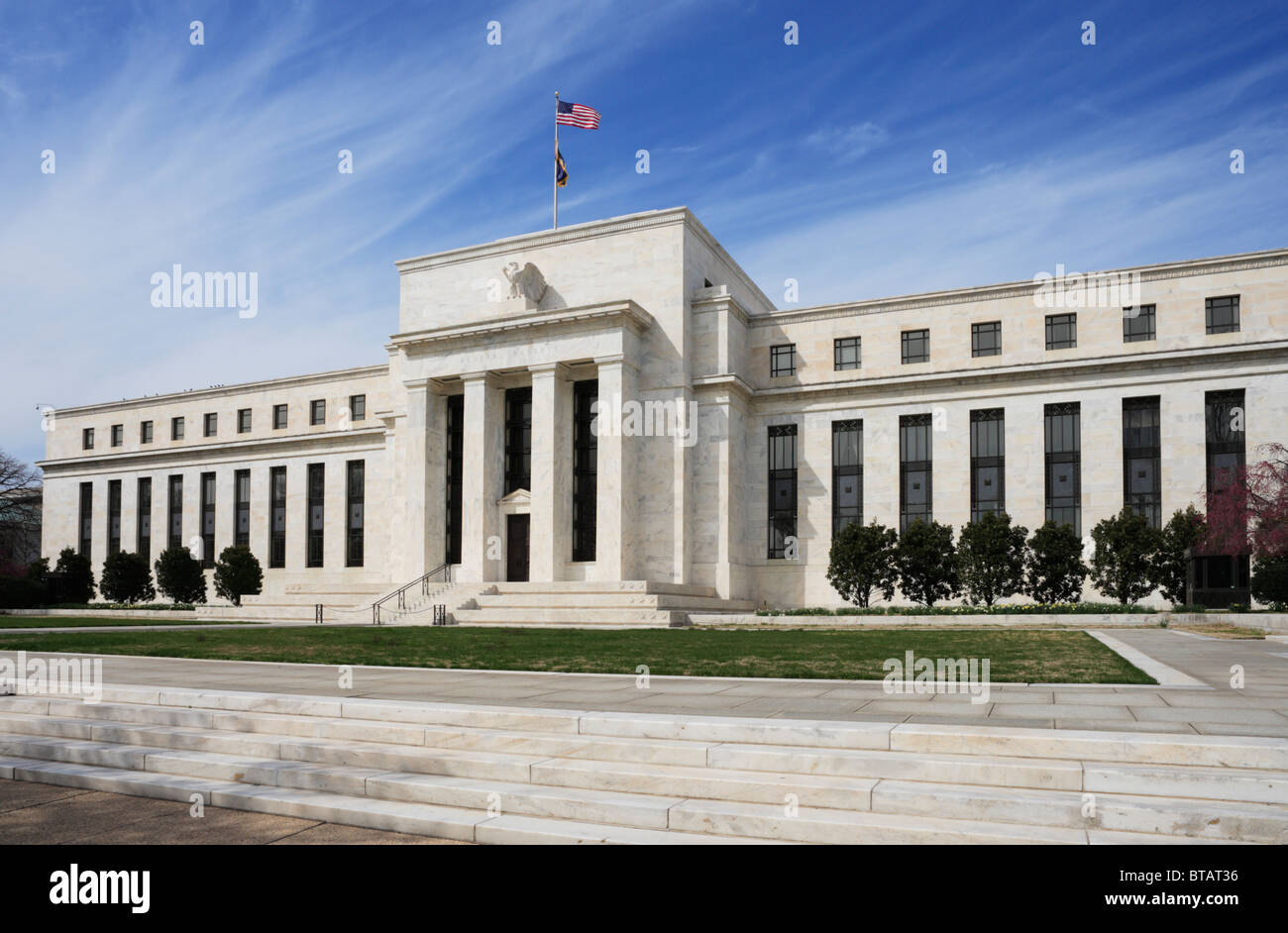
The DOJ’s criminal investigation into Fed Chair Jerome Powell represents an unprecedented challenge to the independence of the U.S. central bank in modern American history. According to multiple verified sources, the investigation was approved in November 2025 and focuses on Powell’s congressional testimony concerning the Federal Reserve’s headquarters renovation project, which has ballooned from an initial $2.5 billion estimate to approximately $700 million over budget [1][4]. The U.S. Attorney’s Office for the District of Columbia, reportedly under the direction of U.S. Attorney Jeanine Pirro, has issued grand jury subpoenas to Federal Reserve officials, marking the first time in the Fed’s 111-year history that a sitting chair has faced such legal scrutiny [1][2].
Powell addressed the nation in a video statement released January 11, 2026, characterizing the investigation as a coordinated effort to pressure the Federal Reserve into lowering interest rates [2][3]. This characterization suggests the investigation may be politically motivated rather than focused on genuine accountability for the renovation project’s cost overruns. The constitutional and market uncertainty created by potential indictment of a sitting Fed Chair raises profound questions about the separation of monetary policy from political interference, a principle that has underpinned U.S. financial stability since the Federal Reserve Act of 1913 [4][5].
The investigation arrives at a critical juncture for U.S. monetary policy, with the Federal Reserve navigating ongoing inflation concerns, fiscal sustainability debates, and the transition to a new presidential administration. The timing and nature of the DOJ’s actions have led many observers to question whether this represents a new era of political-monetary risk that could fundamentally alter the landscape of U.S. financial governance [5][6].
The immediate market reaction to the investigation news revealed significant investor concern about potential erosion of Federal Reserve independence, though equity markets showed resilience in subsequent trading sessions. On January 12, 2026, major U.S. indices demonstrated mixed performance following the initial shock: the S&P 500 closed marginally higher at +0.17%, the NASDAQ advanced +0.32%, and the Dow Jones Industrial Average added +0.06%, suggesting that markets were processing the information with measured caution [0]. However, these modest gains masked deeper structural concerns manifesting in currency and bond markets.
The currency markets exhibited pronounced weakness, with the U.S. dollar facing selling pressure as investors digested the implications of potential political interference in monetary policy. Francesco Pesole, currency strategist at ING, warned of “substantial downside risks for the dollar” stemming from Fed independence concerns, noting that the investigation introduces a new category of political-monetary risk that global investors had not previously priced into currency valuations [5]. The dollar’s status as the world’s primary reserve currency depends heavily on perceptions of institutional independence and policy predictability, both of which are now subject to unprecedented scrutiny.
The bond market demonstrated heightened anxiety through rising long-term Treasury yields, even as the Federal Reserve has pursued an accommodative policy stance [5]. This divergence between monetary policy direction and bond market pricing suggests that investors are demanding higher risk premiums to hold U.S. government debt amid institutional uncertainty. The yield curve’s behavior warrants particularly close monitoring, as steepening could signal growing concerns about debt sustainability and institutional credibility [5][6].
Gold prices emerged as a primary beneficiary of the uncertainty, with safe-haven demand increasing as institutional investors sought hedges against potential erosion of trust in U.S. financial frameworks [6]. The precious metal’s rally reflects broader portfolio reallocation strategies among investors repositioning for elevated political-monetary risk, a dynamic that could intensify if the investigation escalates or if congressional reaction proves inadequate to restore confidence in central bank independence.
The investigation’s implications extend across multiple stakeholder categories, each facing distinct risks and uncertainties from the potential politicization of monetary policy.
U.S. Treasury markets face immediate stress from the investigation, with the yield curve showing signs of strain as investors reprice institutional risk. The debt sustainability question, already prominent in fiscal debates, takes on additional urgency when central bank independence is called into question, as the Fed’s ability to manage monetary conditions independently of political pressure is fundamental to long-term U.S. borrowing costs [5].
The dollar’s position as the global reserve currency faces medium to long-term risks from the investigation, as foreign holders of U.S. Treasuries may reassess the wisdom of maintaining substantial allocations to dollar-denominated assets given unprecedented political-monetary uncertainty [5][6]. While the dollar’s structural advantages—including deep capital markets, the petrodollar system, and limited viable alternatives—provide significant support, the investigation introduces a vulnerability that did not exist in prior market calculus.
Global investors are confronting an entirely new category of political-monetary risk that lacks historical precedent for calibration and hedging purposes. The potential for future administrations to employ similar tactics against Federal Reserve leadership creates uncertainty premium that may permanently alter the risk-return characteristics of U.S. assets [5][6].
Congressional reaction remains a critical variable, with some GOP senators reportedly opposing efforts to interfere with Fed independence, suggesting potential bipartisan resistance to politically motivated pressure on monetary policy [2]. However, the ultimate effectiveness of congressional oversight in constraining executive branch actions against the Fed remains uncertain and will depend significantly on the investigation’s trajectory.
The investigation into Fed Chair Powell establishes a dangerous precedent that could fundamentally alter the relationship between monetary policy and political authority in the United States. Regardless of the investigation’s ultimate outcome, the mere fact of a sitting Fed Chair facing criminal prosecution creates constitutional and market uncertainty that may persist for years. Future Fed Chairs will operate under heightened vulnerability to political pressure, knowing that testimony regarding administrative matters could potentially be weaponized through criminal investigations. This dynamic could fundamentally compromise the Fed’s ability to maintain independence, even if current legal proceedings ultimately favor Powell.
The constitutional questions surrounding indictment of a sitting Fed Chair remain largely unexplored territory. The Federal Reserve’s structure as an independent agency within the federal government creates legal ambiguities regarding the extent of prosecutorial authority over its leadership. These uncertainties introduce market risk regardless of the investigation’s merits, as investors must price the possibility of prolonged legal and institutional conflict.
Even if Powell maintains his position and the investigation ultimately yields no charges, the credibility damage to Federal Reserve independence may prove difficult to reverse. Markets and global investors operate heavily on perceptions, and the visual of a Fed Chair defending himself against criminal investigation creates lasting impressions that data-driven reassurances may struggle to overcome. The multi-month campaign against Fed independence—including public criticisms, political pressure, and now criminal investigation—has created a cumulative erosion of institutional credibility that could manifest in elevated risk premiums for U.S. assets for years to come [5][6].
The effectiveness of monetary policy depends substantially on credibility; when markets believe the Fed will prioritize inflation control over political considerations, policy transmits more effectively through financial markets to the real economy. If that credibility is compromised, the Fed’s toolkit becomes less potent, potentially requiring more aggressive policy actions to achieve desired outcomes, with corresponding implications for market volatility and economic stability.
The investigation’s implications extend beyond domestic markets to the dollar’s role as the global reserve currency. Foreign central banks and sovereign wealth funds, which collectively hold trillions of dollars in U.S. assets, are necessarily reassessing the risk profile of dollar-denominated holdings. While no viable alternative currently exists that matches the dollar’s liquidity, depth, and institutional framework, the investigation introduces a vulnerability that did not exist previously. The cumulative effect of U.S. institutional challenges—including political polarization, fiscal sustainability concerns, and now potential central bank politicization—could gradually erode the dollar’s dominance over time, though such shifts typically occur over years or decades rather than weeks or months [5].
The investigation presents several interconnected risk factors that warrant close monitoring and assessment. The most immediate risk involves the potential for escalation, including potential indictment of Powell, which would create acute market uncertainty and likely trigger significant asset reallocation away from U.S. markets. Such an outcome would represent an unprecedented constitutional crisis with unpredictable market consequences [5][6].
Fed independence erosion represents a structural risk with long-term implications for U.S. asset valuations. If markets conclude that future Fed Chairs will operate under threat of political or legal pressure, the risk premium embedded in U.S. assets may permanently increase, affecting borrowing costs, equity valuations, and the dollar’s premium in currency markets. This risk compounds over time as the precedent becomes embedded in market psychology.
Inflation expectations could become unanchored if investors lose confidence in the Fed’s commitment to price stability independent of political considerations. Even if actual policy remains data-driven, the perception of political influence could reignite inflationary pressures through expectations channels, complicating the Fed’s ongoing battle against persistent inflation.
Dollar decline risk has materialized in the immediate term, with currency markets reflecting concerns about Fed independence. A sustained dollar decline would import inflation through higher import prices, potentially forcing the Fed into more restrictive policy than economic conditions might otherwise warrant [5].
The investigation’s documentation of political pressure on the Fed could ultimately strengthen institutional safeguards if congressional action follows. Bipartisan recognition of the importance of central bank independence could prompt legislative reforms that more formally protect the Fed from political interference, potentially enhancing long-term credibility [2].
Market volatility creates tactical opportunities for investors positioned to capitalize on dislocation, though such opportunities carry substantial risk given the unprecedented nature of the current situation. The bond market’s repricing of institutional risk could eventually create attractive entry points for long-term investors, assuming the investigation’s resolution restores confidence.
The dollar’s weakness could benefit U.S. exporters in the near term, though this benefit would be outweighed by broader concerns about financial stability and institutional credibility.
The situation carries elevated urgency given the potential for rapid escalation. Key developments warranting immediate monitoring include congressional reaction, any additional DOJ actions or subpoenas, Powell’s testimony timeline, and potential announcements regarding Fed Chair nominations as Powell’s term approaches its natural expiration. Markets will likely remain sensitive to any developments that could clarify or complicate the trajectory of this situation.
The Department of Justice’s criminal investigation into Federal Reserve Chair Jerome Powell, approved in November 2025 and disclosed January 11, 2026, centers on testimony regarding the $2.5 billion Fed headquarters renovation project that has exceeded budget by approximately $700 million. Powell has characterized the investigation as politically motivated pressure to compel interest rate cuts, an assertion that has gained credibility among market observers given the investigation’s timing and the broader pattern of political attacks on Fed independence. Multi-source verification from major news organizations confirms the investigation’s existence while raising profound questions about the future of U.S. central bank independence [1][2][3][4].
Market impacts have manifested primarily through currency weakness and bond market stress, with equity markets showing relative resilience in initial trading sessions. The dollar has faced selling pressure, gold has rallied as a safe-haven asset, and long-term Treasury yields have risen despite accommodative monetary policy, suggesting investor concern about institutional stability [0][5][6]. These dynamics reflect the market’s processing of unprecedented political-monetary risk that lacks historical precedent for precise calibration.
The investigation’s long-term implications depend significantly on its trajectory and resolution. Potential outcomes range from dismissal or acquittal to indictment, each carrying distinct market implications. Regardless of outcome, the precedent established by targeting a sitting Fed Chair may permanently alter the risk profile of U.S. assets by introducing political-monetary risk as a permanent market consideration. Congressional response, market reaction, and the Fed’s ability to maintain policy credibility through this period will shape the ultimate impact on U.S. financial stability and the dollar’s reserve currency status.
Insights are generated using AI models and historical data for informational purposes only. They do not constitute investment advice or recommendations. Past performance is not indicative of future results.
About us: Ginlix AI is the AI Investment Copilot powered by real data, bridging advanced AI with professional financial databases to provide verifiable, truth-based answers. Please use the chat box below to ask any financial question.