
December 2025 CPI Inflation Report: Data Quality Concerns Amid Government Shutdown Distortions
Unlock More Features
Login to access AI-powered analysis, deep research reports and more advanced features
About us: Ginlix AI is the AI Investment Copilot powered by real data, bridging advanced AI with professional financial databases to provide verifiable, truth-based answers. Please use the chat box below to ask any financial question.
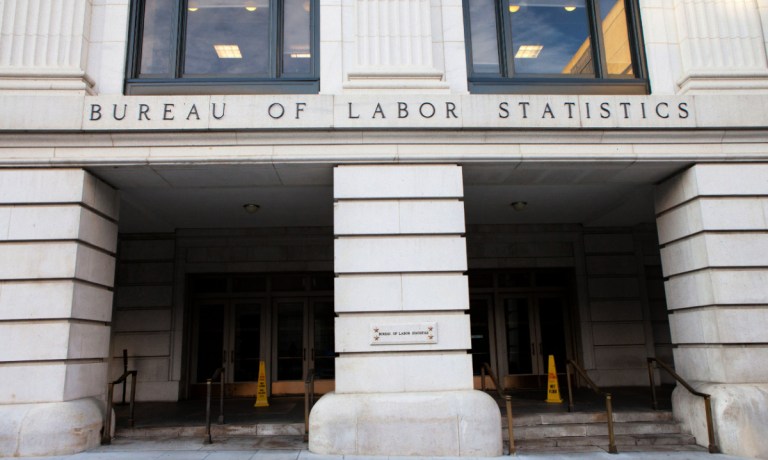
The December 2025 Consumer Price Index (CPI) report represents a unique challenge for economists, policymakers, and market participants due to unprecedented data quality concerns stemming from the recent 43-day government shutdown. According to the Fox Business report [1], the Bureau of Labor Statistics (BLS) was unable to conduct its normal price surveys during the shutdown period, which ended in mid-November 2025. To fill the gaps in their data collection, the BLS utilized a carry-forward methodology that essentially assumed no price changes occurred for items that could not be surveyed, thereby introducing a systematic downward bias into the reported inflation figures.
This methodological approach has particularly severe implications for shelter cost data, which constitutes approximately one-third of the CPI weighting. The shelter component is especially vulnerable to the carry-forward approach because rental prices and housing costs tend to exhibit more gradual and consistent movements compared to other CPI components. By artificially holding shelter costs at their October levels while actual market conditions continued to evolve, the BLS has effectively created an artificially low baseline that will understate true inflation until the methodology normalizes in April 2026 [1].
Market indicators suggest cautious optimism amid these data uncertainties. The S&P 500 traded around 6,966 with modest gains during the recent session, while the NASDAQ held steady near 23,671 [0]. However, the VIX index’s elevation to 15.91 from the previous close of 14.49, representing a 9.8% increase, indicates that market participants are pricing in elevated uncertainty surrounding the inflation data release [0]. This elevated volatility reflects the challenging interpretive environment facing investors who must parse distorted data to inform their positioning.
The consensus forecasts among economists point to a headline CPI increase of 0.3% month-over-month and 2.6-2.7% year-over-year, with core CPI also expected to remain elevated at approximately 2.6% [1]. Greg Daco, Chief Economist at EY-Parthenon, characterized the situation as “extremely muddy,” emphasizing the difficulty in drawing meaningful conclusions from data that is known to contain systematic biases [1]. Oxford Economics has similarly warned that the data interpretation challenges will extend beyond a single report, creating a sustained period of uncertainty that will complicate both Federal Reserve decision-making and market expectations regarding the interest rate trajectory.
The government shutdown’s impact on CPI data collection reveals a critical vulnerability in the U.S. economic data infrastructure that extends well beyond a single reporting period. The 43-day disruption to BLS price surveys has created a data gap that cannot be fully retroactively corrected, meaning that economists and policymakers must operate with imperfect information for several months. This situation underscores the fragility of federal statistical agencies and the potential for political disruptions to undermine the integrity of key economic indicators that inform trillion-dollar decisions across the financial system.
The shelter cost distortion is particularly significant because housing costs serve as a sticky component of inflation that tends to reflect longer-term economic conditions rather than transitory fluctuations. By artificially suppressing shelter readings through the carry-forward methodology, the December CPI will present an incomplete picture of the inflationary pressures facing consumers. Economists note that the carry-forward approach assumes no price changes occurred during the shutdown period, which is an unrealistic assumption given ongoing market dynamics in the rental and housing markets during October and November [1]. This means the true inflationary pressure in the shelter sector is likely being underreported, and the gap between reported and actual inflation may only become apparent when normal data collection resumes.
The temporal dimension of these distortions is crucial for understanding their full implications. While the immediate impact affects the December 2025 report, the carry-forward methodology creates a cascading effect that will influence multiple subsequent releases. The BLS has indicated that the distortions will persist through April 2026, meaning that the January, February, and March CPI reports will all contain some degree of artificial suppression in shelter costs [1]. This extended period of data quality concerns creates challenges for the Federal Reserve, which typically relies on multiple months of data to establish trends and justify policy changes. The Fed may find itself operating in a fog of uncertain inflation data precisely when it needs clear signals to navigate potential rate decisions.
From a market perspective, the data distortion creates both risks and opportunities for positioned participants. Traders and investors who understand the downward bias in the reported figures may be able to look through headline numbers to underlying economic realities, potentially positioning for mean reversion when the data normalizes in April 2026. However, the complexity of these dynamics also creates the potential for misinterpretation and subsequent market volatility as different market participants weigh the distorted data through varying analytical frameworks.
The December CPI report presents several significant risks that market participants must carefully consider. The most immediate risk is data interpretation error, where investors and analysts may overreact to headline inflation figures without properly accounting for the downward bias introduced by the carry-forward methodology. If market participants focus solely on the reported number without adjusting for known distortions, they may draw incorrect conclusions about the true trajectory of inflation and make poorly informed positioning decisions. This risk is amplified by the likelihood that media coverage will emphasize headline numbers without adequate context regarding data quality concerns.
Federal Reserve policy uncertainty represents another substantial risk factor during this period of data distortion. The central bank has been seeking clearer signals about the sustainability of inflation before adjusting its policy stance, and the compromised data quality means that the Fed will need to rely more heavily on alternative indicators, surveys, and qualitative assessments to inform its decisions. This increases the uncertainty surrounding the policy path and may contribute to market volatility as participants attempt to divine Fed intentions from incomplete information. The extended period of data distortion through April 2026 means this uncertainty will persist for several months, complicating forward-looking positioning strategies.
There is also the risk of forecast revision and model failure during this period. Economic forecasting models built on historical CPI relationships may produce unreliable outputs when the underlying data contains systematic biases. Economists at EY-Parthenon have noted upside risks to their projections, suggesting that the consensus 2.6-2.7% year-over-year figure may prove too low once the true data emerges [1]. This model uncertainty can cascade into investment models and risk assessments that depend on inflation forecasts for valuation and positioning decisions.
The data distortion creates potential opportunities for sophisticated market participants who can accurately identify and quantify the bias. Historical analysis of similar data disruptions, combined with alternative data sources such as private rental indices, Zillow rental data, and real estate transaction data, may provide independent estimates of true shelter cost inflation that can be compared against the distorted BLS figures. Participants who develop robust methods for estimating the true inflation trajectory may be able to position advantageously for the normalization in April 2026.
The elevated VIX and associated market caution also create potential opportunities for volatility strategies. The uncertainty surrounding the CPI release and its interpretation may generate trading ranges that exceed normal parameters, providing opportunities for volatility-focused strategies. Additionally, the expected normalization of data in April 2026 creates a known future catalyst that can be priced into longer-dated options and forward markets, potentially allowing participants to express views on the eventual magnitude of the data revision.
The December 2025 CPI inflation report, released on January 12, 2026, faces significant data quality challenges stemming from the 43-day government shutdown that disrupted Bureau of Labor Statistics price collection activities. The BLS has employed carry-forward methodology to estimate prices for items that could not be surveyed during the shutdown period, creating a systematic downward bias in the reported figures. This bias is most pronounced in the shelter cost component, which represents approximately one-third of the CPI basket and is particularly susceptible to the carry-forward approach due to its sticky and gradually evolving nature.
Consensus forecasts indicate expected headline CPI of 0.3% month-over-month and 2.6-2.7% year-over-year, with core CPI also expected to remain around 2.6%. These figures suggest that inflation remains elevated above the Federal Reserve’s 2% target, even before accounting for the downward bias introduced by the data collection issues. The distortions are expected to persist through the January, February, and March 2026 CPI reports, with normalization anticipated in April 2026 when the BLS can resume full data collection and the carry-forward effects work through the system.
Market indicators reflect cautious positioning ahead of the report, with the S&P 500 trading near 6,966, the NASDAQ around 23,671, and the VIX elevated to 15.91, up 9.8% from the previous session [0]. This elevated volatility environment reflects market awareness of the interpretive challenges posed by the distorted data and uncertainty regarding Federal Reserve policy implications. Economists, including Greg Daco of EY-Parthenon, have emphasized the difficulty of drawing meaningful conclusions from data that is known to contain significant biases, characterizing the situation as “extremely muddy” [1]. Market participants are advised to focus on underlying economic trends and alternative data sources rather than relying solely on the distorted CPI releases over the coming months.
Insights are generated using AI models and historical data for informational purposes only. They do not constitute investment advice or recommendations. Past performance is not indicative of future results.
About us: Ginlix AI is the AI Investment Copilot powered by real data, bridging advanced AI with professional financial databases to provide verifiable, truth-based answers. Please use the chat box below to ask any financial question.