
DOJ Criminal Investigation into Fed Chair Powell: Implications for Monetary Policy Independence and Market Stability
Unlock More Features
Login to access AI-powered analysis, deep research reports and more advanced features
About us: Ginlix AI is the AI Investment Copilot powered by real data, bridging advanced AI with professional financial databases to provide verifiable, truth-based answers. Please use the chat box below to ask any financial question.
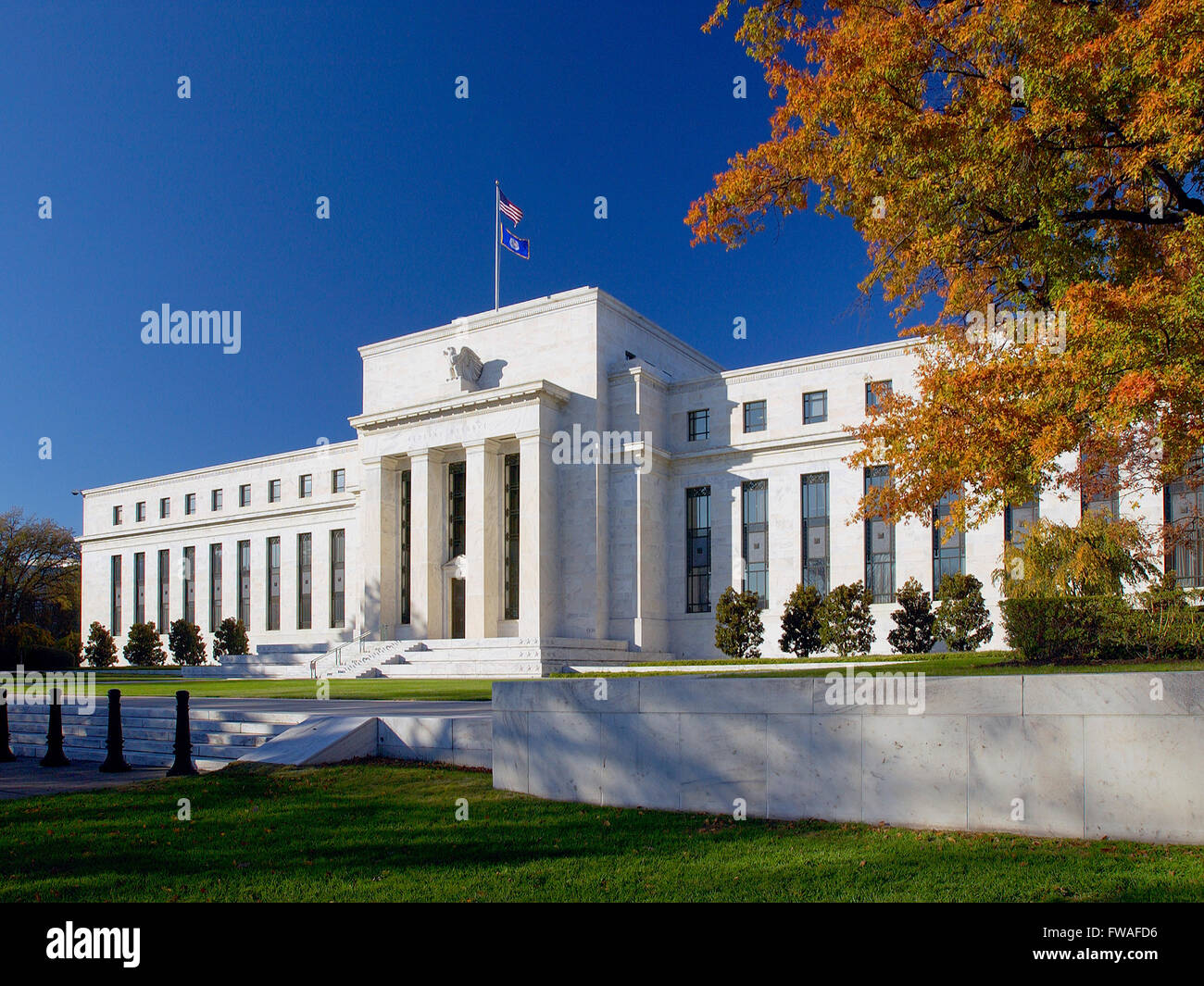
The Department of Justice served the Federal Reserve with grand jury subpoenas on Friday, January 9, 2026, initiating a criminal investigation into Fed Chair Jerome Powell concerning his testimony before the Senate Banking Committee in June 2025 regarding the Fed’s $2.5 billion headquarters renovation project [1][2]. Powell publicly disclosed the investigation on Sunday evening, January 11, 2026, characterizing it as a pretext for the Trump administration’s pressure campaign to compel the Fed to lower interest rates. This action constitutes an unprecedented escalation in the ongoing tension between the White House and the Federal Reserve, representing the first criminal investigation of a sitting Federal Reserve Chair in the institution’s 111-year history [1][3][4].
The timing of this investigation is particularly significant given that Powell’s term as Fed Chair expires in May 2026, with his board term extending until January 2028 [3]. The investigation emerges against the backdrop of sustained public criticism from President Trump regarding Fed interest rate policy and repeated threats to remove Powell from his position. Powell’s public statement directly addressed the constitutional implications, asserting that “this is about whether the Fed will be able to continue to set interest rates based on evidence and economic conditions — or whether instead monetary policy will be directed by political pressure or intimidation” [1][2][4].
The investigation raises fundamental questions about the separation of powers and the independence of monetary policy institutions that have historically operated with significant autonomy from political interference. The Wall Street Journal analysis emphasizes that the investigation “isn’t ultimately about the Fed’s headquarters, or Powell, or even interest rates” but rather about the extent to which the executive branch will go to exercise control over the central bank [original source]. This framing suggests the investigation serves a dual purpose: applying immediate pressure on current monetary policy decisions while establishing a precedent that will constrain future Fed leadership.
The constitutional crisis stems from multiple overlapping tensions. First, the Justice Department’s use of criminal investigative powers against a sitting Federal Reserve Chair creates a novel legal precedent with uncertain boundaries. Second, the timing—coinciding with ongoing policy disagreements—supports Powell’s characterization of the investigation as pretextual rather than a genuine prosecutorial effort [1][3]. Third, the investigation threatens to undermine the Fed’s credibility in financial markets, where independence from political pressure has traditionally been considered essential for effective monetary policy formulation.
Immediate market reaction reflected investor concern about the implications for monetary policy stability and U.S. institutional credibility. Equity futures declined across major indices, with the S&P 500 futures falling 0.5%, Dow Jones futures dropping 0.4%, and Nasdaq futures sliding 0.7% [5]. The technology-heavy Nasdaq decline suggests particular concern among growth-oriented investors about the potential for interest rate policy to be influenced by political considerations rather than economic fundamentals [5][6].
The Treasury market and currency markets also showed pronounced reactions to the news. The Dollar Index (DXY) declined 0.2%, while gold prices remained elevated above $4,600 per ounce as investors sought safe-haven assets [6]. These movements indicate elevated uncertainty regarding U.S. monetary policy trajectory and, by extension, the dollar’s role as the world’s reserve currency. The combination of equity weakness, dollar pressure, and gold strength paints a picture of a risk-off market environment driven primarily by institutional and political uncertainty rather than economic fundamentals [5][6].
The investigation represents a fundamental departure from established norms governing relations between the executive branch and the Federal Reserve. While previous administrations have occasionally criticized Fed policy decisions, the use of criminal investigative mechanisms against a sitting Fed Chair marks an unprecedented escalation. The Wall Street Journal analysis notes that the investigation serves as “a warning to the next Fed Chair,” suggesting that the Trump administration seeks to establish a new paradigm of executive influence over monetary policy that will persist beyond the current leadership transition [original source].
The precedent-setting nature of this investigation extends beyond the immediate case. Future Fed Chairs will now operate with the knowledge that political disagreement with the executive branch could result in criminal investigation, potentially chilling independent policy deliberation and increasing susceptibility to political pressure. This dynamic could fundamentally alter the balance of power in monetary policy formulation and undermine the technocratic independence that has characterized U.S. central banking since the Federal Reserve Act of 1913.
The investigation reveals a critical interrelationship between political developments and market stability mechanisms that extends beyond traditional financial analysis. The Federal Reserve’s independence has historically functioned as a market stability anchor, providing confidence that monetary policy decisions reflect economic analysis rather than political considerations. When this independence is perceived as compromised, market confidence in U.S. financial institutions erodes proportionally [1][4][6].
The multi-domain nature of this event—spanning legal, political, economic, and institutional dimensions—creates compounding effects that single-domain analysis cannot capture. Legal uncertainty regarding the Fed Chair’s position translates into policy uncertainty regarding interest rate trajectory, which in turn affects asset valuations across equity, fixed income, and currency markets. The coordination of these effects amplifies market volatility beyond what any single factor would generate in isolation [5][6].
Powell’s characterization of the investigation as a pretext for interest rate pressure finds support in the temporal and substantive characteristics of the probe. The investigation relates to testimony about a headquarters renovation project—an issue largely unrelated to monetary policy—yet emerges at a moment of intense disagreement between the White House and the Fed regarding interest rate decisions [1][3]. This disconnect between the investigative subject matter and the political context supports the interpretation that the investigation represents инструмент of political pressure rather than a genuine prosecutorial effort.
The precedent implications are particularly significant. By launching an investigation into a sitting Fed Chair over peripheral matters while simultaneously applying public pressure on monetary policy decisions, the administration establishes a framework in which political disagreement with Fed policy could trigger investigative scrutiny. This dynamic fundamentally alters the incentive structure for future Fed leadership and potentially compromises the deliberative independence essential to effective central banking [original source][4].
The investigation’s implications extend beyond domestic markets to the global financial system’s foundational assumption of U.S. monetary policy independence. The dollar’s role as the world’s reserve currency and the U.S. Treasury market’s position as the global benchmark for risk-free assets depend critically on investor confidence that U.S. monetary policy follows economic rather than political considerations [6]. Any perception that this independence is compromised threatens the premium embedded in dollar-denominated assets and potentially accelerates efforts by foreign entities to diversify reserve holdings.
The timing of the investigation, coinciding with ongoing global discussions about de-dollarization and alternative reserve currency arrangements, amplifies these concerns. Market participants will closely monitor foreign official reactions and any signs of accelerated reserve diversification as indicators of how this institutional development affects global confidence in U.S. financial leadership [6].
The time sensitivity of this development is acute. Market reaction has already manifested in futures trading, and the coming days will likely bring additional volatility as investors process developments and await responses from the White House, Fed officials, and congressional leaders [5][6]. The proximity to Powell’s May 2026 term expiration adds urgency to the situation, as the investigation’s trajectory will significantly influence the context for the next Fed Chair nomination and confirmation process [3].
The Department of Justice’s criminal investigation into Federal Reserve Chair Jerome Powell represents a watershed moment for U.S. monetary policy governance and institutional independence. The investigation, relating to Powell’s Congressional testimony about the Fed’s headquarters renovation project, has been characterized by Powell as a pretext for political pressure to force interest rate cuts—a characterization supported by the temporal and substantive characteristics of the probe [1][2][3].
The unprecedented nature of criminal investigative action against a sitting Fed Chair raises profound constitutional questions about separation of powers and the boundaries of executive authority over central banking functions. Market reaction reflected immediate concern, with equity futures declining 0.4-0.7% and safe-haven assets appreciating as investors assessed implications for monetary policy stability and U.S. institutional credibility [5][6].
The investigation serves notice to future Fed leadership that political disagreement with executive branch policy preferences could trigger investigative scrutiny, fundamentally altering the incentive structure for independent central banking. This precedent effect may prove more significant than the immediate investigation’s outcome in shaping long-term monetary policy dynamics [original source].
Key monitoring priorities include DOJ and White House responses to Powell’s public characterization of the investigation as pretextual, Monday market opening dynamics and Treasury auction reception, Fed official communications regarding policy continuity, and congressional oversight responses to the unprecedented executive action against central bank independence [1][4][5][6]. The situation remains fluid, with potential for escalation or de-escalation depending on institutional and market reactions in the coming days and weeks.
Insights are generated using AI models and historical data for informational purposes only. They do not constitute investment advice or recommendations. Past performance is not indicative of future results.
About us: Ginlix AI is the AI Investment Copilot powered by real data, bridging advanced AI with professional financial databases to provide verifiable, truth-based answers. Please use the chat box below to ask any financial question.