
In-Depth Analysis Report on Guoxia Technology's 'Scale-Profit-Cash' Imbalance
Unlock More Features
Login to access AI-powered analysis, deep research reports and more advanced features
About us: Ginlix AI is the AI Investment Copilot powered by real data, bridging advanced AI with professional financial databases to provide verifiable, truth-based answers. Please use the chat box below to ask any financial question.
Related Stocks
Based on the obtained information, I now provide you with an in-depth analysis report on Guoxia Technology’s ‘scale-profit-cash’ imbalance and its impact on the industry.
Guoxia Technology (Stock Code: 02655.HK) was founded in 2019, with its headquarters in Wuxi, Jiangsu. It is a leading Chinese provider of “AI+” energy storage renewable energy solutions and products. The company was officially listed on the main board of the Hong Kong Stock Exchange on December 16, 2025, with a share price surge of 117.9% on its first trading day[1][2].
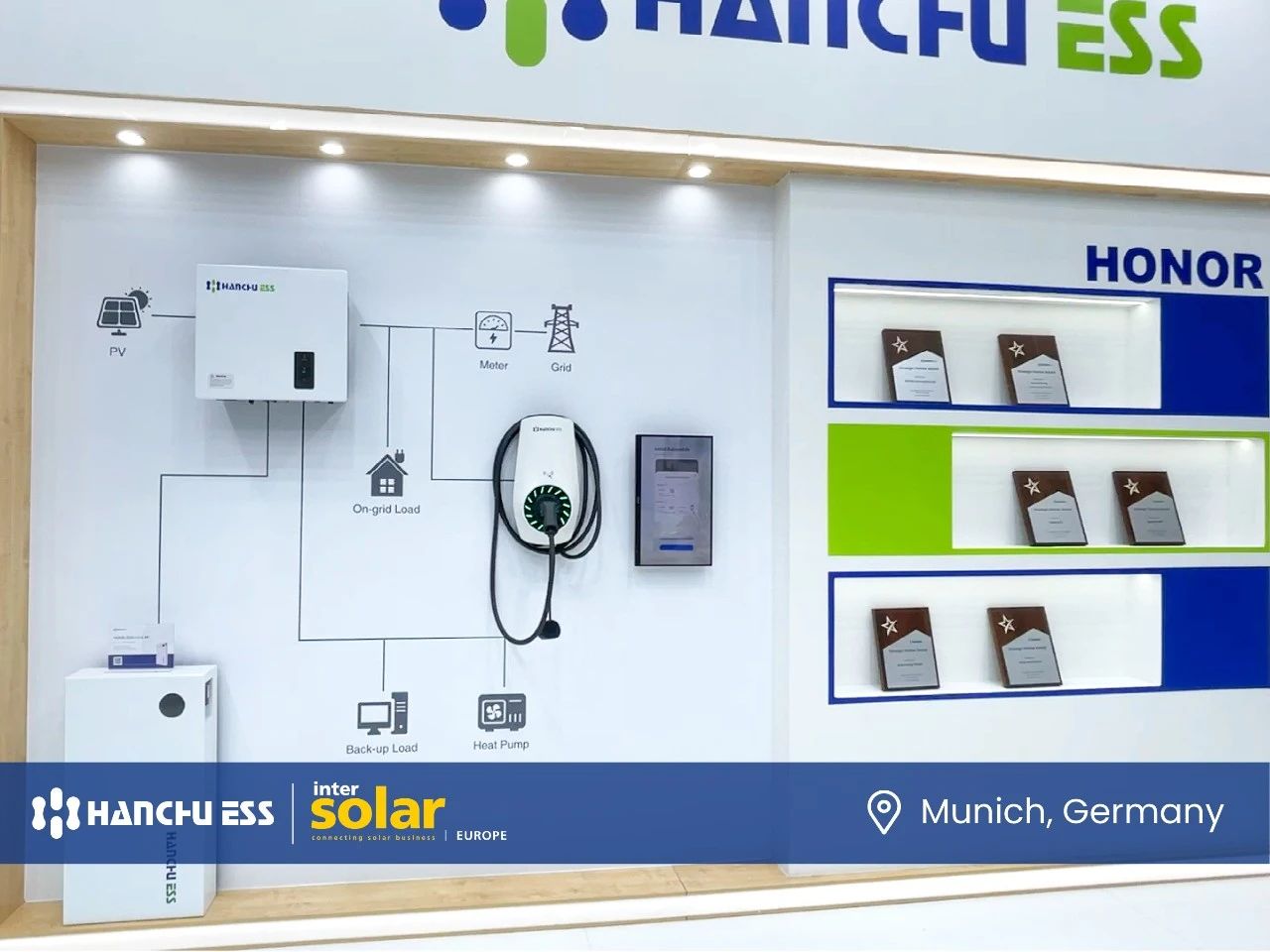
The company’s business covers multiple application scenarios including large-scale power generation side, large power grid side, industrial and commercial, and residential sectors. It adopts a dual-brand operation strategy of “Guoxia Technology” and its overseas brand “HANCHU ESS”, with markets spanning China, Europe, and Africa[3]. According to an authoritative industry report, based on the 2024 global new installed capacity of multi-purpose energy storage systems, Guoxia Technology ranks as the 8th largest Chinese energy storage system provider globally[4].
Guoxia Technology’s revenue growth can be described as “skyrocketing”. From 2022 to 2024, the company’s operating revenue surged from RMB 142 million to RMB 1.026 billion, with a compound annual growth rate of 168.9%[1][5]. In the first half of 2025, it achieved operating revenue of RMB 691 million, a year-on-year surge of approximately 663%, a growth rate leading the energy storage industry.
| Time Period | Revenue Share from Chinese Market | Revenue Share from European Market | Business Focus |
|---|---|---|---|
| 2022 | 27.9% | 72.1% | Focused on residential energy storage |
| H1 2025 | 81.8% | 9.1% | Focused on large-scale energy storage |
The company’s drastic strategic shift from European residential energy storage to domestic large-scale energy storage is the core driver of its scale expansion[1][6]. The revenue share of large-scale energy storage systems surged from 12.2% in 2022 to 74.2% in H1 2025[6].
However, behind the steep growth curve is a sharp compression of profit margins:
| Financial Indicator | 2022 | 2023 | 2024 | H1 2025 |
|---|---|---|---|---|
| Gross Profit Margin | 25.1% | 26.7% | 15.1% | 12.5% |
| Net Profit Margin | 17.1% | 9.0% | 4.8% | 0.8% |
| Net Profit (RMB 100 million) | 0.24 | 0.28 | 0.49 | 0.06 |
The core reason for the profit decline lies in the business structure transformation. Due to fierce competition, the gross profit margin of large-scale energy storage systems is significantly lower than that of residential energy storage. When the company actively embraced this low-margin track to expand its scale, profit sacrifice became an inevitable result[6].
Guoxia Technology is facing severe cash flow pressure, which is the most dangerous aspect of the ‘scale-profit-cash’ imbalance:
| Period | Operating Cash Flow (RMB 100 million) |
|---|---|
| 2022 | -0.30 |
| 2023 | -0.72 |
| 2024 | -0.52 |
| H1 2025 | -2.05 |
There has been a net outflow of operating cash flow for three and a half consecutive years, with the scale continuing to expand, showing a typical “cash bleeding” trend[1][6].
- Trade receivables and notes receivable: Surged from RMB 42 million at the end of 2022 to RMB 952 million at the end of June 2025, an increase of more than 22 times[1][6]
- Accounts receivable turnover days: Sharply increased from 56.7 days to 198 days, significantly slowing down the cash collection speed[6]
This rigid cycle of “scale expansion - capital occupation” is intensifying: the company needs to advance funds to secure projects, while the extended collection cycle further widens the cash flow gap[1].
Most alarmingly, Guoxia Technology has adopted an extreme competitive practice of “providing loans to potential customers without binding purchase obligations”[1]. This strategy carries extremely high credit risk exposure:
- Credit expansion replaces product competition: Securing orders by providing funds rather than optimizing products, essentially using corporate credit as a competitive tool
- Advance capital intensifies industry risks: Lending funds on top of extended payment terms, forming “dual capital occupation”
- Securing orders at the cost of future risks: Current transactions are achieved at the cost of potential bad debts and liquidity crises
Guoxia Technology faces significant concerns over “major customer dependence”. In H1 2025, revenue from its largest customer, CALB Group, accounted for as high as 41.7%[6].
Complicating matters further,
- Business independence risk: Excessive related-party transaction share may affect pricing fairness
- Risk concentration: Fluctuations from a single customer may cause a major impact on the company
- Regulatory attention: The Securities and Futures Commission of Hong Kong has paid special attention to this issue during the review process[6]
Based on industry data and trend analysis, the “scale-profit-cash” imbalance in the energy storage industry may trigger the following vicious cycle:
┌─────────────────────────────────────────────────────────────┐
│                      Vicious Cycle Chain                    │
├─────────────────────────────────────────────────────────────┤
│  Price War → Gross Profit Margin Decline → Profit Margin Compression │
│     ↓                                                        │
│  Continue to Cut Prices/Relax Credit to Maintain Scale → Surge in Accounts Receivable │
│     ↓                                                        │
│  Tight Cash Flow → Expanded Net Outflow of Operating Cash Flow │
│     ↓                                                        │
│  Capital Chain Pressure → Rising Bad Debt Risk/Default Incidents │
│     ↓                                                        │
│  Credit Risk Exposure → Deterioration of Industry Financing Environment │
│     ↓                                                        │
│  More Enterprises Fall into Difficulty → More Disordered Competition → Further Price Cuts │
└─────────────────────────────────────────────────────────────┘
The energy storage industry is facing a similar risk evolution path as the photovoltaic industry:
| Comparison Dimension | Lessons from Photovoltaic Industry | Current Status of Energy Storage Industry |
|---|---|---|
| Expansion Model | Frenzied Capacity Expansion | Aggressive Revenue Growth |
| Competition Intensity | Fierce Price War | Sharp Decline in Gross Profit Margin |
| Cash Flow | Large Amount of Accounts Receivable | Sustained Outflow of Operating Cash Flow |
| Credit Risk | Frequent Bad Debts | Lending to Customers Without Binding Purchase Obligations |
| Industry Outcome | Multiple Shuffles, Mass Enterprise Failures | Repeating the Same Mistakes |
As the analysis points out:
| Risk Dimension | Indicator Performance | Risk Level |
|---|---|---|
| Profitability | Net profit margin of 0.8% approaching break-even line | 🔴 High Risk |
| Cash Flow | Sustained net outflow of operating cash flow | 🔴 High Risk |
| Accounts Receivable | Turnover days of 198 | 🟠 Warning |
| Customer Concentration | 41.7% share from largest customer | 🟠 Warning |
| Leverage Level | Total Debt/Shareholders’ Equity of 128.8% | 🟠 Warning |
| R&D Investment | 2.4% of revenue, lower than industry median of 5.23% | 🟡 Attention |
The case of Guoxia Technology is not an isolated incident, but rather a
- Overall decline in credit standards: More enterprises are forced to offer similar terms to secure orders
- Systemic capital chain tension: The overall cash flow situation of the industry deteriorates
- Concentrated outbreak of bad debt risks: Concentrated collection pressure after extended payment terms
- Deterioration of financing environment: Financial institutions reprice industry risks
Despite the company’s impressive share price performance on its first trading day (a 117.9% surge),
- Net profit in H1 2025 was only RMB 5.57 million, while market capitalization exceeded HK$20 billion
- The extremely low net profit margin means any operational fluctuation may lead to losses
- Sustained cash burn requires reliance on external financing to maintain operations
- A vicious cycle of “scale-profit-cash” imbalance has formed: To pursue scale expansion, Guoxia Technology actively embraced low-margin large-scale energy storage business, leading to continuous profit compression; at the same time, it relaxed credit terms to secure orders, resulting in a surge in accounts receivable and sustained net outflow of cash flow.
- Extreme competitive practices pose industry-wide demonstration risks: If the practice of “providing loans to potential customers without binding purchase obligations” is emulated, it will lower the credit standards and competitive bottom line of the entire industry.
- Systemic risks are accumulating: Three and a half years of sustained net outflow of operating cash flow, net profit margin approaching the break-even line, and extended payment terms constitute a typical “scale trap”.
- High risk of vicious industry cycles: Against the backdrop of increasing industry concentration, the survival pressure on small and medium-sized players may lead to more intense disordered competition, which in turn triggers industry-wide credit risk exposure.
For Guoxia Technology and the industry as a whole,
- Reassess business structure to balance scale and profitability
- Tighten credit policies to improve accounts receivable turnover
- Increase R&D investment to build technological moats
- Reduce customer concentration to diversify risks
- Establish industry self-discipline conventions to curb credit wars
- Promote a competition order centered on technological innovation
- Strengthen information disclosure and risk early warning mechanisms
[1] Sina Finance - “How Guoxia Technology is Involved in Energy Storage Involution?” (https://finance.sina.com.cn/roll/2026-01-11/doc-inhfxzzm7516520.shtml)
[2] Wuxi Municipal Government - “Guoxia Technology Listed on Main Board of Hong Kong Stock Exchange” (https://www.wuxi.gov.cn/doc/2025/12/17/4702177.shtml)
[3] Securities Times - “Guoxia Technology Listed on Hong Kong Stock Exchange Main Board to Deepen ‘AI+’ Energy Storage Track” (https://www.stcn.com/article/detail/3542359.html)
[4] Energy Storage Headlines - “Surge of 119%, Market Cap Exceeds HK$22.5 Billion, Another Energy Storage Company Listed!” (https://mchuneng.in-en.com/html/chunengy-50974.shtml)
[5] Guoxia Technology Financial Report Summary - Profit and Revenue Data (https://tool.stockstar.com/summary/caibao/02655)
[6] Sina Finance - “Guoxia Technology (02655.HK) Surges on First Trading Day, Why Has Gross Profit Margin Been Declining?” (https://cj.sina.cn/articles/view/7750929051/1cdfdca9b00101c774)
Insights are generated using AI models and historical data for informational purposes only. They do not constitute investment advice or recommendations. Past performance is not indicative of future results.
About us: Ginlix AI is the AI Investment Copilot powered by real data, bridging advanced AI with professional financial databases to provide verifiable, truth-based answers. Please use the chat box below to ask any financial question.