
In-Depth Analysis Report on Iluvatar CoreX's R&D Investment and Profitability
Unlock More Features
Login to access AI-powered analysis, deep research reports and more advanced features
About us: Ginlix AI is the AI Investment Copilot powered by real data, bridging advanced AI with professional financial databases to provide verifiable, truth-based answers. Please use the chat box below to ask any financial question.
Related Stocks
Now I have collected sufficient data, let me provide you with a comprehensive and systematic analysis report.
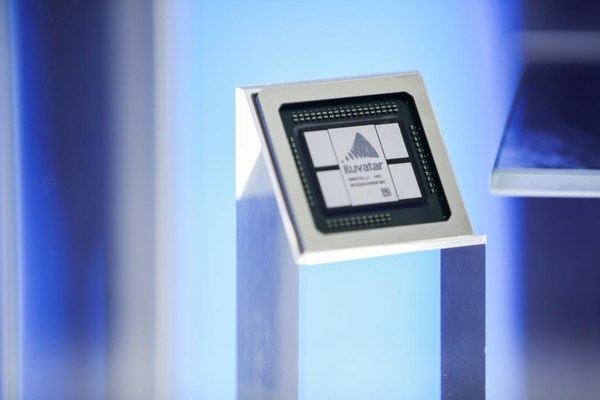
Iluvatar CoreX (Stock Code: 09903.HK) was officially listed on the Main Board of the Hong Kong Stock Exchange on January 8, 2026, becoming the last company among the “Four Little Dragons of Domestic GPUs” to enter the capital market [1][2]. Founded in 2015, the company is the first domestic enterprise to mass-produce general-purpose GPU chips for training and the first to mass-produce general-purpose GPU chips for inference [3].
Currently, the company has two major product lines, “Tiangai” and “Zhikai”:
- Tiangai Series: Focused on AI model training, has completed three generations of iteration from Gen 1 to Gen 3, with a single card supporting the operation of large models with tens of billions of parameters
- Zhikai Series: Focused on AI inference, optimized for low-latency and high-throughput performance, with actual performance reaching 2-3 times that of similar products on the market [4]
From December 2025 to January 2026, within a short 35 days, the domestic GPU industry witnessed a wave of intensive listings [5]:
| Company | Listing Date | Listing Venue | First-Day Gain | Current Market Capitalization |
|---|---|---|---|---|
| Moore Threads | December 5, 2025 | STAR Market | 425% | ~RMB 300 billion |
| Muxi Semiconductor | December 17, 2025 | STAR Market | 693% | ~RMB 257.1 billion |
| Biren Technology | January 2, 2026 | Hong Kong Stock Exchange | 76% | ~HKD 80.6 billion |
| Iluvatar CoreX | January 8, 2026 | Hong Kong Stock Exchange | 11% | ~HKD 39.9 billion |
The total market capitalization of the four companies has reached RMB 681.8 billion [5].
Based on the prospectus and public financial data, Iluvatar CoreX’s R&D investment has the following characteristics [1][2][4]:
| Period | R&D Investment (CNY 100 million) | Revenue (CNY 100 million) | R&D/Revenue Ratio | Year-on-Year Change |
|---|---|---|---|---|
| 2022 | 4.57 | 1.89 | 241.1% |
- |
| 2023 | 6.16 | 2.89 | 213.1% |
Decreased by 28 percentage points |
| 2024 | 7.73 | 5.40 | 143.2% |
Decreased by 70 percentage points |
| H1 2025 | 4.51 | 3.24 | 139.2% |
Continuous decline |
| Indicator | 2022-2024 Compound Annual Growth Rate (CAGR) |
|---|---|
Revenue Growth Rate |
68.8% |
| R&D Investment Growth Rate | 30.2% |
| Company | R&D Investment/Revenue | Characteristics |
|---|---|---|
Iluvatar CoreX |
143.2% |
The lowest among the Four Little Dragons, with relatively high R&D efficiency |
| Muxi Semiconductor | ~250% | High R&D intensity |
| Moore Threads | ~600% | Highest R&D intensity |
| Biren Technology | ~180% | Medium level |
| NVIDIA | 14.2% | Mature enterprise, optimal R&D efficiency |
Compared with NVIDIA, the R&D intensity of domestic GPU enterprises is generally 10-40 times higher, but this is a necessary cost to pay during the catch-up phase [4][6].
| Period | Revenue (CNY 100 million) | Year-on-Year Revenue Growth Rate | Net Loss (CNY 100 million) | Net Loss Ratio |
|---|---|---|---|---|
| 2022 | 1.89 | - | 5.54 | 293.1% |
| 2023 | 2.89 | 52.9% | 8.17 | 282.7% |
| 2024 | 5.40 | 86.9% | 8.92 | 165.2% |
| H1 2025 | 3.24 | 64.2% | 6.09 | 188.0% |
- Net Loss Ratio: Narrowed from 293.1% in 2022 to 188.0% in H1 2025, with an improvement of105 percentage points
- Gross Profit Margin: Rose from 45.1% in H1 2024 to50.1%in H1 2025, an improvement of 5 percentage points
- Three-Year CAGR of Revenue: As high as68.8%
In its prospectus, Iluvatar CoreX attributes its continuous losses to the following factors [2][6]:
- Huge early-stage R&D investment: GPU chip R&D has a long cycle and high tape-out costs
- Long product commercialization cycle: It takes 3-5 years from product launch to large-scale commercial application
- Limited economies of scale: Compared with NVIDIA’s million-level shipment volume, domestic manufacturers are still in the initial stage
- Increased sales and operating expenses: Sales and distribution expenses reached CNY 122 million in 2024
| Company | 2024 Net Loss | Loss Narrowing Trend | Expected Break-Even Time |
|---|---|---|---|
| Iluvatar CoreX | CNY 892 million | Loss expanding | No forecast provided |
| Muxi Semiconductor | CNY 186 million | Narrowed by 63.7% | 2026 |
| Moore Threads | CNY 271 million | Continuous narrowing | 2027 |
| Biren Technology | ~CNY 450 million | - | No forecast provided |
It is worth noting that although Iluvatar CoreX’s absolute loss amount is relatively large, its R&D investment as a percentage of revenue is the
The GPU chip industry has the following characteristics, making high R&D investment an inevitable choice for catch-up players:
- Extremely high technical barriers: Requires full-stack capabilities from architecture design, instruction set development to software ecosystem
- High tape-out costs: A single tape-out for 7nm advanced process can cost hundreds of millions of yuan
- Strong ecosystem dependence: Software ecosystems such as CUDA require long-term accumulation
- Strong competitors: NVIDIA’s R&D expenditure in fiscal year 2025 reached USD 12.91 billion, which is 30 times the total R&D expenses of the four domestic leading GPU companies [6]
Compared with peers, Iluvatar CoreX has adopted a more pragmatic strategy [4][5]:
| Comparison Dimension | Iluvatar CoreX | Moore Threads/Muxi Semiconductor |
|---|---|---|
| Product Strategy | Dual-drive of training + inference | Focus on training chips |
| Customer Concentration | Top 5 customers account for 38.6% | Over 75% |
| Number of Customers | 290+ | Relatively concentrated |
| R&D Intensity | 143% (lowest) | 250-600% |
- A more diversified customer structure reduces the risk of dependence on a single customer
- Full-scenario coverage capability of “cloud-edge integration, training-inference collaboration”
- A gross profit margin of over 50% lays a foundation for future profitability
From an industry perspective, Iluvatar CoreX’s R&D investment has strategic necessity:
- Need for technological catch-up: NVIDIA’s GPU products have iterated to the Blackwell architecture, and domestic manufacturers need continuous investment to narrow the gap
- Product iteration rhythm: Tiangai Gen 4 is expected to be launched in Q2 2026, and Gen 5 is expected to be launched in Q1 2027 [3]
- Market share competition: The Chinese GPGPU market size reached RMB 154.6 billion in 2024, and is expected to increase to RMB 715.3 billion by 2029 [3]
Based on financial data, Iluvatar CoreX’s profit prospects show the following positive signals:
| Indicator | Improvement Trend | Expectation |
|---|---|---|
| R&D/Revenue Ratio | From 242% → 139% | Expected to drop below 100% in 2026 |
| Gross Profit Margin | 45.1% → 50.1% | Expected to further improve under economies of scale |
| Net Loss Ratio | 293% → 188% | Loss ratio continues to narrow |
| Revenue Growth Rate | 68.8% CAGR | Expected to maintain a growth rate of over 50% |
According to the current trend, Iluvatar CoreX is expected to achieve break-even through the following paths:
- Continued revenue growth: Maintain a revenue growth rate of over 50%, with expected revenue to exceed CNY 1 billion in 2026
- Decline in R&D intensity: R&D investment growth rate (30%) continues to be lower than revenue growth rate, leading to a natural decline in R&D/revenue ratio
- Gross profit margin improvement: As shipment volume increases, economies of scale will reduce unit costs
- Expense ratio optimization: The proportion of sales and management expenses to revenue is expected to decline
| Company | Expected Break-Even Time |
|---|---|
| Muxi Semiconductor | 2026 |
| Moore Threads | 2027 |
| Iluvatar CoreX | Expected 2026-2027 |
| Biren Technology | No forecast provided |
It should be noted that Iluvatar CoreX’s management has
- First-mover advantage: The first domestic enterprise to mass-produce general-purpose GPUs for both training and inference
- Technical strength: Full-stack independent R&D capabilities, compatible with mainstream AI frameworks
- Customer base: Delivered over 52,000 units in total, serving 290+ customers and completing over 900 deployments [3]
- Capital recognition: IPO received over 100x subscription, with 18 cornerstone investors subscribing HKD 1.583 billion
- Continuous loss risk: Cumulative loss of over CNY 2.8 billion in three and a half years [6]
- R&D investment pressure: Continuous high investment is required for product iteration
- Supply chain risk: Dependence on US EDA software and IP cores
- Market competition risk: NVIDIA dominates the market, and domestic competition is intensifying
- Valuation pressure: Price-to-sales ratio is about 61x, which is at a relatively high level [7]
-
R&D intensity is at a low level in the industry: The R&D/revenue ratio of 143% is thelowestamong the Four Little Dragons of domestic GPUs (Muxi 250%, Moore Threads 600%), indicating its relatively high R&D efficiency
-
Clear improvement trends:
- R&D intensity decreased from 242% to 139% (a decrease of 103 percentage points)
- Revenue growth rate (68.8%) is more than twice the R&D investment growth rate (30.2%)
- Gross profit margin stabilizes at around 50% and continues to improve
-
Profit prospects are promising:
- According to the current trend, the R&D/revenue ratio is expected to drop below 100% in 2026
- Referring to peer forecasts, the industry as a whole is expected to achieve break-even in 2026-2027
- A gross profit margin of over 50% lays a foundation for future profitability
-
Strategic necessity:
- High R&D investment is a necessary condition to catch up with NVIDIA
- NVIDIA’s R&D intensity is only 14.2%, but this is based on decades of accumulation
- Domestic GPU enterprises need to make high investments to quickly make up for technological gaps
| Dimension | Assessment |
|---|---|
| Short-term | Post-listing increase is lower than expected, but fundamentals are sound |
| Medium-term | Focus on revenue growth and the trend of declining R&D intensity |
| Long-term | A core target of domestic computing power infrastructure, with strategic allocation value |
[1] Sina Finance - “Iluvatar CoreX Raises HKD 3.7 Billion, ‘Four Little Dragons of Domestic GPUs’ Gather in Capital Market” (https://finance.sina.com.cn/roll/2026-01-08/doc-inhfqpsp5356648.shtml)
[2] Sina Finance - “Iluvatar CoreX Listed, Four Domestic GPU Companies Gather in Capital Market” (https://finance.sina.com.cn/roll/2026-01-08/doc-inhfqcax6856648.shtml)
[3] Jiemian News - “Iluvatar CoreX Officially Lists on Hong Kong Stock Exchange, Enters the Main Battlefield of Domestic GPU Stock Substitution” (https://www.jiemian.com/article/13853314.html)
[4] Wall Street CN - “HKD 48 Billion, ‘Luckin Coffee Operator’ Li Hui Bets, the Last of the ‘Four Little Dragons of Domestic GPUs’ Goes Public” (https://wallstreetcn.com/articles/3762851)
[5] PEDaily - “4 Domestic GPU Companies List in 35 Days, Total Market Capitalization Surges to RMB 680 Billion” (https://news.pedaily.cn/202601/559698.shtml)
[6] Southern Plus - “Founder Left, Two Leadership Changes, Iluvatar CoreX’s Hong Kong Stock Gain Lags Behind Peers” (https://www.nfnews.com/content/ryepXPXzog.html)
[7] Tiger Community - "Must-Read for Iluvatar CoreX IPO: ‘First Pioneer of Domestic Computing Power Infrastructure’ " (https://www.laohu8.com/post/518346748019936)
Insights are generated using AI models and historical data for informational purposes only. They do not constitute investment advice or recommendations. Past performance is not indicative of future results.
About us: Ginlix AI is the AI Investment Copilot powered by real data, bridging advanced AI with professional financial databases to provide verifiable, truth-based answers. Please use the chat box below to ask any financial question.