
In-depth Investment Research on Forest Cabin's Business Model: A Long-Term Value Review of the High-Marketing, Low-R&D Model
Unlock More Features
Login to access AI-powered analysis, deep research reports and more advanced features
About us: Ginlix AI is the AI Investment Copilot powered by real data, bridging advanced AI with professional financial databases to provide verifiable, truth-based answers. Please use the chat box below to ask any financial question.
Related Stocks
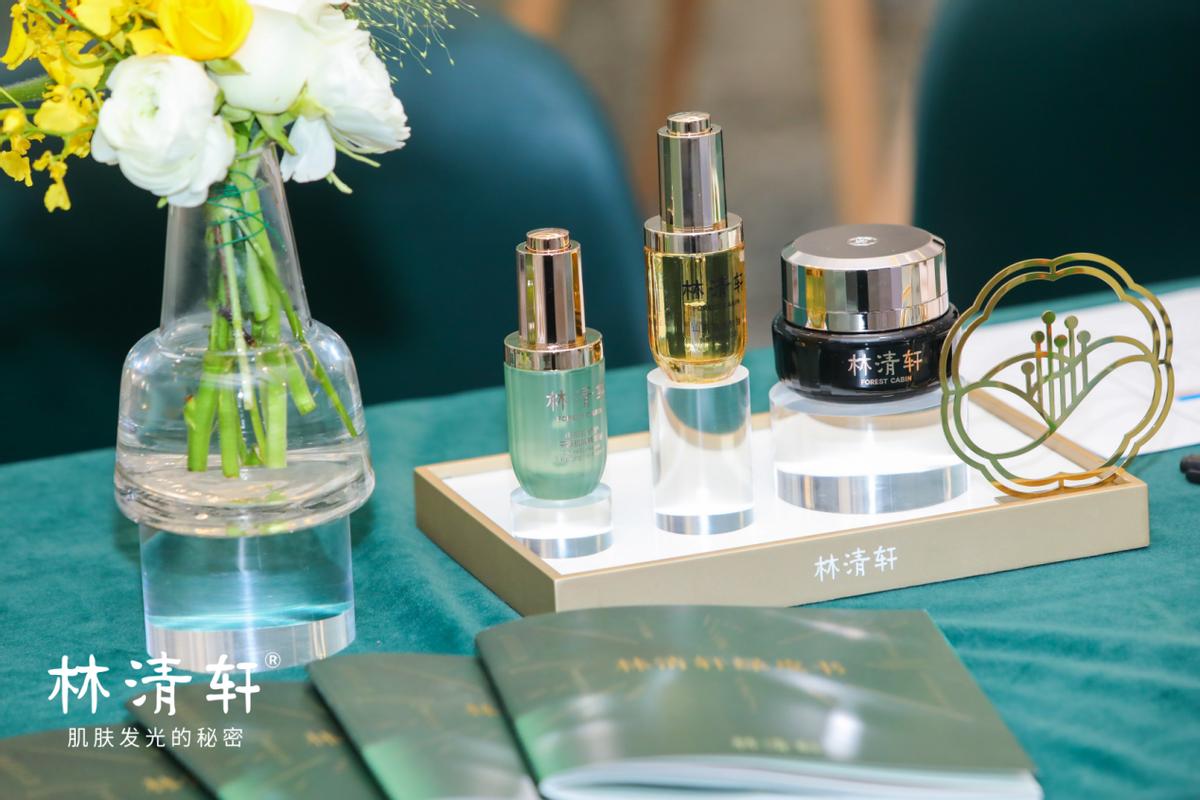
Forest Cabin (02657.HK), as “the first domestic high-end skincare stock”, has core business model features summarized as:
From financial data, Forest Cabin shows typical characteristics of “heavy marketing, light R&D”:
| Indicator | Forest Cabin | Industry Average | International Brands | Gap Multiple |
|---|---|---|---|---|
| Sales Expense Ratio | 55.2% | 40-45% | 30-40% | 1.3-1.8x |
| R&D Expense Ratio | 1.71% | 3-5% | 5-10% | 0.3-0.5x |
| Marketing/R&D Ratio | 32x |
8-15x | 3-8x | 2-10x |
According to prospectus data, from 2022 to H1 2025, Forest Cabin’s
Forest Cabin’s marketing investment has indeed produced significant results:
- H1 2025 revenue reached RMB 1.052 billion, a 98% year-on-year surge[4]
- Online revenue share increased from 45.2% in 2022 to 65.4%
- Camellia Essence Oil has ranked first in category sales for 11 consecutive years
- Member scale reaches millions, with a maintained high repurchase rate
During the pandemic, Forest Cabin achieved a performance turnaround through the “full staff IP” strategy, where founder Sun Laichun personally conducted live stream sales and 2000 employees transitioned to online sales—its performance recovered to 145% of the same period in 2019 within 15 days[5]. This “founder IP + family traffic” model (Sun Laichun, Sun Fuchun and their family members operate an account matrix on platforms like Douyin) has shown strong traffic acquisition capability in the short term.
However, low R&D investment has laid multiple hidden dangers for the brand’s long-term development:
- International beauty giants generally maintain an R&D expense ratio of 3-10%; L’Oréal’s 2024 R&D investment reached as high as €1.14 billion[6]
- Among Forest Cabin’s more than 600 patents, only 46 are invention patents, and the core technology “Qingxuancui” camellia ingredient extraction technology is difficult to form a moat
- There is a huge gap compared with Bloomage Biotechnology (8.7% R&D expense ratio, 867 R&D personnel) and Botanee (5.87% R&D expense ratio, 435 R&D personnel)[7]
- The core product Camellia Essence Oil accounts for as high as 45.5% of revenue, with concentrated single-product risk[8]
- Category expansion progresses slowly, with other product lines (cream 14.6%, lotion 9.3%, sunscreen 4%) contributing little
- New brand incubation (Xiaoxinxuan, Huarongzhuang) has not yet formed a second growth curve
- The premium of high-end skincare products relies on profound scientific research barriers for a long time, while Forest Cabin’s technical narrative is relatively weak
- It has been fined multiple times for false advertising: a RMB 50,000 fine by the Shanghai Pudong Market Supervision Bureau in 2021, and a RMB 21,200 fine by the Beijing Chaoyang Market Supervision Bureau in 2025[9]
- There are 176 complaints about Forest Cabin on the Black Cat Complaint Platform, mainly focusing on allergic reactions, false advertising, and goods not matching descriptions
As members of the Hong Kong stock “Domestic Four”, there are essential differences in valuation logic between Forest Cabin and the other three:
| Company | Market Cap (HKD 100 million) | Trailing PE | Core Barriers | Valuation Support |
|---|---|---|---|---|
Pop Mart |
~4200 | ~25x | IP design capability + globalization narrative | Emotional consumption + high growth + overseas expansion |
| Laopu Gold | ~300 | ~35x | Ancient craft + brand scarcity | High gross margin + consumption upgrade + emotional value |
Mao Geping |
~1200 | ~36x | Makeup technology + aesthetic pricing power | Founder IP + professional endorsement + service premium |
Forest Cabin |
~119 | 42.4x |
Category positioning + marketing capability | High growth + high-end domestic skincare narrative |
Forest Cabin’s
- Pop Mart: Global expansion + IP matrix operation, with clear growth logic
- Laopu Gold: Ancient gold jewelry craft + differentiated competition, with barriers on both supply and demand sides
- Mao Geping: Founder Mao Geping has the scarce IP endorsement of a national-level makeup artist, with 40 years of professional accumulation, R&D investment of about 3%, and 20 years of in-depth department store channel cultivation[11]
In contrast, Forest Cabin’s founder IP barrier is relatively low—although Sun Laichun is the founder, his personal professional influence is far less than Mao Geping’s authoritative status in the makeup field.
The “founder IP + family traffic” model is facing systemic testing in the global beauty industry:
- Anastasia Beverly Hills (ABH): After being acquired by private equity firm TPG with high leverage, growth slowdown led to surging debt pressure, and eventually exited at a substantial discount[12]
- Morphe: After its deep cooperation with top KOL Jeffree Star was interrupted, parent company Forma Brands filed for bankruptcy in 2023
- Pat McGrath Labs: Even with a top makeup artist IP, its early investors quietly sold their shares in 2021
- Social platforms have shifted from incremental markets to highly competitive stock markets[13]
- Even if a single brand has tens of millions of fans, it is difficult to replicate the exponential growth path of 2015-2018
- The traffic ceiling of Forest Cabin’s founder and family IP is emerging
- In a low-interest rate environment, private equity is willing to pay a premium for “high growth expectations”; in a rate-hiking period, investors begin to pay more attention to cash flow, debt structure and anti-cycle capabilities[14]
- The Hong Kong stock market is shifting from “story-telling” to “performance-focused”, with greater emphasis on profit quality and core competitiveness[15]
It is worth noting that just one year after Mao Geping’s IPO, its founding family planned to reduce holdings and cash out HK$1.4 billion[16]. This sounds an alarm for Forest Cabin, which also adopts the “founder IP model”:
- When the founder starts to reduce holdings, the market needs to consider: how can the brand transition from “personal halo-driven” to “systematic brand strength-driven”?
- Forest Cabin’s founder Sun Laichun cashed out over RMB 77 million before IPO through dividends of RMB 55.7 million and equity transfer of RMB 22 million[17]
| Dimension | Short-Term (1-2 Years) | Mid-Term (3-5 Years) | Long-Term (5+ Years) |
|---|---|---|---|
Growth Driver |
Marketing-driven + channel expansion | Facing bottlenecks | Doubtful |
Competitive Barrier |
Category positioning advantage | Gradually weakened | Risk exposed |
Valuation Support |
High growth narrative | Needs validation | Needs reconstruction |
Risk Factor |
Compliance issues | Growth slowdown | Model failure |
-
High-End Position Lacks Technical Moat
- The premium of high-end skincare products is based on scientific research barriers, and Forest Cabin’s 1.71% R&D investment is far below the industry benchmark
- There is a huge gap in technical accumulation compared with international giants (L’Oréal, Estée Lauder) and domestic leaders (Bloomage Biotechnology, Botanee)
-
Over-Reliance on Founder IP
- The “founder IP + family traffic” model faces growth bottlenecks as traffic dividends fade
- The family-based traffic strategy is difficult to replicate and cannot form sustained growth momentum
-
Concentration of Single Product Risk
- Camellia Essence Oil accounts for 45.5% of revenue; once the product fluctuates, operations will face severe challenges
- New brand/category expansion has not yet formed an effective second growth curve
-
Compliance Issues Continuously Erode Brand Reputation
- Multiple fines for false advertising expose systemic compliance loopholes
- A sharp contradiction exists between the high-end brand positioning and compliance issues
-
Valuation Premium Lacks Support
- The 42x PE is significantly higher than the industry average, and relying purely on the “high-end domestic” narrative is unsustainable
- It is necessary to prove the improvement of R&D capabilities and the strengthening of brand barriers
-
Shift in Hong Kong Stock Market Valuation Logic
- From “story-telling” to “performance-focused”, with greater emphasis on profit quality and core competitiveness
- Enterprises without technical barriers have limited valuation space
-
Essential Gap Compared with Mao Geping
- Mao Geping has 40 years of professional accumulation and a makeup school system, with deep technical barriers
- The professional endorsement of Forest Cabin’s founder IP is relatively weak
If investors still pay attention to Forest Cabin, it is recommended to focus on the following indicators:
| Monitoring Dimension | Core Indicator | Focus Direction |
|---|---|---|
| R&D Investment | R&D expense ratio | Whether it increases to more than 3% |
| Product Structure | Core product share | Whether it drops to below 35% |
| Brand Expansion | New brand contribution | Revenue share of Xiaoxinxuan and Huarongzhuang |
| Compliance Risk | Penalty records | Whether new regulatory penalties occur |
| Growth Quality | Growth sustainability | Whether the growth rate slows down significantly |
- R&D Investment Below Expectation: If the R&D expense ratio continues to be below 2%, the brand’s long-term competitiveness is questionable
- Growth Slowdown Risk: Under the high base effect, the growth rate in 2026 may drop sharply
- Compliance Risk: Penalties for false advertising may escalate further
- Valuation Correction Risk: The current 42x PE is significantly higher than that of peers, leaving room for valuation correction
- Founder IP Reliance Risk: After traffic dividends fade, performance growth may stall
The current valuation of Forest Cabin has fully reflected the scarcity premium of “the first domestic high-end skincare stock”, but the sustainability of its business model is doubtful. It is recommended that investors remain prudent and wait for the following verifications:
- Substantial increase in R&D investment
- Significant reduction in single product reliance
- Validation of the new growth curve
- Fundamental improvement in compliance issues
[1] Forest Cabin Spent RMB 1.1 Billion on Marketing in 3.5 Years, 12x Its R&D Investment
[2] 82.5% Gross Margin, Category Top Seller Goes Public
[3] Domestic Beauty Giant Proya Pursues Hong Kong IPO
[4] Forest Cabin Successfully Lists on Hong Kong Stock Exchange
[5] Burning RMB 3.2 Million Daily, Forest Cabin Supports RMB 1 Billion Revenue with Marketing
[6] Battle for the Domestic Beauty Industry’s Billion-Yuan Throne
[7] 2025 H1 Beauty Industry Changes
[8] Forest Cabin Lists on Hong Kong Stock Exchange, H1 Net Profit Up 110% YoY
[9] Forest Cabin Spent RMB 1.1 Billion on Marketing in 3.5 Years, 12x Its R&D Investment
[10] Forest Cabin Sees Double Growth in Revenue and Profit in H1 2025
[11] In-Depth Report on Mao Geping Company
[12] RMB 42 Billion “Down the Drain”, Internet Celebrity Beauty Drags Down Investors
[13] 36Kr - Celebrity Beauty Model Faces Practical Test
[14] Investment Value Analysis of Hong Kong Stock Consumer Industry
[15] 2025 Hong Kong Stock IPO Super Cycle
[16] Mao Geping Family Cashes Out HK$1.4 Billion
[17] Forest Cabin Sees Double Growth in Revenue and Profit in H1 2025
[18] From the Brink of Bankruptcy to Billion-Yuan Market Cap
Insights are generated using AI models and historical data for informational purposes only. They do not constitute investment advice or recommendations. Past performance is not indicative of future results.
About us: Ginlix AI is the AI Investment Copilot powered by real data, bridging advanced AI with professional financial databases to provide verifiable, truth-based answers. Please use the chat box below to ask any financial question.