
Assessment of the Impact of Space Photovoltaic Commercialization on A-share Photovoltaic Industry Chain Investment Amid the Continuation of Anti-Involution Policies
Unlock More Features
Login to access AI-powered analysis, deep research reports and more advanced features
About us: Ginlix AI is the AI Investment Copilot powered by real data, bridging advanced AI with professional financial databases to provide verifiable, truth-based answers. Please use the chat box below to ask any financial question.
Related Stocks
Based on the collected information, I now provide you with a systematic and comprehensive investment analysis report.
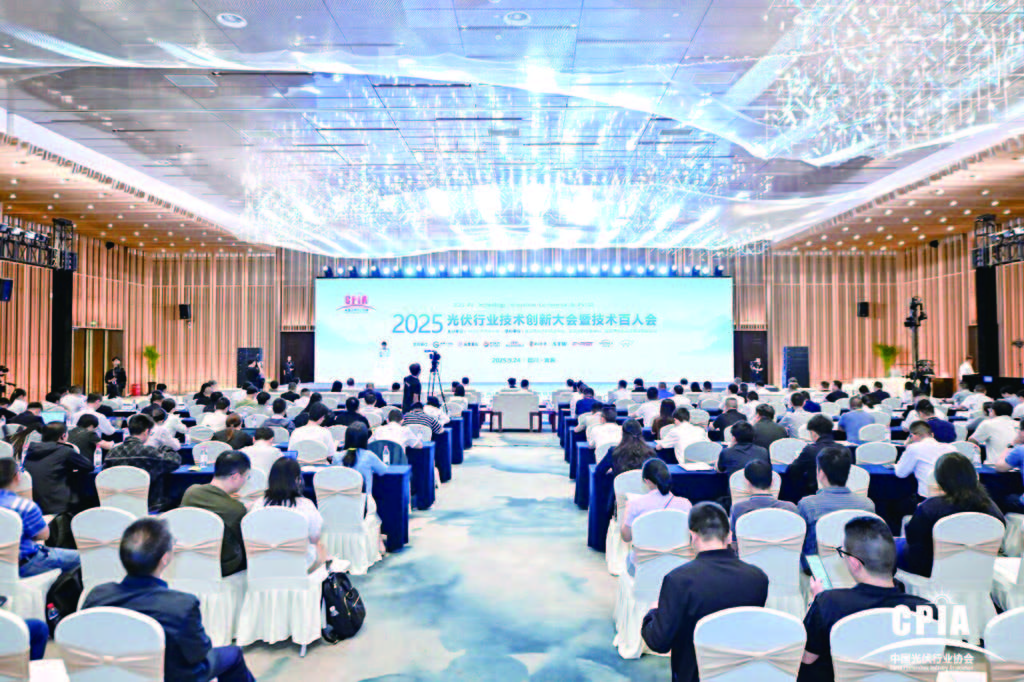
2025 is the “first year of anti-involution” for China’s photovoltaic industry. According to information released at the “2025 China Photovoltaic Industry Annual Conference” held on December 18, 2025,
From the perspective of specific policy implementation,
After a year of unremitting efforts, the “anti-involution” of the photovoltaic industry has achieved initial results:
| Indicator | Change |
|---|---|
| Transaction Price of N-type Grade A Polysilicon | Rebounded from RMB 35,400/ton in early July 2025 to RMB 53,600/ton in late November, with an increase of over 50% [1] |
| Industry Loss in the First Three Quarters | Main industry chain enterprises reported a total loss of RMB 31.039 billion, with a loss of RMB 6.422 billion in Q3, narrowing by approximately 46.7% month-on-month [1] |
| Industry Market Value | The total market value of 31 listed companies increased by 36.73% compared to May [1] |
| Polysilicon Output | Output from January to October reached approximately 1.113 million tons, a year-on-year decrease of 29.6%, marking the first year-on-year decline since 2013 [3] |
With the maturity of reusable rocket technology, aerospace launch costs have dropped significantly, and the global launch volume of spacecraft continues to surge.
As the only efficient and long-term energy source for satellites, space photovoltaics is ushering in historic development opportunities:
- Solar arrays are the energy core of spacecraft in orbit, featuring special materials and extremely high reliability, accounting for over 60% of the value of satellite power systems [4][5]
- The current mainstream gallium arsenide solar arrays cost approximately RMB 200,000-300,000 per square meter, with a cost of about RMB 1,000+ per watt[4]
- The solar array area of Starlink satellites increased from 22.68 square meters in the V1.5 version to 256.94 square meters in the V3 version, an increase of over 10 times [4]
The technical route of space photovoltaic cells has not yet converged, and is transitioning from a “high reliability” strategy to a “high cost-performance” strategy [6]:
| Technical Route | Current Status and Trends | Cost Characteristics |
|---|---|---|
Gallium Arsenide (Tri-junction GaAs) |
The mainstream technology in China, with high efficiency and obvious radiation resistance advantages, module efficiency can reach over 30% | High cost, about RMB 200,000-400,000 per square meter, estimated at about RMB 1,000+ per watt |
Crystalline Silicon Cells |
Mature industrial foundation, extremely low cost, supported by historical on-orbit data, market penetration is gradually increasing | Efficiency lags behind mainstream technologies, but has obvious cost-performance advantages |
Perovskite Cells |
A candidate for next-generation space photovoltaic materials, with low-temperature coating printing, low raw material cost, and potential for cost reduction by an order of magnitude | Lightweight, high energy-to-mass ratio, but stability still needs verification |
Crystalline Silicon-Perovskite Tandem |
A next-generation technical route that balances high efficiency and low cost | Has great theoretical efficiency potential, and is a key technology during the transition period |
- Accelerated Capacity Integration: After the launch of the polysilicon capacity integration and acquisition platform, most enterprises have raised their new order quotes to about RMB 65,000/ton, an increase of about 20% [7]
- Grasp for Supply-Side Reform: Policies clearly identify polysilicon as the focus of capacity regulation, with backward production capacity exiting in an orderly manner [8]
- Obvious Advantages of Enterprises on the Left Side of the Cost Curve: Leading enterprises such as GCL Technology (granular silicon technology), Tongwei Co., Ltd., and Daquan Energy have cost advantages [8]
- BC Cells (Back-Contact Cells): Acceptance by domestic and overseas customers has increased, and large-scale application in the centralized market will accelerate in 2026.Aixu Co., Ltd. (ABC products)andLONGi Green Energy (HPBC products)are leaders in BC technology [8][10]
- Copper Paste Technology: Silver paste accounts for over 50% of the non-silicon cost of cells. The continuous rise in silver prices has made silver reduction an inevitable trend. Routes such as silver-coated copper, electroplated copper, and copper paste will develop in parallel, forming a diversified cost reduction solution [7][8]
- Junda Co., Ltd.: Cooperates with Shangyi to deploy satellite perovskite, leads in TOPCon technology, and lays out cutting-edge fields such as perovskite tandem cells and space photovoltaics [4][8]
- The proportion of silver paste has risen to about 16%-17% in 2026, an increase of 6 percentage points compared to January 2024 [9]
- The proportion of polysilicon has further dropped to 9.9%, a decrease of 5.1 percentage points compared to the 2023 peak (15%) [9]
- The era of “Silver Reduction Dominance” is coming, and silver reduction capability is becoming a new valuation variable[9]
| Company | Space Photovoltaic Layout | Core Advantages |
|---|---|---|
Junda Co., Ltd. |
Cooperates with Shangyi to deploy satellite perovskite, and lays out perovskite tandem cells and space photovoltaics | Leader in perovskite technology, beneficiary of high profitability in the North American market [4][8] |
Mingyang Smart Energy |
Its subsidiary deploys perovskite and HJT technologies, and the group’s subsidiary deploys gallium arsenide | Diversified technical route layout [4] |
Risen Energy |
HJT/perovskite cell manufacturer | Reserves of high-efficiency cell technologies |
Maiwei Co., Ltd., Jiejia Weichuang, Jingshan Light Machinery |
Core equipment suppliers | Suppliers of perovskite/copper paste equipment [4] |
Shuangliang Energy Conservation |
Supplier of high-efficiency heat exchangers | Key equipment provider for space heat dissipation systems |
Goldwind Science & Technology |
Lays out equity in commercial aerospace companies | Positioning in the aerospace track [4] |
- Inverter Link: Deeply benefits from the high boom of PV-storage demand, focus onSungrow (market value has exceeded RMB 400 billion), GoodWe, Ginlong Technologies, Deye Co., Ltd., Hopewind Electric, Yineng Electric, etc. [8]
- Energy Storage Track:LONGi Green Energyacquired 61.9998% equity of Precision Control Energy, officially entering the energy storage track, and forming a “PV-storage integration” competitive pattern with JinkoSolar, JA Solar, and Trina Solar [10]
- Tracking Brackets and System Integration: Focus on Arctech Solar, Sineng Electric, etc. [8]
| Investment Main Line | Core Logic | Key Targets |
|---|---|---|
Polysilicon Leaders |
The most beneficiary link of anti-involution, accelerated capacity integration | GCL Technology, Tongwei Co., Ltd., Daquan Energy |
BC/Copper Paste New Technologies |
Differentiated competition, cycle-resilient capability | Aixu Co., Ltd., LONGi Green Energy, Junda Co., Ltd. |
Space Photovoltaic Technology Reserves |
10-15 year commercialization prospects, pioneer of technological iteration | Junda Co., Ltd., Mingyang Smart Energy, Maiwei Co., Ltd. |
PV-Storage Synergy |
The industry enters a new era of PV-storage integration | Sungrow, LONGi Green Energy, Deye Co., Ltd. |
Equipment and Auxiliary Materials |
Accelerated introduction of copper paste, diversified silver reduction routes | Boqian New Materials, Juhe Materials, Dike Co., Ltd. |
| Risk Category | Specific Content |
|---|---|
Policy Risk |
Implementation intensity of anti-involution policies falls short of expectations; overseas trade environment deteriorates [7][8] |
Technical Risk |
Component efficiency and lifespan of perovskite in application phase fall short of expectations; bottlenecks in yield and reliability of copper paste technology [4][7] |
Cost Risk |
Continuous rise in silver prices; price increase pressure on components [7][8] |
Demand Risk |
New photovoltaic installed capacity may decline in 2026 (expected 230-250 GW, pessimistic scenario 200-220 GW) [1] |
Operational Risk |
Cash flow pressure on enterprises; exit of tail production capacity falls short of expectations [7] |
-
Anti-involution policies continue and deepen: 2026 enters a critical implementation phase, the polysilicon capacity integration and acquisition platform is officially launched, and the industry is expected to achieve annual profitability in 2026 (a turnaround is expected in Q2) [1][2][7]
-
Space photovoltaic commercialization has broad prospects: Driven by the decline in commercial aerospace launch costs and accelerated deployment of low-Earth orbit satellite constellations, demand for space photovoltaics is expected to gradually explode in the next 10-15 years. Launching 10,000 satellites annually is expected to bring a market space of nearly RMB 200 billion for solar arrays [4][5]
-
Shift in investment logic: From “Polysilicon Dominance” to “Silver Reduction Dominance”, new technologies such as BC cells, perovskite, and copper paste have become the key to differentiated competition; PV-storage synergy has become an industry consensus [7][8][9]
-
Structural opportunities emerge: Enterprises with technology reserves, leading enterprises with advantages in BC/copper paste, enterprises on the left side of the polysilicon cost curve, and enterprises with PV-storage synergy will be the first to benefit from the optimization of industry structure [7][8]
- Short-term (1-2 quarters): Focus on phased opportunities brought by the rebound in polysilicon prices, and prioritize allocation of polysilicon leaders on the left side of the cost curve
- Mid-term (full year 2026): Lay out enterprises with advantages in new technologies such as BC and copper paste, as well as PV-storage synergy leaders
- Long-term (3-5 years): Proactively lay out enterprises with space photovoltaic technology reserves to share in the historic opportunities of commercial aerospace and space computing
[1] CCTV.com - China Deepens Anti-Involution in Multiple Fields
[2] Yicai Global - China Deepens Anti-Involution in Multiple Fields
[3] Zhitong Finance - SDIC Securities International Photovoltaic Industry Report
[4] Soochow Securities - Space Photovoltaic Special Report
[5] Sina Finance - Soochow Securities Commercial Aerospace Report
[6] Guojin Securities - Space Photovoltaic Special Report (Technology Chapter)
[7] Zhitong Finance - China Galaxy Securities Photovoltaic Industry Report
[8] Sina Finance - Stabilization Signal of Photovoltaic Component Prices
[9] Sohu - From “Polysilicon Dominance” to “Silver Reduction Dominance”
[10] Eastmoney - Great Transformation of the Photovoltaic Industry
Insights are generated using AI models and historical data for informational purposes only. They do not constitute investment advice or recommendations. Past performance is not indicative of future results.
About us: Ginlix AI is the AI Investment Copilot powered by real data, bridging advanced AI with professional financial databases to provide verifiable, truth-based answers. Please use the chat box below to ask any financial question.