
In-Depth Research Report on Brand Premium Strategy of China's High-End New Energy Vehicle Enterprises
Unlock More Features
Login to access AI-powered analysis, deep research reports and more advanced features
About us: Ginlix AI is the AI Investment Copilot powered by real data, bridging advanced AI with professional financial databases to provide verifiable, truth-based answers. Please use the chat box below to ask any financial question.
Related Stocks
Now I will conduct an in-depth analysis based on the collected data to present you with a complete research report on brand premium strategy.
At the start of 2026, China’s new energy vehicle market witnessed a wave of intensive launches of high-end “9 Series” models. According to information from the Ministry of Industry and Information Technology catalog, three heavyweight “9 Series” models have attracted widespread market attention [1]:
| Model | Brand | Vehicle Dimensions (mm) | Wheelbase (mm) | Powertrain Type | Pre-sale Price Range | Core Differentiators |
|---|---|---|---|---|---|---|
NIO ES9 |
NIO | 5365×2029×1870 | 3250 | BEV + 4WD | RMB 300,000-500,000 | Battery Swap Network, High-Tech Interior |
Smart World V9 |
HarmonyOS Intelligent Mobility | 5359×2009×1879 | 3250 | Extended Range + 1200km Range | RMB 350,000-500,000 | Huawei ADS, HarmonyOS Cockpit |
Zeekr 8X |
Zeekr | 5100×1998×1780 | 3069 | PHEV (1030kW) | RMB 300,000-450,000 | Performance & Handling, Technology Downsizing |
The strategic intent of these three models is highly consistent: to establish brand image through flagship products, penetrate the high-end market segment of RMB 300,000-500,000, and directly target the core price range of traditional luxury brands [1].
The rise of Chinese new energy vehicle brands is reshaping the luxury car market landscape. Data shows that traditional luxury brands faced unprecedented challenges in 2025 [4][5]:
- Some BMW models saw a maximum price cut of over RMB 300,000, triggering a chain reaction in the luxury car market
- The average price of BBA (BMW, Mercedes-Benz, Audi) has dropped to the RMB 200,000 range, with their brand premium capabilities significantly diminished
- Sales of second-tier luxury brands such as Lincoln and Maserati plummeted by over 90%
- Over 80% of luxury car owners who traded in their vehicles in 2025 chose domestic models
- AITO M9 captured 70% of the market share in the above-RMB 500,000 segment
This market change indicates that China’s high-end new energy vehicle enterprises are breaking through the competitive barriers of traditional luxury brands.
The construction of brand premium by China’s high-end new energy vehicle enterprises first relies on establishing clear “functional anchors” — that is, forming unique and irreplaceable brand associations in consumers’ minds [3]:
Huawei relies on intelligent driving technology (ADS 4.0 system) and ecological synergy (HarmonyOS in-vehicle system and mobile phone interconnection) to reshape luxury perception through “intelligent experience” with models such as AITO M9 and Smart World S7. Data shows that the cumulative sales of all AITO M9 models have reached 260,000 units, with a monthly delivery peak of over 15,000 units, making it the first Chinese brand model to maintain strong sales in the above-RMB 500,000 price segment [6][7]. More importantly, the AITO brand has formed an anomalous phenomenon of “the more expensive, the better the sales”, with the M8 and M9 continuously leading BBA models in the same class in the RMB 400,000-500,000 price range.
NIO takes battery swap networks and user community operations as its core differentiated advantages. To date, NIO has invested a total of RMB 18 billion in building charging and battery swap infrastructure, with 8,541 charging and battery swap stations built nationwide, providing over 96 million battery swap services cumulatively [2]. This one-of-a-kind energy replenishment experience has become the core competitiveness in the luxury pure electric vehicle market above RMB 300,000. In December 2025, deliveries of the all-new NIO ES8 exceeded 20,000 units, setting a monthly sales record for pure electric models above RMB 400,000, with an average price of over RMB 300,000 [8].
Li Auto accurately positioned itself in the “family luxury SUV” track, entering the market with large six-seat SUVs (L Series) and building a differentiated label through “range anxiety-free” (extended-range powertrain). Despite facing strong competition from the AITO M8 in 2025, Li Auto still holds a significant share in the family luxury sub-market.
Leveraging its consumer electronics brand heritage and “technology for all” strategy, Xiaomi’s SU7, with a 0-100km/h acceleration of 1.98 seconds and a pricing of RMB 529,900, broke the performance monopoly of million-yuan supercars and attracted a large number of young tech enthusiasts who value digital experiences [3].
As the world’s top-selling electric vehicle manufacturer, BYD has built a unique technological moat through a vertical integration model [9]:
- Independent R&D of Core Technologies: BYD independently develops and produces batteries, motors, and chips, with its signature Blade Battery becoming a core competitive advantage
- Distinct Cost Advantage: Vertical integration helps the enterprise reduce costs and reduce dependence on external suppliers
- Rapid Product Iteration: The R&D cycle for new models is only 18-24 months, much faster than the 4-6 years of Western automakers
BYD’s overseas sales exceeded 1 million units in 2025, with a target of 1.5-1.6 million units for 2026. Its Hungarian plant will officially start production in 2026, further improving its global production capacity layout [9].
Leading automakers generally adopt a multi-brand strategy to cover different high-end sub-markets:
| Automaker | High-End Brand | Representative Models | Price Range | Core Selling Points |
|---|---|---|---|---|
| BYD | Denza | Z9GT, D9 | RMB 330,000-420,000 | Yi Sanfang Technology, Luxury GT |
| BYD | Yangwang | U8, U9 | RMB 1,000,000+ | Emergency Floating, Yunjian-X |
| NIO | NIO | ES8, ES9 | RMB 400,000-500,000 | Battery Swap Service, User Community |
| Huawei | AITO | M8, M9 | RMB 400,000-550,000 | Huawei Intelligent Driving, HarmonyOS Cockpit |
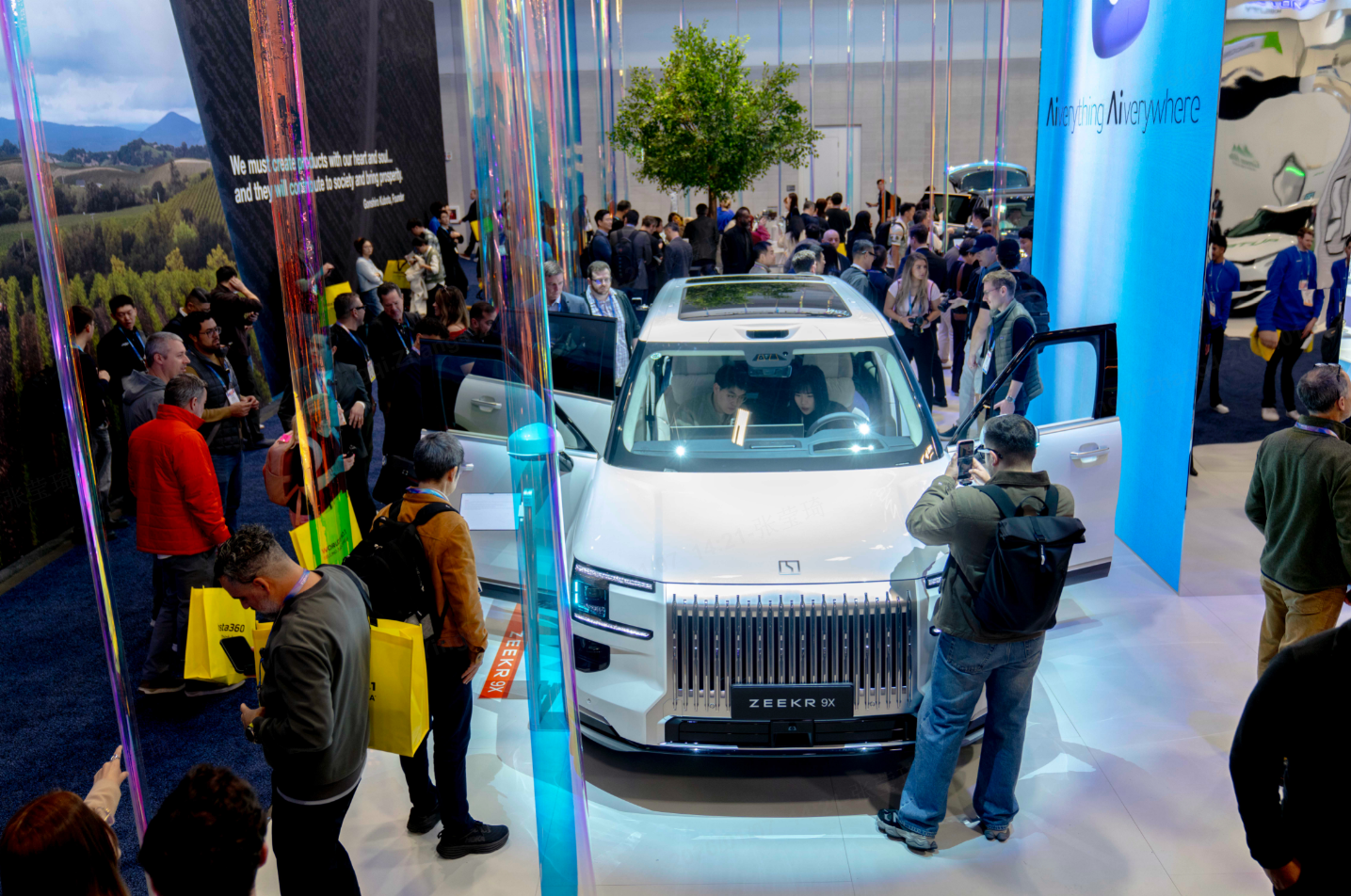
| Zeekr | Zeekr | 9X, 8X | RMB 300,000-500,000 | Performance & Handling, SEA Architecture |
The launch of the NIO ES9 marks the continuation and upgrade of NIO’s “Flagship Product Strategy” [1]:
- Size Advantage: 5365mm length, 3250mm wheelbase, positioned as a full-size pure electric SUV, directly competing with AITO M9 and Zeekr 9X
- Powertrain Configuration: Front/rear motors with maximum power of 180/340kW, ternary lithium battery + electric 4WD system
- Technology Inheritance: Expected to adopt the same cutting-edge technologies as the ET9, with an interior design oriented towards business scenarios
- Market Expectation: If it can form a synergy with the ES8 (monthly sales of 20,000-30,000 units), it will consolidate NIO’s position in the high-end SUV market
NIO’s current market capitalization is approximately USD 11.27 billion, and its stock price is under pressure (a year-on-year increase of only 14.29%, and a three-year decline of 59.69%) [2]. The company is still in a loss-making state (net profit margin of -31.46%), and the sustainability of its brand premium capability remains to be verified by the market.
As the first MPV under HarmonyOS Intelligent Mobility, the Smart World V9 carries Huawei’s mission to break through in the luxury MPV market [1]:
- Huawei Technology Debut: New-generation DLP projection headlights + dynamic welcome light carpet, all-new Huawei ADS hardware
- Range Anxiety-Free: 115kW 1.5T engine, CLTC combined range of over 1200km
- Cockpit Experience: Latest HarmonyOS cockpit, second-row rotating seats, on-board oxygen generator, and other luxury configurations
- Brand Endorsement: Huawei’s technology and brand influence provide strong support for the product
The RMB 500,000-class luxury MPV market has long been dominated by joint-venture brands such as Toyota Alphard and Mercedes-Benz V-Class. The Smart World V9 is expected to reshape the market landscape with its intelligent advantages.
The Zeekr 8X adopts a “Youth Version of 9X” strategy, expanding the market through a younger positioning while maintaining core technical capabilities [1]:
- Powertrain Inheritance: Same 205kW 2.0T engine + single-speed DHT + three-motor combination as the Zeekr 9X, with a maximum power of 1030kW
- More Compact Size: 5100mm length, 3069mm wheelbase, offering a 5-seat version, more suitable for household scenarios
- Differentiated Positioning: Covers the 5/6-seat mid-to-large PHEV SUV market, complementing the 9X
The analysis in the article points out that unique differentiated advantages such as high-level intelligent driving and battery swap networks are the key for automakers to win competition in the high-end market [1]. This judgment is highly consistent with market data:
| Differentiated Element | Representative Enterprise | Competitive Effect |
|---|---|---|
| Battery Swap Network | NIO | 8,541 battery swap stations nationwide, single swap takes less than 3 minutes, forming a unique experience closed-loop |
| High-Level Intelligent Driving | Huawei ADS | Leading urban NOA experience, forming “intelligent luxury” brand perception |
| Vertical Integration | BYD | Strong cost control capability, rapid product iteration |
| Ecological Synergy | Huawei/Xiaomi | Mobile phone-in-vehicle system-home interconnection, forming user stickiness |
However, the window period for technological advantages is constantly shortening. When once “unique skills” become industry standards, technological premium capabilities will be eroded [3]:
- In the field of intelligent driving, the experience gap between XPeng’s urban NOA, Huawei’s ADS 3.0, and Li Auto’s urban intelligent driving is constantly narrowing
- In the field of electrification, core indicators such as 800V high-voltage platforms, fast charging technology, and range capabilities are gradually leveling off among various brands
To boost sales in the mid-to-low-end market, some brands rapidly downsize core technologies originally equipped in high-end models. While this can indeed achieve sales growth in the short term, it will directly erode the technological scarcity and value perception of high-end models in the long run. The success of XPeng MONA M03 (high-level intelligent driving downsized to the RMB 150,000 segment) has brought about the dilemma of “low-end models saving sales, high-end models facing sluggish demand” [3].
Brand value is the core competitiveness in the high-end automotive market, and it is also the biggest shortcoming of independent brands currently [3]:
- Brands such as Mercedes-Benz, BMW, Rolls-Royce, and Bentley have accumulated over time and formed a deep moat in terms of brand history, cultural heritage, and quality reputation
- The essence of consumers purchasing high-end luxury cars is to buy the brand stories, cultural connotations, and circle identity behind them
Most independent brands started in the mid-to-low-end market, and the labels of “affordable, cheap, cost-effective” have taken shape in consumers’ minds. Reversing this perception is far more difficult and slower than technological breakthroughs.
Industry insiders judge that there are two core factors affecting the competitive trend in 2026 [5]:
China’s high-end new energy vehicle enterprises are exploring diversified overseas strategies [9]:
| Market Region | Representative Enterprise | Strategy Key Points |
|---|---|---|
| Europe | BYD, NIO | Localized production (Hungarian plant), battery swap network layout |
| Southeast Asia | BYD | Local plants in Thailand and Indonesia, leveraging tax incentives |
| Latin America | BYD | Brazilian plant in production, penetrating North America through the USMCA |
| Middle East/Nordic | Yangwang | Establishing high-end image, over 30% of orders come from non-Chinese users |
- In 2026, the new energy vehicle purchase tax policy will be adjusted from full exemption to 50% exemption
- In overseas markets, EU carbon emission regulations and tariff policies are becoming stricter, and US trade protectionism is on the rise
- Traditional luxury brands are accelerating their electrification transformation, with Volkswagen, Toyota, etc., launching dedicated electric platforms
- New forces such as Tesla, NIO, and XPeng are accelerating their global layout
Based on the above analysis, the “9 Series” strategy of China’s high-end new energy vehicle enterprises is expected to break through the competitive barriers of traditional luxury brands under the following conditions:
- Achieve leadership in specific sub-markets through unique differentiated advantages (battery swap, high-level intelligent driving)
- The success of the AITO M9 and M8 has proven the feasibility of Chinese brands in the above-RMB 500,000 market
- The NIO ES8 and ES9 are expected to replicate this success in the RMB 400,000-500,000 pure electric market
- Continuous technological innovation is required to maintain differentiation and avoid the homogenization trap
- Long-term investment in brand building and user operation is essential
- Localized operation capabilities in the global market determine the height of brand internationalization
- Strengthen Differentiated Anchors: Continue to invest in unique areas such as battery swap networks and high-level intelligent driving to build a technological moat
- Tiered Product Strategy: Avoid indiscriminate downsizing of core technologies to protect the technological scarcity and value perception of high-end models
- Shape Brand Stories: Upgrade from product brands to lifestyle brands to build emotional identity and circle identity
- Global Localized Operation: Develop differentiated strategies based on different market characteristics, focusing on breaking through with a high-end image in European and American markets
[1] 2026 Opening Blockbuster! BYD Song Ultra, NIO ES9, Smart World V9, Zeekr 8X. EV Commune. https://www.eet-china.com/mp/a466407.html
[2] NIO Company Overview. Jinling AI Financial Data Terminal. 2026-01-11
[3] Breaking Through and Moving Up: The Transformation War of Independent Brands from “Cost-Effectiveness” to “Value Competition”. CADAC. https://www.cadacac.com/detail.html?id=12945
[4] BYD Sells 1 Million Units Overseas, Will It Dominate the Rankings Again in 2026? Sohu Auto. https://m.sohu.com/a/973911567_157493
[5] Review of the Second Half of 2025 New Energy Vehicle Market: Fought Amidst Hustle, Anxiety, and Experience Upgrade. Jiemian News. https://m.jiemian.com/article/13852317.html
[6] Cumulative Deliveries of All AITO M9 Models Exceed 260,000 Units, Reshaping the High-End Market Landscape. Securities Times Network. https://www.stcn.com
[7] 2025 New Energy Dark Horse List (Blockbusters). First Electric Network. https://caifuhao.eastmoney.com/news/20260105212632668629010
[8] Another Major Milestone for NIO! The 1,000,000th Mass-Produced Vehicle Rolls Off the Line. Electric Home. https://cj.sina.cn/articles/view/5953189932
[9] BYD Sells 1 Million Units Overseas, Will It Dominate the Rankings Again in 2026? NetEase Auto. https://www.163.com/dy/article/KIOUDJVS052781GQ.html
Insights are generated using AI models and historical data for informational purposes only. They do not constitute investment advice or recommendations. Past performance is not indicative of future results.
About us: Ginlix AI is the AI Investment Copilot powered by real data, bridging advanced AI with professional financial databases to provide verifiable, truth-based answers. Please use the chat box below to ask any financial question.