
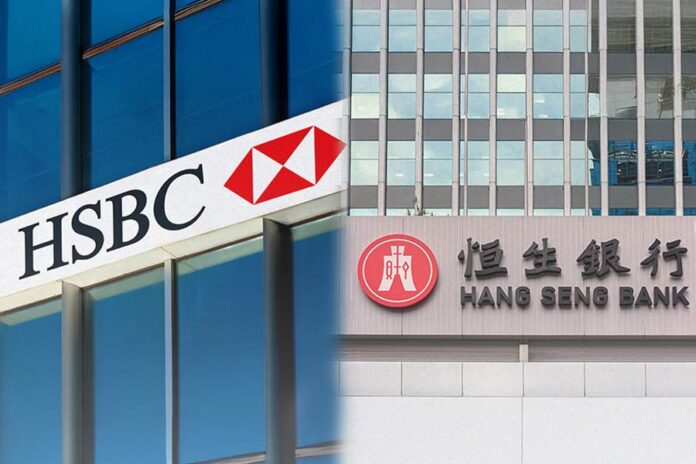
Analysis of the Impact of Hang Seng Bank's Privatization and Delisting on HSBC Holdings' Financial Metrics
Unlock More Features
Login to access AI-powered analysis, deep research reports and more advanced features
About us: Ginlix AI is the AI Investment Copilot powered by real data, bridging advanced AI with professional financial databases to provide verifiable, truth-based answers. Please use the chat box below to ask any financial question.
Related Stocks
Based on my analysis, the following is a detailed report on the impact of Hang Seng Bank’s privatization and delisting on HSBC Holdings’ financial metrics:
HSBC Holdings officially announced the privatization of Hang Seng Bank (stock code: 0011.HK) on October 9, 2025, making this one of the largest bank privatization transactions in Hong Kong’s financial history [1][2].
| Item | Details |
|---|---|
| Privatization Method | Scheme of Arrangement under the Hong Kong Companies Ordinance |
| Offer Price per Share | HK$155 (net of any future dividends declared or paid) |
| Relative Premium | Approximately 33% premium over the 30-trading-day average closing price of HK$116.49 prior to the announcement |
| Outstanding Shares to Be Acquired | Approximately 276.3 million shares |
| Total Transaction Consideration | Approximately HK$42.8265 billion |
| Financing Method | Funded by HSBC Asia Pacific using internal HSBC Group resources |
| Shareholder Approval Rate | 97.30% favorable votes at the general meeting, 85.75% favorable votes at the court meeting |
- Founded in 1933, with a history of nearly 93 years
- Acquired by HSBC Holdings in 1965
- Listed on the Hong Kong Stock Exchange for over 53 years, with its listing status formally terminated in January 2025 [1]
Market analyses suggest that HSBC Holdings’ decision to privatize Hang Seng Bank was primarily driven by the following operational pressures:
| Financial Metric | H1 2025 | H1 2024 | Change |
|---|---|---|---|
| Non-Performing Loan Ratio | 6.69% | 5.32% | +1.37 percentage points |
| Total Impaired Loans | HK$55 billion | - | - |
The significant rise in Hang Seng Bank’s non-performing loan ratio reflects substantial asset quality pressure in its real estate and commercial lending segments [1][2].
- Increase in Asset Size:The acquisition of Hang Seng Bank will directly increase the consolidated asset size of HSBC Holdings
- Goodwill Recognition:The difference between the acquisition price of HK$155 per share and the fair value of Hang Seng Bank’s identifiable net assets will be recognized as goodwill
- Incorporation of Asset Quality:Hang Seng Bank’s HK$55 billion in impaired loans will be incorporated into the HSBC Group’s asset quality metrics
- Cash Outflow:The payment of the approximately HK$42.8 billion consideration will consume an equivalent amount of cash and cash equivalents
- Reduction in Minority Interest:Upon completion of privatization, Hang Seng Bank will become a wholly-owned subsidiary of HSBC, and minority interest will be eliminated
- Impact on Capital Adequacy:Acquisition expenditure may put short-term pressure on the Common Equity Tier 1 (CET1) capital adequacy ratio
- Integration Costs:One-time expenses will be incurred for system integration, personnel adjustments, and brand restructuring following privatization
- Transitional Efficiency Loss:Business operational efficiency may decline during the integration period
- Increase in Loan Loss Provisions:Additional provisions need to be set aside for Hang Seng Bank’s impaired loans
- Synergies:Cost synergies can be achieved through shared technology platforms, back-office services, and customer resources
- Business Integration and Optimization:Eliminate duplicate business lines and optimize resource allocation in the Hong Kong market
- Improved Capital Efficiency:Full ownership enables more flexible allocation of Hang Seng Bank’s capital and liquidity
Assuming HSBC Holdings completes the acquisition for HK$42.8 billion, based on its approximately US$180 billion in Tier 1 capital as of the end of 2024:
| Metric | Estimated Impact |
|---|---|
| Reduction in CET1 Capital | Approximately US$5.5 billion (based on an exchange rate of US$1 = HK$7.8) |
| Short-Term Impact on CET1 Ratio | Decrease of approximately 30-50 basis points |
| Recovery Time | Expected to recover within 6-12 months through retained earnings |
- Cash Consumption:The payment of the privatization consideration will significantly reduce the liquid assets of HSBC Asia Pacific
- Liquidity Coverage Ratio (LCR):May face short-term pressure, requiring adjustments to asset structure
- Financing Needs:If internal resources are insufficient, market financing may be required to supplement liquidity
Based on market data analysis from 2024 to early 2026 [0]:
| Period | HSBC Holdings (HSBC) | Hang Seng Bank (0011.HK) |
|---|---|---|
| Total Return from Early 2024 to Early 2026 | +99.88% | +74.58% |
| 2024 Annual Return | +23.28% | +7.97% |
| 2025 Annual Return | +61.61% | +62.35% |
| Annualized Volatility | 24.40% | 30.61% |
| Sharpe Ratio (Rf=4%) | 2.65 | 1.58 |
- HSBC Holdings significantly outperformed Hang Seng Bank in 2024 (+23.28% vs +7.97%)
- The two stocks are highly correlated (correlation coefficient 0.8768), reflecting the linkage effect of being part of the HSBC Group
- HSBC Holdings has significantly better risk-adjusted returns
According to event study analysis [0]:
- 20 days prior to the event: HSBC +2.65%, Hang Seng Bank -1.89%
- 20 days after the event: HSBC +10.59%, Hang Seng Bank +8.08%
- The market reacted positively to the privatization news, with HSBC recording significant excess returns
- 20 days prior to the event: HSBC +5.79%, Hang Seng Bank +3.80%
- 20 days after the event: HSBC +15.30%, Hang Seng Bank +11.85%
- Following the completion of privatization, HSBC Holdings achieved even greater excess returns
Monthly performance of HSBC Holdings during the privatization period shows [0]:
| Month | Return | Notes |
|---|---|---|
| January 2025 | +6.00% | Month of privatization proposal announcement |
| February 2025 | +14.27% | Privatization advancement period |
| October 2025 | -1.28% | Official announcement of privatization |
| December 2025 | +10.55% | Expectation of privatization completion |
| Financial Metric | Short-Term Impact | Medium-to-Long-Term Impact | Assessment |
|---|---|---|---|
| Total Assets | ↑ Increase by approximately US$80 billion to US$100 billion | ↑ Sustained growth | Positive |
| Return on Equity (ROE) | ↓ Short-term pressure | ↑ Synergies take effect | Neutral to Positive |
| Capital Adequacy Ratio (CET1) | ↓ Decrease of 30-50 bps | → Gradual recovery | Short-term pressure |
| Non-Performing Loan Ratio | ↑ Incorporation of higher non-performing ratio | ↓ Risk resolution | Short-term Negative |
| Net Profit | ↓ Integration costs | ↑ Synergies | Negative initially, then positive |
| Liquidity Coverage Ratio | ↓ Short-term decline | → Return to normal | Short-term pressure |
| Earnings Per Share (EPS) | ↓ Increase in share count | ↑ Profitability improvement | Negative initially, then positive |
- Risk Management: Eliminate the drag of Hang Seng Bank’s asset quality issues on the listed company’s performance through privatization
- Resource Integration: Unify the Hong Kong business platform to improve operational efficiency
- Brand Unification: Strengthen the overall image of the HSBC brand in the Asia-Pacific region
- Capital Flexibility: Full ownership enables more flexible capital allocation and business restructuring
- Following the completion of privatization, HSBC will gain full access to Hang Seng Bank’s customer resources and market share
- Long-term synergies are expected to enhance overall profitability
- Eliminate compliance costs associated with listed company information disclosure obligations
- Integration processes may result in higher-than-expected costs
- Hang Seng Bank’s asset quality issues may be more severe than anticipated
- The competitive landscape of Hong Kong’s local banking industry may change
- Regulatory approval uncertainties (e.g., antitrust reviews)
It is recommended that investors focus on the following metrics in the coming quarters:
- Disclosure of integration costs in HSBC Holdings’ quarterly reports
- Changes in capital adequacy ratios
- Revenue contribution from Hong Kong regional operations
- Changes in non-performing loan ratios and provision coverage ratios
Hang Seng Bank’s privatization and delisting has
- Short Term: Capital adequacy ratio, liquidity, and profitability metrics face certain pressure. Integration costs and provisions for impaired loans will have a negative impact on profits.
- Medium to Long Term: As synergies materialize and resource integration is completed, HSBC Holdings is expected to gain stronger competitive advantages in the Hong Kong market, with profitability expected to improve.
- Strategic Value: This privatization is a key initiative for the HSBC Group to optimize its Asia-Pacific business layout and strengthen risk management. Its long-term strategic value outweighs short-term financial costs.
Market data shows that investors have generally adopted a positive attitude towards the privatization transaction, and HSBC Holdings achieved significant relative returns during the event period [0].
[1] Futu News - “93-year-old Hang Seng Bank ‘Bids Farewell’ to the Hong Kong Stock Market” (https://news.futunn.com/en/post/67131275/hengsheng-bank-at-93-years-old-says-farewell-to-the)
[2] Futu NiuNiu - “93-year-old Hang Seng Bank Says Goodbye to HKEX” (https://web.lbkrs.com/news/271959355)
[3] HSBC News & Media Releases - “HSBC proposes to privatise Hang Seng Bank by scheme of arrangement” (https://www.hsbc.com/news-and-views/news/media-releases)
[0] Jinling AI Financial Database - Historical price data and technical analysis of HSBC Holdings (HSBC) and Hang Seng Bank (0011.HK)
Insights are generated using AI models and historical data for informational purposes only. They do not constitute investment advice or recommendations. Past performance is not indicative of future results.
About us: Ginlix AI is the AI Investment Copilot powered by real data, bridging advanced AI with professional financial databases to provide verifiable, truth-based answers. Please use the chat box below to ask any financial question.