
Analysis of Muyuan Foods' Overseas Expansion Strategy: First Layout in Vietnam and Globalization Challenges
Unlock More Features
Login to access AI-powered analysis, deep research reports and more advanced features
About us: Ginlix AI is the AI Investment Copilot powered by real data, bridging advanced AI with professional financial databases to provide verifiable, truth-based answers. Please use the chat box below to ask any financial question.
Related Stocks
Based on collected information, this report provides a systematic analysis of Muyuan Foods’ overseas expansion process and the core challenges faced by pig breeding enterprises in globalization.
Muyuan Foods’ internationalization strategy began in 2024, featuring a dual-drive model of “technology export + capital collaboration” [1][2]:
| Time Node | Milestone Event |
|---|---|
| September 2024 | Signed a strategic cooperation agreement with Vietnam’s BAF Agriculture Joint Stock Company to provide technical services such as pig farm design and biosecurity |
| March 2025 | Established a wholly-owned subsidiary in Ho Chi Minh City, Vietnam, to deepen localized operations |
| May 2025 | Submitted an application for H-share issuance and listing to the Hong Kong Stock Exchange, with funds raised to be primarily invested in Southeast Asian markets |
| August 2025 | Signed a strategic cooperation agreement with Charoen Pokphand Group to carry out all-round cooperation in global layout |
Muyuan selected Vietnam as its first core overseas market mainly based on the following factors [2]:
-
Market Demand: Vietnam is among the top five pork-consuming markets globally, with pork production accounting for about 60% of local livestock meat output, and annual pig demand reaching 45-50 million head. Affected by African swine fever, local pig supply is tight, pork prices remain high for a long time, and there is an urgent need to improve breeding levels.
-
Technology Export: Muyuan has accumulated mature models and solutions in pig house operation and maintenance, odor management, and biological disease prevention and control during the African swine fever prevention and control period, which can help address local industry pain points.
-
Strategic Goals: The company plans to achieve 10% of its revenue from overseas operations within 3 years, and hedge against the risks of domestic industry cycle fluctuations through the dual-drive strategy of “stable domestic operations + breakthrough in overseas expansion” [1][2].
Significant differences exist in cultural customs, legal environments, and fiscal and taxation policies among different countries, so enterprises need to build management teams adapted to globalization. Specific aspects include [2]:
- Legal Compliance Risks: There are great differences in agricultural policies, environmental protection standards, and food safety regulations among countries; it is necessary to introduce finance, taxation, and legal experts, and establish in-depth cooperation with local firms and law firms
- Cultural Integration Barriers: Cross-border adaptation of management models and corporate culture requires a long run-in period
- Brand Awareness Building: It is necessary to refer to the localization strategies of enterprises such as Pop Mart and Mixue Ice Cream & Tea, and respect local consumption culture
This is one of the biggest challenges faced by pig breeding enterprises in globalization [3]:
- African Swine Fever Variant Strains: The prevention and control of weakly positive strains is more difficult, and traditional diseases such as foot-and-mouth disease and porcine reproductive and respiratory syndrome (PRRS) are still prevalent in certain regions
- Cross-border Transmission Risks: Cross-border movement of live pigs and pork products may introduce new pathogens
- Increased Costs: Enterprises need to continuously invest in biosecurity facilities, testing equipment, and personnel training; the epidemic prevention cost per pig has increased significantly compared to before 2018
- Alignment with International Standards: Different countries have different regulations on animal welfare and disease culling policies
Feed costs account for about 75% of total breeding costs, which is a core link in cost control [3]:
- High Dependence on Imported Soybeans: China is highly dependent on imported soybeans, with corn supply in tight balance, fully exposing the vulnerability of the feed grain supply chain
- Impact of International Geopolitics: With the intensification of international geopolitical games, the feed grain supply chain faces strategic passivity
- Localized Formula Adaptation: Muyuan needs to optimize formulas based on local feed raw material endowments in markets such as Vietnam, and technological localization adaptation is the key [2]
Against the background of African swine fever, successfully completing local pig breeding and sales is a major challenge at the core operation level [2]:
- Long Capacity Construction Cycle: It takes a long time from pig farm construction to pig slaughter and sales
- Difficulty in Localizing Talents: Breeding technicians and managers require long-term training
- Sales Channel Establishment: It is necessary to establish sales networks and brand channels that meet the characteristics of the local market
- Heavy Asset Investment: The self-breeding and self-raising model requires large upfront investment and has a long payback period
- Exchange Rate Fluctuation Risks: Overseas businesses involve multi-currency settlement, and exchange rate fluctuations affect profits
- Restrictions on Financing Channels: The financing cost of overseas projects is usually higher than that of the domestic market
By cooperating with local enterprises such as BAF and Charoen Pokphand Group, Muyuan has avoided the large upfront investment and operational risks required for independent construction of farms [2]:
- Export a complete set of technical solutions such as intelligent pig farm design and disease prevention and control
- Optimize the ventilation, temperature and humidity control systems of intelligent pig farms based on local climate and geographical conditions
- Introduce core technologies such as four-level air filtration and closed water and feed delivery to build a comprehensive disease prevention and control system
Muyuan has a R&D team of more than 6,400 people, and its R&D expenses reached RMB 921 million in the first half of 2025 [1]:
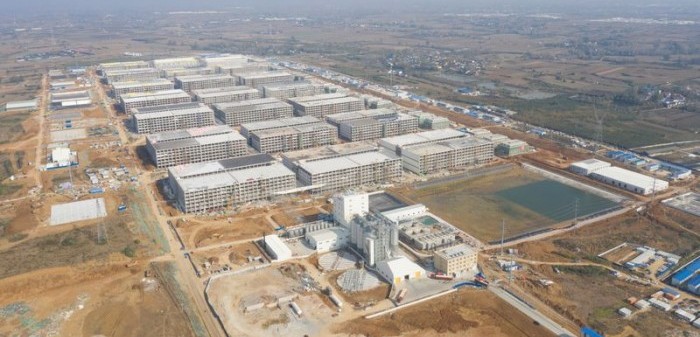
- Air-filtered pig houses solve disease prevention and control and odor problems
- Implemented the “Sky Net Project” to improve pig herd health
- The daily weight gain of pigs exceeds 870g, close to international levels
Through the H-share listing, Muyuan can obtain [1]:
- Financing channels in international capital markets
- Enhance international brand awareness
- Provide financial support for overseas business development
Muyuan Foods’ overseas expansion represents a new trend in the global layout of Chinese pig breeding enterprises. In terms of challenges, localization adaptation, disease prevention and control, and supply chain security are the three core risk factors. Through the light-asset model of “technology export + joint venture cooperation”, combined with strong R&D capabilities and cost advantages, Muyuan is exploring a differentiated overseas expansion path.
In the future, with the improvement of the comprehensive strength of Chinese breeding enterprises in technology, management, capital and other aspects, as well as the policy support for enterprises’ overseas layout in the “15th Five-Year Plan”, the internationalization process of the pig breeding industry is expected to accelerate. However, enterprises need to fully recognize the complexity of risks in global operations and establish a sound risk prevention and control system to gain an advantageous position in fierce international competition.
[1] Ebang Power - 《Interview with Muyuan CFO Gao Tong: Exploring Globalization, What Does Muyuan “Compete” For》(https://www.ebrun.com/20251003/606019.shtml)
[2] Dahe Net - 《First Stop in Vietnam: Pig Giant Opens Southeast Asian Market with Technology | Henan Enterprises’ Overseas Expansion Story》(https://5g.dahe.cn/news/202511152020928)
[3] MCR Consulting - 《Brief Analysis Report on Pig Breeding Industry》(http://chinamcr.com/report-jp/reportjp20251222.pdf)
Insights are generated using AI models and historical data for informational purposes only. They do not constitute investment advice or recommendations. Past performance is not indicative of future results.
About us: Ginlix AI is the AI Investment Copilot powered by real data, bridging advanced AI with professional financial databases to provide verifiable, truth-based answers. Please use the chat box below to ask any financial question.