
In-Depth Analysis of the Impact of BAIC ArcFox's Large-Scale Launch of L3 Autonomous Driving on BAIC BluePark's Valuation and Industrial Chain
Unlock More Features
Login to access AI-powered analysis, deep research reports and more advanced features
About us: Ginlix AI is the AI Investment Copilot powered by real data, bridging advanced AI with professional financial databases to provide verifiable, truth-based answers. Please use the chat box below to ask any financial question.
Related Stocks
BAIC BluePark, as a new energy vehicle listed company under BAIC Group, is one of the early domestic enterprises laying out intelligent connected vehicles. The company currently has a market value of approximately RMB 47.54 billion, with a current stock price of $8.53 (equivalent to about RMB 62), occupying an important position in the new energy vehicle sector of the A-share market [0].
From the perspective of market performance, BAIC BluePark’s stock price has shown a significant upward trend. As of January 10, 2026, the stock rose 2.16% in a single day, with a 6.23% increase in the past 5 days, a 13.28% increase in the past month, and a 20.82% increase in the past year [0]. This strong performance is directly related to the major breakthrough in L3 autonomous driving policies. Especially on December 16, 2025 (the day after MIIT announced that BAIC ArcFox obtained L3 access approval), BAIC BluePark’s stock price rose by the daily limit and drove the entire L3 concept sector to surge significantly [1][2].
From the perspective of financial indicators, BAIC BluePark is still in a stage of strategic losses:
| Indicator | Value | Interpretation |
|---|---|---|
| Price-to-Earnings Ratio (P/E) | -8.08x | Still in a loss state |
| Price-to-Book Ratio (P/B) | 22.78x | Relatively high, reflecting market expectations for the future |
| Return on Equity (ROE) | -153.23% | In a loss state |
| Net Profit Margin | -29.30% | Operations have not yet turned profitable |
| Current Ratio | 0.69 | Weak short-term solvency |
From a financial analysis perspective, the company exhibits the characteristics of a “conservative accounting policy”. The high depreciation/capital expenditure ratio indicates that the enterprise is in a period of heavy investment. With the gradual maturity of intelligent technologies and the advancement of large-scale production, the profitability is expected to improve significantly within the next 2-3 years [0].
On December 15, 2025, the Ministry of Industry and Information Technology (MIIT) officially approved the L3 conditional autonomous driving function product access applications for BAIC New Energy’s ArcFox Alpha S (L3 Version) and Changan Deepal SL03. This is the first time in China that national-level safety certification and compliance endorsement have been completed for vehicle products with high-level autonomous driving functions in accordance with the “Administrative Measures for the Access of Intelligent Connected Vehicle Manufacturers and Products” [1][2].
On December 23, 2025, Beijing witnessed a historic moment – the first batch of special license plates for L3 highway autonomous driving vehicles (Jing AA0001Z, Jing AA0733Z, Jing AA0880Z) were officially installed on ArcFox Alpha S (L3 Version) models [3].
On January 10, 2026, BAIC ArcFox Alpha S (L3 Version) officially launched large-scale road operation trials, with the first batch of vehicles entering designated areas of the Beijing-Taipei Expressway, Northern Airport Expressway, and Daxing Airport Expressway [1]. This marks that China’s autonomous driving industry is accelerating into the stage of large-scale commercial implementation.
Professor Deng Zhidong, Department of Computer Science and Technology, Tsinghua University, and Director of the Visual Intelligence Research Center of the Institute for Artificial Intelligence, pointed out: “This will undoubtedly have a positive and far-reaching impact on the rapid development of China’s high-level intelligent driving industry, especially on technology verification, policy improvement, and market competition pattern. Once L3 is popularized and consolidated, it will become the ‘ChatGPT moment’ for the development of China’s autonomous driving industry” [2].
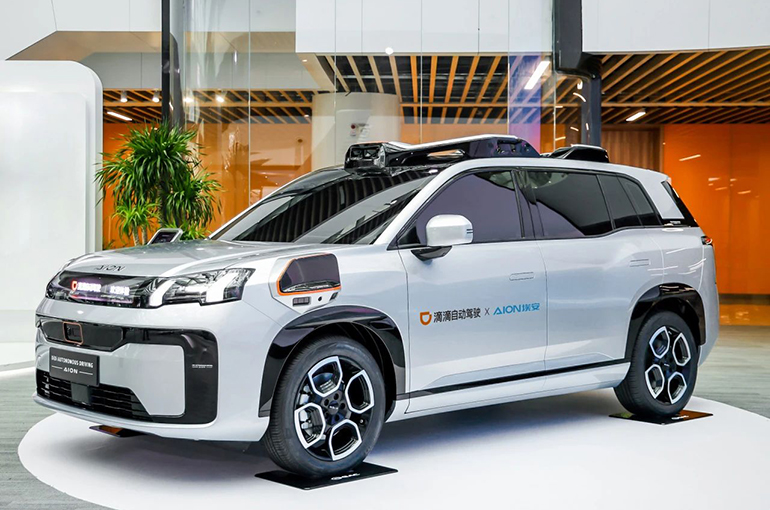
BAIC ArcFox Alpha S (L3 Version) demonstrates strong competitive advantages in terms of technology:
- Perception System: Equipped with 34 high-performance sensors, including 3 lidars, 6 millimeter-wave radars, and 13 cameras, building a super perception fusion system [2][3]
- Decision-Making System: Adopts Huawei Qiankun Intelligent Driving ADS 3.3 System, with strong environmental perception and decision-making planning capabilities
- Safety Redundancy: Realizes full-link safety redundancy backup in seven core systems including perception, decision-making, steering, braking, communication, power supply, and positioning. When a single system fails, the backup system can take over within milliseconds [2]
- Test Verification: Completed a cumulative equivalent test mileage of over 800,000 kilometers, undergoing strict function tests and traffic regulation compliance tests [2]
This “full-stack redundancy, fully kitted” technical solution enables BAIC ArcFox to establish a significant technological moat in the field of L3 autonomous driving.
The acquisition of L3 autonomous driving access approval has triggered a significant re-rating of BAIC BluePark’s valuation:
- Technology Premium: As one of the first automakers to obtain national-level L3 access approval, BAIC BluePark has gained a scarcity premium
- Growth Expectations: The L3 operation trial will be launched in the first quarter of 2026, with a clear commercialization path [2]
- Cooperation Value: Huawei’s empowerment has enhanced intelligent competitiveness
- Policy Dividend: Local regulations (Beijing, Wuhan, etc.) have been introduced one after another, providing institutional guarantees for L3 commercialization [1]
According to technical analysis reports, BAIC BluePark is currently in a clear upward trend [0]:
| Technical Indicator | Signal | Interpretation |
|---|---|---|
| MACD | bullish | Sufficient upward momentum |
| KDJ | bullish | Short-term strength |
| RSI | Overbought risk | Possible short-term correction |
| Trend Judgment | Upward trend (to be confirmed) | Support level at $8.15, resistance level at $8.70 |
Commercialization of L3 autonomous driving marks a fundamental shift in the competition logic of the automotive industry:
- The competition logic of the “three major components” (engine, gearbox, chassis) in the traditional fuel vehicle era has been completely broken
- Intelligent driving capability has become the core selling point of high-end models
- Intelligent driving experiences such as City NOA have become the main way for automakers to break through user perception and gain recognition [4]
- Electrification is a semi-finished product; intelligence is the ultimate subversion of traditional century-old fuel vehicles
- Automobiles have evolved from simple means of transportation to intelligent terminals that continuously generate data and provide services [4]
Autonomous driving commercialization will restructure the value distribution of all links in the automotive industry chain:
| Segment | Value Change | Benefit Logic |
|---|---|---|
| Lidar | Significant growth | L3 models are usually equipped with 3-6 lidars, with a single-vehicle value of approximately $500-$1,000 [3] |
| High-Precision Maps | Increased demand rigidity | Dynamic high-precision maps require minute-level update capabilities |
| High-Computing-Power Chips | Value doubled | 200-400 TOPS high-computing-power chips become standard |
| 4D Millimeter-Wave Radars | Strong demand | Core component of fusion perception solutions |
| Wire-Controlled Chassis | Volume and price both increase | Wire-controlled braking systems and redundant EPS become standard [3] |
- Shift from “one-time vehicle sales” to a continuous monetization model of “hardware + software + services”
- Software services such as OTA upgrades have become new profit growth points
- The value of data assets has become prominent, and automakers with closed-loop capabilities in algorithms, chips, and data will dominate [4]
- The Robotaxi business model is maturing rapidly, with China’s Robotaxi penetration rate expected to exceed 30% by 2030 [4]
- Derived business formats such as intelligent transportation operation and maintenance, and data services are emerging
- The auto insurance model may be restructured due to changes in autonomous driving liability division [3]
Many brokerage research institutions have given optimistic expectations for the autonomous driving market:
| Time Node | Expected Target |
|---|---|
| 2026 | First year of L3 commercialization, penetration rate of L3 and above autonomous driving passenger vehicles achieves a breakthrough [1] |
| 2030 | Penetration rate of L3 and above autonomous driving passenger vehicles reaches 10% [1] |
| 2030 | Robotaxi penetration rate in smart travel exceeds 30% [4] |
Market calculations show that the Robotaxi-related fleet sales and maintenance market alone has a scale of hundreds of billions of yuan, while the entire high-level autonomous driving industrial chain is expected to reach a trillion-yuan scale [3].
| Investment Type | Characteristics | Representative Enterprises |
|---|---|---|
| Full-Stack Self-Developed Type | Strong closed-loop capabilities in algorithms, chips, and data | XPeng, Li Auto, Leapmotor, Changan [4] |
| Huawei-Empowered Type | Rapidly improve product strength with the help of Huawei’s ecosystem | BAIC ArcFox, Seres, JAC [4] |
| Traditional Transformation Type | Has scale advantages and channel resources | BYD, SAIC, GAC |
| Segment | Focus Direction | Potential Enterprises |
|---|---|---|
| Domain Controllers | Leading enterprises with market share exceeding 30% | Desay SV, Keboda [3] |
| Wire-Controlled Chassis | Suppliers with technical advantages | Baolong Technology, Jingwei Hengrun [4] |
| Lidar | Obtained fixed-point cooperation with head automakers | Hesai Technology, RoboSense [3] |
| HUD/Intelligent Cockpit | Upgraded to system solutions | Foryou Group [4] |
| Driving Factor | Degree of Impact | Sustainability |
|---|---|---|
| First-Batch L3 Access Qualification | ★★★★★ | Long-term (first-mover advantage) |
| Huawei Technical Empowerment | ★★★★★ | Long-term (deepening cooperation) |
| Policy Support Intensity | ★★★★☆ | Medium-term (continuous dividends) |
| Commercialization Implementation Progress | ★★★★☆ | Short-to-medium-term verification |
| Performance Improvement Expectations | ★★★☆☆ | Long-term (2-3 years) |
Based on different scenario assumptions, the valuation target price forecast for BAIC BluePark is as follows:
| Scenario | Target Price | Valuation Enhancement Range | Core Assumptions |
|---|---|---|---|
| Conservative Scenario | RMB 10.0 | +17% | L3 trial progresses smoothly but large-scale expansion is slow |
| Neutral Scenario | RMB 12.5 | +46% | L3 commercialization exceeds expectations, Huawei cooperation deepens |
| Optimistic Scenario | RMB 15.0 | +75% | Robotaxi operation is successful, performance inflection point emerges |
| Risk Type | Specific Content | Response Strategy |
|---|---|---|
| Technical Risk | Safety and reliability of autonomous driving systems | Continuous test verification, redundancy design |
| Policy Risk | Regulation progress falls short of expectations | Track policy dynamics, actively participate in standard formulation |
| Competition Risk | Increase in Huawei’s cooperative automakers, intensifying competition | Deepen differentiated cooperation, enhance brand strength |
| Financial Risk | Sustained losses, capital pressure | Control costs, diversify financing channels |
| Market Risk | Consumer acceptance falls short of expectations | Market education, experiential marketing |
- BAIC BluePark’s valuation re-rating is already underway: The first-batch L3 autonomous driving access qualification has brought a significant scarcity premium to BAIC BluePark, and the strong stock price performance reflects the capital market’s recognition of this major positive development.
- Technological Leadership + Huawei Empowerment Form Core Competitiveness: BAIC ArcFox Alpha S (L3 Version) is equipped with Huawei Qiankun Intelligent Driving ADS 3.3 System and full-link redundancy design, enabling the company to establish a technological moat in the field of high-level autonomous driving.
- 2026 is a Key Verification Period: The company plans to launch L3 operation trials in specific scenarios in the first quarter of 2026, which will test technological maturity and business model feasibility, and is a key verification point for whether valuation can continue to rise.
- Industrial Chain Value Restructuring Brings Systematic Opportunities: Autonomous driving commercialization not only changes the competitive position of a single automaker, but also restructures the value distribution of the entire automotive industry chain. Upstream links such as lidar, chips, and wire-controlled chassis will usher in mass production dividends.
| Investor Type | Recommended Strategy |
|---|---|
| Long-Term Value-Oriented | May accumulate on dips to share the dividends of intelligent transformation |
| Trend-Oriented Investors | May participate in rebound rallies when the stock price pulls back to the support level |
| Conservative Type | Wait for the results of the L3 operation trial to be clear before making decisions |
[0] Jinling AI Financial Database - BAIC BluePark (600733.SS) Company Overview, Real-Time Quotes, Financial Analysis, Technical Analysis
[1] Wall Street CN - “China’s Autonomous Driving ‘Truly Hits the Road’, Launching a New Battle in the Global AI Era” (https://wallstreetcn.com/articles/3761708)
[2] Securities Times - “First Batch of L3 Models ‘Compliant on the Road’, Can China’s Autonomous Driving Welcome the ‘ChatGPT Moment’?” (https://www.stcn.com/article/detail/3559473.html)
[3] Securities Market Weekly - “China’s L3 Autonomous Driving Era Officially Begins! First Batch of License Plates Land, Trillion-Yuan Market Ignited” (https://cj.sina.cn/articles/view/1648948823/6248f65702709u37q)
[4] Ajian Securities Research Institute - “L3 Vehicle Product Access, Intelligent Vehicle Development Accelerated” Industry Research Report (https://pdf.dfcfw.com/pdf/H3_AP202512311812060266_1.pdf)
Insights are generated using AI models and historical data for informational purposes only. They do not constitute investment advice or recommendations. Past performance is not indicative of future results.
About us: Ginlix AI is the AI Investment Copilot powered by real data, bridging advanced AI with professional financial databases to provide verifiable, truth-based answers. Please use the chat box below to ask any financial question.