
Analysis of Supply Chain Vertical Integration Strategy for Xiaomi Auto's Self-Developed V6s Plus Electric Motor
Unlock More Features
Login to access AI-powered analysis, deep research reports and more advanced features
About us: Ginlix AI is the AI Investment Copilot powered by real data, bridging advanced AI with professional financial databases to provide verifiable, truth-based answers. Please use the chat box below to ask any financial question.
Related Stocks
Based on information obtained from searches, I will provide you with an in-depth analysis report on the supply chain vertical integration strategy for Xiaomi Auto’s self-developed V6s Plus electric motor.
Xiaomi Auto adopts a multi-level technical route of “core self-development + joint development + supply chain collaboration” in the electric drive system field. According to the latest data [1], Xiaomi has formed a complete product matrix of three generations of electric motors:
| Motor Model | Technical Features | Supplier/Self-Development Status | Mass Production Time |
|---|---|---|---|
V6 |
21000rpm, 299PS | Jointly developed by Inovance Technology / United Automotive Electronics | Mass-produced |
V6s |
21000rpm, 374PS | Jointly developed by Inovance Technology / United Automotive Electronics | Mass-produced |
V6s Plus |
22000rpm, 288kW/528N·m | Xiaomi self-developed and self-manufactured (gradual replacement) | From 2025 onwards |
V8s |
27200rpm, 578PS/425kW | Xiaomi fully self-developed and self-manufactured | To be installed in vehicles in 2025 |
Xiaomi Auto’s supply chain vertical integration strategy shows distinct phased characteristics:
- V6 and V6s motors are jointly developed and supplied by Inovance Technology and United Automotive Electronics [2]
- Batteries are supplied in collaboration with CATL, BYD (Fudi Battery)
- Relies on mature supplier systems during the initial capacity ramp-up phase
- The new-generation SU7 full range is equipped with the V6s Plus super motor [3]
- Xiaomi’s self-developed and self-manufactured V6s Plus motor will be introduced subsequently
- Mass production and vehicle installation of the V8s motor will be advanced simultaneously
As a core component of new energy vehicles, electric motors account for approximately
- Eliminates intermediate supplier profit margins, achieving cost internalization
- Referring to data from industry benchmark BYD, its vertical integration model has achieved a gross margin of 21.02%, an increase of 0.63 percentage points compared to the previous year [5]
- Xiaomi Auto’s gross margin in Q1 2025 has increased to 18.5%, and with the rising proportion of self-developed motors, the gross margin is expected to improve further
- Xiaomi has accumulated substantial R&D resources in the electric motor field, forming technical reserves
- The technical white paper released in December 2023 shows that Xiaomi has applied for more than 680 vehicle-related patents, of which nearly 280 have been authorized [6]
- R&D results can be reused across multiple models, with diminishing marginal costs
- Xiaomi has supply chain management experience and traffic advantages in the consumer electronics field [7]
- Through self-development of core components, it transforms from “ordering based on production” to “producing based on demand”
- Has stronger bargaining power with non-core component suppliers
| Cost Item | Current Status | Expected After Vertical Integration | Optimization Range |
|---|---|---|---|
| Motor Procurement Cost | External procurement + joint development | Self-developed and self-manufactured | Expected reduction of 15-25% |
| Quality Control Cost | Dual supplier management | Single-source controllable | Reduced management costs |
| Delivery Response Cost | Supplier scheduling | Internal coordination | Shorter delivery cycle |
| Technical Iteration Cost | Joint development coordination | Independent and controllable | Accelerated iteration efficiency |
Xiaomi Auto’s delivery volume shows a rapid growth trend:
- Full-year 2024 deliveries: 136,854 units[8]
- Q1 2025 deliveries: 75,869 units, with an average of over 25,000 units per month [9]
- July 2025 deliveries exceeded 30,000 units, with a full-year 2025 target of350,000 units[10]
As sales scale expands, the unit fixed cost of self-developed motors will be significantly amortized, forming a positive cycle of “scale expansion → cost reduction → competitiveness enhancement”
In the traditional model, motor delivery relies on external suppliers’ capacity scheduling, which carries the risk of supply bottlenecks. After building its own motor production lines, Xiaomi can achieve:
- Independent and controllable production planning: Dynamically adjust capacity according to order demand
- Optimized inventory management: Implement JIT (Just-In-Time) production model to reduce inventory costs
- Convenient quality traceability: Full-process traceability to improve quality control efficiency
| Indicator | Supplier Model | Self-Developed and Self-Manufactured Model |
|---|---|---|
| Typical Delivery Cycle | 6-8 weeks | 2-4 weeks |
| Emergency Response Capability | Weak | Strong |
| Capacity Flexibility | Limited | Adjustable |
Xiaomi Auto is building a “multi-base + high flexibility” capacity system:
- Annual capacity of 150,000 units, monthly capacity has reached approximately 24,000 units [11]
- Equipment utilization is near the limit, and capacity optimization is underway
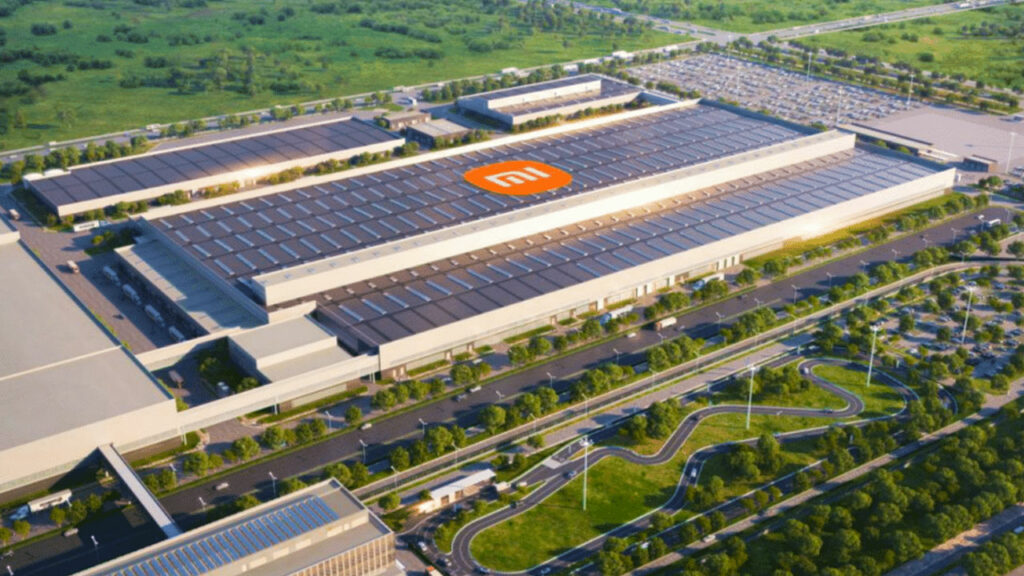
- Annual capacity of 150,000 units, fully put into production at the end of July 2025 [12]
- Mainly produces the YU7 model, with an initial monthly capacity target of 8,000 units
- Covers an area of approximately 530,000 square meters, with a building area of approximately 400,000 square meters
- Full-year 2025 delivery target: 350,000 units
- 2026 sales are expected to exceed 800,000 units[13]
- Construction of the Phase III plant has been put on the agenda
- Self-manufacturing of the V6s Plus motor can eliminate external supplier capacity bottlenecks
- Provides core component support for popular models such as the YU7 and SU7
- Supports the 2025 delivery target of 350,000-500,000 units
The self-developed motor strategy significantly enhances the risk resistance capability of Xiaomi Auto’s supply chain:
- Reduced reliance on single suppliers: Although Inovance Technology is an important partner, self-developed production lines form a backup
- Responding to raw material fluctuations: Price fluctuations of rare earth permanent magnet materials can be absorbed through internal coordination
- Guaranteed delivery commitments: The waiting period after SU7 order locking in 2024 was approximately 25-30 weeks, and self-manufactured motors can effectively shorten the waiting time
- Xiaomi’s super motor V8s has achieved a globally leading speed of 27200rpm, with a power density of10.14kW/kg[14]
- The conversion efficiency of the self-developed SiC electronic control module reaches 99.85%
- The next-generation motor adopts the “laser in-situ curing” process, with a laboratory speed exceeding 35000rpm
- The fully self-developed model eliminates coordination costs in joint development
- Five core technologies including electric motors, batteries, large die-casting, intelligent driving, and intelligent cockpit form a synergistic effect
- The “Titan Alloy” self-developed by Xiaomi’s materials team has been mass-produced, with a yield strength of 960MPa
- The YU7 full range launched in June 2025 is equipped with the V6s Plus motor, with a maximum horsepower of 690PSand 0-100km/h acceleration of3.23 seconds[15]
- The high-performance technology label strengthens brand premium capability
- Compared with new power car companies, Leapmotor increased its gross margin from 0.5% to 8.4% through self-development and self-manufacturing [16]
- Xiaomi’s self-developed motor strategy can replicate this successful path to form a cost advantage
- Against the backdrop of price wars, cost advantages are directly converted into profit margins and room for price reductions
- Xiaomi’s “full ecosystem of human-vehicle-home” forms a unique competitive advantage
- The intelligent cockpit and Surge OS provide a seamless interconnected experience
- Self-developed motor technology provides a hardware foundation for product performance
- Xiaomi Auto delivered 137,700 units in 2024, with market performance exceeding expectations
- The 2025 target is 350,000-500,000 units, and market share is expected to increase significantly
- The YU7 enters the 200,000-400,000 RMB SUV market (annual scale exceeding 3 million units), opening a second growth curve
- Transform from “purchaser” to “competitor + collaborator”
- Imposes stricter technical standards and cost requirements on Tier 1 suppliers
- Referring to BYD’s model, build industrial chain discourse power from “mine to vehicle”
- Xiaomi’s motor technical parameters have become industry benchmarks
- Has discourse power in cutting-edge fields such as 800V high-voltage platforms and SiC power devices
- The penetration rate of 800V high-voltage architectures was 6.9% in 2024, and is expected to exceed 35% by 2030 [17]
- Xiaomi Auto’s Q1 2025 revenue reached 18.6 billion RMB[18]
- Gross margin was 26.4%, operating loss narrowed to 300 million RMB, exceeding market expectations
- The vertical integration strategy enhances investors’ confidence in profit prospects
The current vertical integration in the new energy vehicle industry presents three typical models:
| Automaker | Integration Model | Core Characteristics | Gross Margin |
|---|---|---|---|
BYD |
Full industrial chain vertical integration | Full coverage from mine to vehicle | 21.02% |
Tesla |
Core technology self-development + ecosystem control | Software-defined vehicle | 17.9% |
Xiaomi |
Core self-development + open collaboration | Tier 0.5 platform model | 18.5% |
- Unlike BYD’s radical full integration, Xiaomi adopts a steady path of “collaboration first, self-development later”
- In the V6 and V6s stages, joint development with Inovance Technology accumulated technical experience
- Self-development and self-manufacturing were achieved in the V6s Plus stage, reducing transformation risks
- Adopts a Tier 0.5 collaboration model for non-core components, joining forces with platform-based suppliers such as Tuopu Group
- Significantly shortens R&D and mass production cycles, realizing “the fast fish eats the slow fish” [19]
- Self-development of core links guarantees competitiveness, while open collaboration in non-core links ensures efficiency
- Xiaomi’s ecosystem investment experience in the consumer electronics field can be replicated in the automotive field
- The intelligent cockpit, IoT devices, and vehicles form synergy
- User base and brand influence drive traffic to the automotive business
- Approximately 75% of BYD’s components are self-produced, 17% come from Chinese suppliers, and 8% come from overseas [20]
- Xiaomi’s current self-development ratio is low, but technical reserves and patent layout are advancing rapidly
- Xiaomi’s gross margin (18.5%) is lower than BYD’s (21.02%), but there is significant room for improvement
- Tesla adopts a “self-development + open patents” strategy
- Xiaomi has a late-mover advantage in the intelligent cockpit field
- The two converge on technical routes such as 800V high-voltage platforms and SiC applications
- Leapmotor achieved significant gross margin improvement through self-development and self-manufacturing
- Xiaomi has stronger capital strength and greater R&D investment
- Xiaomi’s brand influence and channel advantages are more prominent
- Self-developed motors require strict quality verification from R&D to mass production
- Although Xiaomi’s V8s motor has been mass-produced, the yield ramp-up of the self-manufactured V6s Plus production line still takes time
- 50% of the supply chain information circulated online in 2024 was false, reflecting the risk of information asymmetry [21]
- 800V high-voltage platforms have become the industry mainstream, and the application of SiC devices is accelerating
- Competition in next-generation motor technologies (such as axial flux motors, rare earth-reduced motors) is fierce
- Continuous increase in R&D investment creates short-term pressure on profits
- Competition in the new energy vehicle market is fierce, and price reduction pressure continues
- Xiaomi Auto’s ASP (238,301 RMBin Q1 2025) is in the mid-to-high-end segment [22]
- The cost advantage of self-developed motors needs to be converted into pricing flexibility
- The long waiting period (25-30 weeks) after SU7 order locking may lead to partial order loss
- The YU7’s pricing (253,500-329,900 RMB) needs to balance cost performance and profits
- Economic downturn may affect sales in the mid-to-high-end market
- The Phase II plant will be put into production at the end of July, with stable mass production to be achieved in August, which is a tight schedule with heavy tasks
- The Phase III plant has a long construction cycle, and capacity bottlenecks will still exist in the short term
- Supply chain vertical integration requires time for integration
- The automotive business team is expanding rapidly, increasing management complexity
- The stability of core technical talents is crucial
- Resource coordination between the mobile phone business and automotive business needs to be balanced
- The self-developed V6s Plus motor is expected to reduce procurement costs by 15-25%
- The release of scale effects will further amortize unit costs
- Gross margin is expected to rise from 18.5% to over 20%
- Self-manufactured motors eliminate external supplier capacity bottlenecks
- Supports the 2025 delivery target of 350,000 units
- Lays the foundation for the 2026 target of 800,000 units
- Core technologies are independently controllable, and technical iteration is accelerated
- Differentiated competitive advantages are prominent, and brand premium capability is improved
- Industrial chain discourse power is enhanced, and supplier relationships are reshaped
- Yield ramp-up progress of the self-manufactured V6s Plus production line
- Capacity release rhythm of the Phase II plant
- Market performance of the YU7 after launch
- Application proportion of self-developed motors in more models
- Continuous price wars in the new energy vehicle industry
- Capacity ramp-up fails to meet expectations
- Technical iteration lags behind competitors
- Macroeconomic downturn affects consumer demand
[1] 2024 Xiaomi Auto Industrial Chain Analysis and New Product Launch Panoramic Insight Report
[2] Xiaomi Refutes “Supply Chain List”: At Least 50% is False!
[3] Xiaomi Auto Launches New-Generation Pure Electric Sedan SU7
[4] Xiaomi Auto’s Supply Chain Layout Unfolds Gradually
[5] 12 Automakers Earned 32.4 Billion More Last Year: What Signal Does This Send?
[6] Xiaomi Auto Series 4: Xiaomi YU7 Launched
[7] Xiaomi Automotive Analysis and Review: Ecosystem Win-Win, Promising Model
[8] Xiaomi Auto’s August Deliveries Exceed 30,000 Units
[9] Results Announcement for the Three Months Ended March 31, 2025
[10] Lei Jun Announces Xiaomi Auto’s New Achievements!
[11] Rushing Towards 350,000 Deliveries! Xiaomi Auto’s Phase II Plant Project Passes Acceptance
[12] Xiaomi Auto’s Phase II Plant Project Passes Acceptance
[13] Xiaomi Auto Series 4: Xiaomi YU7 Launched, Officially Entering the 1-N Phase
[14] Technical Parameters of Xiaomi Super Motor V8s
[15] Xiaomi YU7 Full Range Equipped with V6s Plus Motor
[16] Leapmotor Improves Performance Through Self-Development and Self-Manufacturing
[17] 2025 New Energy Vehicle 800-1000V High-Voltage Platform and Supply Chain Panoramic Research Report
[18] Xiaomi Corporation Q1 2025 Results Announcement
[19] Four Types of Sources for Xiaomi Auto Components
[20] Disassembly of BYD’s Vertical Integration Model
[21] Xiaomi Refutes Supply Chain Rumors
[22] Xiaomi Auto ASP and Gross Margin Data
Insights are generated using AI models and historical data for informational purposes only. They do not constitute investment advice or recommendations. Past performance is not indicative of future results.
About us: Ginlix AI is the AI Investment Copilot powered by real data, bridging advanced AI with professional financial databases to provide verifiable, truth-based answers. Please use the chat box below to ask any financial question.