
Geely Automobile (0175.HK) U.S. Market Strategic Investment Analysis Report
Unlock More Features
Login to access AI-powered analysis, deep research reports and more advanced features
About us: Ginlix AI is the AI Investment Copilot powered by real data, bridging advanced AI with professional financial databases to provide verifiable, truth-based answers. Please use the chat box below to ask any financial question.
Related Stocks
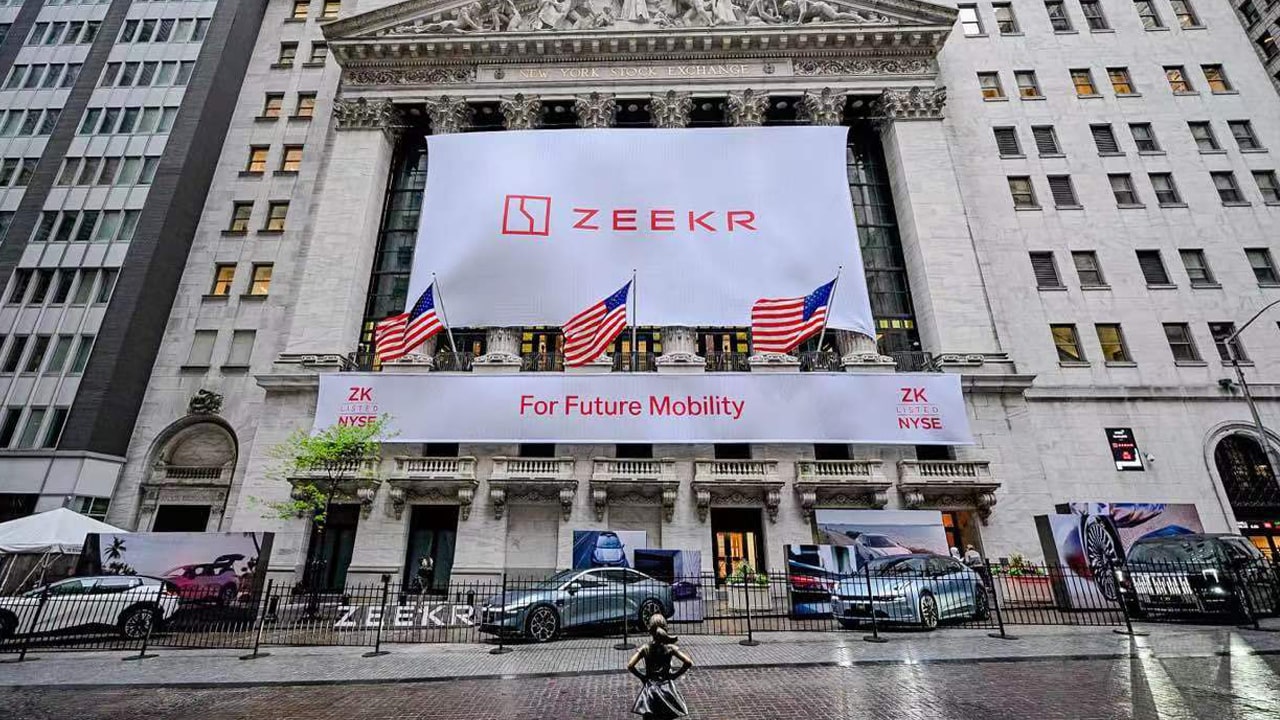
Based on comprehensive collected data, I now present an in-depth analysis report on the strategic feasibility and investment value of Geely Automobile entering the U.S. market via Zeekr and Lynk & Co.
Ash Sutcliffe, Global Communications Director of Geely Holding Group, clearly stated in an interview with Autoline Network during the 2026 International Consumer Electronics Show (CES 2026) that the company is actively evaluating the feasibility of entering the U.S. market, and may issue an official announcement
Sutcliffe emphasized: “We are looking at all global markets where we can expand, and the biggest question for us is when and where to enter the U.S.” [2]. He noted that Zeekr and Lynk & Co, the two premium brands, are most likely to enter the U.S. market first, as they have already proven their product competitiveness in the European market [1][4].
According to Geely Automobile’s first-half 2025 performance data, the group’s strong sales performance lays a solid foundation for U.S. market expansion:
| Brand | H1 2025 Sales | 2026 Global Sales Target | YoY Growth |
|---|---|---|---|
| Zeekr | 90,740 units | 300,000 units | +3% |
| Lynk & Co | 154,137 units | 400,000 units | +22% |
| Geely Core Brand | 615,895 units | - | - |
Group Total |
Over 3,000,000 units |
3,450,000 units |
- |
The Zeekr brand has set an industry record for “the fastest to reach 500,000 pure electric vehicle sales”, and its luxury MPV model Zeekr 009 maintains a leading position in its segment across multiple markets [5]. Lynk & Co’s cumulative sales have exceeded 1,500,000 units, with nine models ranking among the top 10 in their respective segments [5][6].
The product lines of Zeekr and Lynk & Co demonstrate significant technological competitiveness. The two plug-in hybrid crossover models, Zeekr 7X and Lynk & Co 08, showcased at CES 2026 represent industry-leading standards [4]:
- Zeekr 7X: Adopts an 800V high-voltage platform, supports 400kW fast charging technology, and is at the forefront of the industry in charging efficiency and power performance
- Lynk & Co 08: Shares a platform with the heavily revised Volvo XC70, is equipped with a large-capacity battery, has an electric driving range of up to 200 km (124 miles), and delivers excellent overall performance from its plug-in hybrid system
These technological features enable Zeekr and Lynk & Co products to meet U.S. consumers’ expectations for high-performance electric vehicles, and they have a distinct advantage particularly in the “affordable premium luxury” segment [3].
Geely Automobile has gained valuable U.S. local manufacturing capabilities through its acquisition of Volvo Cars. Volvo’s plant in Ridgeville, South Carolina, has accumulated investments of $1.3 billion and has become a manufacturing hub for plug-in hybrid vehicles in the North American market [4]:
| Model | Production Status |
|---|---|
| Volvo EX90 | In Production |
| Polestar 3 | In Production |
| Volvo XC60 | Scheduled to start production by end of 2026 |
Localized production at Volvo’s plant allows Geely to effectively avoid high tariff barriers while meeting the requirements for electric vehicle tax incentives under the Inflation Reduction Act (IRA) [1][2]. Sutcliffe stated that as a major shareholder of Volvo, utilizing its U.S. plant facilities is a “natural choice” [1].
Zeekr and Lynk & Co have established solid market positions and brand recognition in the European market [5][6]:
- Zeekr has over 70 stores in more than 40 countries and regions worldwide, and ranks first in electric vehicle sales in markets such as Hong Kong and Kazakhstan
- Lynk & Co has 7 Co-Club experience centers and 58 dealers in Europe, and continues to expand into new markets outside Europe (such as the Dominican Republic and Laos)
- Both brands achieved significant growth in overseas sales in the first half of 2025
The success in the European market proves that Zeekr and Lynk & Co products can meet the quality requirements and design preferences of Western consumers.
The U.S. government has significantly increased tariffs on Chinese electric vehicles to over 100%, effectively blocking the possibility of directly importing electric vehicles from China [1][2]. According to the latest data, some Chinese electric vehicle products face a comprehensive tariff of up to 245% [7]. This means:
- Direct import of Zeekr and Lynk & Co models from China is economically unfeasible
- Localized production (KD semi-knockdown or CKD complete knockdown assembly) becomes a necessary option
- Initial investment scale and time frame will increase significantly
The continued tension in China-U.S. relations brings uncertainty to Geely’s U.S. market strategy. The U.S. government has imposed strict scrutiny on Chinese technology companies, especially those involving data security and autonomous driving technology [1]. During CES, Sutcliffe stated that Geely is already familiar with global data security standards such as GDPR (General Data Protection Regulation) and CCPA (California Consumer Privacy Act), and will ensure that its products comply with future U.S. regulations related to software and data sovereignty [1].
Despite their success in Europe, Zeekr and Lynk & Co still need to build brand awareness and a complete sales service network in the U.S. market. Geely has not yet announced plans for U.S. dealer network construction, which means years of upfront investment will be required to achieve large-scale sales [3].
| Strengths | Challenges |
|---|---|
| • Leading 800V high-voltage fast charging technology | • High tariff barriers (over 100%) |
| • Global brand synergy effect | • Geopolitical uncertainty |
| • Resources from Volvo’s U.S. manufacturing facility | • Data security regulatory scrutiny |
| • Cost-effective product positioning | • Long dealer network development cycle |
| • Proven success in the European market | • U.S. consumer brand awareness |
| Opportunities | Threats |
|---|---|
| • U.S. electric vehicle market growth (15.2% CAGR) | • Tesla’s solid leading position (41% market share) |
| • Market gap in the “affordable premium” segment (CNY 250,000-350,000) | • Competition from local automakers such as GM and Ford |
| • Localized production incentives under the Inflation Reduction Act (IRA) | • Policy risks may tighten further |
| • Brand endorsement from Volvo/Polestar | • Simultaneous entry of Chinese peer competitors |
The U.S. electric vehicle market is in a period of rapid growth, with an expected CAGR of 15.2% from 2023 to 2030 [8]. Data from Q3 2025 shows that despite short-term fluctuations, the overall penetration rate of electric vehicles continues to rise [9][10].
| Brand/Manufacturer | Q3 2025 Market Share | 2025 Sales | YoY Change |
|---|---|---|---|
| Tesla | 40.9% | Approximately 180,000 units | Market share declining |
| General Motors | 15.2% | 169,887 units | +48% |
| Ford | 7.0% | 84,113 units | Lagging behind GM |
| Hyundai/Kia | Approximately 7% | Approximately 80,000 units | Sales decline |
| Honda | 5.1% | 22,236 units | Rapid growth |
Notably, Tesla’s market share has dropped from 75% in 2022 to approximately 41% in 2025, indicating that market competition is intensifying [9][10]. This provides market space for new entrants.
- Chevrolet Equinox EV: 57,945 units (+100.7%)
- Ford Mustang Mach-E: 51,620 units (-0.2%)
- Hyundai Ioniq 5: 47,039 units (+6%)
- Honda Prologue: 39,194 units (+18.7%) [10]
These data indicate strong U.S. market demand for reasonably priced electric SUVs, which is exactly the core product positioning of Zeekr and Lynk & Co.
The U.S. electric vehicle market exhibits the following competitive characteristics:
- Tesla leads but share is declining: Despite remaining the market leader, Tesla faces dual pressure from traditional automakers and new entrants
- Traditional automakers accelerate transformation: Giants such as GM, Ford, and Hyundai are increasing investment in electrification, but progress varies
- Price competition intensifies: The Chevy Equinox EV has achieved success with a pricing of approximately $35,000, proving that cost-effectiveness is a key factor
- Segment market gap: There are relatively limited options for high-quality electric SUVs in the CNY 250,000-400,000 price range
The product positioning of Zeekr and Lynk & Co perfectly fits this market opportunity — providing “affordable premium” options that surpass traditional joint-venture brands in quality and technical configuration, while being priced lower than Tesla and luxury brands [3].
| Indicator | Value | Industry Comparison |
|---|---|---|
| Stock Price | $17.19 | - |
| Market Capitalization | $173.3 billion | - |
| Price-to-Earnings (P/E) Ratio | 10.33x | Below industry average |
| Price-to-Book (P/B) Ratio | 1.77x | Reasonable range |
| Price-to-Sales (P/S) Ratio | 0.55x | Significantly undervalued |
| ROE | 17.38% | Excellent performance |
| Net Profit Margin | 5.41% | Stable |
| Scenario | Fair Value | Upside vs. Current Price |
|---|---|---|
| Conservative Scenario | $95.18 | +453.7% |
| Base Scenario | $119.16 | +593.2% |
| Optimistic Scenario | $182.63 | +962.4% |
| Probability-Weighted Value | $132.32 | +669.8% |
DCF valuation shows that Geely Automobile has a potential upside of approximately
Based on financial analysis results [11]:
- Financial Stance: Neutral, the company maintains balanced accounting practices
- Debt Risk: Medium risk
- Cash Flow: Free cash flow of RMB 23.475 billion, healthy cash flow position
- Profitability: ROE reaches 17.38%, indicating strong shareholder return capability
| Period | Revenue | Earnings Per Share (EPS) | Performance |
|---|---|---|---|
| Q2 FY2025 | $97.51 billion | $0.42 | Sustained growth |
| Q4 FY2024 | $141.37 billion | $0.60 | Historical high |
| Q2 FY2024 | $115.24 billion | $1.12 | - |
| Q4 FY2023 | $117.35 billion | $0.41 | - |
Based on technical analysis results [11]:
- Current Trend: Sideways consolidation (range of $16.95-$17.43)
- Beta Coefficient: 0.83 (lower volatility relative to the S&P 500)
- Key Indicators:
- MACD: No crossover signal, biased bullish
- KDJ: K value 31.9, D value 48.0, indicating short-term oversold
- RSI: Normal range
The current stock price is at the bottom of the recent trading range, and technical indicators suggest a potential short-term rebound opportunity.
- Valuation Repair Potential: The current P/E ratio is only 10.3x, significantly lower than historical averages and U.S. peers. If the U.S. market strategy progresses, valuation is expected to improve significantly
- U.S. Market Increment: Successful entry into the U.S. market will open up new revenue sources, expected to contribute 10-15% incremental revenue
- Product Competitiveness: Zeekr and Lynk & Co have significant advantages in technology and cost-effectiveness
- Scale Effects: Zeekr and Lynk & Co completed their merger in July 2025, which will generate significant synergies and reduce R&D, production, and operating costs [5][6]
- Dividend Returns: Stable dividend income is available under the Stock Connect mechanism
- Policy Risks: U.S. tariffs on Chinese goods may be further tightened
- Geopolitical Uncertainty: Deterioration of China-U.S. relations may affect strategy execution
- Execution Risks: Localized production and channel development require significant time and capital investment
- Intensified Competition: Competition from Tesla and traditional automakers may compress profit margins
| Evaluation Dimension | Rating | Description |
|---|---|---|
| Strategic Feasibility | ★★★☆☆ |
Medium-High |
| Valuation Attractiveness | ★★★★☆ |
High |
| Growth Potential | ★★★★☆ |
High |
| Risk-Reward Ratio | ★★★☆☆ |
Medium-High |
- Entry Timing: Gradually build positions when the stock price falls below $16.50
- Target Price:
- Short-term (12 months): $25-$30 (based on valuation repair)
- Mid-term (24 months): $50-$70 (based on clarification of U.S. strategy)
- Long-term (36 months): $80-$100 (based on U.S. market contribution)
- Position Suggestion: Initial position should not exceed 5-8% of the portfolio; additional positions can be added in batches based on U.S. strategy progress
- Stop-Loss Level: $14.00 (approximately 18% decline from current price)
| Time Frame | Potential Catalyst | Impact Level |
|---|---|---|
| Q1-Q2 2026 | Submission of U.S. regulatory filings | ★★★☆☆ |
| Q2-Q3 2026 | Signing of production agreement with Volvo’s South Carolina plant | ★★★★☆ |
| H2 2026 | Announcement of U.S. dealer network partners | ★★★☆☆ |
| Q1-Q2 2027 | Debut of the first U.S.-spec model | ★★★★☆ |
| H2 2027 | Start of trial production at U.S. plant | ★★★★★ |
| 2028 | Official launch in the U.S. market | ★★★★★ |
| Time Frame | Risk Event | Potential Impact |
|---|---|---|
| January 2026 | Trump’s inauguration | China-U.S. policy may tighten |
| Q2 2026 | U.S. Department of Commerce review results | May affect data security compliance |
| H2 2026 | Midterm elections | Trade policy uncertainty |
| 2027 | Discussion on IRA amendments | Tax incentives may be adjusted |
-
Strategic Feasibility: Geely Automobile’s entry into the U.S. market via Zeekr and Lynk & Co is feasible technically and in terms of production, but faces significant tariff barriers and policy risks. The 24-36 month time frame is in line with the typical industry cycle from planning to mass production.
-
Investment Value: Current valuation is at a historical low, and the DCF model shows a potential upside of over 593%. Successful execution of the U.S. market strategy will become an important catalyst for the stock price.
-
Risk Management: Investors are advised to closely monitor the trend of China-U.S. trade policies, progress of the production agreement between Geely and Volvo’s U.S. plant, and the release of synergies following the Zeekr-Lynk & Co merger.
| Key Point | Content |
|---|---|
Target |
Geely Automobile (0175.HK) |
Current Price |
$17.19 |
Target Price |
$50-$100 (36 months) |
Upside Potential |
591%-982% |
Entry Timing |
When price falls below $16.50 |
Main Catalyst |
Clarification of U.S. market strategy |
Main Risks |
Policy risks, geopolitical risks |
Investment Rating |
Buy on Dips (BB) |
[1] Hypebeast - “China’s Geely Plots Zeekr and Lynk & Co Entry Into US EV Market” (https://hypebeast.com/2026/1/geely-plots-zeekr-and-lynk-co-push-into-us-ev-market)
[2] InsideEVs - “‘The Question Is When’: China’s Geely On Zeekr, Lynk & Co Brands In America” (https://insideevs.com/news/783515/geely-lynk-zeekr-coming-us/)
[3] Dealership Guy - “Chinese-owned Geely signals interest in U.S. market, but faces significant barriers” (https://news.dealershipguy.com/p/chinese-owned-geely-signals-interest-in-u-s-market-but-faces-significant-barriers-2025-01-07)
[4] Electrek - “Chinese auto giant Geely to announce entry into US EV market within 2-3 years” (https://electrek.co/2026/01/05/chinese-auto-giant-geely-to-announce-entry-into-us-ev-market-within-2-3-years/)
[5] Geely Global - “Geely Auto 2025 H1 Revenues Exceed 150B RMB” (https://global.geely.com/en/news/2025/geely-auto-2025-h1-revenues)
[6] Dongfeng South - “Auto Sales Update: June 2025 Performance of Leading Chinese Automakers” (https://www.dongfengsouth.com/Auto_Sales_June_2025_Performance_of_Leading_Chinese_Automakers)
[7] Global-IMI - “US-China Tariffs Infographic” (https://www.global-imi.com/sites/default/files/inline-images/US-China-Tariffs.jpg)
[8] GM Insights - “US Electric Vehicle Market Size by Propulsion 2023-2032” (https://cdn.gminsights.com/image/rd/automotive-and-transportation/us-electric-vehicle-ev-market-size-by-propulsion-2023-2032.png)
[9] CarEdge - “Electric Vehicle Sales and Market Share (US - Q3 2025 Updates)” (https://caredge.com/guides/electric-vehicle-market-share-and-sales)
[10] Electrek - “These were the best-selling EVs in the US in 2025 outside of Tesla” (https://electrek.co/
Insights are generated using AI models and historical data for informational purposes only. They do not constitute investment advice or recommendations. Past performance is not indicative of future results.
About us: Ginlix AI is the AI Investment Copilot powered by real data, bridging advanced AI with professional financial databases to provide verifiable, truth-based answers. Please use the chat box below to ask any financial question.