
Impact of Political Intervention on the Operations of U.S. Cultural and Art Institutions and Investment Implications
Unlock More Features
Login to access AI-powered analysis, deep research reports and more advanced features
About us: Ginlix AI is the AI Investment Copilot powered by real data, bridging advanced AI with professional financial databases to provide verifiable, truth-based answers. Please use the chat box below to ask any financial question.
Related Stocks
Now I will conduct a systematic analysis, delving into the impact of political intervention on the operations of U.S. cultural and art institutions and its investment implications based on collected information.
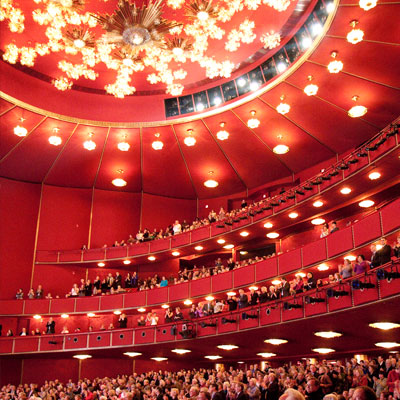
The Washington National Opera formally announced its departure from the Kennedy Center on January 9, 2025, marking the first time the institution has left this 54-year-old performance venue since 1971 [1][2]. This event signals that the severe challenges faced by the U.S. cultural and arts sector amid drastic political changes have reached a new high.
- In December 2024, the Trump administration officially renamed the Kennedy Center the “Trump-Kennedy Arts Center”, sparking strong backlash from the cultural and arts community
- Francesca Zambello, Artistic Director of the Washington National Opera, revealed in November 2024 that the opera was considering relocating, citing plummeting box office revenue and “shattered” donor confidence [2]
- The Kennedy Center stated that its relationship with the opera was “financially challenging”, and the two parties chose to “amicably terminate” their affiliation agreement [1][3]
The Kennedy Center’s new business model requires performances to be fully funded in advance, which is completely incompatible with the traditional operating model of opera. Additionally, the centralized support services previously provided by the center have been reduced or eliminated, putting art institutions dependent on this platform at risk of survival [2].
According to tracking data from the Pittsburgh Arts Council, the U.S. government has taken a series of major measures [4][5]:
| Institution | Cut Measures | Scope of Impact |
|---|---|---|
| NEA (National Endowment for the Arts) | 35% budget cut for FY2026 (reduced from $207 million to $135 million) | National arts organizations |
| NEH (National Endowment for the Humanities) | 80% of staff placed on administrative furlough, facing permanent layoffs | Humanities research institutions |
| IMLS (Institute of Museum and Library Services) | Facing complete elimination | Community cultural institutions |
| CPB (Corporation for Public Broadcasting) | Has officially ceased operations due to federal funding cuts | National public media |
Take the Rochester area of New York State as an example: the Flower City Arts Center lost critical federal funding, and its executive director noted that these cuts appear to be aimed at blocking diversity, equity, and inclusion (DEI) initiatives in the arts sector [6]. Poetry publisher Boa Editions lost $35,000 in NEA funding, which was once its largest single source of funding, leaving the publisher unable to produce hardcover and audiobook versions of specific titles [6].
Since the renaming of the Kennedy Center, multiple artists have publicly canceled their performances in protest [7][8]:
- Jazz musician Chuck Redd canceled his Christmas Eve performance
- Nashville banjoist Béla Fleck canceled his collaborative performance with the National Symphony Orchestra
- A growing number of performers describe the Kennedy Center as a “politicized” venue
Members of the Kennedy family have publicly opposed the name change. Former Representative Joseph Kennedy III stated on social media: “The Kennedy Center is a living memorial to a deceased president, named by federal law. No one can rename it like the Lincoln Memorial, no matter what he says.” [1] Ohio Representative Joey Betti filed a lawsuit, stating that the renaming act “flagrantly violates the rule of law” [1].
According to the 2026 Media & Entertainment Industry Predictions Report released by AlixPartners and analysis from Morgan Stanley [9][10], the industry shows a clear K-shaped divergence:
- Experiential Entertainment: Companies such as Live Nation (Live Nation Entertainment, LYV) are favored by multiple institutions, benefiting from consumer demand for in-person, collective entertainment, which is difficult to replace with AI
- Streaming Recovery: Disney (DIS) has seen improvements in its streaming business, with expansion of the ESPN streaming service
- Advertising Market: Benefiting from major events such as the 2026 Olympics and World Cup, as well as political advertising spending
- Traditional Theaters: Cinemark (CNK) has had its rating downgraded due to weak box office prospects
- Pure Content Production Companies: Facing disruption risks from AI and cost pressures
- Public Funding-Dependent Institutions: Nonprofit cultural organizations face funding cutoffs
| Risk Dimension | High-Risk Areas | Relatively Resilient Areas |
|---|---|---|
| Policy Dependency | Public broadcasting, nonprofit art institutions | Commercial entertainment companies |
| Funding Source | Primarily federal appropriations | Primarily consumer spending |
| Political Sensitivity | Organizations involved in “woke” issues | Pure entertainment content |
| Substitutability | Highly dependent on specific venues/platforms | Multi-channel distribution capabilities |
According to Morgan Stanley’s 2025 Investment Outlook [11] and recommendations from Wellington Management [12], the following allocations are recommended:
-
Experiential Entertainment Leaders: Live Nation Entertainment (LYV)
- 2025 Performance: Up approximately 16% year-to-date
- Advantages: AI immunity, strong consumer demand for live events, fan-driven assets
- Risk Warning: The U.S. Department of Justice is expanding its antitrust investigation into the company [13]
-
Streaming/Content Integrators: Disney (DIS)
- Regarded as a beneficiary of the streaming market recovery
- Experiential businesses (theme parks, etc.) have AI risk isolation characteristics
- Key growth drivers: International market expansion and ESPN streaming
-
Music Industry Leaders: Warner Music Group (WMG), Spotify (SPOT)
- Morgan Stanley upgraded their ratings to “Overweight”
- Benefiting from the recovery of the experience economy and growth in audio content
Given that “political intervention and cross-market diversification will continue to increase” [12], it is recommended to:
- Increase allocations to European and Japanese markets
- Focus on cultural consumption growth in emerging markets
- Increase holdings of countercyclical assets
- Focus on cultural infrastructure with stable cash flows
- Track NEA/NEH budget processes
- Monitor legislative developments in the cultural and arts sector
- Monitor state-level alternative funding mechanisms (e.g., Ohio allows tobacco tax revenue to fund cultural projects) [14]
- The U.S. cultural industry contributes $1.2 trillion in economic output, accounting for 4.2% of GDP [5]
- State governments are filling the gap left by federal funding: Total state cultural spending for FY2026 is $649.2 million, though down 7.4% year-over-year, it still maintains basic operations [14]
- There remains considerable bipartisan support for arts funding
- The closure of the public broadcasting system (CPB) may lead to a “news desert” in local media
- Small and medium-sized nonprofit cultural institutions face survival crises
- Arts education funding has been included in federal cuts ($600 million in K-12 arts education funding has been frozen) [5]
The Washington National Opera’s departure from the Kennedy Center is a landmark case of U.S. political intervention in the cultural and arts sector, revealing the following core investment implications:
-
Rising Political Risk Premium: Cultural institutions dependent on government funding face a revaluation of systemic risks; investors should avoid highly policy-dependent targets
-
Intensifying Industry Structural Differentiation: High-commercialization, consumer-driven cultural and entertainment companies will gain relative advantages, while nonprofit institutions will experience growing pains
-
Experience Economy Remains a Safe Haven: Experiential entertainment assets such as Live Nation and Disney demonstrate strong risk resilience; it is recommended to accumulate on dips during pullbacks
-
Necessity of Diversified Investment: Geographic diversification and asset class diversification are key strategies to cope with political risks
[1] NBC News - Washington National Opera leaves Kennedy Center in wake of Trump renaming (https://www.nbcnews.com/politics/politics-news/washington-national-opera-leave-kennedy-center-wake-trump-renaming-rcna253244)
[2] Reuters - Washington National Opera latest to leave Kennedy Center after Trump takeover (https://www.reuters.com/world/us/washington-national-opera-latest-leave-kennedy-center-after-trump-takeover-2026-01-10/)
[3] USA TODAY - Washington National Opera to leave Kennedy Center after Trump renaming (https://www.usatoday.com/story/entertainment/music/2026/01/09/washington-national-opera-trump-kennedy-center/88109713007/)
[4] Pittsburgh Arts Council - Trump’s Impact on the Arts: A Running List of Updates (https://www.pittsburghartscouncil.org/blog/trumps-impact-arts-running-list-updates)
[5] Indy Arts and Culture Funding Advocacy - Summary of impacts (https://indyarts.org/indyartsaction/)
[6] Rochester City Magazine - Local arts organizations lost federal funding in 2025. What’s next? (https://www.roccitymag.com/arts-entertainment/local-arts-organizations-lost-federal-funding-in-2025-whats-next/)
[7] The Fulcrum - Artists Escalate Boycott of Trump-Renamed Kennedy Center (https://thefulcrum.us/civic-engagement-education/kennedy-center-cancellations)
[8] CNN Politics - Inside Trump’s transformation of the Kennedy Center (https://www.cnn.com/2025/12/06/politics/trump-kennedy-center-takeover)
[9] AlixPartners - 2026 Media & Entertainment Industry Predictions Report (https://www.alixpartners.com/media/x04lwcgr/2026-media-and-entertainment-predictions-report-tmt01sig2025.pdf)
[10] Investing.com - MS flags experiential media stocks for 2026, upgrades Sphere and Warner Music (https://www.investing.com/news/stock-market-news/ms-flags-experiential-media-stocks-for-2026-upgrades-sphere-and-warner-music-4415879)
[11] Morgan Stanley - Outlook 2025: The Case for Portfolio Diversification (https://www.morganstanley.com/ideas/2025-market-outlook-portfolio-diversification)
[12] Wellington US Institutional - 5 equity investment ideas for 2025 (https://www.wellington.com/en-us/institutional/insights/5-equity-investment-ideas-for-2025)
[13] Seeking Alpha - Live Nation Entertainment: DOJ Probe Expansion Is Another Risk The Market Ignores (https://seekingalpha.com/article/4823647-live-nation-entertainment-doj-probe-expansion-is-another-risk-the-market-ignores)
[14] The Art Newspaper - US states step up to fund the arts in the wake of federal cuts (https://www.theartnewspaper.com/2025/07/21/us-states-step-up-to-fund-the-arts-in-the-wake-of-federal-cuts)
Insights are generated using AI models and historical data for informational purposes only. They do not constitute investment advice or recommendations. Past performance is not indicative of future results.
About us: Ginlix AI is the AI Investment Copilot powered by real data, bridging advanced AI with professional financial databases to provide verifiable, truth-based answers. Please use the chat box below to ask any financial question.