
Federal Reserve Rate Cut Forecast: Labor Market Dissonance and Policy Divergence
Unlock More Features
Login to access AI-powered analysis, deep research reports and more advanced features
About us: Ginlix AI is the AI Investment Copilot powered by real data, bridging advanced AI with professional financial databases to provide verifiable, truth-based answers. Please use the chat box below to ask any financial question.
Related Stocks
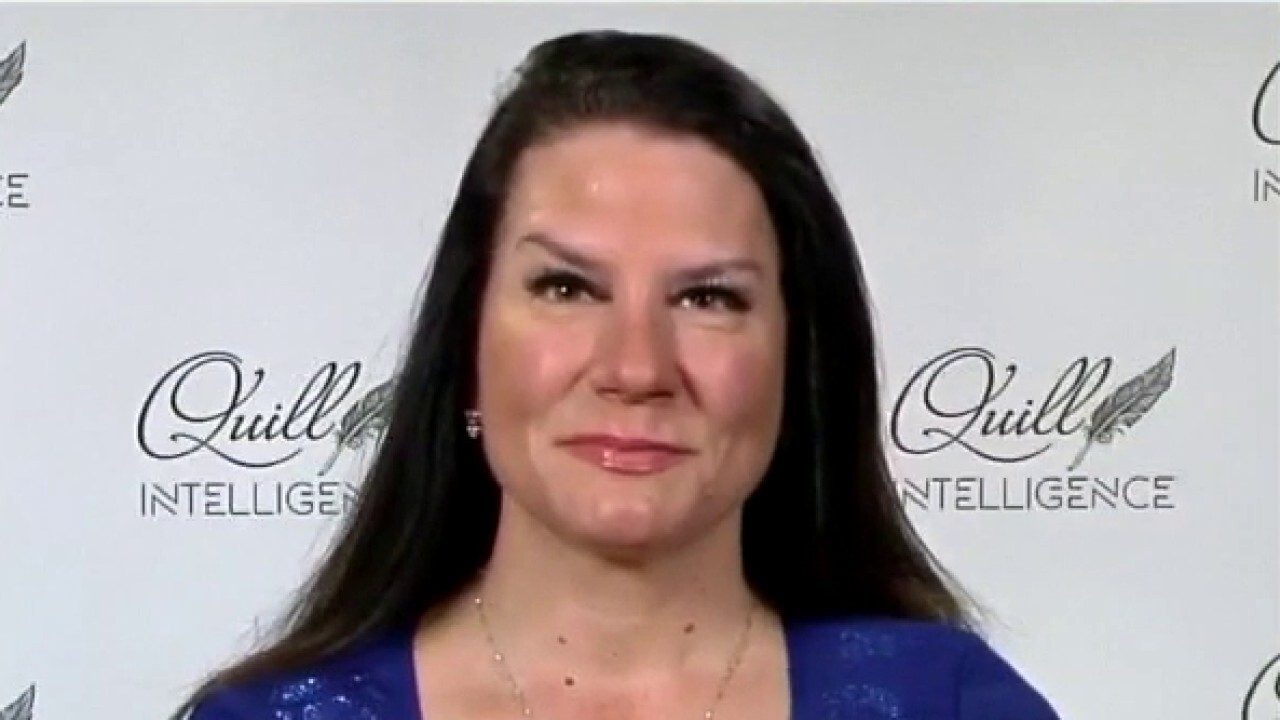
This analysis examines the January 9, 2026 appearance by QI Research CEO and Chief Strategist Danielle DiMartino Booth on Fox Business’s “Making Money With Charles Payne,” where she advocated for aggressive Federal Reserve monetary easing [1][2]. Booth’s forecast of four interest rate cuts in the first half of 2026—representing 100 basis points of total easing—represents a significantly more bearish outlook than current market consensus or Federal Reserve officials’ projections. Her call is predicated on deteriorating labor market conditions, as evidenced by the December 2025 jobs report showing only 50,000 positions added, the weakest monthly figure in recent memory and consistent with 2025 marking the poorest annual job growth since 2003 [3][4]. This forecast positions her alongside Federal Reserve Governor Stephen Miran, who has publicly endorsed a similar aggressive easing trajectory, while diverging sharply from the majority of FOMC participants who project minimal or no rate cuts for 2026 [5][6][8]. The divergence between bear-case forecasts and official projections creates significant uncertainty for market participants as they calibrate expectations for the January 28, 2026 FOMC meeting.
The December 2025 employment data serves as the primary catalyst for Booth’s aggressive rate cut forecast, revealing labor market stress that has implications far beyond a single month’s statistics. The economy added just 50,000 jobs during the month, falling significantly below economist expectations and representing a continuation of the weakening trend that characterized the entirety of 2025 [3][4]. Annual job growth for 2025 totaled 584,000 positions—the weakest annual expansion since 2003—indicating a structural deceleration rather than a temporary setback [4]. The three-month moving average of job creation has turned negative, historically a reliable leading indicator of recessionary conditions and one that typically prompts central bank intervention.
This labor market deterioration occurs against a backdrop of persistent inflationary pressures that complicate the Federal Reserve’s policy calculus. Despite the weakness in hiring, inflation remains approximately one percentage point above the Fed’s two percent target, creating what economists describe as a “bifurcated mandate” situation [3]. Federal Reserve Chair Jerome Powell has emphasized the central bank’s patient approach, stating that officials are “well positioned to wait” before adjusting policy, reflecting the Fed’s traditional preference for allowing comprehensive data to inform decisions rather than reacting to single data points [6]. However, the accumulating evidence of labor market weakness challenges this patient stance and raises questions about how much deterioration the Fed will tolerate before pivoting to accommodation.
The divergence between Booth’s forecast and market pricing represents one of the most significant dislocations in current monetary policy expectations. According to CME FedWatch Tool analysis, markets are pricing in approximately 50 basis points of total rate cuts for the entirety of 2026, suggesting roughly two quarter-point reductions over the year [5]. Booth’s forecast of four cuts in the first half alone implies an acceleration of easing that is nearly double the market-consensus pace, representing a substantial departure from prevailing expectations among bond traders and interest rate strategists.
This divergence becomes even more pronounced when comparing Booth’s outlook to the Summary of Economic Projections released by Federal Reserve officials. Among the 19 FOMC participants who submit quarterly projections, seven officials projected zero rate cuts for 2026, representing the largest bloc of individual forecasts [6]. This configuration suggests that the “hawkish” contingent within the Federal Reserve system—officials who prefer tighter policy or greater caution in easing—currently constitutes the plurality of participants. Booth’s forecast thus represents not merely a moderate deviation from consensus but a fundamentally contrarian position that assumes the Fed’s “hawkish” contingent will be proven wrong by rapidly deteriorating economic data.
The presence of Governor Stephen Miran’s publicly expressed views provides institutional validation for the more aggressive easing case that Booth advocates. Miran has stated that “well over 100 basis points” of rate cuts would be justified over the coming year, a position that aligns closely with Booth’s four-cut forecast [8]. This creates an interesting dynamic where a sitting Federal Reserve Governor is publicly endorsing a policy path that contradicts the apparent consensus among his colleagues, suggesting either that Miran possesses superior information about economic conditions or that internal Fed debates are more contested than official communications indicate.
The contrast between Miran’s public comments and the dot plot projections highlights the distinction between individual officials’ views and the collective messaging that emerges from FOMC meetings. While the dot plot represents a consensus of individual projections, it captures a specific moment in time and may not reflect the full range of perspectives held by Fed officials. Miran’s willingness to deviate publicly from the apparent consensus raises questions about whether additional officials privately share his concerns about economic weakness, potentially creating conditions for a more aggressive policy pivot than the dot plot suggests if incoming data continues to deteriorate.
The labor market data supporting Booth’s forecast carries particular significance as a leading economic indicator with established predictive value for recessionary conditions. The deterioration visible in the December report—combined with the full-year 2025 figures—suggests that the economy may be entering a contraction phase that typically precedes broader economic weakness by several quarters. Historical analysis indicates that the three-month moving average of job creation turning negative has preceded each of the past three recessions, making this indicator particularly relevant for policy calibration [4]. If this historical pattern holds, the data currently being observed may represent the early stages of a downturn that has not yet fully manifested in other economic indicators.
The weakness in labor markets also interacts with other economic variables in potentially compounding ways. Declining employment growth reduces household income growth, which in turn dampens consumer spending—the largest component of economic activity. This dynamic creates a feedback loop where initial labor market weakness amplifies through the economy, potentially accelerating the deceleration that Booth’s forecast anticipates. Corporate layoff announcements provide additional confirmation of employer sentiment, with companies apparently concluding that headcount reductions are necessary ahead of an anticipated demand slowdown.
Despite labor market weakness, the inflationary environment presents complications for aggressive monetary easing. Trump administration tariffs and immigration restrictions may introduce additional price pressures that could prevent the Fed from pursuing the aggressive easing path that Booth advocates [9]. Moody’s Analytics analysis suggests that these policy developments could add between 25 and 50 basis points to inflation through direct cost increases and supply-chain disruptions, partially offsetting the disinflationary impact of weakening labor markets. This inflationary pressure creates a ceiling on how far the Fed can ease without risking a resurgence in price growth, limiting the policy space available for aggressive stimulus.
The interaction between labor market weakness and persistent inflation creates what some economists term “stagflationary” conditions—a challenging environment for central banks that traditionally involves choosing between supporting growth and maintaining price stability. The Fed’s dual mandate, requiring attention to both objectives, becomes more difficult to fulfill when the indicators for each objective point in opposite directions. This tension may explain the divergence between officials’ projections, with some prioritizing the employment mandate while others emphasize price stability.
Booth’s specific focus on the first half of 2026 for the anticipated four rate cuts carries implications for the timing and sequencing of potential policy changes. If her forecast proves accurate, the Fed would need to initiate its easing cycle at the January 28, 2026 meeting or shortly thereafter, with subsequent reductions following at each successive meeting through June. This aggressive timeline suggests that the market may be underestimating the urgency that deteriorating labor market conditions could create for Fed officials, particularly if January and February employment reports show continued weakness.
The current probability distribution for the January meeting shows approximately 97 percent odds of a hold decision, with cuts not fully priced until later in the year [7]. This configuration suggests that a surprise move toward accommodation at the January meeting would constitute a significant market-moving event, potentially triggering repositioning across multiple asset classes including equities, bonds, and currencies. The divergence between current pricing and Booth’s forecast thus represents not merely an academic disagreement but a potentially significant source of market volatility depending on which scenario unfolds.
The analysis reveals several risk factors that warrant attention from market participants and economic observers. First, the labor market weakness documented in the December report appears structural rather than seasonal, with the full-year 2025 data confirming a sustained deceleration that began earlier in the year. This structural weakness suggests that the economy may require more significant policy support than the Fed’s current stance anticipates, potentially creating conditions for a more abrupt policy pivot than markets currently expect. The resulting volatility could affect asset prices across multiple categories, particularly interest-rate-sensitive sectors including housing and consumer durables.
Second, the divergence between official Fed projections and more aggressive easing forecasts creates uncertainty that complicates risk management. If Booth’s forecast proves correct, markets have significant repositioning to accomplish, with bond yields potentially falling substantially and equity valuations adjusting to a lower interest rate environment. Conversely, if the Fed maintains its cautious stance and economic data stabilizes, positions predicated on aggressive easing could experience mark-to-market losses. The wide dispersion of forecasts—from zero cuts to four cuts in H1—indicates genuine uncertainty about the economic trajectory and appropriate policy response.
Third, the inflationary complications arising from potential trade policy changes and immigration restrictions introduce additional uncertainty into the rate outlook. If these policies generate more inflation than anticipated, the Fed’s ability to ease aggressively becomes constrained regardless of labor market conditions. This inflationary risk creates downside for easing-dependent asset classes and upside for the US dollar, reversing some of the correlations that have characterized the post-2022 period.
The divergence between current market pricing and Booth’s forecast creates potential opportunity for participants who can accurately assess the probability of aggressive Fed easing. If incoming data continues to show labor market deterioration, market expectations may shift toward the more aggressive easing path, generating returns for positions established at current relatively cheap levels. The January 15 release of December CPI data will provide additional information about the inflation trajectory and may serve as a catalyst for repricing if the data surprises in either direction.
Additionally, the upcoming FOMC meeting and updated dot plot projections will offer formal confirmation or rejection of the consensus view among Fed officials. If the updated projections show a meaningful shift toward more cuts compared to the prior release, it would validate the bear case and potentially trigger significant market movements. Even without a formal projection change, any shift in Fed communication toward acknowledging labor market concerns could signal the beginning of a policy pivot that markets would need to price.
The January 9, 2026 Fox Business appearance by QI Research CEO Danielle DiMartino Booth presenting a forecast of four Federal Reserve rate cuts in the first half of 2026 represents a significant contrarian position relative to both market consensus and official Fed projections. Her forecast is grounded in deteriorating labor market conditions, as confirmed by the December 2025 jobs report showing only 50,000 positions added and annual job growth reaching the weakest level since 2003 [3][4]. Current market pricing reflects approximately 50 basis points of total easing for 2026, roughly half the magnitude of Booth’s forecast, while seven of 19 FOMC participants project zero cuts for the year [5][6].
The divergence between bear-case forecasts and official projections creates meaningful uncertainty for market participants calibrating expectations for the January 28, 2026 FOMC meeting and subsequent policy decisions. Governor Stephen Miran’s public endorsement of aggressive easing—supporting “well over 100 basis points” of cuts—provides institutional validation for the more bearish view and suggests that internal Fed debates may be more contested than collective communications indicate [8]. The timing of the anticipated policy shift, concentrated in the first half of 2026, implies that markets may be underestimating the urgency created by ongoing labor market deterioration.
Upcoming data releases, particularly the December CPI report on January 15 and subsequent employment reports, will provide additional information for assessing the probability of aggressive Fed easing. The interaction between labor market weakness and persistent inflationary pressures creates a complex policy environment that complicates the Fed’s calibration and contributes to the forecast dispersion visible across market participants and official projections.
Insights are generated using AI models and historical data for informational purposes only. They do not constitute investment advice or recommendations. Past performance is not indicative of future results.
About us: Ginlix AI is the AI Investment Copilot powered by real data, bridging advanced AI with professional financial databases to provide verifiable, truth-based answers. Please use the chat box below to ask any financial question.