
Impact of Beijing Stock Exchange's Strengthened Regulation of Delisting-Risk Stocks on A-Share Market Investment Ecology and Risk Avoidance Strategies
Unlock More Features
Login to access AI-powered analysis, deep research reports and more advanced features
About us: Ginlix AI is the AI Investment Copilot powered by real data, bridging advanced AI with professional financial databases to provide verifiable, truth-based answers. Please use the chat box below to ask any financial question.
Related Stocks
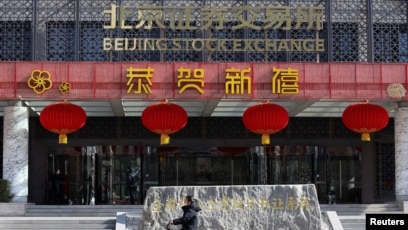
According to the latest regulatory information, the Beijing Stock Exchange (BSE) released trading regulatory updates from January 5 to 9, 2026, which clearly reflect its firm stance on stringent regulation [1]. Specific regulatory measures include:
- Key Monitoring of Delisting Risk Warning Stocks: Continue to list the delisting risk warning stock “*ST Yunchuang” (920305) as a key monitoring target
- Crackdown on Abnormal Trading Behaviors: Imposed self-regulatory measures on 17 cases of abnormal securities trading, mainly involving abnormal trading behaviors such as pumping and dumping, false declarations, etc.
- Special Inspection of Major Matters: Conducted special inspections on 2 major matters of listed companies, etc.
Notably, the BSE has decided to terminate the listing of Guangdao Digital, which has a “seven-year fraud history”, making it the first delisted stock of 2026. The company systematically inflated its total operating revenue by RMB 1.465 billion through means such as fabricating purchase and sales contracts, invoices, bank receipts, etc., with the highest annual inflation rate reaching 99.39% [2]. Its sponsor, Minmetals Securities, has announced a contribution of RMB 210 million to establish a pre-compensation special fund.
A total of 30 A-share and B-share companies delisted from the stock market throughout 2025, among which 6 were voluntary delistings [3]. Since the China Securities Regulatory Commission (CSRC) issued the “Opinions on Strictly Implementing the Delisting System” in April 2024, the delisting reform of the capital market has continued to deepen under the principle of “delist all eligible companies”.
| Delisting Type | Representative Cases | Main Characteristics |
|---|---|---|
| Mandatory Delisting for Major Violations | Delisted Suwu, Delisted Jinggang, Puli Delisting, Delisted Zhuolang | Financial fraud, fraudulent issuance |
| Par Value Delisting | 7 companies including ST Gaohong | Stock price fell below RMB 0.5 |
| Market Value Delisting | ST Dayao, ST Boxin, ST Meixun | Market value below RMB 500 million for 20 consecutive trading days |
| Voluntary Delisting | Haitong Securities, China Heavy Industries, Hangzhou Steam Turbine B | Merger and share swap, capital operations |
Tian Lihui, Dean of the Institute of Financial Development at Nankai University, pointed out that the ST and *ST systems have evolved from a single “risk identifier” to a key trigger for the market clearing mechanism, marking a shift in regulation from “paternalistic” protection to the construction of a market-oriented, rule-based elimination mechanism [4]. This transformation has multiple impacts on the investment ecology:
- Accelerated Depreciation of Shell Value: The probability of poor-performing stocks turning from “crows to phoenixes” has dropped significantly
- Sharply Rising Risks of Speculating on ST and Small-Cap Stocks: 146 listed companies were “labeled with ST/*ST” in 2025, among which 34 were designated ST or *ST due to financial fraud [5]
- Further Strengthening of Value Investing Concept: Market resources are withdrawing from inferior targets
Regulation features “teeth and thorns”, and the investor protection network is becoming multi-dimensional [6]:
- Record Penalty Amount: ST Gaohong was fined a sky-high RMB 125 million, and the actual controller and executives were fined a total of over RMB 20 million
- Full Coverage of Accountability Scope: Extended from listed companies to actual controllers, directors, supervisors, senior executives, and intermediaries
- Significantly Improved Law Enforcement Efficiency: The “five consecutive investigations” incident (ST Changyuan, Zhenlei Technology, PERI Co., Ltd., Daye Intelligent, ST Huluwa) was launched in a concentrated manner at the end of 2025
- Strengthened Collaboration Between Judiciary and Administration: Courts in multiple regions have carried out trials under the model case + parallel application mechanism
| Indicator Type | Specific Criteria | Risk Level |
|---|---|---|
| Net Profit + Operating Revenue | Net profit was negative in the past year and operating revenue was below RMB 300 million | Mandatory Delisting Trigger Threshold |
| Audit Report | Net profit was negative for three consecutive years and a non-standard audit opinion was issued | Going Concern Ability in Doubt |
| Net Assets | Net assets are negative | Major Risk Warning |
From the perspective of the net profit distribution of BSE delisting-risk stocks, from 2023 to 2025, the proportion of companies with net profit exceeding RMB 100 million continued to decline, while the proportion of companies with net profit below RMB 60 million increased significantly [7].
- Main Board A-share Companies: Market value below RMB 500 million for 20 consecutive trading days
- STAR Market, ChiNext, BSE: Continue to use the original RMB 300 million standard
- A stock price below RMB 1 for 20 consecutive trading days will trigger par value delisting
- Most companies delisted due to par value in 2025 had their stock prices fall below RMB 0.5 at the time of delisting
- Frequent issuance of exchange inquiry letters and concern letters
- Release of investigation initiation announcements
- Frequent resignations and changes of senior executives
- Change of accounting firms
- Abnormal growth of related-party transactions
- Excessively high share pledge ratio of major shareholders
- Circular Trading: Inflating performance through closed-loop transactions with no real business substance
- Fund Occupancy: The actual controller treats the listed company as a “cash cow”
- Fraudulent Issuance: Obtaining IPO financing through false financial reports
□ Has the company's net profit been negative for three consecutive years?
□ Was a non-standard audit opinion issued for the latest year's audit report?
□ Is operating revenue below RMB 300 million?
□ Is the stock price below RMB 2 (par value delisting warning line)?
□ Is the total market value below RMB 1 billion?
□ Are there large-scale related-party transactions?
□ Is the share pledge ratio of major shareholders over 50%?
□ Has the company been subject to regulatory inquiries or investigations recently?
□ Have inventory and accounts receivable increased abnormally?
□ Is the gross profit margin significantly higher than the industry average?
- Resolutely avoid *ST and ST stocks
- Remain vigilant of small-cap and low-trading-volume stocks
- Avoid participating in speculation on the “shell preservation” concept
- Focus on core indicators such as ROE, cash flow, and operating revenue growth rate
- Conduct in-depth analysis of the articulation of financial statements
- Pay attention to changes in audit firms and audit opinions
- Avoid excessive concentration in a single industry or individual stock
- Maintain a moderate position and reserve a safety margin to cope with extreme situations
- Regularly review regulatory announcements of held companies
- Set early warning indicators (such as stock price falling below RMB 2, continuous shrinkage of trading volume)
- Respond quickly to risk signals
If investors unfortunately hold delisted stocks, they can still protect their rights in accordance with the law [9]:
| Delisted Company | Claim Period | Rights Protection Conditions |
|---|---|---|
| ST Yuancheng | Purchased between April 15, 2021 and January 30, 2024 | Held after January 31, 2024 |
| ST Lifang | Purchased between April 25, 2022 and April 29, 2025 | Held after April 30, 2025 |
| ST Gaohong | Purchased between March 22, 2016 and July 30, 2024 | Held after July 31, 2024 |
| Delisted Suwu | Purchased between April 28, 2021 and February 26, 2025 | Held after February 27, 2025 |
- Investor Protection Fund Coordination Mechanism
- Ordinary Representative Litigation
- Special Representative Litigation (litigation represented by investor protection institutions)
The BSE’s strengthened regulation of delisting-risk stocks is an important measure against the background of the deepening of the comprehensive registration-based reform of the capital market, marking the formation of a virtuous cycle mechanism of “entry and exit, ups and downs” in the A-share market. For investors, it is necessary to:
- Update Investment Concepts: Abandon the mindset of “speculating on poor-performing stocks” and adhere to value investing
- Enhance Risk Awareness: Establish systemic risk identification and response capabilities
- Make Good Use of Rights Protection Mechanisms: Seek relief in accordance with laws and regulations when rights and interests are damaged
Looking ahead, with the continuous improvement of the delisting system and the in-depth application of regulatory technology, the survival of the fittest function of the capital market will be further strengthened. Only by keeping pace with the times can investors achieve long-term and stable investment returns in the new market ecology.
[1] Eastmoney.com - BSE Trading Regulatory Updates (http://finance.eastmoney.com/a/202601093614404923.html)
[2] The Economic Observer - Guangdao Digital, the First Delisted Stock of 2026, Delisted (http://www.eeo.com.cn/2026/0105/777237.shtml)
[3] Money Week - 30 A-share and B-share Companies Delisted from the Stock Market in 2025 (https://finance.eastmoney.com/a/202601063610277949.html)
[4] Economic Information Daily - 146 Listed Companies “Labeled with ST/*ST” in the Year (http://jjckb.xinhuanet.com/20251231/3ca32278f35041f3b7047636dd85fb3b/c.html)
[5] 21st Century Business Herald - Over 30 Companies Delisted Last Year (https://www.21jingji.com/article/20260105/herald/3611d9ace85bf6901dd63d0788fe9a47.html)
[6] Sina Finance - Over 30 Companies Delisted Last Year: Full-Chain Regulatory Accountability (https://finance.sina.com.cn/roll/2026-01-05/doc-inhfhavp8091894.shtml)
[7] Securities Times - Distribution Map of BSE Delisting-Risk Stocks (https://stcn-main.oss-cn-shenzhen.aliyuncs.com/upload/wechat/20241030/YRdSz9epGViaw3wibIvvgoN0FG8hazrQsC1AicZ3yQyqNabial1J5IicVBB9R9L4DmI2VkK8Lb8CHqRVasDicRzdIIvQ.png)
[8] Lexology - 2025 Annual Review and Outlook on Bankruptcy Reorganization of Chinese Companies (https://www.lexology.com/library/detail.aspx?g=12016324-8645-405d-9c34-a48893dcfb99)
[9] Hengcaibao · Weiheng Finance 315 Team - Compilation of Claim Periods for Delisted Companies (https://www.21jingji.com/article/20260105/herald/3611d9ace85bf6901dd63d0788fe9a47.html)
Insights are generated using AI models and historical data for informational purposes only. They do not constitute investment advice or recommendations. Past performance is not indicative of future results.
About us: Ginlix AI is the AI Investment Copilot powered by real data, bridging advanced AI with professional financial databases to provide verifiable, truth-based answers. Please use the chat box below to ask any financial question.