
Analysis Report on Customer Concentration Risk of Saiying Electronics
Unlock More Features
Login to access AI-powered analysis, deep research reports and more advanced features
About us: Ginlix AI is the AI Investment Copilot powered by real data, bridging advanced AI with professional financial databases to provide verifiable, truth-based answers. Please use the chat box below to ask any financial question.
Based on the collected information, I will provide you with a comprehensive analysis report on the customer concentration risk of Saiying Electronics.
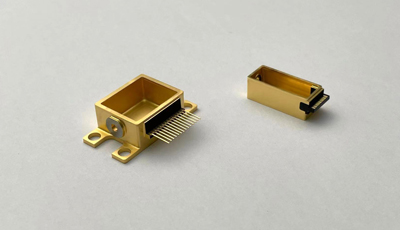
Jiangyin Saiying Electronics Co., Ltd. is a national high-tech enterprise specializing in the R&D, manufacturing, and sales of key components for power semiconductor devices such as ceramic packages and packaging heat dissipation substrates. It has been recognized by the Ministry of Industry and Information Technology as a national-level specialized, sophisticated, unique, and new “little giant” enterprise [1][2]. The company’s products are mainly used in power semiconductor devices such as thyristors, IGBTs, and IGCTs, covering the entire industrial chain of power systems including power generation, transmission, transformation, distribution, and consumption. They play an important role in fields such as UHV power transmission and transformation, new energy power generation, industrial control, new energy vehicles, intelligent computing centers, and rail transit [2].
According to the prospectus, Saiying Electronics’ sales to its top five customers accounted for
| Period | Sales Share of Top 5 Customers | Sales Share of Top Customer CRRC Times |
|---|---|---|
| 2022 | 90.50% | ~42% |
| 2023 | 82.22% | ~38.5% |
| 2024 | 80.92% | ~35% |
| H1 2025 | 79.46% | ~33% |
More importantly,
A comparison between Saiying Electronics and its peer companies shows that its customer concentration is significantly higher:
- Saiying Electronics: Sales share of top 5 customers: 79.46%-90.50%
- Huangshan Gujie: 63.86%, 55.52%, 50.90% during the same periods [1]
The stock exchange’s inquiry letter directly pointed out the core issue: “Customer concentration is a double-edged sword, bringing orders while also laying hidden risks of dependency” [1].
The primary risk brought by high customer concentration is
- Passive Acceptance of Prices: The unit price of the company’s core products sold to CRRC Times rose abnormally in a short period. The unit price of ceramic packages soared from RMB70.24/piece in 2024 to RMB91.27/piece in H1 2025, an increase of as much as 29.94% [1]. This abnormal pricing has not only aroused regulatory doubts but also exposed the company’s passive position in its pricing mechanism.
- Pressure to Extend Credit Periods: The company offers long credit periods to customers (usually 90-120 days), while it needs to pay upfront for copper materials, leading to a capital mismatch issue characterized by delayed cash inflow and accelerated cash outflow [1].
- Order Dependency Risk: If CRRC Times reduces or even terminates its purchases due to industry cycle fluctuations, its own business adjustments, or experiences payment delays, Saiying Electronics’ revenue and cash flow will face the risk of a cliff-like decline [1].
The issue of customer concentration has directly transmitted to the company’s financial indicators:
- Deterioration of Cash Flow: During the reporting periods, the net cash flow from operating activities wasRMB23.7044 million, RMB17.2043 million, -RMB7.7226 million, -RMB7.4886 million, showing a continuous downward trend. Since 2024, the company has fallen into the predicament of net cash outflow from operating activities [2]. The ratio of net cash flow from operating activities to net profit has been below 1 for a long time, reaching 0.54, 0.31, -0.1, and -0.17 respectively [2].
- Accounts Receivable Risk: As of the end of June 2025, the company’s accounts receivable reachedRMB134 million, accounting for 27.55% of its total assets [2]. If the financial condition of downstream customers deteriorates, the risks of bad debts and inventory impairment will break out simultaneously.
- Doubts about Profitability: Although the company’s gross profit margin (around 30%) is higher than the industry average (the gap reached 8.15 percentage points in H1 2025), this combination of “high gross profit margin + low R&D investment” breaks the common sense of profitability in technology-intensive industries [2].
- Suspicions of Related-Party Relationships: Chen Guoxian, the actual controller of the company, used his own funds to participate in an equity investment fund that has a clear associated relationship with CRRC Times. This cross-regional and cross-business investment behavior has aroused suspicions of interest transfer [1]. This key fact is not mentioned at all in the prospectus, which may constitute a major omission in information disclosure.
- Hidden Risks of Family Control: Chen Guoxian, Qin Jing, Chen Beilu, and Chen Qiang jointly control79.87% of the voting rights, and two of them only have a high school education [1]. Such a highly concentrated shareholding structure is likely to lead to a lack of checks and balances in decision-making.
- Sign Strategic Cooperation Agreements
- Sign a long-term strategic cooperation agreement with CRRC Times to lock in the supply relationship for the next 3-5 years
- The agreement should include key clauses such as capacity guarantee, price adjustment mechanism, and payment terms
- Optimize Customer Payment Terms
- Strive to shorten the credit period to within 60 days
- Introduce supply chain financial services to improve cash flow
- Establish a Customer Risk Early Warning Mechanism
- Regularly track CRRC Times’ operating conditions and changes in its procurement strategies
- Establish a mechanism for visiting and communicating with major customers to obtain order information in a timely manner
- Actively Expand New Customers
- Target: Reduce the sales share of top 5 customers from 80% to below 50%
- Strategy: Use IPO fundraising to establish a dedicated sales team to develop customers in fields such as industrial control, intelligent computing centers, and new energy vehicles
- Case: Peer company Huangshan Gujie reduced its customer concentration from 63.86% to 50.90% through customer diversification [1]
- Enhance Product Differentiation
- Increase R&D investment to raise the R&D expense ratio from the current 3.16% to the industry average (above 6%)
- Develop high-performance products with independent intellectual property rights to increase customer switching costs
- Conduct technology reserves in the field of third-generation semiconductor (SiC/GaN) packaging materials
- Improve Supply Chain Management
- Reduce procurement dependency on the top five suppliers (currently as high as 81%)
- Sign long-term supply agreements with major suppliers such as Jintian Copper Group Co., Ltd. to lock in copper prices
- Establish a hedging mechanism against raw material price fluctuations
- Vertical Integration of the Industrial Chain
- Consider extending to upstream raw material fields (copper, ceramic parts) to reduce supply risks
- Explore opportunities for strategic joint ventures or mergers and acquisitions with downstream customers
- Market Diversification
- Develop overseas markets and participate in international competition
- Enter high-growth segmented fields such as rail transit, new energy vehicles, and energy storage
- Optimize Corporate Governance
- Introduce an independent director system to improve the decision-making check and balance mechanism
- Establish a strict system for the approval and disclosure of related-party transactions
- Consider introducing strategic investors to diversify the shareholding structure
The company plans to raise
The customer concentration risk faced by Saiying Electronics is no longer a “gray rhino” event, but a “gray swan” issue that needs to be addressed immediately. The company’s risk chain is interlocked:
At the turning point when the power semiconductor industry is shifting from “chip shortage” to “structural oversupply”, if the company cannot break this vicious cycle, a performance reversal after its IPO may be inevitable. In the future, the company needs to urgently reduce customer dependency (such as expanding into new fields like industrial control and intelligent computing centers), strengthen supply chain resilience (such as signing long-term copper supply agreements), and increase R&D intensity to cope with technological iterations.
Otherwise, when the industry winter comes again, Saiying Electronics, with its high customer concentration, may be the first to fall.
[1] Caifuhao - Saiying Electronics IPO: Triple Interrogations of Major Customer Dependency, Capital Association Mists, and Abnormal Pricing (https://caifuhao.eastmoney.com/news/20251219021437328023010)
[2] Sina Finance - Saiying Electronics: Top 5 Customers Contribute 80% of Revenue, High Gross Profit Margin Cannot Hide Low R&D Shortcomings (https://finance.sina.com.cn/cj/2025-12-17/doc-inhcaqyi2381728.shtml)
[3] CNFOl - Saiying Electronics IPO: Survival Cliff Under High Concentration, The Fatal Chain Behind Gross Profit Margin Decline (http://news.cnfol.com/chanyejingji/20251215/31865015.shtml)
Insights are generated using AI models and historical data for informational purposes only. They do not constitute investment advice or recommendations. Past performance is not indicative of future results.
About us: Ginlix AI is the AI Investment Copilot powered by real data, bridging advanced AI with professional financial databases to provide verifiable, truth-based answers. Please use the chat box below to ask any financial question.