
US Stock Indices Rise on Mixed Employment Data as Labor Market Shows Weakest Growth Since 2020
Unlock More Features
Login to access AI-powered analysis, deep research reports and more advanced features
About us: Ginlix AI is the AI Investment Copilot powered by real data, bridging advanced AI with professional financial databases to provide verifiable, truth-based answers. Please use the chat box below to ask any financial question.
Related Stocks
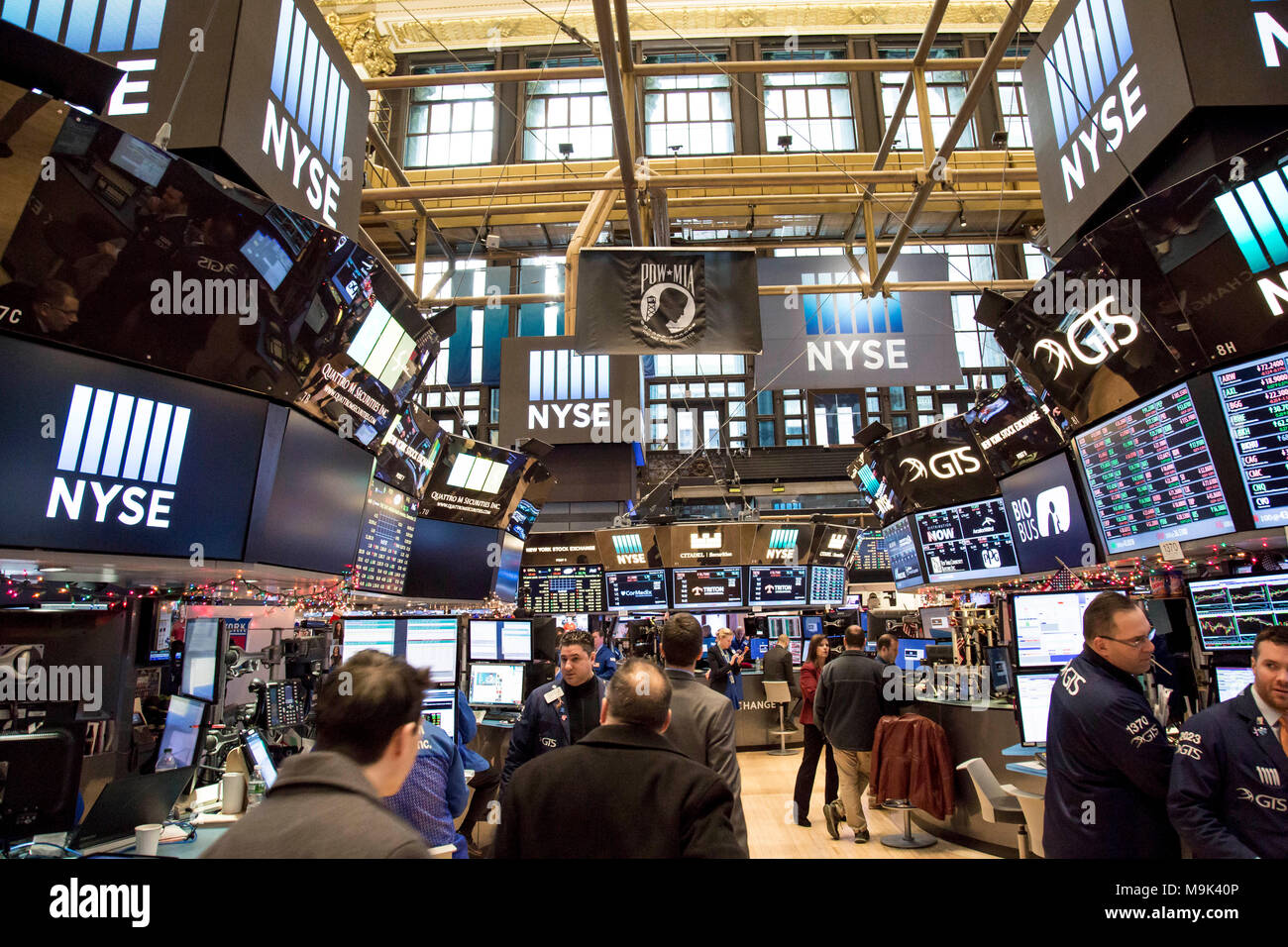
The January 9, 2026 trading session saw U.S. equity indices posting modest gains despite mixed signals from the December 2025 employment report [0][1]. The Dow Jones Industrial Average closed at 49,348.00, representing a 0.23% daily advance and a robust 2.1% weekly gain. The S&P 500 finished at 6,941.49, up 0.20% for the day and 1.0% for the week, while the Nasdaq Composite added 0.32% to reach 23,570.59 [0]. The small-cap Russell 2000 led weekly performance with a 3.3% advance, suggesting continued investor appetite for domestic-focused equities despite broader economic uncertainty.
The sector rotation pattern observed during the session revealed meaningful investor positioning in response to the employment data. Real estate stocks surged 1.08%, leading all sectors, followed by basic materials (+0.95%) and industrials (+0.83%) [0]. This rotation toward rate-sensitive sectors indicates market expectations that the Federal Reserve will maintain its current policy stance given the mixed labor market signals. Conversely, communication services (-0.64%), consumer cyclical (-0.57%), and financial services (-0.40%) sectors faced headwinds, reflecting concerns about growth-oriented exposures amid economic uncertainty [0].
The December 2025 employment report presented a paradox that perplexed market participants: nonfarm payrolls increased by only 50,000 positions, falling significantly below consensus forecasts of 73,000, yet the unemployment rate declined to 4.4% from a revised 4.5% [2][3][4]. This disconnect reflects the complex dynamics shaping the current labor market, where both supply and demand factors are simultaneously influencing headline metrics.
The annual context provides critical perspective on the December figures. The U.S. economy added just 584,000 jobs throughout all of 2025, a dramatic deceleration from the 2 million positions created in 2024 [2][4]. This represents the weakest year of hiring outside of a recessionary period since 2003, signaling a fundamental shift in labor market dynamics that warrants close monitoring from economic policymakers and market participants alike [2][5]. The trajectory represents a meaningful deceleration that contrasts with near-historical-low unemployment readings.
Additional concerning signals emerged from the labor market infrastructure. October and November payroll figures were revised downward by a combined 76,000 positions, indicating that initial estimates overestimated hiring strength [3][4]. Furthermore, job openings fell to their lowest level since March 2021, with only 0.9 vacancies available per unemployed worker in November [2]. This tightening of the labor market’s demand side suggests employers are exercising greater caution in their hiring plans despite continued workforce expansion by some measures.
Wage growth data provided a modestly positive signal, with average hourly earnings rising 3.6% year-over-year, matching expectations and representing a deceleration from the prior month’s 4.0% annual rate [3]. This moderation in wage pressures could provide the Federal Reserve with additional comfort regarding inflation dynamics, though the policy implications remain nuanced given the broader economic context.
The employment data reinforced market expectations that the Federal Reserve will maintain its benchmark interest rate at current levels for an extended period. CME FedWatch Tool data indicated odds of holding rates steady rose to approximately 97% following the report’s release, up from roughly 88% prior to the data [2][3]. This near-certainty of a rate hold at the upcoming Federal Open Market Committee meeting reflects the delicate balance the central bank must strike between supporting economic growth and maintaining progress on inflation.
Market pricing now suggests the next rate cut is not expected until June 2026 at the earliest, representing a meaningful shift from earlier expectations [3]. This recalibration of the policy path reflects both the stronger-than-expected economic growth data and the mixed signals from the labor market. The Federal Reserve cut rates three times in the second half of 2025, but Chair Jerome Powell has emphasized that the central bank has established “a high bar” for additional accommodation measures [2].
The divergent signals between robust GDP growth expectations and decelerating hiring create a challenging environment for Fed communication. The Atlanta Fed’s GDPNow indicator currently points to 5.4% annualized fourth-quarter economic growth, suggesting strong underlying activity despite the labor market’s weakness [3]. This “jobless boom” dynamic presents interpretive challenges for policymakers seeking to calibrate appropriate policy responses.
A significant source of market uncertainty remained unresolved as the Supreme Court announced it would not issue a ruling on January 9 regarding the legality of President Trump’s tariffs implemented under the International Emergency Economic Powers Act (IEEPA) [6][7][8][9]. The Court’s next opinion batch, expected later this month, will determine whether the administration exceeded its statutory authority in implementing sweeping tariff measures.
The economic stakes are substantial. Over $200 billion in tariffs have been collected under the challenged authority, with no administrative mechanism currently in place for potential refunds should the Court rule against the administration [6]. Importers have until February 6 to register for electronic ACH refunds through U.S. Customs, though the ultimate availability of such refunds remains contingent on the Court’s decision [7].
Market analysts have quantified the potential market implications of various outcomes. Wells Fargo estimated that a ruling against the tariffs would boost S&P 500 pre-tax earnings by 2.4% in 2026, reflecting the significant cost burden that tariff payments currently represent for many corporations [9]. Treasury Secretary Scott Bessent has indicated the administration has “at least three other options” through the 1962 Trade Act to maintain most tariff protections even if the IEEPA authority is invalidated [8].
Prediction market pricing on Kalshi suggests only a 28% probability that the Court will rule in favor of the tariffs as currently implemented, indicating significant uncertainty about the ultimate resolution of this dispute [8]. This uncertainty creates ongoing volatility potential for equity markets, particularly in sectors with significant international trade exposures.
Notable individual stock movements on January 9 reflected both company-specific developments and broader market dynamics. Intel (INTC) shares surged 4.85% following a social media post from President Trump after a meeting with recently appointed CEO Lip-Bu Tan [0]. This development suggests investor optimism about Intel’s strategic direction under new leadership, though the sustainability of this momentum remains to be seen.
General Motors (GM) shares declined 1.19% after the company announced a $7.1 billion fourth-quarter charge related to restructuring operations in China and scaling back electric vehicle investments [0]. This substantial charge exemplifies the challenges facing traditional automotive manufacturers as they navigate the transition to electric vehicles while managing legacy operations in challenging international markets.
Southwest Airlines (LUV) saw minimal movement, declining 0.08% despite an upgrade to overweight from JPMorgan [0]. The muted reaction suggests the upgrade may have already been priced into the stock or that broader market concerns offset the positive analyst sentiment.
Nuclear power companies Vistra (VST) and Oklo (OKLO) both declined during the session, with Vistra falling 2.26% and Oklo dropping 4.27% [0]. Notably, these movements contrast with claims in the FXEmpire article suggesting substantial pre-market gains, indicating potential timing discrepancies in the reported data or reversals during the trading session.
The convergence of weak hiring data with resilient unemployment and strong GDP growth expectations reveals a structural shift in the relationship between economic output and labor market participation. The 584,000 jobs added in 2025 versus 2 million in 2024 represents not merely a cyclical slowdown but potentially a fundamental change in how corporations approach workforce expansion in an increasingly automation-enabled and AI-influenced economic environment [2][4].
The technology sector’s disproportionate contribution to the hiring slowdown warrants particular attention. Layoffs in the technology sector surged 58% in 2025, reaching a five-year high of 1.206 million positions eliminated [2]. This pattern suggests the “year of efficiency” narrative that dominated 2023 and 2024 corporate strategy has evolved into deeper restructuring of technology workforces, with implications for broader productivity growth and innovation trajectories.
Consumer confidence indicators present a troubling disconnect from headline economic data. Americans’ perceived probability of finding a job if laid off fell to 43.1% in December, the lowest level since the survey began in 2013 [5]. This erosion of labor market confidence, despite historically low unemployment, may foreshadow consumer spending weakness that could materialize in coming quarters despite strong current economic indicators.
The immigration policy environment has likely contributed to labor supply constraints that partially explain the hiring weakness. Aggressive immigration enforcement has reduced labor supply growth, potentially creating mismatches between job openings and available workers in certain sectors while simultaneously reducing overall hiring volumes [2]. This dynamic complicates the interpretation of labor market trends and their implications for monetary policy.
The pending Supreme Court tariff ruling represents a binary risk event for markets, with the potential to either unlock substantial corporate earnings improvements or create significant disruption to trade-dependent business models. The 2.4% boost to S&P 500 earnings estimated by Wells Fargo under a favorable ruling scenario underscores the material impact of this regulatory uncertainty [9].
The “jobless boom” dynamic observed in the current economic environment creates significant forecasting uncertainty. Strong GDP growth expectations coexisting with the weakest hiring since 2020 outside recession periods suggests potential fragility in the economic expansion. Should corporate profit margins compress under the weight of policy uncertainty and restructuring costs, the current disconnect between growth and hiring could narrow in a less favorable direction.
Consumer sentiment deterioration represents an emerging risk that could translate into reduced spending. The record-low confidence in job-finding ability, if sustained, mayprompt consumers to increase savings rates and reduce discretionary spending, potentially creating a self-fulfilling weakness in economic activity that contradicts current robust growth indicators.
Policy uncertainty surrounding both monetary policy and trade policy creates elevated volatility potential. The Supreme Court tariff ruling, whenever it arrives, could trigger significant market movements regardless of the outcome, as positioning adjustments and reassessments of business models occur across multiple sectors.
Corporate restructuring costs, exemplified by GM’s $7.1 billion China-related charge, may continue to burden earnings reports in coming quarters. Companies with significant international exposures, particularly to China, face ongoing challenges from both regulatory pressure and market dynamics that could produce additional material charges.
The sector rotation toward rate-sensitive sectors presents opportunities for investors positioning for an extended period of stable monetary policy. Real estate, utilities, and basic materials sectors demonstrated strength on the employment data release and may continue to benefit from the “higher for longer” interest rate environment if the Fed maintains its cautious stance.
The pending Supreme Court tariff ruling creates potential opportunity for traders positioned to benefit from tariff relief. Should the Court rule against the administration’s current tariff authority, companies with significant international supply chains and trade exposures could experience meaningful earnings upgrades.
Technology sector weakness, if sustained, may present entry opportunities for long-term investors. Despite the 58% increase in tech layoffs, the sector continues to drive productivity improvements and innovation across the economy, suggesting that current pessimism may be overdone.
The small-cap Russell 2000’s strong weekly performance indicates investor interest in domestic-focused equities that may benefit from potential policy changes. This sector could continue to outperform if tariff relief materializes or if domestic policy priorities shift toward supporting domestic manufacturing and employment.
The December 2025 employment report revealed a labor market experiencing significant deceleration, with only 50,000 jobs added versus expectations of 73,000, and annual hiring reaching its weakest level since 2020 outside recession periods [2][3][4]. Despite this hiring weakness, unemployment declined to 4.4% and wage growth remained moderate at 3.6% year-over-year, presenting a complex picture for policymakers and market participants [3].
Federal Reserve policy expectations have solidified around a hold at upcoming meetings, with market pricing indicating a 97% probability of no rate change and the next cut not expected until June 2026 [2][3]. This policy backdrop supports continued rotation toward rate-sensitive sectors and maintains the “higher for longer” interest rate environment that has characterized much of the current cycle.
The Supreme Court’s delay of its tariff ruling maintains ongoing uncertainty regarding trade policy, with over $200 billion in collected tariffs potentially subject to refund depending on the outcome [6][7]. The Court’s decision, expected this month, represents a significant binary risk event with material implications for corporate earnings across multiple sectors [9].
Individual stock movements reflected both company-specific developments and broader market dynamics, with Intel benefiting from White House engagement while General Motors faced restructuring charges related to China operations [0]. The discrepancy between reported early-session gains and end-of-day data for some stocks highlights the importance of timing considerations when interpreting market movements.
Key metrics to monitor in coming weeks include January employment data for signs of hiring recovery or continued deceleration, the Supreme Court tariff ruling for policy clarity, Federal Reserve communications for shifts in the “high bar” stance on rate cuts, and consumer spending data for indications of sentiment deterioration translating into economic weakness.
Insights are generated using AI models and historical data for informational purposes only. They do not constitute investment advice or recommendations. Past performance is not indicative of future results.
About us: Ginlix AI is the AI Investment Copilot powered by real data, bridging advanced AI with professional financial databases to provide verifiable, truth-based answers. Please use the chat box below to ask any financial question.