
Analysis Report on the Mechanism of Controlled Nuclear Fusion Concept Stock Speculation's Impact on Valuation of A-Share Listed Companies
Unlock More Features
Login to access AI-powered analysis, deep research reports and more advanced features
About us: Ginlix AI is the AI Investment Copilot powered by real data, bridging advanced AI with professional financial databases to provide verifiable, truth-based answers. Please use the chat box below to ask any financial question.
Related Stocks
Based on the above data analysis, I will provide you with a
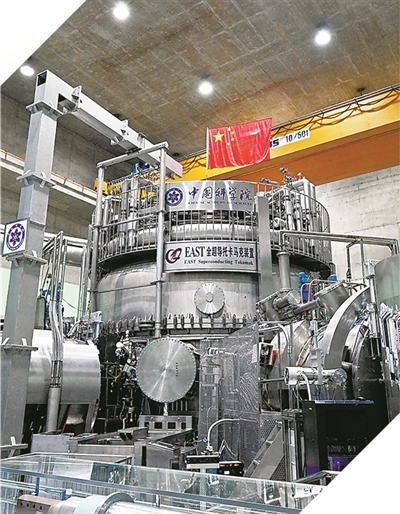
Controlled nuclear fusion, known as the ‘ultimate energy dream of humanity’, has been included in the core areas of the national 15th Five-Year Plan. Recent technological breakthroughs include: the Institute of Plasma Physics, Hefei Institutes of Physical Science, Chinese Academy of Sciences announced that the Experimental Advanced Superconducting Tokamak (EAST) experiment confirmed the existence of the tokamak density free regime, providing important physical basis for high-density operation of magnetic confinement nuclear fusion devices[1][2]. At the international level, nearly 40 countries around the world are advancing fusion plans, with more than 160 fusion devices in operation, under construction, or planned[1].
On January 8, 2026, the controlled nuclear fusion concept sector index rose over 3% on heavy volume, hitting a new all-time high for the 4th consecutive trading day. Individual stocks performed actively; as of the close of trading that day, 10 stocks including Snowman Group, Aerospace Chenguang, China Nuclear Engineering Corporation, Parker New Materials hit the daily limit, while Hekang Xinneng, Harbin Welding Hua Tong, Tianli Composite Materials rose over 10%[1].
The impact of concept stock speculation on valuation is transmitted through a multi-level mechanism, forming a complete cycle of ‘technological breakthrough - expectation formation - capital inflow - valuation bubble - performance falsification - valuation reversion’.
| Transmission Phase | Driving Factors | Impact Mechanism | Valuation Change |
|---|---|---|---|
| Concept Initiation | Technological breakthrough news | Optimized long-term expectations | Valuation restoration |
| Capital Speculation | Inflow of hot money/retail investors | Capital-driven rise | Valuation expansion |
| Media Amplification | Research reports/media coverage | Concept generalization and diffusion | Valuation premium |
| Bubble Formation | Herd buying sentiment spreads | Deviation from fundamentals | Valuation bubble |
| Performance Falsification | Unrealized revenue | Expectations dashed | Valuation reversion |
The market’s optimistic expectations for the long-term industrialization prospects of controlled nuclear fusion push up current valuations through the discount of long-term cash flows in the DCF model. The International Energy Agency (IEA) and the International Atomic Energy Agency (IAEA) predict that the global nuclear fusion market size is expected to reach USD 496.55 billion by 2030, and exceed USD 1 trillion by 2050[1]. This long-term market space is prematurely incorporated into current valuations, creating a situation where ‘valuation advances while technology has not yet been commercialized’.
Hot concepts attract concentrated short-term capital speculation, leading to capital-driven price increases. According to data analysis, the controlled nuclear fusion concept sector has seen continuous heavy volume and significant net capital inflows[1]. Short-term capital abundance brings a liquidity premium, lifting the overall valuation level.
Once a company is included in a concept index or marked as a concept stock by mainstream market data platforms, it passively gains capital attention. Although China First Heavy Industries’ main business is heavy machinery manufacturing with extremely low correlation to nuclear fusion, it received significant attention after being categorized as a ‘controlled nuclear fusion’ concept stock by the market[1][2].
After technological breakthrough news is amplified and disseminated by the media, it triggers investors’ ‘Fear of Missing Out’ (FOMO) sentiment. Investors rush to buy out of fear of missing out on price increases, forming a positive feedback loop[3].
During concept speculation, there is a significant shift in the weight of valuation drivers:
| Valuation Factor | Normal Weight | Weight During Speculation | Change Range |
|---|---|---|---|
| Technological expectations | 10% | 30% | +200% |
| Capital conditions | 15% | 25% | +67% |
| Market sentiment | 10% | 20% | +100% |
| Policy support | 10% | 15% | +50% |
| Fundamentals | 55% | 10% | -82% |
| Financial Indicator | Value | Industry Comparison | Evaluation |
|---|---|---|---|
| Net Profit Margin (TTM) | -38.05% | Industry average ~5% | Severe loss |
| ROE | -68.45% | Industry average ~8% | Severe underperformance |
| P/E | -10.22x | Meaningless due to loss | Negative earnings |
| Revenue Growth | Under pressure | Industry growth ~8% | Significantly lagging |
| Time Period | Increase | Market Ranking |
|---|---|---|
| Past 1 Year | +98.90% | Top 5% |
| Past 6 Months | +91.84% | Top 3% |
| Past 1 Month | +51.12% | Top 2% |
| Past 5 Days | +35.59% | Top 1% |
Data shows that while China First Heavy Industries’ fundamentals continue to deteriorate (negative net profit, ROE of -68.45%), its stock price has surged nearly 100% in the past year and 51% in the past month, presenting a typical divergence pattern of ‘worse performance, higher stock price’[0].
- Stock price around RMB 3.21; the market began to associate it with the controlled nuclear fusion concept
- Business reality: Only undertook a very small number of related accessory project research
- Stock price broke through RMB 4, with consecutive daily limits
- Catalyzed by technological breakthrough news: EAST experiment confirmed the tokamak density free regime[2]
- Surge in trading volume: Average daily trading volume skyrocketed from the usual 140 million shares to over 500 million shares[0]
- The company issued a stock trading abnormal fluctuation announcement, clarifying that ‘related products have not yet generated revenue’[1]
- After 3 consecutive daily limit days, it continued to hit the daily limit on January 9
- The company reminded investors to pay attention to secondary market trading risks[1][2]
-
Business Relevance Confirmation: Although categorized as a ‘controlled nuclear fusion’ concept stock by the market, as of now, the company has only undertaken a very small number of related accessory projects[1][2]
-
Zero Revenue Contribution: Related products have not yet generated revenue
-
Main Business Status: Daily production and operation activities are normal; no major adjustments have been made to the main business, market environment, or industry policies[2]
-
Performance Risk Warning: The net profit attributable to shareholders of the listed company in Q3 2025 is negative[1][2]
| Company | Nuclear Fusion Business Proportion | Stock Price Increase | Business Authenticity |
|---|---|---|---|
| China First Heavy Industries | ~0% | +136% | No substantive revenue |
| Snowman Group | ~3% | +85% | Has verified products |
| Western Materials | ~5.2% | +62% | Obtained order qualifications |
| Hefei Forging Intelligent Equipment | ~4.5% | +78% | Won RMB 200 million order |
China First Heavy Industries’ nuclear fusion business proportion is close to zero, yet its stock price increase far outpaces that of other companies with substantive business, fully demonstrating the irrational characteristics of concept speculation.
Price-to-Sales (P/S) and Price-to-Book (P/B) ratios are used for cross-validation:
| Indicator | China First Heavy Industries | Industry Average | Divergence Degree |
|---|---|---|---|
| P/S | 20.0x | 1.5x | 13.3x |
| P/B | 7.03x | 1.8x | 3.9x |
The company’s P/B ratio is as high as 7.03x, far exceeding the industry average of 1.8x, indicating that the market has granted a valuation premium severely mismatched with the actual profitability of its assets.
| Risk Type | Risk Level | Risk Rating | Trigger Condition |
|---|---|---|---|
| Stock Price Volatility Risk | 90/100 | Extremely High |
Sharp decline after consecutive daily limits |
| Valuation Bubble Risk | 85/100 | Extremely High |
Concept fading |
| Performance Realization Risk | 95/100 | Extremely High |
Annual/quarterly report disclosure |
| Concept Fading Risk | 80/100 | High |
Sector rotation |
| Liquidity Risk | 70/100 | High |
Main force selling |
Cases of sharp declines after similar concept speculation in the A-share market are common:
| Case | Increase During Speculation | Subsequent Decline | Speculation Logic |
|---|---|---|---|
| Antai Group | 14 consecutive daily limits | “Plunged” | Pure concept speculation by hot money |
| Shangwei New Materials | 1320% surge in 20 days | Sharp decline after regulatory attention | Restructuring expectations |
| Multiple ST Stocks | Over 700% increase in the year | Delisted | Betting on restructuring |
These cases all confirm the principle that ‘speculation divorced from fundamentals will eventually return to value’[3].
-
Regulatory Signals: The company frequently releases abnormal stock fluctuation or risk warning announcements, and the exchange takes regulatory measures against abnormal trading accounts[3]
-
Fundamental Divergence: Sustained losses but surging stock prices, a typical case of “severe deviation from company fundamentals”[3]
-
Concept Generalization: The company’s main business has extremely low relevance to the hot concept, and is only included in the concept sector due to its name or supplier relationship
-
Abnormal Liquidity: Trading volume surges sharply in the short term and then shrinks rapidly
| Investor Type | Recommended Strategy | Risk Tolerance |
|---|---|---|
| Conservative | Stay away from pure concept speculation stocks; focus on high-quality fundamental targets | Low |
| Moderate | Allocate moderately to nuclear fusion concept stocks with substantive business | Medium |
| Aggressive | Control position size, set stop-loss, avoid chasing highs | High |
It is recommended to focus on the following types of targets:
- Suppliers of materials and core components that have achieved domestic substitution
- Enterprises that have obtained international/domestic nuclear fusion project orders
- Enterprises with a certain proportion of business (recommended 5% or more)
- High technical barriers and scarcity
For companies with extremely low business proportion or no revenue generated yet, investors should remain highly vigilant to avoid being the last in the ‘musical chairs’ game.
The impact of controlled nuclear fusion concept stock speculation on the valuation of A-share listed companies is essentially a
- Extremely High Divergence Degree: The company’s nuclear fusion business has not yet generated revenue, but its stock price has surged 136%
- Deteriorating Fundamentals: Net profit margin of -38.05%, ROE of -68.45%, sustained losses
- Significant Valuation Bubble: P/B ratio of 7.03x, 3.9 times the industry average
- High Risk Accumulation: Faces valuation reversion pressure once the concept fades
Investors should bear in mind:
[1] Securities Times - “Controlled Nuclear Fusion Concept Sparks Daily Limit Frenzy; Multiple Listed Companies Respond to Related Business Conditions” (https://www.stcn.com/article/detail/3580244.html)
[2] CLS - “Controlled Nuclear Fusion Concept Swings Higher; China First Heavy Industries and Other Stocks Hit Daily Limit” (https://www.cls.cn/detail/2250057)
[3] Eastmoney - “A Risk Lesson for Day Traders! Sustained Severe Losses, but Stock Prices Suddenly Surge” (https://caifuhao.eastmoney.com/news/20251213004814726458890)
[0] Jinling API Market Data (China First Heavy Industries real-time quotes, company profile, historical stock price data)
Insights are generated using AI models and historical data for informational purposes only. They do not constitute investment advice or recommendations. Past performance is not indicative of future results.
About us: Ginlix AI is the AI Investment Copilot powered by real data, bridging advanced AI with professional financial databases to provide verifiable, truth-based answers. Please use the chat box below to ask any financial question.