
Analysis of IP Authorization Dependence and Resolution Strategies for Grandpa's Farm
Unlock More Features
Login to access AI-powered analysis, deep research reports and more advanced features
About us: Ginlix AI is the AI Investment Copilot powered by real data, bridging advanced AI with professional financial databases to provide verifiable, truth-based answers. Please use the chat box below to ask any financial question.
Based on the information I collected, I will now systematically analyze the IP authorization dependence and resolution strategies of
Grandpa’s Farm International Holdings Limited submitted a prospectus to the Hong Kong Stock Exchange (HKEX) on January 5, 2016, seeking to list on the main board[1]. Founded in 2015 in Guangzhou by four Chinese nationals: Yang Gang, Jiang Fuquan, He Jiannong, and Liu Haibo[2], the company is mainly engaged in the R&D and sales of baby snacks & complementary foods and family foods.
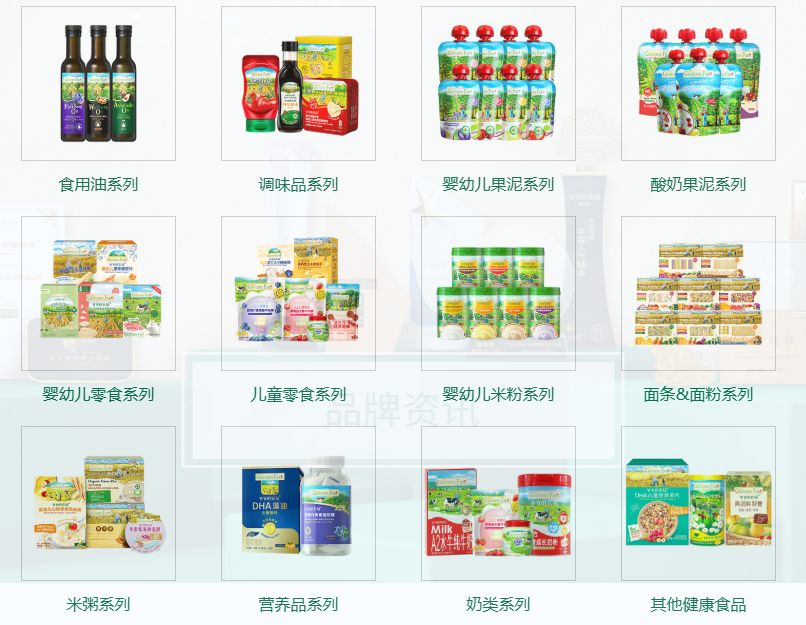
As of the end of September 2025, the company’s product portfolio covers
According to public information, Grandpa’s Farm presents a pattern of
| Indicator | Data Performance | Industry Comparison |
|---|---|---|
| Proportion of self-owned IP revenue | Approximately 4% | Lower than industry average |
| Authorized IP business | Participates in co-branding collaborations with IPs such as Da Feng Da Geng Ren | - |
| Brand building | Relies on “European imported” concept marketing | - |
The company disclosed in its prospectus that its business model is
Since its founding in 2015, Grandpa’s Farm’s
- Brand positioning drift: It emphasized its “European original imported” identity in the early stage, and only gradually downplayed this promotion in 2024[2]
- Lack of IP content: No recognizable original IP image or story system
- Single consumer perception: Consumers’ perception of the brand stays at the product function level, rather than emotional connection
In this model, the brand’s premium capability is built on the “imported concept”, lacking a real cultural foundation.
The company adopts an
- Quality control risks transmitted to the brand: It has been penalized by regulators multiple times for food safety issues (e.g., nutritional content of infant rice noodles and puree failed to meet standards in 2019, fined and confiscated a total of RMB 290,000 for unqualified products in 2020)[1]
- Difficulty in product differentiation: It is difficult to form a core product line with IP recognition among 269 SKUs
- Weak voice in supply chain: Dependence on 62 OEM factories limits the independent development space of IP products
Data from the prospectus shows that the company’s sales and distribution expenses as a proportion of revenue rose from
This “heavy marketing, light R&D” investment structure leads to:
- R&D expenditure accounts for only 2.2%-3.5%[1], far lower than the innovation investment of leading enterprises in the industry
- Brand building stays at the level of traffic acquisition, lacking systematic investment in long-term IP assets
- Marginal decline in marketing efficiency, with net profit margin dropping from 12.1% to 11.2%[1]
In view of the shortcoming that self-owned IP revenue accounts for only 4%, it is recommended to systematically develop original IP:
| IP Type | Development Direction | Commercialization Path |
|---|---|---|
| Brand IP image | Create cartoon images with memorable features (e.g., “Farm Cuties” series) | Product packaging, peripheral derivatives, emoticons |
| Content IP | Build a short video IP for infant nutrition popularization | Social media matrix, parent-child education content |
| Experience IP | Design offline “Grandpa’s Farm” themed experience spaces | Parent-child parks, pop-up stores, factory tours |
Integrate self-owned IP into the entire product development process, rather than simple co-branding:
- IP-based product naming: e.g., “Farm Cuties Rice Cracker Series”
- IP-based packaging design: Unify IP visual identity system
- IP-based gift set: Create holiday-limited IP gift boxes
The company’s current marketing team focuses on e-commerce operations, and needs to add content creativity and IP development functions:
Proposed Structure:
├── IP Creative Department (responsible for original content development)
├── Copyright Authorization Department (responsible for IP commercial authorization)
└── Community Operation Department (responsible for fan economy operation)
Leverage the consumer reach capability of existing direct sales channels (accounting for 42.1% of revenue) to build a content ecosystem:
| Platform | Content Type | Goal |
|---|---|---|
| Xiaohongshu | Product reviews, parenting sharing | Drive conversion through product recommendation |
| Douyin | Funny short videos, IP animations | Brand exposure |
| WeChat Official Account | Parenting popularization, IP stories | Deep user engagement |
The company put its self-owned production base in Zengcheng, Guangzhou into operation in October 2025[1], and should accelerate capacity expansion to provide quality assurance for IP products:
- Phase 1 (2026-2027): Achieve independent production coverage of core baby food categories
- Phase 2 (2028-2029): Configure exclusive production lines for IP co-branded products
Establish strategic cooperation with core OEM factories to
- Share intellectual property rights of product formulas and packaging designs
- Establish a quality traceability system for IP products
- Explore deep binding models such as profit sharing
After IPO, self-owned IP assets can be incorporated into the enterprise valuation system:
| IP Asset Category | Valuation Method | Potential Value |
|---|---|---|
| Brand IP | Brand premium method | Increase price-to-earnings ratio |
| Content IP | User value method | Open up new revenue streams |
| Authorized IP portfolio | Market comparison method | Enhance profit certainty |
Through the capitalization of IP assets, the risk of reliance on externally authorized IP can be reduced, and enterprise autonomy can be enhanced.
- Brand trust crisis: If it continues to rely on externally authorized IP and neglects self-owned IP construction, it may face business interruption risks when IP authorizations expire or collaborations are terminated
- Competitor catch-up: Competitors such as Engnice, Deer Blue, and Wo Xiao Ya are also accelerating their IP layout
- Consumer generational shift: The new generation of parents is more sensitive to “fake foreign brands” and requires authentic and credible brand stories
2026            2027            2028            2029
   │               │               │               │
   ▼               ▼               ▼               ▼
┌─────────┐   ┌─────────┐   ┌─────────┐   ┌─────────┐
│IP Asset │   │IP Content│   │IP Auth  │   │IP Ecosystem│
│Inventory│→ │Preliminary│→ │Proportion│→ │Closed Loop │
│& Strategy│  │Matrix    │  │Reaches 15%││Formed      │
│         │   │Established││         │   │         │
└─────────┘   └─────────┘   └─────────┘   └─────────┘
   │               │               │               │
   ▼               ▼               ▼               ▼
Short-term (1Y) Medium-term (2Y) Long-term (3Y)  Long-term (4Y)
The current situation where self-owned IP revenue accounts for only 4% of Grandpa’s Farm’s total revenue is essentially a
The key to resolving authorization dependence lies in
[1] 21st Century Business Herald. Gross profit margin reaches 57% but “heavy marketing, light quality control”? Grandpa’s Farm sprint for HKEX listing. 2026-01-08. https://www.21jingji.com/article/20260108/herald/bd1054c60bf650d8a2238aa7d4e6c777.html
[2] The Paper. “Grandpa’s Farm” seeks IPO: A “European national complementary food brand” founded in Guangzhou by an all-Chinese team. 2026-01-07. https://www.thepaper.cn/newsDetail_forward_32327943
[3] Caixun Net. “Grandpa’s Farm” goes for HKEX IPO: Annual revenue exceeds RMB 800 million, strengthens R&D and production capacity to build core barriers. 2026-01-07. https://mtz.china.com/touzi/2026/0107/211823.html
Insights are generated using AI models and historical data for informational purposes only. They do not constitute investment advice or recommendations. Past performance is not indicative of future results.
About us: Ginlix AI is the AI Investment Copilot powered by real data, bridging advanced AI with professional financial databases to provide verifiable, truth-based answers. Please use the chat box below to ask any financial question.