
Yijing Optoelectronics (600537.SH) 2025 Expected Loss Exceeding Net Assets: Insolvency Risks and Response Strategies During the PV Industry's Capacity Clearing Period
Unlock More Features
Login to access AI-powered analysis, deep research reports and more advanced features
About us: Ginlix AI is the AI Investment Copilot powered by real data, bridging advanced AI with professional financial databases to provide verifiable, truth-based answers. Please use the chat box below to ask any financial question.
Related Stocks
Based on the collected materials, I will conduct a systematic and comprehensive analysis for you.
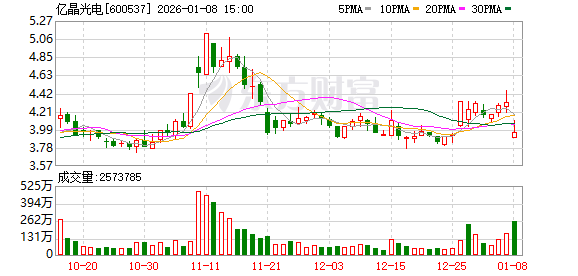
Yijing Optoelectronics (600537.SH), known as the “first A-share PV component stock”, is currently facing severe financial distress. According to the performance forecast disclosed by the company on January 8, 2025, it expects the net profit attributable to shareholders of the listed company in 2025 to be negative, and the expected loss amount will exceed the audited net assets of the previous year, so the company’s end-of-term net assets in 2025 may be negative [1]. This warning means that the company will face the risk of being subject to delisting risk warnings (*ST).
| Indicator | 2024 | 2025 Q1-Q3 | Trend |
|---|---|---|---|
| Operating Revenue | RMB 3.478 billion | RMB 1.556 billion | YoY decrease of 42.58% |
| Net Profit Attributable to Parent | RMB -2.09 billion | RMB -214 million | Continuous Loss |
| Net Assets | Negative Value Warning | Negative Value Warning | Insolvency Risk |
| Current Ratio | 0.88 | - | Below the 1.0 warning line |
| Quick Ratio | 0.75 | - | Below the 0.8 warning line |
From the company’s profile data, the company’s price-to-book ratio (P/B Ratio) is as high as 20.85 times [0], which is mainly due to net assets approaching zero or even turning negative. The price-to-earnings ratio (P/E Ratio) is -2.71 times, reflecting the market’s expectation of the company’s continuous losses. More severely, the company’s return on equity (ROE) is -520.26%, net profit margin is -74.51%, and operating profit margin is -85.69% [0], indicating that the company’s business model has suffered severe blood loss.
The RMB 10 billion PV project invested and constructed by Yijing Optoelectronics in Quanjiao County, Chuzhou, Anhui Province is a key turning point for the company’s predicament. The project was launched in 2022, with an original planned total investment of RMB 10.3 billion, to build a 10GW annual output PV cell, 10GW PV wafer, and 10GW PV module project [1]. However, due to periodic structural capacity mismatch in the PV industry, weak industry market conditions, and continuous decline in the industry’s capacity utilization rate, the project only completed the implementation of 7.5GW capacity in the first phase of the PV cell project, and there has been no substantial progress in the remaining cell capacity and the second and third phases of PV wafer and PV module projects [2].
Starting from October 2024, affected by the industry and market environment, the company has gradually suspended production at the Chuzhou base. As of now, the 5GW PERC cell capacity at the Changzhou base and the 7.5GW TOPCon cell capacity at the Chuzhou base have both been suspended, and the module capacity utilization rate is only about 40% [3]. This production suspension decision directly led to a dispute over the investment agreement between the company and the Management Committee of Quanjiao County Economic Development Zone. The committee believes that the company has not fully fulfilled the investment agreement, and intends to terminate the investment agreement and supplementary agreements, recover the RMB 140 million investment, no longer fulfill the subsequent investment obligations, and hold the company liable for breach of contract such as repayment of construction agency fees, rent, and capital occupation costs [4].
In addition to the above crises, Yijing Optoelectronics is also deeply involved in multiple lawsuit disputes. As of December 27, 2025, the company and its subsidiaries within the consolidated statement scope have accumulated 23 litigation and arbitration cases, with a total involved amount of RMB 71.1631 million, including 13 cases where the company is the defendant/respondent, involving an amount of RMB 44.8215 million [1]. These lawsuits not only consume the company’s resources but also seriously affect its financing capacity and market reputation.
More worrying is that Yijing Optoelectronics is currently in a state of having no actual controller. The company has gone through multiple rounds of control changes: In 2017, Xun Jianhua transferred control to Gu Yaoming of Qinchengdada Investment, and at the end of 2020, Gu Yaoming gifted the control to his son Gu Hanning [2]. The instability of control further weakens the company’s ability to respond to crises, making the implementation of strategic decisions face uncertainty.
The current PV industry is experiencing the fourth reshuffle, which is the most challenging one in the industry’s history. The main causes of the first three reshuffles came from external factors (such as the “double reverse” measures in Europe and the US, the 531 PV New Policy, etc.), while there were no major external impacts before this turmoil, and the main cause of the reshuffle comes from the industry’s own overcapacity [5]. According to industry analysis, the impact of this reshuffle may far exceed all previous ones.
From the perspective of capacity utilization, the PV industry has fallen into a serious oversupply dilemma. In the fourth quarter of 2024, the industry’s average capacity utilization rate dropped to a historical low of 42%, and only gradually recovered to around 58% in the third quarter of 2025 [5]. This data indicates that even when the industry has recovered to some extent, a large amount of capacity remains idle.
| Enterprise | Asset-Liability Ratio Excluding Advance Receivables | Net Gearing Ratio | Cash to Short-Term Debt Ratio | Risk Level |
|---|---|---|---|---|
| Risen Energy | Over 70% | Over 100% | 0.32 | High Risk |
| Tongwei Co., Ltd. | Over 70% | Over 100% | Below 1.0 | Relatively High |
| TCL Zhonghuan | 60-70% | 112% | Below 1.0 | Relatively High |
| Longi Green Energy | 60-70% | Negative | Above 1.0 | Stable |
| JA Solar Technology | Over 70% | Over 100% | Below 1.0 | Relatively High |
It can be seen from the above data that the financial status of most leading PV enterprises is not optimistic, and only Longi Green Energy has a relatively stable financial status [5].
The root cause of overcapacity in the PV industry lies in blind expansion in the past few years. According to statistics, from 2022 to 2023, concentrated capacity expansion in all links of the industry led to the gradual emergence of periodic structural capacity mismatch problems, and price declines and falling operating rates became common phenomena [2]. Product prices have continued to fall from the 2023 high, and the silicon material price once fell to a historical low of RMB 35,400/ton. Although it has recovered to RMB 53,600/ton by the end of 2025, it is still lower than the industry’s reasonable target of RMB 65,000-70,000/ton [6].
More severely, the elimination process of backward capacity is slow. “Lingering on in a state of half-death” has become a true portrayal of some enterprises in the PV industry, and “unable to exit, unable to survive” has become a “new normal” [6]. Out of consideration for tax revenue and employment, local governments continue to provide financial support to struggling enterprises, making it difficult for inefficient and backward capacity to exit, which intensifies vicious competition.
The 2025 Central Economic Work Conference clearly proposed “in-depth rectification of ‘involutionary’ competition”, which is a further upgrade after “comprehensive rectification of ‘involutionary’ competition” first appeared in the statement of the Central Economic Work Conference in 2024 [7]. On December 18, 2025, the Ministry of Industry and Information Technology also stated that the governance of the PV industry will enter a critical period in 2026, and it will further strengthen capacity regulation, and promote the orderly exit of backward capacity through market-oriented and legal means [7].
These policy signals indicate that the government has attached great importance to the overcapacity problem in the PV industry, and may introduce more powerful regulatory measures in the future. For high-risk enterprises, the policy window period is narrowing.
Facing the risk of insolvency, enterprises first need to reduce their debt scale through debt restructuring. The reorganization case of GCL Integration (300093.SZ) provides an important reference for the industry. The company launched reorganization in 2024, and the reorganization plan was completed on December 23, 2025. Through debt-to-equity swap and the introduction of reorganization investors, the company obtained RMB 1.804 billion in reorganization investment funds, effectively optimized its capital structure, significantly reduced its debt scale, its asset-liability ratio dropped sharply from over 100%, and annual financial expenses are expected to decrease by more than RMB 100 million [8].
Enterprises should focus on core businesses, strip non-core assets and inefficient capacity, straighten out business structures, and concentrate resources on the core links of PV manufacturing. Yijing Optoelectronics can consider selling or suspending production of severely loss-making cell capacity, only retaining profitable module businesses, and seeking capital injection from strategic investors at the same time.
Under liquidity crises, introducing strategic investors with state-owned enterprise backgrounds is an important option. The case of Jiawei New Energy (300317.SZ) shows that debt-bearing acquisitions by state-owned enterprises can not only provide relief for enterprises and enhance financing credibility, but also be a local layout to promote the development of the new energy industry [9]. After Fuyang Quanfu obtained control of Jiawei New Energy in 2022, it injected long-term financing capacity into the company.
The fourth industry reshuffle will inevitably be accompanied by capacity integration. It is expected that by the end of 2025, all P-type capacity and about 50% of the existing N-type capacity cannot be upgraded due to technical, capital, factory space and other reasons, and will become backward capacity eliminated by the market [5]. Enterprises should take the initiative to withdraw from backward capacity and avoid continuous resource consumption on inefficient capacity.
During the technology iteration period, enterprises need to bet on high-efficiency technology routes. HJT (Heterojunction) technology is heavily bet on by the industry due to its advantages such as high theoretical efficiency upper limit, high natural double-sided rate, and excellent temperature coefficient. Industrial Securities predicts that the penetration rate of heterojunctions is expected to reach 8% in 2025, and will jointly promote the iteration of TOPCon with BC technology in the next 3 years [8]. Although Yijing Optoelectronics’ TOPCon production line has been suspended, it can consider resuming production at an appropriate time after the industry recovers, and consider transforming to more efficient HJT or BC technologies.
Collaborative integration of all links in the PV industry chain is the key to enhancing competitiveness. Enterprises should consider extending to links such as silicon materials, wafers, cells, modules, and power stations to form a vertical integration layout to smooth the impact of industry chain fluctuations.
During the industry winter, cash flow management is crucial. Enterprises should strictly control capital expenditures, suspend or postpone non-essential investment projects, and ensure positive operating cash flow. At the same time, strengthen accounts receivable management to accelerate capital recovery.
When traditional bank credit channels narrow, enterprises should actively expand financing channels, including but not limited to: issuing corporate bonds, convertible bonds; introducing strategic investors such as industrial funds and AMCs; applying for government relief funds, etc.
Enterprises should establish a sound financial early warning mechanism, and closely monitor key indicators such as current ratio, quick ratio, asset-liability ratio, and cash to short-term debt ratio. When indicators touch the warning line, emergency plans should be activated in a timely manner to avoid falling into liquidity crises.
Affected by domestic overcapacity, PV enterprises are accelerating their overseas layout. By building factories or selling in markets such as Southeast Asia, Europe, and the United States, trade barriers can be avoided and higher profits can be obtained. Yijing Optoelectronics should increase its efforts in overseas market expansion and increase its export proportion.
Learning from the successful experience of GCL Integration’s “PV + Computing Power” dual main business model [8], enterprises can consider extending to new energy-related fields such as energy storage, hydrogen energy, and virtual power plants to reduce dependence on a single PV business.
The development and operation of PV power stations have relatively stable cash flow and returns, which is an effective means to smooth industry chain fluctuations. Enterprises can consider increasing the proportion of power station business to improve performance stability.
According to the “Shanghai Stock Exchange Stock Listing Rules”, if Yijing Optoelectronics’ net assets at the end of 2025 are confirmed to be negative, the company’s stock will be subject to delisting risk warnings. 2026 will become the only window period for the company’s self-rescue. The company must meet the following conditions simultaneously in its 2026 annual report to avoid delisting [3]:
- Net Assets Turn Positive- Increase net assets through debt restructuring, asset disposal, or introduction of strategic investment, etc.
- Avoid “Net Profit Negative and Revenue Below RMB 100 Million”- Maintain revenue scale and achieve loss reduction or profitability
- Obtain an Audit Report with “Unqualified Opinion”- Ensure the authenticity and completeness of financial information
Referring to the reorganization model of GCL Integration, Yijing Optoelectronics can apply for bankruptcy reorganization, and resolve the debt crisis through debt-to-equity swap, introduction of reorganization investors, etc. The reorganization plan should protect the interests of creditors to the greatest extent and obtain support from all parties. During the reorganization period, the company should adhere to the “reorganize while operating” model to avoid market loss caused by production interruption.
Introduce strategic investors with state-owned enterprise backgrounds to inject capital into the company through equity transfer or private placement. State-owned enterprise takeover can not only solve the capital problem but also enhance the company’s financing credibility and market reputation. Considering the company’s current predicament, local governments may be motivated to participate in relief efforts to protect local employment and industrial chains.
Exchange cash flow by selling part of assets or businesses, and focus on core profitable businesses. The company can consider selling the land and factory buildings of the Chuzhou project, or carry out capacity cooperation with leading industry enterprises to integrate resources and achieve win-win results.
Regardless of which plan is adopted, Yijing Optoelectronics faces the following risks:
- Uncertainty of Hearing Results: The Management Committee of Quanjiao County Economic Development Zone intends to recover RMB 140 million in investment and related breach of contract liabilities, and the final amount and impact are still uncertain [1]
- Lawsuit Risk: The company is involved in 23 lawsuits and may face further losses
- Industry Cycle Risk: The capacity clearing process of the PV industry is uncertain, and it is difficult for the company to grasp the timing of production resumption
- Control Stability Risk: The state of having no actual controller may lead to reduced efficiency of strategic decision-making
The capacity clearing in the PV industry is the result of the combined effect of cyclical and structural factors, and this process is expected to last 2-3 years. The industry will eventually form a pattern dominated by a few leading enterprises and supported by many specialized enterprises. In the short term, price wars will continue, and some enterprises will exit the market; in the long term, the PV industry still has broad development space.
International energy consulting firm Wood Mackenzie released a report stating that China’s PV module prices are expected to rise by about 9% in the fourth quarter of 2025, and prices will continue to climb in 2026 [5]. This means that the 18-month low-price era has ended, and the industry is expected to gradually emerge from the trough.
- Initiate debt restructuring or introduce strategic investors as early as possible to avoid passive exit
- Take the initiative to withdraw from backward capacity and focus on high-efficiency capacity and core businesses
- Strengthen cash flow management to ensure liquidity safety
- Explore business transformation and diversified development paths
- Accelerate industry integration to form a healthy competition pattern
- Standardize local investment promotion behaviors to avoid redundant construction
- Give play to the role of industry associations and strengthen capacity self-discipline
- Support technological innovation and the development of advanced capacity
- Accelerate the improvement of the capacity regulation policy system for the PV industry
- Establish an industry relief fund to help high-quality enterprises tide over difficulties
- Strengthen guidance on local investment promotion to avoid disorderly expansion
- Support enterprises in technological innovation and overseas market expansion
Yijing Optoelectronics’ predicament is a typical case during the capacity clearing period of the PV industry. The company’s 2025 expected loss exceeding net assets, suspension of the 7.5GW TOPCon cell project in Chuzhou, involvement in multiple lawsuits, and state of having no actual controller are intertwined, constituting a serious survival crisis. Against the backdrop of the fourth major reshuffle of the industry, the company must seize the last window period in 2026 to achieve self-rescue through bankruptcy reorganization, state-owned enterprise takeover, or asset restructuring.
For the entire PV industry, avoiding insolvency risks requires comprehensive measures from multiple levels such as strategy, operation, finance, and market. Proactive deleveraging, capacity optimization, strengthened cash flow management, overseas market expansion, and business diversification are core strategies. At the same time, the industry also needs to accelerate integration and standardize competition order to achieve high-quality development.
[1] Sina Finance - “Yijing Optoelectronics Expects 2025 Performance Loss, Trapped in Multiple Risks” (https://finance.sina.com.cn/stock/relnews/cn/2026-01-08/doc-inhfreqf5162745.shtml)
[2] Time Weekly - “Yijing Optoelectronics Trapped in RMB 140 Million Investment Recovery Storm: Project Suspended” (https://news.qq.com/rain/a/20251229A06MA100)
[3] Yicai Global - “First A-share PV Component Stock Warns of Possible Insolvency in 2025” (https://finance.eastmoney.com/a/202601083612543539.html)
[4] Eastmoney - Relevant Reports on Yijing Optoelectronics’ Announcements (https://finance.eastmoney.com/)
[5] Caijing - “PV Industry Brews Fourth Reshuffle” (https://www.mycaijing.com/article/detail/560431)
[6] Black Hawk PV - “Ten ‘Killer Moves’ to Break PV Involution” (https://m.huxiu.com/article/4824465.html)
[7] 21st Century Business Herald - “MIIT Speaks, PV Industry Receives Strong Signal of Capacity Regulation Again” (https://www.21jingji.com/article/20251218/herald/a520a8dc1cfbec683fc45aefc1ff3bbe.html)
[8] TMTpost - “Reborn from Nirvana! GCL Integration Completes Reorganization, ‘PV + Computing Power’ Starts a New Chapter” (https://finance.sina.com.cn/cj/2025-12-23/doc-inhcuqep5367659.shtml)
[9] NE21 - “100MW Sold for Only RMB 1, EPC Forced to Take Over! Who Else is Paying for PV Power Stations?” (https://www.ne21.com/news/show-223351.html)
[0] Jinling API - Company Profile and Real-Time Market Data of Yijing Optoelectronics (600537.SS)
Insights are generated using AI models and historical data for informational purposes only. They do not constitute investment advice or recommendations. Past performance is not indicative of future results.
About us: Ginlix AI is the AI Investment Copilot powered by real data, bridging advanced AI with professional financial databases to provide verifiable, truth-based answers. Please use the chat box below to ask any financial question.