
Assessment Report on Asset-Liability Ratio and Cash Flow Risks of Tongxin Medical
Unlock More Features
Login to access AI-powered analysis, deep research reports and more advanced features
About us: Ginlix AI is the AI Investment Copilot powered by real data, bridging advanced AI with professional financial databases to provide verifiable, truth-based answers. Please use the chat box below to ask any financial question.
Based on the collected financial data and market information, I now provide you with a comprehensive assessment report on the asset-liability ratio and cash flow risks of Tongxin Medical.
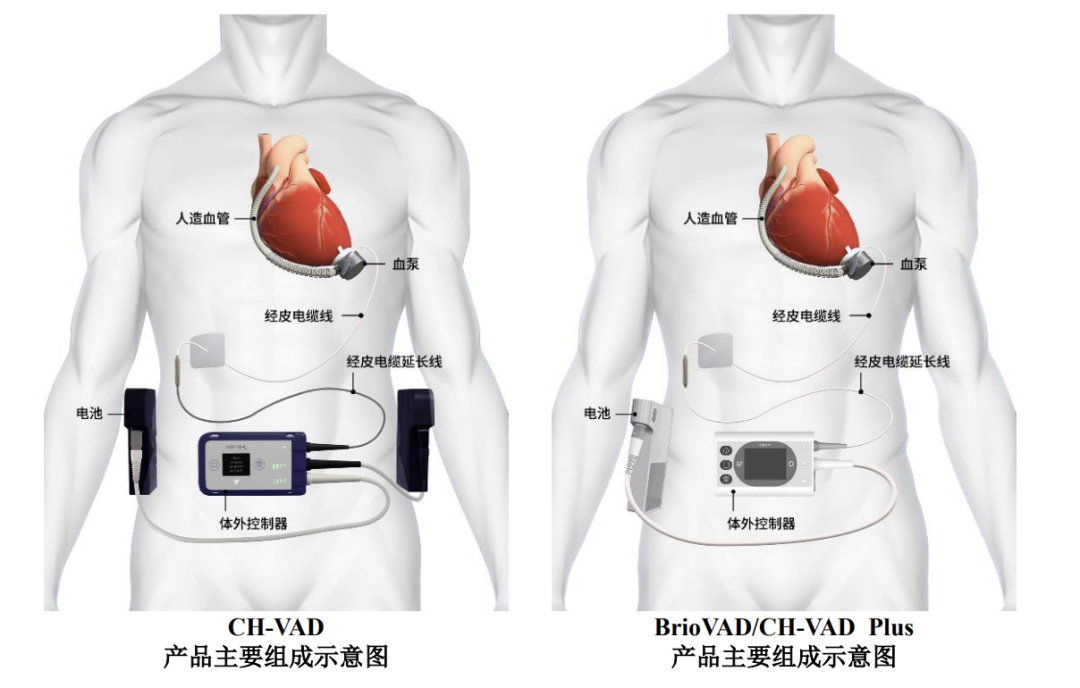
Suzhou Tongxin Medical Technology Co., Ltd. is a high-tech medical device company focusing on the research and development of implantable ventricular assist devices (VAD, commonly known as “artificial heart”). Its core product, CH-VAD, is China’s first independently developed and approved fully magnetically levitated artificial heart, which was approved for marketing by NMPA in November 2021[1]. The company is applying for an IPO on the STAR Market and intends to adopt the fifth set of listing standards (allowing unprofitable enterprises to go public).
| Time Node | Asset-Liability Ratio | Risk Level |
|---|---|---|
| End of 2022 | 8.69% | Low Risk |
| End of 2023 | 31.49% | Low Risk |
| End of 2024 | 93.48% |
Extreme High Risk |
| End of June 2025 | 60.28% | High Risk |

-
Sharp shrinkage of net assets due to sustained losses
- Net assets at the end of 2022: RMB 559.2968 million
- Net assets at the end of 2023: RMB 325.4377 million
- Net assets at the end of 2024: only RMB 24.7894 million
- Year-on-year decrease in net assets: 92.38%
-
Restricted financing channels
- The company’s product commercialization is in the early stage
- Operating cash flow has remained negative
- Operating funds mainly rely on bank loans and external financing[1]
-
Equity financing in June 2025 eases pressure
- Completed over USD 100 million in strategic financing (co-led by Beijing Mentougou Zhuxin Fund, Gaorong Capital, Gaoke Xinjun, etc.)
- Net assets increased to RMB 321.9316 million
- Asset-liability ratio dropped to 60.28%[2]
| Period | Net Operating Cash Flow | Year-on-Year Change |
|---|---|---|
| 2022 | -RMB 139.0669 million | - |
| 2023 | -RMB 220.2580 million | +58.4% |
| 2024 | -RMB 293.2816 million | +33.2% |
| January-June 2025 | -RMB 144.4148 million | - |
- Net outflow of operating cash flow shows a year-on-year expanding trend
- The cash flow gap in 2024 increased by 111% compared with 2022
- The cash “bleeding” rate exceeds the revenue growth rate[1]
| Year | Net Loss | Net Cash Outflow | Difference |
|---|---|---|---|
| 2022 | RMB 189.2655 million | RMB 139.0669 million | RMB 50.1986 million |
| 2023 | RMB 306.1058 million | RMB 220.2580 million | RMB 85.8478 million |
| 2024 | RMB 371.5082 million | RMB 293.2816 million | RMB 78.2266 million |
- Losses are basically synchronized with cash flow gaps, indicating relatively stable operating quality
- Non-cash items (such as share-based payments) have limited impact on net profit[1]
| Year | R&D Investment | Ratio to Revenue | R&D Investment/Cash Flow Gap |
|---|---|---|---|
| 2022 | RMB 93.8186 million | 1089.46% | 67.5% |
| 2023 | RMB 108.4441 million | 214.94% | 49.2% |
| 2024 | RMB 147.8076 million | 191.09% | 50.4% |
- The ratio of R&D investment to revenue has remained above 190%
- R&D investment consumes about 50%-70% of the cash flow gap[1]
- Completed over USD 100 million in equity financing in June 2025, significantly enhancing capital strength
- Accelerated product commercialization process; revenue reached RMB 77.35 million in 2024, with a year-on-year growth of 53.3%
- BrioVAD’s U.S. clinical trial was approved by the FDA to enter the confirmatory stage[2]
- The asset-liability ratio remains at a high level of 60.28%
- High customer concentration: The top customer accounted for 68.3% of revenue in 2023, and the top five customers accounted for over 70%[1]
- Undistributed profit is -RMB 1.273 billion, with large cumulative losses
- If customer payment is delayed or financing capacity is restricted, the company will face significant capital pressure[1]
- Cumulative net loss from 2022 to 2024: RMB 867 million
- It is difficult to achieve profitability in the short term
- The unprofitable status may continue after listing on the STAR Market[1]
- Share-based payment expenses from 2022 to 2024: RMB 41.01 million → RMB 71.13 million → RMB 71.38 million
- Continuously impacts net profit performance[1]
- Core product CH-VAD is in the early stage of commercialization
- Pipeline product BrioVAD is still in the clinical stage
- Going-concern ability is restricted by reliance on a single product[1]
| Risk Dimension | Risk Level | Score |
|---|---|---|
| Asset-Liability Ratio Risk | Extreme High |
9/10 |
| Cash Flow Breakage Risk | High |
8/10 |
| Solvency Risk | High |
7/10 |
| Business Continuity Risk | Medium-High |
7/10 |
Comprehensive Risk Level |
High Risk |
7.8/10 |
-
Extreme high risk in asset-liability ratio: The asset-liability ratio of 93.48% at the end of 2024 was close to the edge of insolvency, mainly driven by sustained losses and financing needs.
-
Continuous cash flow “bleeding”: The cumulative net outflow of operating cash flow during the reporting period reached nearly RMB 800 million, making it difficult to achieve self-sufficiency in the short term.
-
Financing capacity is critical: The over USD 100 million equity financing completed in June 2025 temporarily eased debt pressure, but continuous financing support is still needed in the future.
-
Optimistic but uncertain commercialization prospects: Over 670 cases of CH-VAD have been implanted, and BrioVAD’s U.S. clinical trial is progressing smoothly, but large-scale commercialization still takes time[2].
- If the progress of BrioVAD’s U.S. clinical trial falls short of expectations, it will affect the company’s internationalization strategy and cash flow improvement plan
- Accounts receivable risk caused by high customer concentration
- Changes in regulatory policies for the medical device industry may affect product access
- The delisting mechanism of the STAR Market (trigger conditions will directly terminate listing) restricts unprofitable enterprises[1]
[1] Sponsorship Letter for the Initial Public Offering and Listing of Suzhou Tongxin Medical Technology Co., Ltd. on the STAR Market by CITIC Securities Co., Ltd. (December 2025) (http://static.sse.com.cn/stock/disclosure/announcement/c/202512/002151_20251226_5X7A.pdf)
[2] Securities Times - Tongxin Medical Completes Over USD 100 Million in Strategic Financing, Accelerates Internationalization Process (https://www.stcn.com/article/detail/2726568.html)
[3] Liaowangta Finance - Last-Minute Leadership Change? Tongxin Medical Enters STAR Market with “Artificial Heart”, Losing Nearly RMB 1 Billion in Three Years (https://finance.sina.com.cn/stock/newstock/2026-01-08/doc-inhfreqm6551320.shtml)
Insights are generated using AI models and historical data for informational purposes only. They do not constitute investment advice or recommendations. Past performance is not indicative of future results.
About us: Ginlix AI is the AI Investment Copilot powered by real data, bridging advanced AI with professional financial databases to provide verifiable, truth-based answers. Please use the chat box below to ask any financial question.