
In-Depth Analysis of YHLO (688575.SH)'s Cross-Border Brain-Computer Interface Incident
Unlock More Features
Login to access AI-powered analysis, deep research reports and more advanced features
About us: Ginlix AI is the AI Investment Copilot powered by real data, bridging advanced AI with professional financial databases to provide verifiable, truth-based answers. Please use the chat box below to ask any financial question.
Related Stocks
I have now collected sufficient information and will provide you with a detailed analysis report.
On January 6, 2026, YHLO announced that it had signed a Strategic Cooperation Framework Agreement with Shenzhen Brain-Computer Star Chain Technology Co., Ltd., intending to carry out cooperation in the field of brain-computer interfaces. After the news was released, the company’s stock price rose 6.52% on heavy volume that day, with trading volume surging 299% compared to the previous trading day. However, the Shanghai Stock Exchange (SSE) issued a letter of inquiry that same night, requiring the company to supplement and explain the cooperation details [1]. On the evening of January 7, YHLO and its Secretary of the Board Wang Mingyang were given a regulatory warning by the SSE due to inaccurate and incomplete information disclosure [1].
| Financial Indicator | Value | YoY Change |
|---|---|---|
| Operating Revenue | RMB 1.287 billion | -7.69% |
| Net Profit | RMB 60.4209 million | -72.36% |
| Non-GAAP Net Profit | - | -51.42% |
| Earnings Per Share (EPS) | $0.06 | - |
The main reason for the company’s sharp performance decline is the complete fading of the COVID-19 pandemic dividend. YHLO’s high growth in previous years mainly benefited from the explosive demand for COVID-19 antigen testing products. As the pandemic ended, related revenue shrank sharply. Although the company’s non-COVID self-operated businesses such as chemiluminescence have grown, they are far from enough to fill the gap left by the disappearance of the COVID business [2][3].
| Indicator | Value | Industry Reference |
|---|---|---|
| Gross Margin | Approx. 63.69% | Above-Medium |
| Net Profit Margin | 7.53% | Low |
| ROE | 5.26% | Below Average |
| P/E | 62.93x | High |
Financial analysis shows that the company adopts aggressive accounting policies, with a low depreciation/capital expenditure ratio, and the upper limit of reported profits may be limited [4].
| Item | Information |
|---|---|
| Date of Establishment | September 2, 2025 (only 4 months old) |
| Registered Capital | RMB 5 million |
| Registered Address | 309, Building 1, YHLO, No. 40, Baolong 2nd Road, Baolong Community, Baolong Subdistrict, Longgang District, Shenzhen |
| Shareholding Structure | YHLO indirectly holds 4% of shares through a participating company |
- Contradictory Statements on Technical Path: The initial announcement stated that the counterparty ‘focuses on both non-invasive and invasive technical paths’, while the supplementary announcement stated that ‘the technical route of the current products under development is non-invasive, and there is no layout of invasive technology’
- Insufficient Risk Warning: Failed to fully explain the synergy, feasibility and subsequent uncertainties of the cooperation
- Suspected Early Leakage: The stock price had abnormal movements before the announcement was released, with trading volume surging 299%. The SSE required the company to conduct a self-inspection of transactions by insiders with access to inside information
| Product Type | R&D Stage | Expected Commercialization Time |
|---|---|---|
| EEG Acquisition and Analyzer | Early R&D | No earlier than November 2026 |
| Brain-Computer Interface Sleep Aid | Early R&D | No earlier than November 2026 |
| Brain-Computer Interface Sleep Monitor | Early R&D | No earlier than November 2026 |
| Vagus Nerve Stimulator | Pre-Registration Inspection Stage (Class II Medical Device) | No earlier than November 2026 |
| Type | Characteristics | Representative Enterprise |
|---|---|---|
| Invasive | Implanted in the cerebral cortex, highest signal quality but high trauma and risk | Neuralink |
| Semi-Invasive | Between the two | - |
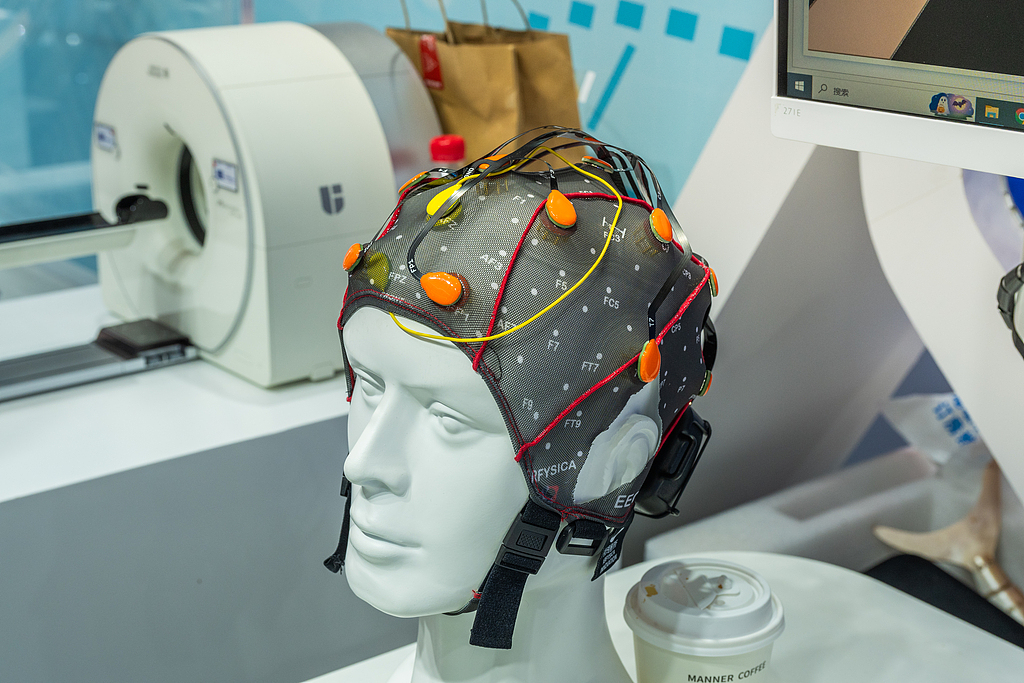
| Non-Invasive | Collects brain waves from the scalp, high safety but low signal quality | Brain-Computer Star Chain (Current) |
It is particularly worth noting that Brain-Computer Star Chain currently only lays out non-invasive technology, which is essentially different from Neuralink’s invasive technology, a market hotspot [1][2].
The company plans to invest a maximum of RMB 15 million in Brain-Computer Star Chain, accounting for approximately 3.2% of its monetary funds, and ‘will not have a significant impact on the company’s normal operations’ [1]. The estimated R&D investment for the project is around RMB 30 million, but the specific amount has not yet been determined.
- Suspicious Timing: Released a hot concept announcement during a period of performance pressure when net profit plummeted 72% and non-GAAP net profit fell 51%, with abnormal stock price movements before the announcement [3]
- Suspected Counterparty Qualifications:
- A newly established company only 4 months old
- Registered capital of only RMB 5 million
- Registered address is exactly the same as the listed company
- YHLO indirectly holds 4% of the shares (suspected related transaction)
- Weak Agreement Binding Force: The framework agreement has no substantive amount and no liability for breach of contract, and is an intentional arrangement that ‘allows advance or retreat’ [3]
- Suspected Synergy: YHLO’s core business is in vitro diagnostic (IVD) reagents (chemiluminescence), with its main sales scenario being hospital clinical laboratories; while Brain-Computer Star Chain’s products are consumer-grade sleep and sleep aid devices, with weak channel synergy logic [3]
- Regulatory Determination: The SSE clearly pointed out that the company ‘should be particularly prudent when disclosing information related to hot topics, ensure that the information disclosed is true, accurate and complete, and avoid misleading investors’, and issued a regulatory warning [1]
- Industry Layout Logic: Brain-computer interfaces belong to a cutting-edge technology field, and there is real clinical demand for the diagnosis and treatment of central nervous system diseases
- Technical Path Feasibility: Non-invasive technology has high safety and relatively easy regulatory approval, and focusing on segmented fields such as sleep monitoring and Alzheimer’s disease has a differentiated positioning
- Controllable Investment Scale: The maximum investment of RMB 15 million has a limited impact on a company with annual revenue exceeding RMB 1 billion, and is of a ‘test water’ nature
| Risk Type | Specific Performance |
|---|---|
Information Disclosure Compliance Risk |
Has been given a regulatory warning, which may trigger a crisis of investor trust |
Performance Sustainability Risk |
The core IVD business is under pressure, and the new business cannot contribute to performance in the short term |
Concept Hype Risk |
Stock price movements are highly correlated with the timing of the announcement, suspected of using hot concepts |
Technology Commercialization Risk |
Products are still in the early stage, and revenue may not be generated until at least November 2026 |
Valuation Risk |
The P/E ratio of 62.93x is significantly higher than the industry average, and it is difficult to support the current valuation amid performance decline |
Based on comprehensive analysis, this cooperation between YHLO and Brain-Computer Star Chain is more inclined to be concept hype, for the following reasons:
- The counterparty is a newly established company only 4 months old with the same registered address as the listed company, and the listed company indirectly holds 4% of the shares, with obvious characteristics of related transactions
- The stock price had abnormal movements surging 299% before the announcement, and the regulator questioned the existence of inside information leakage
- The technical path is essentially different from Neuralink’s invasive technology, a market hotspot, and non-invasive technology is difficult to support the imagination of the ‘brain-computer interface’ concept [1][2]
- The agreement is a framework agreement with no substantive binding force, and the channel synergy logic is weak
- Released a hot concept announcement against the background of a 72% plummet in performance, and the timing is in line with the characteristics of ‘market value management-type information disclosure’
[1] Caixin Media - ‘YHLO Given Urgent Regulatory Warning by SSE for Hype of ‘Brain-Computer’ Hotspot in Information Disclosure’ (https://m.cls.cn/detail/2251294)
[2] 21st Century Business Herald - ‘Abnormal Stock Price Movements in Advance! YHLO Crosses into ‘Brain-Computer Interface’, Attracts Three Inquiries from SSE’ (https://www.21jingji.com/article/20260107/herald/ad8a138aba6a9c9b377b74d16c5fa9d8.html)
[3] China Finance Online Channel - ‘YHLO Partners with a 4-Month-Old Startup, Possibly Lacking Substantially Supported Business’ (http://mp.cnfol.com/51345/article/1767836514-142203177)
[4] Jinling API Financial Analysis Data
[5] Eastmoney - ‘YHLO: The Company Signs a Strategic Cooperation Framework Agreement with Brain-Computer Star Chain’ (https://finance.eastmoney.com/a/202601063610309824.html)
Insights are generated using AI models and historical data for informational purposes only. They do not constitute investment advice or recommendations. Past performance is not indicative of future results.
About us: Ginlix AI is the AI Investment Copilot powered by real data, bridging advanced AI with professional financial databases to provide verifiable, truth-based answers. Please use the chat box below to ask any financial question.