
Analysis of Global Transformer Lead Times and the Sustainability of China's Supply Chain Advantages
Unlock More Features
Login to access AI-powered analysis, deep research reports and more advanced features
About us: Ginlix AI is the AI Investment Copilot powered by real data, bridging advanced AI with professional financial databases to provide verifiable, truth-based answers. Please use the chat box below to ask any financial question.
Related Stocks
Based on the latest collected industry data and market information, I will provide you with an
According to Q2 2025 survey data from international energy consulting firm Wood Mackenzie, lead times for large global power transformers and generator step-up transformers have reached record levels
| Transformer Type | Lead Time | Change vs. 2019 |
|---|---|---|
| Generator Step-Up Transformer (GSU) | 144 weeks (approx. 2.8 years) | 274% increase in demand |
| Power Transformer | 128 weeks (approx. 2.5 years) | 116% increase in demand |
| Distribution Transformer | Approximately 60 weeks (over 1 year) | 10%-30% supply gap |
This round of supply tightness is not a localized phenomenon, but a systemic global shortage of transmission and distribution equipment. A joint report released by Wood Mackenzie and American Clean Power points out that since 2019, demand for almost all major power infrastructure categories has surged by 35% to 274%
The global surge in transformer demand stems from the superposition of three structural factors:
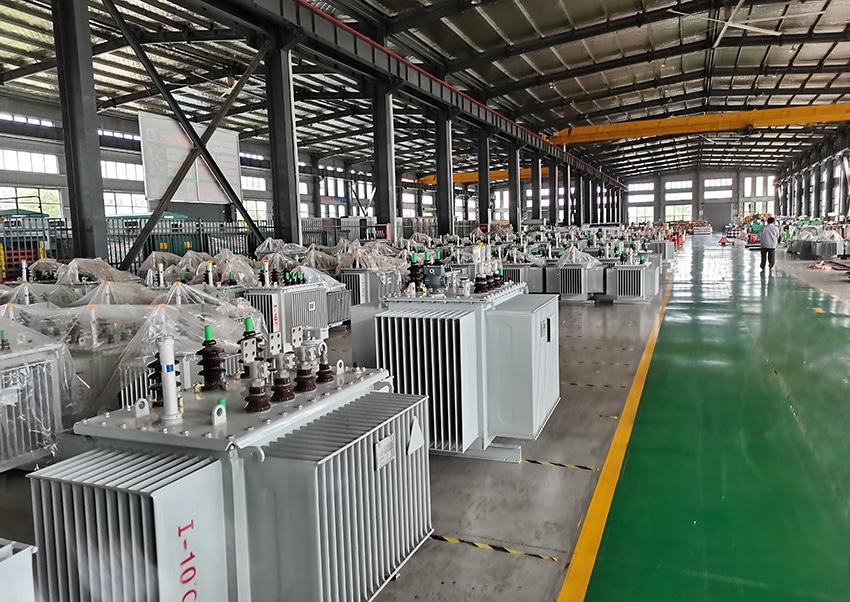
China has established the world’s largest transformer industry system. According to a report by Science and Technology Daily, China’s transformer output accounts for over 60% of the global total
From the perspective of export data, China’s transformer industry is experiencing unprecedented prosperity:
- In the first 8 months of 2025, China’s transformer export value reached RMB 29.711 billion [9]
- In January-October 2025, transformer export value reached RMB 52.22 billion, surging 38.9% year-on-year [10]
- In January-November 2025, cumulative export value reached RMB 57.86 billion, up 36.3% year-on-year [11]
Growth by region is particularly impressive:
- European market: Soared by over 138%
- Asian market: Increased by 65.39%
- African market: Increased by 28.03%
The core competitiveness of China’s transformer industry lies in its complete industrial chain from raw materials to finished products:
- TBEA: Annual output of transformers and reactors reaches 420 million kVA, ranking among the top globally
- XD Electric: Leader in ultra-high voltage (UHV) projects, dominating 65% of the UHV market
- Baobian Electric: Products exported to over 40 countries and regions
Zhang Xiaojin, General Manager of Jiangsu Huachen, stated: “The core competitiveness of Chinese transformers lies in a mature and complete supply chain system and strong industrial integration capabilities. For transformers with equivalent performance, domestic products are priced at approximately RMB 10,000, while similar European equipment may cost RMB 30,000 to 50,000.”
Technologically, China has established absolute advantages in UHV and extra-high voltage (EHV) fields:
- TBEA is the only enterprise deeply involved in all UHV projects
- XD Electric holds an absolute leading position in UHV AC technology
- High-frequency transformer magnetic integration technology is at the industry forefront, with mass-produced 2.4MW solid-state transformers achieving an efficiency of over 97.5%
- Siemens Energy (Germany): Investing €2 billion in capacity expansion
- Hitachi Energy (Japan): Planning to invest $6 billion in capacity expansion by 2027 and hire 15,000 employees
- HD Hyundai Electric: Investing $274 million to increase global transformer production capacity by 30%
- Hitachi Energy: Adding $250 million for global transformer capacity expansion [21]
- TGood has deployed an integrated “high-voltage + solid-state transformer” solution with an energy conversion efficiency of over 98%
- Jinpan Technology’s SST prototype is expected to complete certification in Q4 2025, and its high-voltage HVDC product is expected to complete certification in Q2 2026
- XD Electric’s high-frequency transformer magnetic integration technology is at the industry forefront [23]
Based on industry trends and enterprise competitiveness, it is recommended to focus on the following three investment themes
| Investment Theme | Target | Core Logic |
|---|---|---|
| Leading Enterprises Going Global | TBEA (600089) | Deep participant in ultra-high voltage (UHV) projects; overseas orders increased 70% year-on-year |
| Leading Enterprises Going Global | Siyuan Electric (002028) | Leader in power equipment exports; breakthrough in North American AIDC market |
| New Energy Supporting Equipment | TGood (300001) | Leader in packaged substations; advanced solid-state transformer technology |
| New Energy Supporting Equipment | Jinpan Technology (688676) | Leader in dry-type transformers; digital factory upgrade |
- Trade Policy Risk:Tariffs and non-tariff barriers may impact exports
- Raw Material Price Volatility:Prices of core materials such as grain-oriented silicon steel and copper affect gross profit margins
- Overcapacity Risk:Global capacity expansion may lead to an industry downturn
- Technological Iteration Risk:New technologies such as solid-state transformers may disrupt the traditional market
[1] Wood Mackenzie - “Making the Connection: Meeting the Electric T&D Supply Chain Challenge” (September 2025)
[2] Wood Mackenzie & American Clean Power - Global T&D Equipment Demand Analysis (2025)
[3] Goldman Sachs - Research Report on Aging European Grid Infrastructure (September 2025)
[4] Bank of America - Report on the Status of U.S. Power Infrastructure (August 2025)
[5] International Energy Agency (IEA) - 2025 Mid-Term Progress Report on the Power Sector
[6] Huashang Taolue - “Global Scramble for Chinese Transformers” (January 6, 2026)
[7] Science and Technology Daily - Report on the Global Status of China’s Transformer Industry
[8] United Markets - Global Transformer Market Forecast 2031
[9] General Administration of Customs of China - Transformer Export Data for January-August 2025
[10] General Administration of Customs of China - Transformer Export Data for January-October 2025
[11] General Administration of Customs of China - Transformer Export Data for January-November 2025
[12] Huashang Taolue - Analysis of China’s Grain-Oriented Silicon Steel Industry (January 2026)
[13] Jiemian News - “Transformer Shortage: Chinese Factories Patch Global Power Grids” (December 19, 2025)
[14] Jiemian News - Interview with Zhang Xiaojin, General Manager of Jiangsu Huachen (December 2025)
[15] Rystad Energy - Supply Chain Analysis by Edvard Christoffersen (2025)
[16] Jiemian News - Report on Lead Times for Orders from Chinese Transformer Manufacturers
[17] Jiemian News - Revenue Data of Jiangsu Huachen (First Three Quarters of 2025)
[18] Caifu Hao - Analysis of TBEA’s Overseas Orders and Performance (January 7, 2026)
[19] Caifu Hao - Analysis of Siyuan Electric’s Performance and Production Capacity (January 2026)
[20] Jiemian News - Analysis of Talent Training Cycles in the Transformer Industry
[21] Mordor Intelligence - Hitachi Energy Capacity Expansion Plan (March 2025)
[22] Huashang Taolue - Analysis of U.S. Tariff Policies on Chinese Transformers
[23] Caifu Hao - Analysis of XD Electric’s Technological Advantages (January 2026)
[24] Jiemian News - Jiangsu Huachen’s Overseas Factory Construction Plan
[25] Huashang Taolue - Investment Plans for Grid Upgrades in Europe and the U.S.
[26] Caifu Hao - Investment Themes and Target Selection in the Transformer Industry (January 7, 2026)
Insights are generated using AI models and historical data for informational purposes only. They do not constitute investment advice or recommendations. Past performance is not indicative of future results.
About us: Ginlix AI is the AI Investment Copilot powered by real data, bridging advanced AI with professional financial databases to provide verifiable, truth-based answers. Please use the chat box below to ask any financial question.