
Trump Policy Risk Analysis: Defense Spending, Housing Restrictions, and Venezuelan Oil Create Market Uncertainty
Unlock More Features
Login to access AI-powered analysis, deep research reports and more advanced features
About us: Ginlix AI is the AI Investment Copilot powered by real data, bridging advanced AI with professional financial databases to provide verifiable, truth-based answers. Please use the chat box below to ask any financial question.
Related Stocks
The Trump administration has outlined an ambitious agenda of policy proposals that are creating differentiated impacts across various market sectors. According to the Yahoo Finance report featuring Kevin Gordon of the Schwab Center for Financial Research [0], three primary policy areas are driving current market dynamics: a substantial increase in defense spending to $1.5 trillion by 2027, potential restrictions on institutional investors acquiring single-family residential properties, and new policy approaches toward Venezuelan oil following developments related to Maduro’s political status [0].
The defense spending proposal represents a approximately 67% increase from current levels of $901 billion, signaling a significant shift in military investment priorities [7][8]. The housing policy proposal, which would target large institutional investors, faces uncertain legislative prospects as President Trump himself acknowledged that congressional action would be required to implement such restrictions [1][2]. Meanwhile, the Venezuelan oil policy introduces geopolitical considerations that Morgan Stanley analysts describe as carrying “significant U.S. intervention” implications likely to “unfold over time” due to the “high degree of political and operational uncertainty” [6].
Market responses to these policy announcements have demonstrated notable sector divergence, reflecting investor assessments of potential winners and losers. The S&P 500 has shown relatively modest aggregate movement across trading sessions, recording a 0.20% increase on January 8, a 0.35% decline on January 7, and a 0.53% gain on January 6 [0]. However, individual sector movements have been substantially more pronounced.
Defense stocks experienced significant volatility throughout the announcement period, initially declining sharply following threats of restrictions on defense contractors before recovering substantially when the $1.5 trillion budget proposal emerged [4][5]. This pattern demonstrates the heightened sensitivity of defense sector equities to administration rhetoric and the potential for rapid sentiment shifts based on new information.
The housing sector, particularly real estate investment trusts and companies with significant institutional investment operations, faced negative pressure. Blackstone experienced notable declines estimated between 5% and 9% following the announcement of potential restrictions on institutional home purchases [1][2]. The American Enterprise Institute’s analysis provides important context, indicating that large institutional investors currently own approximately only 1% of the U.S. single-family housing stock, suggesting the market impact of such restrictions may prove more politically significant than economically transformative [2].
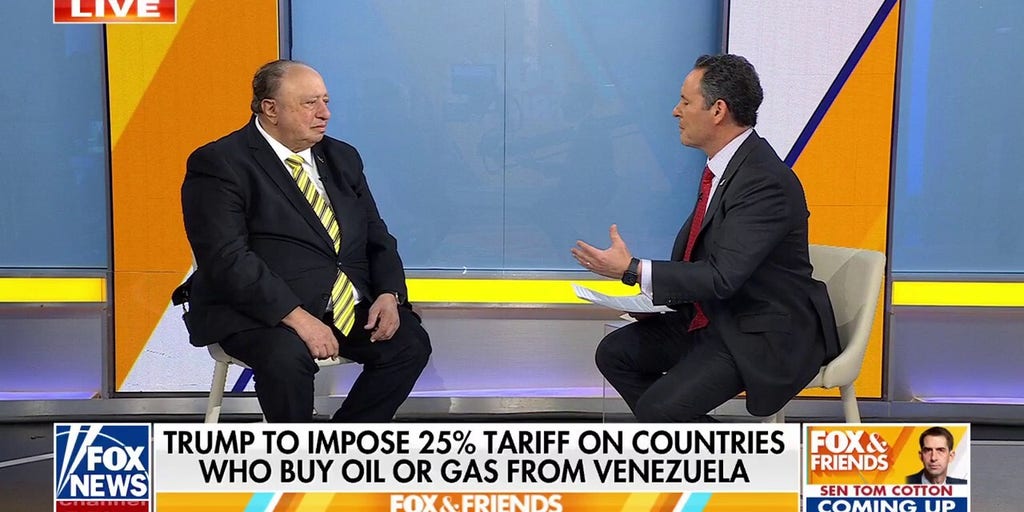
Energy markets showed measured response to Venezuelan developments, with oil prices rising approximately 1% as traders assessed potential supply implications [3]. The Morgan Stanley analysis emphasizes that effects from Venezuelan policy changes are likely to unfold gradually, introducing uncertainty about short-term price trajectories while potentially creating longer-term opportunities for companies positioned to benefit from increased Venezuelan oil production [6].
Kevin Gordon’s characterization of “Trump policy risk” as a “persistent theme” for markets suggests investors should anticipate continued uncertainty and potential volatility as policy details emerge and legislative processes unfold [0]. Several factors contribute to this assessment.
First, the defense budget increase requires congressional authorization, introducing political timeline risk as the proposal faces potential resistance from deficit hawks and Democratic lawmakers [7][8]. The scale of the proposed increase—representing tens of hundreds of billions in additional annual spending—will require complex budgetary negotiations that could extend well beyond initial announcement timelines.
Second, the institutional housing purchase ban explicitly requires legislative action, as President Trump has acknowledged [1][2]. The political feasibility of such legislation remains uncertain, introducing additional timeline and implementation risk for investors positioning based on housing sector impacts.
Third, the Venezuelan oil policy carries inherent geopolitical uncertainty that extends beyond domestic political considerations. The “high degree of political and operational uncertainty” cited by Morgan Stanley analysts [6] suggests market participants should expect potential volatility tied to international developments, potential sanctions adjustments, and the operational challenges of rapidly scaling Venezuelan oil production.
The current market environment reflects investor efforts to parse a complex set of policy announcements with varying implementation timelines, legislative requirements, and economic implications. Defense sector sensitivity to administration communications has demonstrated the potential for rapid sentiment shifts, while housing sector impacts may prove more limited than initial price reactions suggest given the relatively small percentage of housing stock owned by institutional investors.
The upcoming Trump speech at Davos on January 22, 2026, represents a potential catalyst for additional housing and affordability policy details [0]. Additionally, an expected Supreme Court ruling on tariff-related matters could introduce approximately $133.5 billion in potential refunds, creating another source of near-term market volatility [9].
Investors should monitor congressional reactions to defense spending proposals, legislative progress on housing restrictions, and implementation timelines for Venezuelan oil policy as key indicators of how these policy risks may evolve in the coming weeks and months.
The policy announcements reveal important correlations between different market segments and their sensitivity to governmental policy shifts. Defense stocks demonstrated the most pronounced short-term volatility, reacting both to threats of contractor restrictions and the subsequent budget increase announcement [4][5]. This pattern suggests defense sector pricing remains highly responsive to policy communications and that investors should expect continued sensitivity as administration priorities crystallize.
The housing sector reaction provides insight into investor perception versus economic reality. While Blackstone’s stock decline reflected immediate market concern about institutional investment restrictions, the underlying economic impact may prove modest given institutional investors’ relatively small footprint in the single-family housing market [2]. This divergence between market pricing and fundamental impact assessment may create opportunities for investors who can distinguish between political rhetoric and economic substance.
The analysis reveals distinct temporal profiles for different policy risks. Venezuelan oil policy effects are expected to “unfold over time” [6], suggesting longer-term opportunity windows for patient investors. Defense spending increases require legislative processes that will extend implementation timelines, potentially creating entry opportunities for investors who can assess the probability of congressional approval. The housing ban proposal faces the most uncertain timeline given its explicit requirement for congressional action [1][2].
The Schwab strategist’s characterization of policy noise as a “persistent theme” suggests structural changes in market dynamics that may influence trading strategies beyond individual policy outcomes [0]. Investors appear to be pricing in ongoing uncertainty, which may support volatility-focused strategies and increased emphasis on risk management across portfolios.
The most time-sensitive developments include the upcoming Supreme Court tariff ruling [9], which could introduce immediate market-moving implications, and ongoing congressional reactions to defense spending proposals. The January 22 Davos speech [0] represents another near-term catalyst for additional policy details. Venezuelan developments require longer-term monitoring given the expected gradual unfolding of policy effects [6].
The Trump administration’s recent policy announcements spanning defense spending, housing market restrictions, and Venezuelan oil policy have created a complex market environment characterized by sector-specific volatility and persistent policy uncertainty. Kevin Gordon of the Schwab Center for Financial Research has identified “Trump policy risk” as an ongoing theme influencing market dynamics [0].
Market reactions have been differentiated across sectors, with defense stocks showing pronounced sensitivity to evolving policy communications, housing sector declines potentially overstating economic impact given institutional investors’ limited housing stock ownership [2], and energy markets responding cautiously to Venezuelan developments [3][6].
Implementation timelines vary significantly across policy areas, with Venezuelan effects expected to unfold gradually [6], defense spending increases requiring congressional authorization [7][8], and housing restrictions needing legislative action [1][2]. These varying timelines create a complex environment for market positioning.
Near-term catalysts include the Trump Davos speech on January 22, 2026, and an expected Supreme Court ruling on tariff matters with potential $133.5 billion refund implications [9]. Congressional reaction to defense proposals and legislative progress on housing restrictions represent key monitoring priorities for investors navigating this policy environment.
Insights are generated using AI models and historical data for informational purposes only. They do not constitute investment advice or recommendations. Past performance is not indicative of future results.
About us: Ginlix AI is the AI Investment Copilot powered by real data, bridging advanced AI with professional financial databases to provide verifiable, truth-based answers. Please use the chat box below to ask any financial question.