
Tariffs Reshaping Product Design: Softer Sofas, Fewer Sizes, and Simplified Packaging Transform Consumer Goods
Unlock More Features
Login to access AI-powered analysis, deep research reports and more advanced features
About us: Ginlix AI is the AI Investment Copilot powered by real data, bridging advanced AI with professional financial databases to provide verifiable, truth-based answers. Please use the chat box below to ask any financial question.
Related Stocks
The January 8, 2026 MarketWatch report [1] documenting how tariffs are changing not just prices but the physical characteristics of products themselves represents a significant development in understanding trade policy impacts on consumer markets. This phenomenon extends far beyond simple cost pass-through, revealing fundamental shifts in manufacturing strategies, product development approaches, and supply chain configurations across multiple industries.
The current tariff regime represents a dramatic departure from decades of trade policy that had established duty-free treatment for many consumer goods categories. According to the Progressive Policy Institute, tariffs on toys and dolls reached approximately $888 million between January and July 2025, while the advocacy group We Pay the Tariffs estimated $1.2 billion in tariffs between January and August 2025 [3]. These figures are particularly significant because they mark the end of a 30-year period of duty-free treatment for toys that began with the 1995 Uruguay Round global trade agreement [3].
Current tariff rates affecting consumer goods include a 30% tariff rate on most goods from China, with a one-year pause in trade hostilities currently in effect, and a 20% tariff rate on goods from Vietnam following preliminary trade accord negotiations [3]. The furniture sector faces initial tariffs effective October 14, 2025, with further increases on January 1, 2026, though upholstered furniture tariffs were subsequently delayed for one year [4][5]. The National Taxpayers Union reported in August 2025 that tariffs have added approximately 50% to backpacks, 38% to sweatshirts, and over 50% to water bottles since 2021, in many cases doubling or tripling prices for these goods [6].
Research from Harvard Business School indicates that the 2025 tariff increases have already pushed retail prices of imported goods up approximately 5.4% compared to pre-tariff trends, with domestic goods in import-intensive sectors rising about 3% [7]. The study found that only about one-fifth of tariff costs have reached retail shelves so far, with most of the burden absorbed upstream by manufacturers and wholesalers [7]. Sectors with the highest import content—including household furnishings and electronics—face the strongest continued pressure [7].
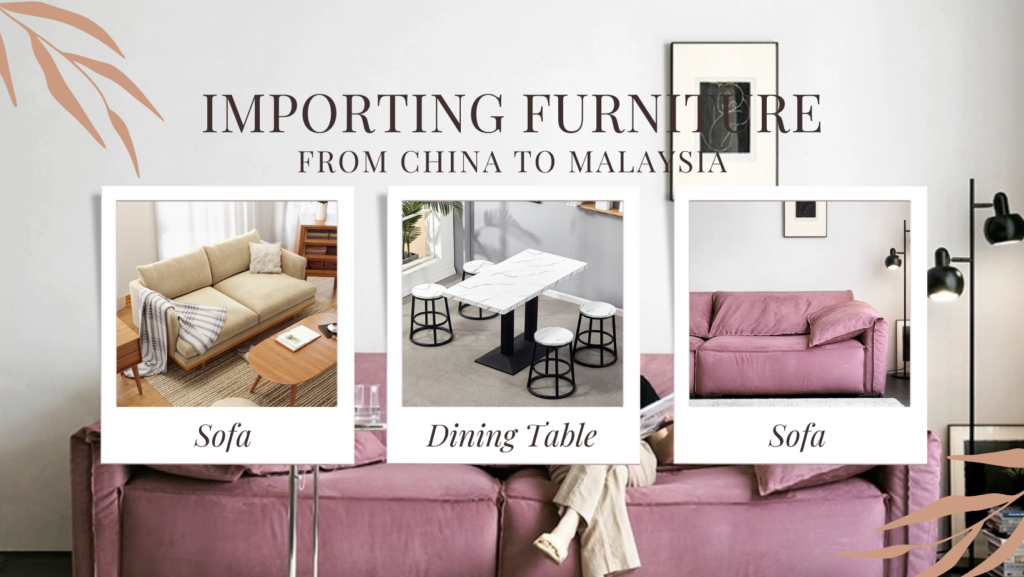
The furniture sector has emerged as one of the most visible examples of tariff-driven product redesign. Furniture companies are modifying cushion construction to reduce material costs and shipping weights, implementing reduced foam density in softer couch cushions that require less material and reduce both production costs and shipping weights [1][2]. Simplified construction methods with streamlined designs that require fewer components or less labor-intensive assembly have become increasingly common.
Material substitution represents another significant adaptation strategy. Walmart disclosed in May 2025 that some suppliers were “shifting materials from tariff-impacted components like aluminum to fiberglass, where there is no tariff” [2]. The Home Décor Market Report from Mordor Intelligence notes that raw-material price volatility has a -1.2% impact on CAGR forecasts, with North America acutely affected due to tariffs [9]. Lumber prices climbed 16% year-over-year in May 2025 to $450 per thousand board feet, while Canadian softwood duties have lifted costs by up to 80% [9].
The apparel sector is experiencing significant product line simplification as companies seek to maintain profitability under tariff pressure. Columbia Sportswear publicly disclosed in May 2025 that product redesigns were among the options being explored for 2026 [2]. CEO Tim Boyle stated: “We have a team of experts exploring possibilities to mitigate the impact of increased tariffs, including redesign, redevelop, resource and reprice products, among other mitigation factors” [2]. The company has even added small zippered “nurse’s pockets” to some shirts as a creative duty-saving measure [12].
Hawke & Co, an apparel importer with products from China, Vietnam, and Bangladesh, has implemented several concrete changes including sizing reduction from 3XL to 2XL, eliminating the largest size category, feature simplification reducing interior zip pockets from two to one, and fabric option slimming with reduced selection of colors, patterns, and textures on some collections [2]. As company leadership explained: “We really shy away from that because of how big the garments are… There were certain things that we did for efficiencies. We need to be a lot smarter now. So our sizing will go to 2XL instead of 3XL” [2].
The toy industry has been particularly hard hit by tariffs, given its heavy reliance on Chinese manufacturing. China supplies approximately 80% of all U.S. toy imports [3]. Basic Fun, which makes toys including Tonka trucks and Care Bears, has implemented significant packaging changes including stripped-down packaging with minimal or no box packaging and battery removal offering items with or without batteries included, saving approximately $1 per unit [1][2].
CEO Jay Foreman explained: “The simpler packaging can reduce a toy’s retail price by as much as $3… We are not changing the visual style or fabrication of the product. It’s mainly around the size and packaging at this point. But only as an option” [2]. However, Foreman noted that retailers have been hesitant to commit to these lower-cost offerings: “The fact the tariffs have come down is giving retailers pause when they consider a deconstruct, as they have to balance ‘shelf appeal’ against value or cost increases. We are waiting for news” [2].
Hasbro reported a $60 million impact on net profit in 2025 from tariffs, prompting a comprehensive strategic response including manufacturing base diversification [10]. Mattel experienced a 6% decline in net sales during Q3 2025 compared to the same period in 2024, missing analyst expectations [3][11]. The company implemented price increases on signature products including Barbie dolls and withdrew its financial forecast due to tariff uncertainty [3].
The evidence suggests that tariff-driven product changes represent structural rather than temporary adaptations. The requirement to design around tariff considerations rather than purely consumer preferences may constrain product innovation in affected categories for years to come. Companies are treating tariff volatility as a design constraint for operating models rather than a temporary shock [7]. The baseline scenario involves continued policy churn layered on top of elevated price levels, requiring frequent monitoring, shorter adjustment cycles, and fundamental reconsideration of product development and sourcing strategies.
Small businesses face amplified challenges due to thinner margins and limited resources for strategic reconfiguration. Queen’s Treasures, an antique doll store in upstate New York, illustrates these challenges having laid off 4 full-time employees, now operating with only 2.5 workers, with December 2025 sales down 60% year-over-year [3]. The company raised doll prices by 20% to cover tariff costs but faces limited domestic alternatives for handmade doll production. The GameBoard, a Wisconsin board game store, was forced to discontinue product lines as game companies closed due to tariffs and pause a $60,000 store expansion loan while maintaining 8-person staff amid ongoing supply chain uncertainty [3].
The tariff regime is accelerating supply chain restructuring across multiple dimensions. Companies are actively exploring manufacturing diversification away from high-tariff countries, though building alternative supply chains takes significant time and investment. India’s toy sector ambitions, while setback by tariffs, represent a longer-term alternative to Chinese manufacturing. Bloomberg reported that Micro Plastics Pvt Ltd, India’s largest toy factory, invested $30 million in capacity that now faces uncertain returns under the 30% China tariff regime [15].
A generation of consumers may become accustomed to products with simplified features, reduced packaging, and narrower variety, potentially changing expectations around product design and value proposition. The drive toward simpler packaging affects paper, plastic, and corrugated packaging manufacturers, with companies like Tetra Pak forming coalitions to address environmental and cost pressures [17].
The analysis reveals several risk factors warranting attention from industry participants and observers. Continued price increases are likely as manufacturers and retailers work through inventory and contracts, with only about one-fifth of tariff costs having reached retail shelves so far [7]. Small businesses face elevated default and credit risk as thinner margins are further compressed by tariff costs and competitive pressures from larger players with more resources for adaptation.
Product quality considerations require attention as products designed to cost constraints may have different durability or performance characteristics. The reduction in foam density for furniture, elimination of size ranges, and removal of batteries from toys could affect consumer satisfaction and brand perception over time. Reduced consumer choice from fewer size, color, and feature options may shift competitive dynamics within categories.
Policy uncertainty creates planning challenges for businesses making long-term sourcing and design decisions, particularly with the one-year pause on certain tariffs and ongoing trade negotiations [3]. Companies must build flexibility into their operating models to adapt to potential policy changes.
Despite the challenging environment, several opportunity windows emerge from the analysis. Companies with diversified sourcing and design flexibility are likely to outperform competitors constrained by single-source dependencies or rigid product architectures. Geographic diversification of manufacturing bases represents a strategic opportunity for companies with sufficient capital and organizational capability.
Private label opportunities are expanding as retailers emphasize exclusive or controlled-source products that avoid tariff exposure. The shift from tariff-laden materials to non-tariff alternatives like fiberglass from aluminum creates opportunities for material science companies and innovative suppliers. Essential goods categories with limited import alternatives may see continued pricing power, benefiting companies with domestic manufacturing capabilities.
The tariff-driven reshaping of product design represents a fundamental shift in the consumer products industry. What began as a trade policy dispute has evolved into a structural change in how products are conceived, manufactured, and sold in the United States.
The evidence from furniture, apparel, and toy industries demonstrates that companies are implementing substantive product changes—not merely passing through price increases. Softer couch cushions, reduced sizing ranges from 3XL to 2XL, and simplified packaging with battery removal are visible manifestations of deeper supply chain and manufacturing restructurings.
Specific company responses vary based on scale and resources. Columbia Sportswear has assembled a dedicated team exploring tariff mitigation strategies including redesign, redevelopment, resourcing, and repricing options [2]. Hasbro reported a $60 million impact on net profit in 2025, while Mattel experienced a 6% decline in Q3 sales and implemented price increases on Barbie dolls [10][11]. Walmart’s suppliers are actively shifting materials to avoid tariff-impacted components, with the company indicating selective price increases may be necessary through fiscal 2026 [2][13].
The implications extend beyond immediate price effects to potentially permanent changes in product variety, manufacturing geography, and consumer expectations. As one industry attorney observed: “People are getting more creative, per se, about what are the mechanisms to navigate tariff increases in this day and age… What else can I do?” [2]
Market data from January 7, 2026 shows sector performance reflecting these dynamics, with consumer defensive stocks showing relative strength, potentially reflecting investor expectations that essential goods companies will maintain pricing power even as consumers face elevated prices across discretionary categories [14]. The 2025 holiday season saw significant “front-loading” of purchases as consumers anticipated price increases from 2026 tariffs, creating an “inflationary mirage” with nominal retail sales growth of approximately 4.1% year-over-year, but more modest real unit volume growth of 2.2% [16].
For industry participants, the imperative is to treat tariff volatility as a permanent operating constraint requiring ongoing adaptation rather than a temporary shock requiring one-time responses. The full implications of these changes will unfold over the coming years, but the evidence clearly indicates that tariffs are changing more than just prices—they are reshaping the physical products that consumers encounter on store shelves and in their homes.
Insights are generated using AI models and historical data for informational purposes only. They do not constitute investment advice or recommendations. Past performance is not indicative of future results.
About us: Ginlix AI is the AI Investment Copilot powered by real data, bridging advanced AI with professional financial databases to provide verifiable, truth-based answers. Please use the chat box below to ask any financial question.