
Analysis of the Impact of Local Vehicle Trade-In Subsidy Policies
Unlock More Features
Login to access AI-powered analysis, deep research reports and more advanced features
About us: Ginlix AI is the AI Investment Copilot powered by real data, bridging advanced AI with professional financial databases to provide verifiable, truth-based answers. Please use the chat box below to ask any financial question.
Related Stocks
Based on collected data and materials, I systematically analyze the impact of local vehicle trade-in subsidy policies for you.
| Item | Details |
|---|---|
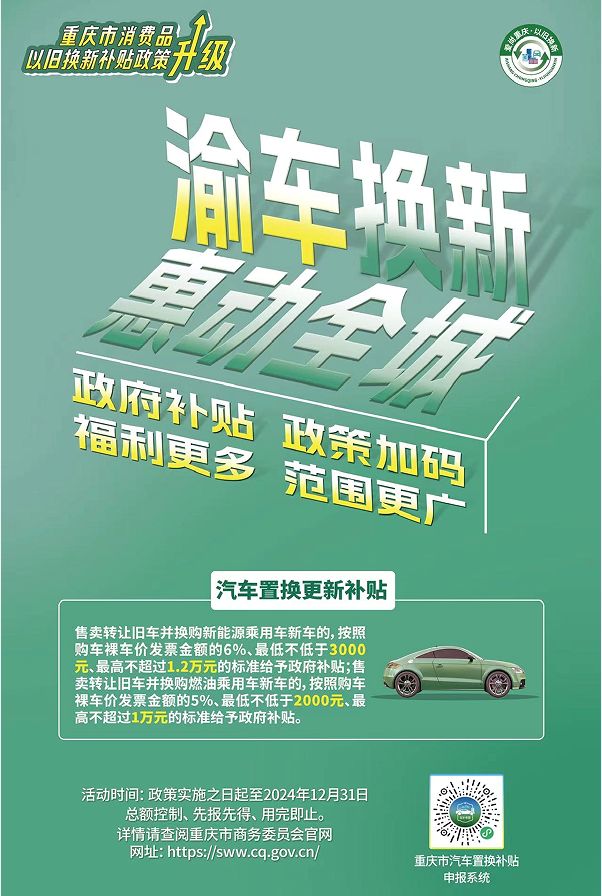
Subsidy Standard |
New energy passenger vehicles: RMB 15,000/unit; Fuel passenger vehicles: RMB 13,000/unit |
Eligibility |
Sell or transfer old vehicles registered before January 8, 2025, and purchase new vehicles in Chongqing |
Time Frame |
January 1 to December 31, 2025 (or until funds are exhausted) |
2025 Remaining Quota |
RMB 59.6 million (applications accepted until January 10, 2026) |
This policy is a local implementation detail of the national “Two Renewals” policy (equipment renewal and consumer goods trade-in), and is implemented under the principle of
According to data from the Ministry of Commerce, the 2024 vehicle trade-in policy achieved remarkable results [2][3]:
| Indicator | 2024 Data | Year-on-Year Growth |
|---|---|---|
| Vehicle Scrap and Renewal | Over 2.9 million units | - |
| Trade-In and Renewal | Over 3.7 million units | - |
| Automobile Sales Driven by Trade-In | Over RMB 920 billion | - |
| 2025 Trade-In Market Scale | Expected to exceed RMB 180 billion | - |
According to research analysis from Ping An Securities [5]:
- In 2024, the number of vehicles eligible for scrap subsidies was approximately 6.6 million, with actual scrap and renewal reaching approximately 1.5 million, representing a scrap and renewal rate of 23%
- Assuming that 20% of automobile consumption in 2025 is policy-driven, the scrap, renewal, and trade-in policies will drive approximately3.5 million vehicle sales
- Based on this calculation, the average sales price driven by trade-in is approximately RMB 139,000/unit
Cui Dongshu, Secretary-General of the China Passenger Car Association (CPCA), stated [6]:
“The trade-in policy stimulates replacement demand, and this consumer group is highly sensitive to policies, leading to significant fluctuations in market demand.”
- Policy Covers the Entire Year: The scale of vehicle demand benefiting from the trade-in policy in 2025 is expected to reach10 million units
- The 2025 “Two Renewals” policy is expected to drive 3.5 million vehicle sales
- CPCA Forecast: In 2025, domestic passenger vehicle retail sales will reach 23.4 million units (2% growth), and new energy passenger vehicle retail sales will reach 13.3 million units (20% growth)
Based on 2024 financial report data of various automobile manufacturers [7]:
| Automobile Manufacturer | Non-GAAP Net Profit (RMB 100 million) | Year-on-Year Growth Rate |
|---|---|---|
| BYD | 370 | +29.9% |
| Great Wall Motors | 97 | +101.4% |
| Geely Automobile | 85 | +51.5% |
| Seres | 56 | Turned profitable from loss |
- Private automobile manufacturers have strong profit performance, and the trade-in policy has effectively boosted market sales
- From January to September 2025, the profit margin of the automobile industry recovered to a mid-to-low level of 4.5% (driven by increased scale and stabilized price promotions)
- BYD: As a leader in new energy vehicles, its non-GAAP net profit reached RMB 37 billion in 2024, with a year-on-year growth of 29.9%, directly benefiting from the high subsidy of RMB 15,000 for new energy vehicles
- Changan Automobile: A local Chongqing-based manufacturer, its non-GAAP net profit attributable to parent company shareholders reached RMB 1.477 billion, with a year-on-year growth of 26.36%, fully benefiting from the local trade-in subsidy policy
- Seres: Turned from a loss (RMB -4.8 billion) to a profit (RMB 5.6 billion), which is closely related to the hot sales of its AITO series models and policy stimulus
- New energy vehicle manufacturers benefit more than fuel vehicle manufacturers (RMB 2,000 subsidy difference)
- Mid-range models with price competitiveness (in the RMB 100,000-RMB 150,000 range) benefit the most from trade-in subsidies
According to notices from the Chongqing Municipal Commission of Commerce [1][8]:
- Subsidy intensity aligned with national policies: RMB 15,000 for new energy vehicles, RMB 13,000 for fuel vehicles
- Wide coverage: Covers 38 districts and counties in Chongqing
- Connection with national policies: Transactions from January 1 to January 8, 2025, can be executed in accordance with 2024 standards
| Impact Dimension | Specific Performance |
|---|---|
Local Sales |
The remaining 59.6 million yuan in quota is expected to support the sales of about 4,000-4,500 new vehicles |
Industrial Driving Effect |
Drives approximately RMB 600 million-RMB 800 million in automobile sales and related service consumption in Chongqing |
Brand Coverage |
Mainstream brands such as Changan, Seres, and BYD have all benefited |
Consumption Node |
The concentrated application period before January 10, 2026, will form a short-term sales peak |
- Consumption Activation: The trade-in policy drives annual automobile sales of over RMB 920 billion [3]
- Industrial Stability: Effectively offset the pressure of a 17.3% decline in fuel vehicle sales in 2024 [9]
- Structural Optimization: Promoted the increase of new energy vehicle penetration rate (reached 50.2% in the first half of 2025) [10]
- Green Transformation: The ownership of new energy vehicles in 2024 increased by 5.4 times compared to 2020
| Risk Point | Description |
|---|---|
Policy Dependence |
Replacement consumer groups are highly sensitive to policies, leading to significant demand fluctuations after policy withdrawal |
Overdraft Effect |
Year-end sales rush may lead to weak consumption in early 2026 |
Regional Differences |
Variations in policy intensity across regions due to different fiscal pressures |
Subsidy Funds |
The CPCA estimates that the subsidy fund demand in 2025 will exceed RMB 200 billion, far exceeding historical peaks |
- Cui Dongshu predicts that the automobile market will “stabilize and recover” in 2026, achieving zero or slight positive growth
- With early policy launch and rapid implementation, the automobile market is expected to achieve a “good start” before the Spring Festival
- New energy vehicles will remain the main growth driver, with overall sales (including exports) expected to reach 20 million units
-
Significant Policy Impact: The trade-in policy has become a core engine driving automobile consumption, and is expected to drive approximately 3.5 million vehicle sales in 2025, accounting for about 15% of annual sales
-
Differentiated Regional Effects: Local government subsidy policies have a significant boosting effect on regional sales, but the effect depends on subsidy intensity and implementation efficiency
-
Uneven Enterprise Benefits: New energy vehicle manufacturers and mid-range brands with price competitiveness benefit the most
-
Mainly Short-Term Stimulus: The policy mainly activates existing replacement demand, with limited effect on developing the incremental market
- Consumers: Pay attention to the policy window period (before January 10, 2026), especially the remaining 59.6 million yuan quota in Chongqing
- Automobile Manufacturers: Need to balance policy dividends and market competitiveness building, and avoid over-reliance on subsidies
- Investors: Focus on leading enterprises that benefit from the trade-in policy (such as BYD, Changan, and Seres)
[1] Notice of the Chongqing Municipal Commission of Commerce on Implementing the 2025 Vehicle Trade-In Subsidy Policy (https://www.qianjiang.gov.cn/bmjd/xzfgzbm/qsww/zwgk_49161/gkml/zzcwj/qtwj/202502/W020250208574874575464.pdf)
[2] China’s New Energy Vehicles Exceed 12.8 Million Units in Both Production and Sales in 2024, Leading the World for 10 Consecutive Years - Securities Times (https://www.stcn.com/article/detail/1491990.html)
[3] Significant Results of Consumer Goods Trade-In in 2025 - Xinhua News (http://www.news.cn/politics/20260103/1e77211ba29341ffa1bad109c72ae046/c.html)
[4] Dongchedi and China Automotive Data Center Release Trade-In Analysis Report, Highlighting Policy Effects in 2025 (https://auto.youth.cn/xw/202506/t20250609_16048294.htm)
[5] Trade-In Policy Clarified, Stimulus Effect Will Exceed 2024 - Ping An Securities (https://pdf.dfcfw.com/pdf/H3_AP202501091641867867374_1.pdf)
[6] Policy “Window Period” Game Unfolds in Year-End Automobile Market - Securities Times (https://www.stcn.com/article/detail/3545918.html)
[7] New Trends of Three Types of Automobile Manufacturers from Financial Reports - Eastmoney (https://pdf.dfcfw.com/pdf/H3_AP202506121689448300_1.pdf)
[8] Notice of the Chongqing Municipal Development and Reform Commission and Chongqing Municipal Finance Bureau on Issuing the “2025 Work Plan for Equipment Renewal and Consumer Goods Trade-In in Chongqing” (https://www.ndrc.gov.cn/xwdt/ztzl/tddgmsbgxhxfpyjhx/dfjy/202508/t20250820_1399924.html)
[9] Monthly Production and Sales Data of the Automobile Industry - China Association of Automobile Manufacturers (https://www.caam.org.cn/)
[10] Multiple Effects Brought by the Trade-In Policy - National Development and Reform Commission (https://www.ndrc.gov.cn/xwdt/ztzl/tddgmsbgxhxfpyjhx/gzdt/202508/t20250820_1399921.html)
Insights are generated using AI models and historical data for informational purposes only. They do not constitute investment advice or recommendations. Past performance is not indicative of future results.
About us: Ginlix AI is the AI Investment Copilot powered by real data, bridging advanced AI with professional financial databases to provide verifiable, truth-based answers. Please use the chat box below to ask any financial question.