
Analysis of SHEIN's Supply Chain Training System and IPO Investment Value
Unlock More Features
Login to access AI-powered analysis, deep research reports and more advanced features
About us: Ginlix AI is the AI Investment Copilot powered by real data, bridging advanced AI with professional financial databases to provide verifiable, truth-based answers. Please use the chat box below to ask any financial question.
Based on in-depth research on SHEIN’s supply chain training system, I will systematically analyze its supporting role in flexible supply chain competitive advantages and discuss its reference significance for IPO investment value.
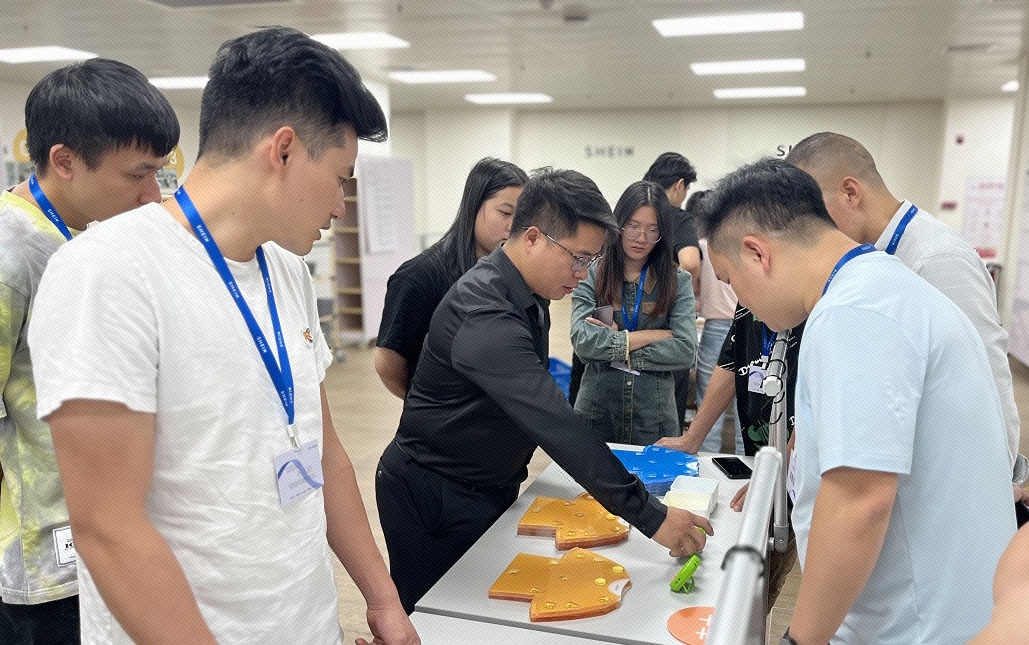
SHEIN launched its “500 Million Yuan in Five Years” Supplier Empowerment Program in the first half of 2023. As of 2025, it has cumulatively invested nearly 300 million yuan to build a systematic empowerment system covering four dimensions: technological innovation, factory upgrading, training system, and community services [1][2]. In 2025, it carried out nearly 600 supplier empowerment training sessions, covering nearly 37,000 person-times among suppliers, and established a diversified training system combining “daily + special sessions” and “offline + online” formats [3].
This training system covers comprehensive content from operation management to business technology, including skill training for key links such as organizational structure, production management, planning and development, production dispatching, quality inspection, and operation stock preparation, and expands the use of innovative formats such as live-stream training and on-site training delivery [2]. As the “chain leader” enterprise of Guangdong Province’s Industry-Education-Assessment Skill Ecological Chain, SHEIN was certified as an independent assessment institution for the Industry-Education-Assessment Skill Ecological Chain in October 2024, enabling it to conduct vocational skill level assessments for positions such as quality inspection, pattern making, sewing, and supply chain management [2].
Targeting the production pain points of suppliers, SHEIN has developed and promoted advanced technical tools, equipment, and processes. As of the end of 2025, it has developed more than 180 innovative tools and delivered over 7,500 lean tools to suppliers. These tools have improved the efficiency of relevant processes by an average of 35%, and the delivery volume of lean tools for complex sewing scenarios in 2025 increased by nearly 20% year-on-year [3]. Through systematic training empowerment, suppliers can proficiently use these digital tools and lean production methods to transform traditional factories into modern manufacturing units with “small-order quick response” capabilities.
Suppliers with SHEIN-certified quality inspectors have seen a 30% reduction in overall product defect rates, a figure that directly reflects the significant improvement in product quality control capabilities brought by the training system [2]. Under the flexible supply chain model, product quality stability is the fundamental guarantee for quick reordering and mass production, and the training system effectively addresses the common quality control shortcomings of small and medium-sized factories.
SHEIN has established its first Apparel Manufacturing Innovation Research Center, continuously releasing flexible supply chain standards, and activating the potential of small and medium-sized factories through training, technical empowerment, and other methods to promote the digital and intelligent upgrading of the apparel manufacturing industry [3]. This training model, which externalizes implicit experience and organizes individual capabilities, allows SHEIN to integrate a large number of scattered small and medium-sized factories into its flexible supply chain network in a short period of time without a long running-in period and trial-and-error costs.
The training instructor team adopts the “industrial belt on-site diagnosis” model, going deep into industrial belts across the country such as the swimwear factories in Xingcheng, Liaoning, and the pajama industrial belt in Shantou to solve specific technical problems. They radiate the experience of senior craftsmen across the country through systematic training, achieving the leverage effect of “one person lighting up an entire industrial belt” [1]. This replicable talent development model provides a universal solution for industrial belt upgrading and has become a key support for the rapid expansion of SHEIN’s flexible supply chain.
Public welfare projects such as “Gathering Starlight” and “Children’s Home” have received a cumulative investment of over 10 million yuan. Among them, “Gathering Starlight” has funded 740 families (1,557 school-aged teenagers), and 30 “Children’s Home” facilities have provided services to over 76,000 person-times. In the first half of 2025, it funded 96 families (228 school-aged teenagers) and provided over 20,000 person-times of child care services [2]. These care projects have significantly improved the work happiness and stability of supplier employees, effectively reducing the turnover rate of frontline employees, and the stability of employee skills is the human foundation for the continuous and efficient operation of the flexible supply chain.
A cumulative investment of over 60 million yuan has been used to help more than 200 factories complete 520,000 square meters of factory building upgrades and renovations, as well as upgrades to nearly 14,000 square meters of canteens, dormitories, and multi-functional rooms, benefiting over 33,000 people [2]. The improvement of hardware environment not only enhances production efficiency, but more importantly, strengthens the cooperation stickiness of suppliers to SHEIN, ensuring the stability of the supply chain network in the face of external competition.
SHEIN’s flexible supply chain model shortens its new product launch cycle to 7 days, which is much faster than ZARA’s 14 days and the 6-9 months of traditional apparel brands; its inventory turnover is only about 40 days, with unsold inventory accounting for a single-digit percentage, while Inditex, ZARA’s parent company, had an inventory turnover period of 80 days in 2022 [4]. This efficiency advantage is directly translated into lower inventory impairment risks and higher capital turnover efficiency, which is the underlying capability support for SHEIN to provide a rich product selection at extremely low prices.
For potential investors, the continuous investment in the supply chain training system means that SHEIN is solidifying its short-term efficiency advantages into long-term organizational capabilities. This capability has high path dependence; even if competitors copy its business model, it will be difficult for them to establish a supplier network and talent pool of the same quality in a short period of time. From an investment perspective, this is one of SHEIN’s most defensive competitive barriers.
SHEIN’s supplier empowerment system, built with a cumulative investment of nearly 300 million yuan, includes more than 180 self-developed lean tools, over 1,400 training courses, more than 200 upgraded and renovated factories, and a public welfare service network covering tens of thousands of supplier employees. These are all intangible assets that cannot be fully reflected in financial statements [2][3]. The value of these assets lies in the fact that they form a highly collaborative supply chain ecosystem, whose network effects and scale effects will continue to strengthen over time.
From an investment valuation perspective, investors should pay attention to whether SHEIN’s supply chain assets can generate continuous compounding of competitive advantages. When competitors try to copy the “small-order quick response” model, they need to invest equivalent or even more resources to cultivate supplier capabilities, while SHEIN has already built a moat through first-mover advantages and continuous investment. Its valuation reached 66 billion USD when it completed its G+ round of financing in May 2023, and its target valuation exceeded 90 billion USD when it secretly submitted its US IPO application in 2024. The efficient operation and high growth potential of its flexible supply chain are the core supports for its valuation increase [4].
The coverage and investment intensity of SHEIN’s training system are important indicators for verifying the sustainability of its business growth. In 2025, its sales increased by 35.7% year-on-year, far exceeding the overall 7.9% growth rate of the apparel and accessories category, and its profit reached 2 billion USD in 2023, doubling that of the previous year [5]. The continuous expansion of training coverage indicates that SHEIN is still actively expanding supplier production capacity to support business growth, and the active participation of suppliers in training projects also reflects their confidence in SHEIN’s business model.
For IPO investors, the supply chain training system can serve as a “leading indicator” to predict SHEIN’s future growth potential. If the number of training sessions and covered person-times continues to grow, it usually means that SHEIN is reserving production capacity for the next stage of business expansion; conversely, it may indicate slow growth. The data of nearly 600 training sessions and 37,000 covered person-times in 2025 shows that SHEIN is still actively expanding its supply chain capabilities, laying the foundation for future business growth.
SHEIN’s supplier training and employee care projects have responded to the international community’s concerns about its supply chain labor standards to a certain extent. The “Gathering Starlight” and “Children’s Home” projects have received a cumulative investment of over 10 million yuan, covering tens of thousands of supplier employees and their children, which is SHEIN’s substantive investment in the ESG (Environmental, Social, Governance) field [2]. For institutional investors, these projects can reduce SHEIN’s compliance risks in labor rights, improve its ESG rating, and increase the probability of obtaining ESG capital support.
However, SHEIN still faces challenges in supply chain compliance. The compliance pressure from the U.S. Uyghur Forced Labor Prevention Act (UFLPA) and warnings from British investor groups on human rights issues may affect its IPO process and valuation [5]. Investors need to evaluate whether SHEIN’s training and public welfare projects can effectively address these regulatory risks; if these investments can be converted into verifiable compliance evidence, it will help reduce post-listing uncertainty.
SHEIN’s valuation has dropped from its 2022 peak of 100 billion USD to an expected 30 billion USD in 2025, a decrease of approximately 70% [5]. This valuation correction reflects the market’s concerns about changes in tariff policies, regulatory risks, and declining profitability. However, for long-term investors, the significant decline in valuation may create a more reasonable entry price.
The key question is: Can SHEIN’s supply chain training system continue to support its competitive advantages, thereby giving the current valuation a sufficient margin of safety? From the perspective of supply chain capabilities, SHEIN’s flexible supply chain model has been proven by the market to have significant efficiency advantages, and the continuous investment in the training system indicates that the company is still strengthening this core capability. If SHEIN can make progress in regulatory compliance and supply chain diversification, its valuation is expected to recover as market confidence is restored.
SHEIN’s supply chain training system is an important support mechanism for its flexible supply chain competitive advantages. Through systematic training empowerment, technological innovation support, factory upgrades and renovations, and employee care projects, SHEIN has successfully integrated scattered small and medium-sized factories into a highly collaborative supply chain network, realizing large-scale replication of the “small-order quick response” model. The construction of this capability requires long-term investment and continuous accumulation, with high entry barriers and replication difficulty.
For potential investors, the supply chain training system provides the following investment references: First, it verifies SHEIN’s organizational capabilities and strategic execution in supply chain management; second, the core competitive barrier it forms provides a fundamental guarantee for future profitability; third, it is an important starting point for SHEIN to address ESG compliance risks and improve its ESG rating; fourth, the continuous growth of training investment can serve as a leading indicator for the sustainability of business growth.
However, investors also need to prudently assess the geopolitical risks, regulatory compliance challenges, and valuation fluctuations faced by SHEIN. According to the latest data, its profit dropped by nearly 40% to 1 billion USD in 2024, and changes in U.S. tariff policies have led to a price increase of up to 377% for some products, which puts pressure on SHEIN’s affordable price competitiveness [5]. It is recommended that when evaluating SHEIN’s IPO value, investors focus on whether its supply chain training system can be continuously converted into verifiable competitive advantages, and whether these advantages can maintain profitability in the new policy environment.

[1] Sina Finance - “The ‘On-Demand Fashion’ Revolution Behind Millions of Jobs: How SHEIN Reshapes the Genes of Industrial Supply Chains” (https://finance.sina.com.cn/wm/2025-06-25/doc-infchcvs2597344.shtml)
[2] Xinhua News Agency - “Systematically Promoting Industrial Upgrading: SHEIN Invests Nearly 300 Million Yuan in Two Years to Empower Suppliers” (http://www.news.cn/tech/20250826/caed41dbe4914b5586f314e75ba8dfca/c.html)
[3] Sina Finance - “SHEIN: Carries Out 600 Empowerment Training Sessions in 2025, Covering 37,000 Supplier Person-Times” (https://finance.sina.com.cn/tob/2026-01-08/doc-inhfqcav4016560.shtml)
[4] Securities Times - “Breakthrough of China’s Supply Chain! How SHEIN Grew into an Overseas Unicorn” (https://www.stcn.com/article/detail/1129197.html)
[5] EBC - “Shein IPO: All You Need to Know Before It Goes Public” (https://www.ebc.com/forex/shein-ipo-all-you-need-to-know-before-it-goes-public)
Insights are generated using AI models and historical data for informational purposes only. They do not constitute investment advice or recommendations. Past performance is not indicative of future results.
About us: Ginlix AI is the AI Investment Copilot powered by real data, bridging advanced AI with professional financial databases to provide verifiable, truth-based answers. Please use the chat box below to ask any financial question.