
Magnificent Seven Divergence: Alphabet Overtakes Apple as Energy Sector Reacts Counterintuitively to Venezuela Oil Deal
Unlock More Features
Login to access AI-powered analysis, deep research reports and more advanced features
About us: Ginlix AI is the AI Investment Copilot powered by real data, bridging advanced AI with professional financial databases to provide verifiable, truth-based answers. Please use the chat box below to ask any financial question.
Related Stocks
The January 7, 2026 trading session revealed a clear rotation within U.S. equity markets. While the S&P 500 closed down 0.35% at 6,920.92 and the Dow Jones Industrial Average declined 1.04% to 48,996.09, the Nasdaq Composite managed a modest gain of 0.17% to 23,584.27 [0]. This divergent performance signals a meaningful shift in investor sentiment toward technology and growth stocks at the expense of broader industrial and financial names [0].
The sector-level analysis reveals significant dispersion that reinforces this rotation narrative. Healthcare emerged as the best-performing sector with a 1.77% gain, followed by Consumer Cyclical at +0.62% and Technology at +0.35% [0]. In contrast, Utilities suffered the steepest decline at 3.37%, while Energy dropped 2.71% despite the positive Venezuela oil news [0]. The counterintuitive decline in Energy despite favorable oil developments warrants particular attention from market participants, as it suggests either profit-taking ahead of the announcement or skepticism about the deal’s actual implementation timeline and volume [0].
The most significant development within the Magnificent Seven cohort was Alphabet (GOOGL) overtaking Apple (AAPL) in market capitalization for the first time since 2019 [1]. Alphabet closed January 7 with a 2.4% gain, reaching a market cap of approximately $3.89 trillion, while Apple declined 0.8% to roughly $3.85 trillion [1]. This $40 billion valuation swing in a single session represents a structural shift in how investors are valuing AI capabilities across the technology sector.
Alphabet’s outperformance throughout 2025 was driven by rapid deployment of new AI models and generators, increased user adoption of Gemini-powered products, and sustained investor enthusiasm for the company’s AI investments [1]. The company’s stock has gained +3.42% over the past 16 trading days, significantly outperforming many of its Magnificent Seven peers [0]. Conversely, Apple is perceived as falling behind in the AI race, with perceived delays to AI product releases and slower integration of generative AI into core product lines creating competitive concerns among investors [1].
At CES 2026, Nvidia CEO Jensen Huang unveiled “Alpamayo,” a new AI reasoning model specifically designed for self-driving vehicles [1][3]. This announcement represents a direct competitive entry into Tesla’s Full Self-Driving domain. Nvidia’s stock has demonstrated strong momentum, gaining +6.28% over the 16 trading days preceding January 7, with the stock trading between $170.31 and $193.63 over the past 52 weeks [0].
Notably, Elon Musk acknowledged Nvidia as potential competitive pressure but characterized Alpamayo as “a challenger in 5-6 years (or longer)” [1]. This timeline assessment mirrors Tesla’s previous characterization of BYD in 2011, a competitive assessment that proved significantly underestimated when BYD overtook Tesla as the world’s largest EV seller in 2025 [1]. This historical pattern suggests investors should carefully evaluate Musk’s competitive timeline assessments.
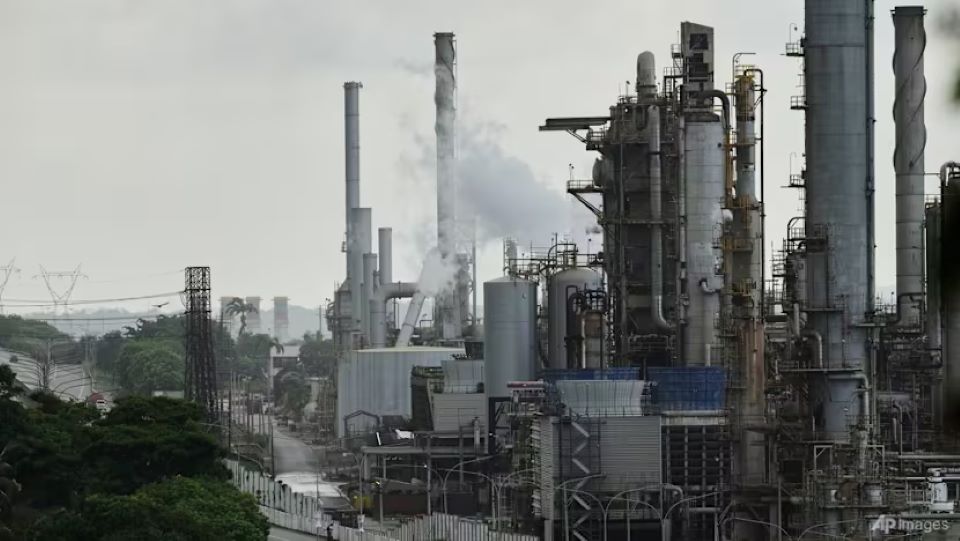
On January 6, 2026, the Trump administration announced a deal to refine and sell up to 50 million barrels of Venezuelan crude oil currently under sanctions [2][6]. According to Energy Secretary Wright, the U.S. will control Venezuela’s oil sales “indefinitely” as part of the arrangement [6]. Venezuela will reportedly use proceeds to purchase American agricultural products, medicines, and medical equipment [7].
The market’s counterintuitive reaction—a 2.71% decline in the Energy sector despite positive oil news—may be attributed to several factors [0]. First, Energy stocks may have rallied ahead of the announcement, creating conditions for profit-taking. Second, UN experts have warned that Venezuela’s oil reserves “must not be cynically exploited,” suggesting potential implementation challenges [6]. Third, ongoing enforcement tensions persist, as evidenced by U.S. seizure of Russian-flagged tankers tied to Venezuela [8]. Finally, broader market rotation from energy to technology may have contributed to the sector’s decline.
The Alphabet-Apple market cap crossover represents more than a single-day stock movement—it reflects a fundamental reallocation of value based on AI capability perception [1]. Investors are increasingly differentiating between technology companies based on their AI trajectory and execution capability, with Alphabet’s aggressive AI deployment standing in contrast to Apple’s more measured approach [1]. This divergence has implications for portfolio construction and sector allocation strategies.
Tesla’s current characterization of Nvidia’s competitive threat mirrors its earlier assessment of BYD, which proved materially incorrect [1]. BYD’s ascent to become the world’s largest EV seller in 2025 demonstrates that competitive threats dismissed as distant can materialize more rapidly than anticipated [1]. This historical pattern suggests investors should maintain heightened vigilance regarding Tesla’s competitive positioning across multiple vectors.
The Energy sector’s decline despite favorable Venezuela news illustrates a common market phenomenon where prices have already incorporated anticipated information [0]. Alternatively, the decline may reflect genuine uncertainty about deal implementation, given Venezuela’s historical pattern of sanctions compliance challenges [2][6][8]. Either interpretation has implications for Energy sector positioning.
Reports that Beijing has asked domestic firms to pause Nvidia H200 orders create uncertainty for Nvidia’s international revenue trajectory [3]. This development suggests that despite Nvidia’s strong domestic performance, geographic diversification challenges may emerge as a consideration for investors.
The January 7, 2026 market session revealed several interconnected developments with implications for market positioning and competitive monitoring:
[0] Ginlix Analytical Database – Market indices, sector performance, and stock price data
[1] CNBC – “CNBC Daily Open: Rumbles within the Magnificent Seven” (https://www.cnbc.com/2026/01/08/cnbc-daily-open-rumbles-within-the-magnificent-seven.html)
[2] The New York Times – “Venezuela Live Updates: U.S. Forces Seize Two Tankers” (https://www.nytimes.com/live/2026/01/07/world/venezuela-us-trump)
[3] DigiTimes – “China reportedly tells firms to pause Nvidia H200 orders” (https://www.digitimes.com/news/a20260108VL202/nvidia-beijing-chips-sales-demand.html)
[4] Business Insider – “Judge indicates Elon Musk’s fraud lawsuit against OpenAI will head to trial” (https://www.businessinsider.com/judge-rejects-sam-altman-efforts-toss-elon-musks-case-openai-2026-1)
[5] InsideEVs – “The Xiaomi SU7 Just Became An Even Bigger Problem For Tesla” (https://insideevs.com/news/783685/xiaomi-su7-facelift-2026-update/)
[6] Al Jazeera – “US says it will control Venezuela’s oil sales ‘indefinitely’” (https://www.aljazeera.com/news/2026/1/7/us-says-it-will-control-venezuelan-oil-sales-indefinitely)
[7] U.S. Department of Energy – “FACT SHEET: President Trump is Restoring Prosperity, Safety and Security” (https://www.energy.gov/articles/fact-sheet-president-trump-restoring-prosperity-safety-security-united-states-and)
[8] Reuters – “US seizes Russian-flagged tanker, another tied to Venezuela” (https://www.reuters.com/business/energy/us-venezuela-oil-deal-angers-china-pushes-prices-down-2026-01-07/)
Insights are generated using AI models and historical data for informational purposes only. They do not constitute investment advice or recommendations. Past performance is not indicative of future results.
About us: Ginlix AI is the AI Investment Copilot powered by real data, bridging advanced AI with professional financial databases to provide verifiable, truth-based answers. Please use the chat box below to ask any financial question.