
Phil Rosen's Bull Case for Latin America: Venezuela Black Swan Event Analysis
Unlock More Features
Login to access AI-powered analysis, deep research reports and more advanced features
About us: Ginlix AI is the AI Investment Copilot powered by real data, bridging advanced AI with professional financial databases to provide verifiable, truth-based answers. Please use the chat box below to ask any financial question.
Related Stocks
This analysis examines Phil Rosen’s market commentary from January 7, 2026, which presents a bullish investment thesis for Latin American markets amid the historic capture of Venezuelan President Nicolás Maduro by U.S. forces on January 3, 2026. Rosen characterizes the Venezuela developments as a “black swan” event that could reshape regional political and economic dynamics while creating near-term volatility for major oil companies. The analysis integrates market reaction data, expert perspectives on Venezuela’s political transition, and the Federal Reserve’s rate cut trajectory to provide decision-makers with a comprehensive framework for understanding this evolving market environment.
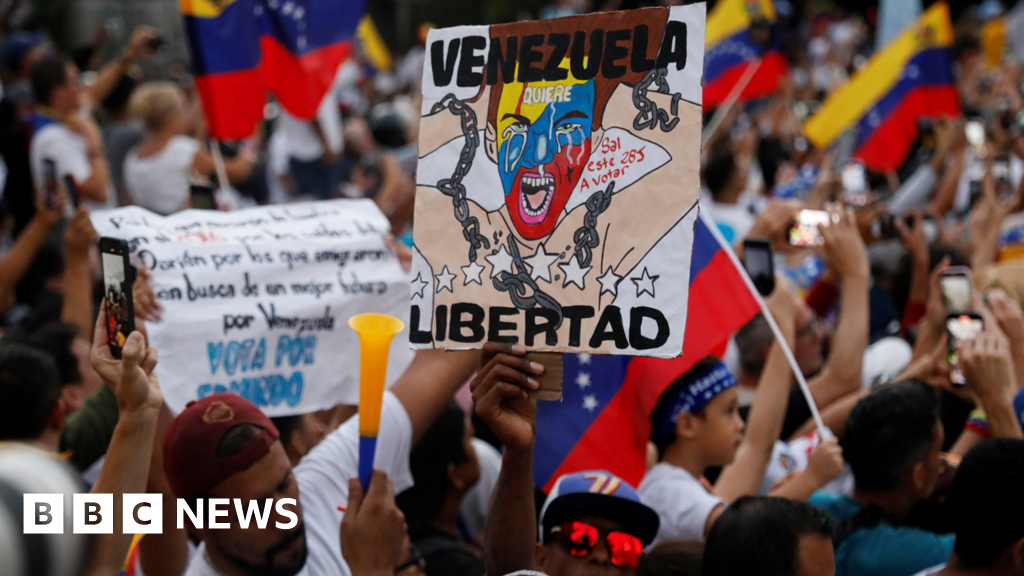
The capture of President Maduro by U.S. forces on January 3, 2026 represents what experts describe as “the most far-reaching U.S. military mobilization in the Western Hemisphere since the 1989 invasion of Panama” [2]. This unprecedented geopolitical development has fundamentally altered market calculations across multiple sectors, particularly energy and emerging markets.
According to Rice University analysis, the end of more than a decade of authoritarian rule in Venezuela raises urgent questions about the country’s political future, regional stability, and ongoing humanitarian emergency [2]. The market reaction has been characterized by initial enthusiasm followed by measured consolidation, consistent with Rosen’s expectation of “choppy trading” in the weeks ahead [1].
Rosen’s characterization of a “bullish cocktail” for Latin America in 2026 is supported by multiple converging factors identified in the analysis. The iShares Latin America 40 ETF (ILF) gained 45% in 2025, driven by domestic currency strength and what analysts describe as a rightward political shift across the Western hemisphere [1].
J.P. Morgan’s 2026 Outlook identifies emerging market equities as positioned for robust performance, supported by four key factors: lower local interest rates, higher earnings growth, attractive valuations, and ongoing improvements in corporate governance [6]. Specifically, Latin America is positioned for what the report characterizes as “outsized monetary policy stimulus” relative to other emerging market regions [6].
The 2026 regional election calendar, including Peruvian elections in April, Colombian elections in May, and Brazilian elections in November, adds a layer of political uncertainty but also potential catalysts for market-friendly policy developments [1]. These elections, occurring under the shadow of Venezuela developments, could “solidify a market-friendly corridor” across the region.
The Fed rate cut outlook provides important context for the Latin America bull case. Current market expectations for 2026 include 1-2 quarter-point cuts according to CME FedWatch data, though FOMC “dot plot” projections suggest only one cut [8]. Polymarket pricing indicates equal probability of two versus three cuts [8].
- J.P. Morgan Asset Management projects two cuts in 2026 and one in 2027 [8]
- Morningstar anticipates cuts in both the first and second half of 2026 [8]
- The Wall Street consensus anticipates one cut in April and another in September [8]
The current Fed funds rate stands at 3.50% to 3.75% [8], and Fed officials remain divided between those pushing for “jumbo rate cuts” and others favoring a gradual, data-driven approach [8]. This divergence creates uncertainty around the precise timing and magnitude of monetary easing, which emerging market investors should factor into their expectations.
Market performance data for the January 2-7, 2026 period reveals sector rotation patterns consistent with risk appetite shifts following the Venezuela developments [0]:
| Index/Sector | January 7 Change | Week Performance |
|---|---|---|
| NASDAQ | +0.17% | +0.47% |
| S&P 500 | -0.35% | Mixed |
| Dow Jones | -1.04% | +1.26% |
| Russell 2000 | -0.39% | +2.68% |
| Healthcare | +1.78% (best) | — |
| Energy | -2.70% | — |
| Utilities | -3.35% (worst) | — |
The healthcare sector’s strength and utilities’ weakness suggest rotation into growth-oriented positions, while the energy sector’s decline reflects profit-taking after initial rally dynamics.
The Venezuela regime change potentially removes a significant geopolitical risk premium that has penalized emerging market valuations for years. The removal of Maduro’s government, which has been characterized by authoritarian governance and economic mismanagement, could signal a broader shift in regional political dynamics that favors market-friendly policies.
However, analysts caution that the constitutional resilience of Venezuelan institutions and the role of opposition leaders remain unclear [2]. The “Donroe Doctrine” approach to Venezuela creates unpredictable outcomes that could introduce new forms of geopolitical uncertainty [1].
While Venezuela’s oil reserves represent a significant potential opportunity, the timeline for U.S. company re-entry remains uncertain. The absence of immediate re-entry plans from major U.S. oil companies suggests that the market may be pricing in developments that are years away from realization [5]. Investors should distinguish between the long-term potential of Venezuelan oil access and the near-term operational realities facing energy companies.
The 2026 Latin American election calendar could serve as a significant catalyst for the regional investment thesis. Brazil’s November election is particularly important given the country’s economic scale and the current positioning of Brazil as a top pick for 2026 [7]. Election outcomes could either reinforce or complicate the pro-business political trends that have supported Latin American market performance.
The expected Fed rate cuts provide a supportive macro backdrop for emerging market investments, but should not be viewed as the primary driver of the Latin America bull case. The combination of domestic political developments, currency strength, and valuation opportunities suggests that the investment thesis has independent merit beyond purely macro-driven flows.
The Venezuela “black swan” event of January 3, 2026 has created a complex market environment characterized by cautious optimism. Phil Rosen’s bullish case for Latin America rests on multiple supporting factors: the potential removal of a significant geopolitical risk premium, the expectation of multiple Federal Reserve rate cuts in 2026, and the emergence of pro-business political dynamics across the region [1].
Market data indicates that initial enthusiasm has given way to consolidation, with energy sector declines reflecting profit-taking rather than fundamental thesis rejection [0]. The iShares Latin America 40 ETF’s 45% gain in 2025 demonstrates the strength of underlying trends supporting regional investments [1].
Key uncertainties include the timeline for Venezuelan oil sector development (industry experts suggest 7-10 years to return to previous production levels) [5], the outcomes of upcoming Latin American elections [1], and the ultimate resolution of Venezuela’s political transition [2]. Investors should monitor developments in these areas while remaining cognizant of Rosen’s expectation for continued “choppy trading” in energy-related positions [1].
The Fed rate cut outlook (1-2 cuts expected in 2026) provides a supportive macro backdrop, though the precise timing and magnitude remain dependent on inflation data and labor market conditions [8]. The consensus view suggests a “bullish cocktail” for Latin America supported by monetary easing, political shifts, and attractive valuations, balanced against the uncertainties inherent in unprecedented geopolitical developments.
Insights are generated using AI models and historical data for informational purposes only. They do not constitute investment advice or recommendations. Past performance is not indicative of future results.
About us: Ginlix AI is the AI Investment Copilot powered by real data, bridging advanced AI with professional financial databases to provide verifiable, truth-based answers. Please use the chat box below to ask any financial question.