
Strategic Analysis of Xiaomi's Extended-Range SUV Entering the Family Market: Can It Replicate the SU7's Success?
Unlock More Features
Login to access AI-powered analysis, deep research reports and more advanced features

About us: Ginlix AI is the AI Investment Copilot powered by real data, bridging advanced AI with professional financial databases to provide verifiable, truth-based answers. Please use the chat box below to ask any financial question.
Related Stocks
Based on the latest market data and industry intelligence, this article provides a systematic analysis of the strategic impact of Xiaomi’s extended-range SUV entering the family market.
Xiaomi Auto delivered an impressive performance in its first full delivery year, with annual deliveries exceeding 410,000 units in 2025, far surpassing the initial annual target of 350,000 units, with a completion rate of 117% [1]. As of the end of 2025, Xiaomi Auto’s cumulative deliveries have exceeded 500,000 units, taking only 1 year and 7 months to reach the 500,000-unit mark from zero, setting the fastest record among global new energy vehicle manufacturers [2].
More importantly, the sustainability of its business model has been verified — in Q3 2025, Xiaomi Auto achieved a unit gross margin of 25.5%, turning a quarterly profit for the first time, becoming the first Chinese new carmaker to achieve annual profit in its first year of listing [2]. This gross margin level far exceeds that of most new force competitors still in losses, demonstrating Xiaomi’s high efficiency in cost control and product pricing.
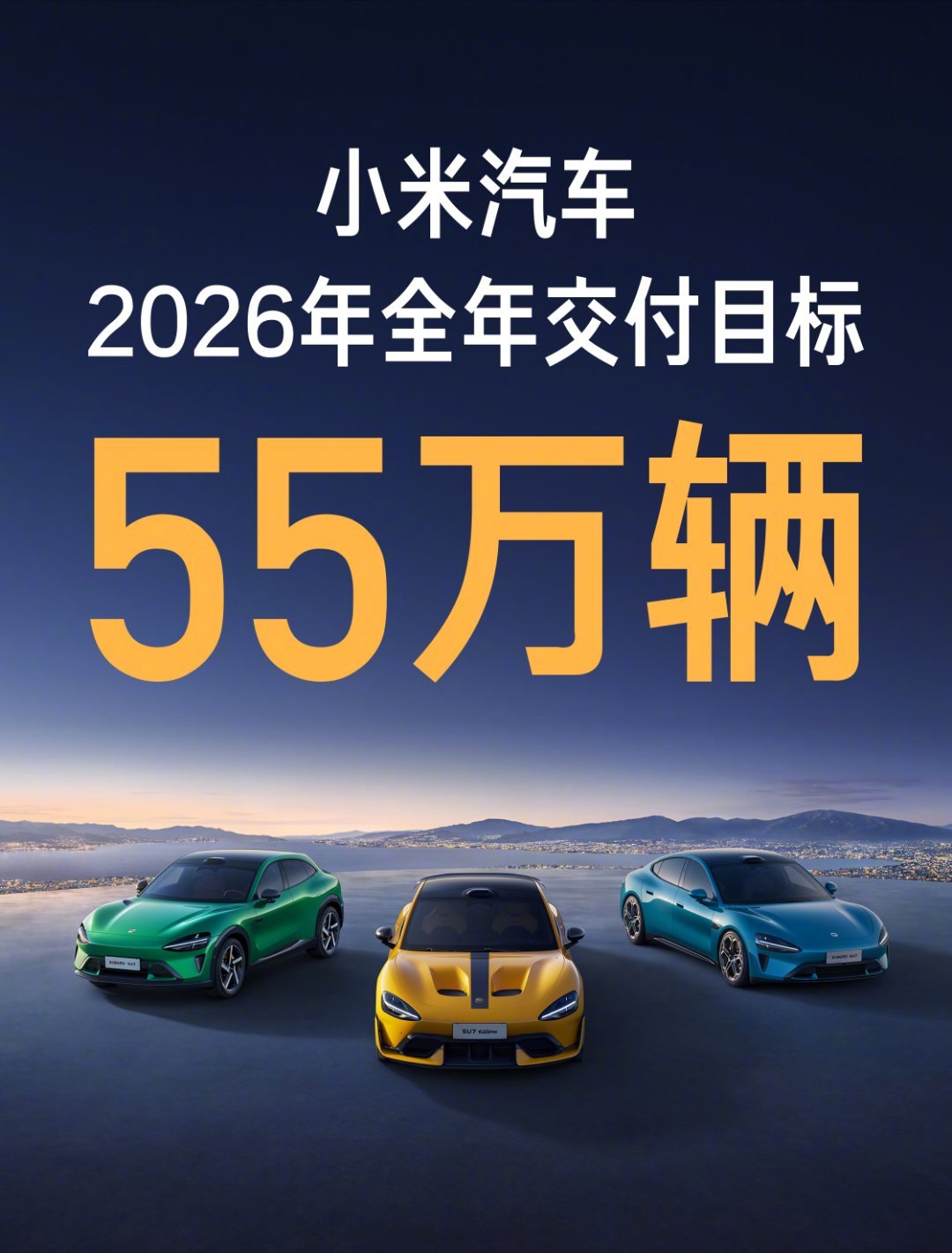
In terms of specific model performance, the SU7 has ranked first in sales in the pure electric sedan market above RMB 200,000 for consecutive months, surpassing Tesla’s Model 3 for the first time; since its delivery in July 2025, the YU7 has topped the sales rankings of mid-to-large SUVs for four consecutive months [3]. Compared horizontally across the industry, Xiaomi’s growth rate can be described as “crushing” — Li Auto took 28 months to reach 500,000 deliveries, NIO took 34 months, while Xiaomi only took 20 months [3].
However, behind the impressive data, there are hidden concerns. The user profiles of the SU7 and YU7 are relatively concentrated, with core sales coming from the huge base of “Mi Fans” and young pioneer users highly sensitive to technology and performance. But what truly determines a carmaker’s long-term sales scale and market position is the much larger group of family users [2]. This is exactly the strategic motivation for Xiaomi to launch its extended-range SUV.
Xiaomi Auto will launch four all-new models in 2026, forming a complete product matrix covering sedans and SUVs, pure electric and extended-range, individual and family, and mid-to-high-end markets:
| Product Name | Estimated Price | Launch Time | Target Customer Group | Core Highlights |
|---|---|---|---|---|
SU7 Facelift |
RMB 250,000-300,000 | H1 2026 | Young Consumers | 900V Platform, 5C Ultra-Fast Charging, LiDAR |
SU7 Executive Edition |
RMB 400,000-500,000 | H2 2026 | Business Professionals | 30cm Wheelbase Extension, Zero-Gravity Seats, 25-Speaker Audio System |
Extended-Range 5-Seater SUV |
RMB 300,000-400,000 | H2 2026 | Family Users | Flexible Space, Intelligent Cockpit, Extended-Range Powertrain |
Extended-Range 7-Seater SUV “Kunlun” |
RMB 450,000-550,000 | H1 2026 | High-End Family Users | Over 5.2m Length, 1500km Range, Benchmarked Against Li L9/AITO M9 |
As Xiaomi Auto’s first extended-range flagship model, the “Kunlun” SUV boasts impressive product strength [4]:
- Body Dimensions: Over 5.2 meters in length, over 3.1 meters in wheelbase, offering flexible 6/7-seat layouts
- Space Design: The third row can comfortably accommodate adults up to 175cm tall; 90° wide-opening doors facilitate entry and exit for the elderly and children
- Range Performance: Equipped with a 1.5T range extender and large-capacity battery pack, pure electric range of 400-500km, combined range of over 1500km
- Intelligent Configuration: Standard LiDAR, NVIDIA Thor-U chip, rear-wheel steering system, Xiaomi HyperOS in-car system
- Ecosystem Integration: Supports interconnection with over 200 Xiaomi Smart Home devices, creating an integrated “car-home” ecosystem experience
Notably, Xiaomi co-founder Wang Chuan is a personal investor in Li Auto and has frequent exchanges with Li Auto CEO Li Xiang [2]. This “close proximity” allows Xiaomi to have a deeper understanding of the value and market logic of the extended-range technology path than other new forces.
The landscape of new carmakers underwent dramatic changes in 2025, with the traditional “NIO, XPeng, Li Auto” pattern broken; the new top tier is “AITO, Leapmotor, Xiaomi” — AITO Smart Mobility, Leapmotor, Xiaomi [5]:
| Brand | 2025 Sales | YoY Growth | Market Share Ranking |
|---|---|---|---|
| Leapmotor | 597,000 units | +103% | 1st |
| AITO Smart Mobility | 589,000 units | +32% | 2nd |
| XPeng | 429,000 units | +126% | 3rd |
| Xiaomi | 410,000 units | - (First Year) | 5th |
| Li Auto | 406,000 units | -19.6% |
6th |
| NIO | 326,000 units | +46.9% | - |
Li Auto is the only top new carmaker to experience a decline, facing an obviously more complex situation [5]. Its net profit turned from profit to loss in Q3, ending a streak of 11 consecutive profitable quarters; after the facelift of its flagship L series, it has been difficult to restore its previous absolute dominant position.
| Dimension | Xiaomi | Li Auto | AITO |
|---|---|---|---|
Brand Positioning |
Tech Newcomer | Family Mobility | Huawei-Enabled |
Core Advantages |
Ecosystem Integration + Cost-Effectiveness | Product Definition + First-Mover Advantage in Extended-Range | AD Technology + Brand Endorsement |
Extended-Range SUV Layout |
Debut in 2026 | Mature Product Line (L6/L7/L8/L9) | M7/M8/M9 Triad |
Intelligent Driving |
Self-Developed + NVIDIA Thor-U | AD Max (Self-Developed) | Huawei ADS |
Ecosystem Capability |
Xiaomi Smart Home Ecosystem (200+ Devices) | None | HarmonyOS Ecosystem |
-
Market Window Still Open: The extended-range route is still in the market verification stage, with relatively low technical structure and R&D costs [2]. Although the market share of extended-range vehicles dropped from 10.7% to 9.8% in 2025 [6], “large-battery extended-range” still holds appeal as a transitional solution.
-
Differentiated Competition Space: Xiaomi can enter the family market through product positioning of “technology + cost-effectiveness”. Li Auto focuses on the “dad car” mindset, AITO relies on Huawei’s brand endorsement, while Xiaomi’s ecosystem integration capability is a unique advantage — the in-car system can synchronize child seat safety data in real time, link with Xiaomi smart cameras for remote video calls, and the rear entertainment screen can seamlessly connect to home smart speakers [4].
-
Migration of Successful Methodology: The success of the Xiaomi SU7 proves that it can migrate its efficient product definition, user demand insight, and marketing integration capabilities from the consumer electronics sector to the automotive sector [5]. The YU7’s rapid foothold in the SUV market indicates that Xiaomi has initially established a capability system to replicate success.
-
Cost-Effectiveness Expectation: A research report from CICC predicts that Xiaomi’s four new models are expected to achieve sales of 800,000 units in 2026 [4]. If the “Kunlun” enters the market at a price of RMB 450,000-550,000, it will have an obvious price advantage compared to the Li L9 (RMB 469,800-539,800) and AITO M9 (RMB 478,000-568,000).
-
Brand Perception Reshaping: Xiaomi’s brand image of “intelligent, sporty, young” established by the SU7 is deeply rooted in consumers’ minds. How to make consumers accept and trust a Xiaomi Auto that “can both build cool electric sports cars and comfortable family SUVs” requires sophisticated marketing strategies [1].
-
Technical Reliability Verification: The durability of the extended-range system and the stability of intelligent driving need to be verified by the market. Li Auto has deep expertise in extended-range technology, and AITO has Huawei’s technical endorsement; as a new entrant, Xiaomi needs to build user trust.
-
Production Capacity and Supply Chain Pressure: Launching four all-new or major facelift models within a year is a huge test for any mature carmaker, and an unprecedented stress test for a startup [1].
-
First-Mover Advantage of Competitors: Li Auto’s L series has accumulated over 1 million deliveries [2], establishing a strong user mindset among family users; the AITO M9 has even rewritten the pattern of the high-end car market above RMB 500,000. The family car market has formed a duopoly pattern, and Xiaomi needs to break the existing mindset barriers.
Comprehensive analysis shows that the probability of Xiaomi’s extended-range SUV replicating the SU7’s success is approximately 60-70%, for the following reasons:
- 60% supporting factors: Xiaomi has proven its capabilities in product definition, supply chain management, and brand marketing; the first-year delivery volume of 410,000 units and 25.5% unit gross margin provide sufficient confidence
- +10% bonus factor: The successful experience of ecosystem integration and cost-effectiveness strategy in the consumer electronics sector can be migrated to the automotive sector
- -10% risk factor: Family users have longer decision-making cycles and higher requirements for brand loyalty; Xiaomi’s brand mindset in the family market still needs to be established
- -10% risk factor: The extended-range market has shifted from a blue ocean to a red ocean; over 15 new extended-range models were launched in 2025, significantly increasing competition intensity
Li Auto will face the most direct pressure, mainly reflected in the following aspects:
-
Core Customer Base Diverted: A large portion of Xiaomi’s audience overlaps with Li Auto’s target users (family users, technology enthusiasts) [5]. The Xiaomi YU7 has already competed directly with the Li i6/L6 in the RMB 250,000-350,000 market, leading to a decline in Li Auto’s sales.
-
Extended-Range Market Share Eroded: The overall performance of the extended-range market in 2025 was inferior to that of pure electric vehicles, which is a result of insufficient competitiveness of this generation of extended-range products [6]. Xiaomi’s entry will further intensify competition in the extended-range track.
-
Price War Pressure: If Xiaomi’s extended-range SUV enters the market at a price of RMB 450,000-550,000, it will form price pressure on the Li L9, potentially forcing Li Auto to follow up with price cuts and compress profit margins.
-
Brand Comparison Effect: Xiaomi is not inferior to Li Auto in product definition and traffic marketing, and the Xiaomi SU7 won the sales championship in the sedan market above RMB 200,000 without a major facelift, proving its stronger market penetration [5].
Relying on Huawei’s brand endorsement and technical empowerment, AITO has established strong trust in users’ minds, and its impact will be relatively limited:
-
AD Advantage Remains: The Huawei ADS intelligent driving system is currently the benchmark in the market, and Xiaomi’s self-developed AD system still needs time to be verified. In the field of high-level intelligent driving, Huawei’s technical barriers are difficult to surpass in the short term.
-
Strong Brand Momentum: The AITO M9 has rewritten the pattern of the high-end car market above RMB 500,000, with annual deliveries exceeding 57,000 units hitting a new high, and its brand momentum is still on the rise [5].
-
Ecosystem Competition: AITO relies on the HarmonyOS ecosystem, forming direct competition with Xiaomi’s Smart Home ecosystem. The two have similar capabilities in intelligent cockpits, car-home interconnection, etc., and competition will become more intense.
Regardless of the final outcome of Xiaomi’s 2026 plan, its strategic shift itself has dropped a heavy stone in the Chinese new energy vehicle market [1]:
-
Accelerate Integration of Extended-Range and Pure Electric Routes: As a cross-segment giant with huge traffic, Xiaomi’s high-profile entry into the extended-range track will further verify the commercial value of “large-battery extended-range” as one of the market solutions at the current stage, potentially prompting more brands originally focused on pure electric to rethink the diversification of technical paths.
-
Promote Competition Upgrade: Starting from Xiaomi’s entry into the extended-range SUV market, the family car market will upgrade from “product competition” to “ecosystem competition”. Traditional carmakers and new forces need to rethink their differentiated competition strategies.
-
Increased Profit Pressure on the Industry: The entry of more players means that price wars will continue, and the overall profitability of the industry will face tests.
| Dimension | Assessment |
|---|---|
Success Probability of Xiaomi’s Extended-Range SUV |
60-70% (Medium-High) |
Impact on Li Auto |
Medium-High Risk (Needs Close Attention) |
Impact on AITO |
Medium Risk (Huawei’s Barriers Remain) |
Industry Impact |
Accelerates Competition Upgrade, Drives Pattern Restructuring |
- Xiaomi Auto Supply Chain Enterprises: As Xiaomi Auto’s sales scale expands, supply chain enterprises are expected to benefit
- Li Auto’s Defensive Strategies: Pay attention to how Li Auto responds to competitive pressures, including product facelifts, pricing strategy adjustments, etc.
- Evolution of Extended-Range Technology Route: In 2026, the “large-battery” hybrid solution will become a new competitive direction; need to pay attention to technological iteration progress
- Production Capacity Risk: Xiaomi’s existing factories are operating at full capacity; the progress of the second-phase factory’s production launch will directly affect delivery capacity
- Price War Risk: Intensified industry competition may lead to prolonged price wars, affecting corporate profitability
- Technological Iteration Risk: Intelligent driving and battery technologies are iterating rapidly, which may affect the competitiveness of existing products
- Policy Risk: Changes in new energy vehicle subsidy policies may affect terminal demand
Xiaomi’s extended-range SUV entering the family market is a strategic product expansion; its success will determine whether Xiaomi Auto can transform from a “internet sensation” to a “mainstream” player. Judging from the successful experience of the SU7, Xiaomi has the sharpness to create hit products, but the extended-range SUV market is inherently different from the pure electric sedan market — family users value reliability, space practicality, and brand trust more, all of which require time to accumulate.
In the short term (2026), Xiaomi’s extended-range SUV will exert direct competitive pressure on the Li L9, while its impact on the AITO M9 will be relatively limited. In the medium to long term, if Xiaomi can make breakthroughs in extended-range system reliability and family user mindset building, it is expected to replicate the SU7’s successful path and gain a foothold in the family car market.
[1] NetEase News - Xiaomi’s Four New Models Exposed in 2026: Targeting the Family Market, Dual-Line Strategy of “Pure Electric + Extended-Range” (https://www.163.com/dy/article/KI3P5PHF05566FUC.html)
[2] 36Kr - Xiaomi Auto Plans to Launch 4 New Models Next Year, Including 2 Extended-Range Models (https://m.36kr.com/p/3616317994681345)
[3] Baidu Youjia - Why Did Xiaomi Auto Deliver 500,000 Units in 20 Months? Lei Jun Reveals the Secret (https://youjia.baidu.com/view/articleDetail/8822126141604851333)
[4] Autohome - 2026 Xiaomi’s 4 New Models Launch Intensively, Covering RMB 200,000 to 500,000 Range (https://chejiahao.autohome.com.cn/info/24656567)
[5] Securities Times - 2025 New Carmaker Changes: “AITO, Leapmotor, Xiaomi” Alter the “NIO, XPeng, Li Auto” Pattern (https://www.stcn.com/article/detail/3572757.html)
[6] OFweek New Energy Vehicle Network - Judging from Carmakers’ New Year Plans, Will Extended-Range Technology Weaken Again in 2026? (https://mp.ofweek.com/nev/a256714949597)
Insights are generated using AI models and historical data for informational purposes only. They do not constitute investment advice or recommendations. Past performance is not indicative of future results.
About us: Ginlix AI is the AI Investment Copilot powered by real data, bridging advanced AI with professional financial databases to provide verifiable, truth-based answers. Please use the chat box below to ask any financial question.