
Strategic Analysis of Yili Co., Ltd.'s Establishment of 5 Investment Subsidiaries
Unlock More Features
Login to access AI-powered analysis, deep research reports and more advanced features
About us: Ginlix AI is the AI Investment Copilot powered by real data, bridging advanced AI with professional financial databases to provide verifiable, truth-based answers. Please use the chat box below to ask any financial question.
Related Stocks
Based on the information I have collected, I will provide a detailed analysis of the strategic shift reflected by Yili Co., Ltd.'s establishment of 5 investment subsidiaries.
In December 2025, Yili Co., Ltd. established 5 wholly-owned investment subsidiaries in Inner Mongolia on the same day [1][2]:
| Subsidiary Name | Business Orientation |
|---|---|
Yonghao Investment |
Investment Management |
Yuchao Investment |
Investment Management |
Taiwei Investment |
Investment Management |
Longzhuo Investment |
Investment Management |
Hongteng Investment |
Investment Management |
The total subscribed capital of the 5 companies reaches RMB 667 million, with a unified legal representative, Wuyun Dalai (formerly employed by Yili Finance Co., Ltd.) [1].
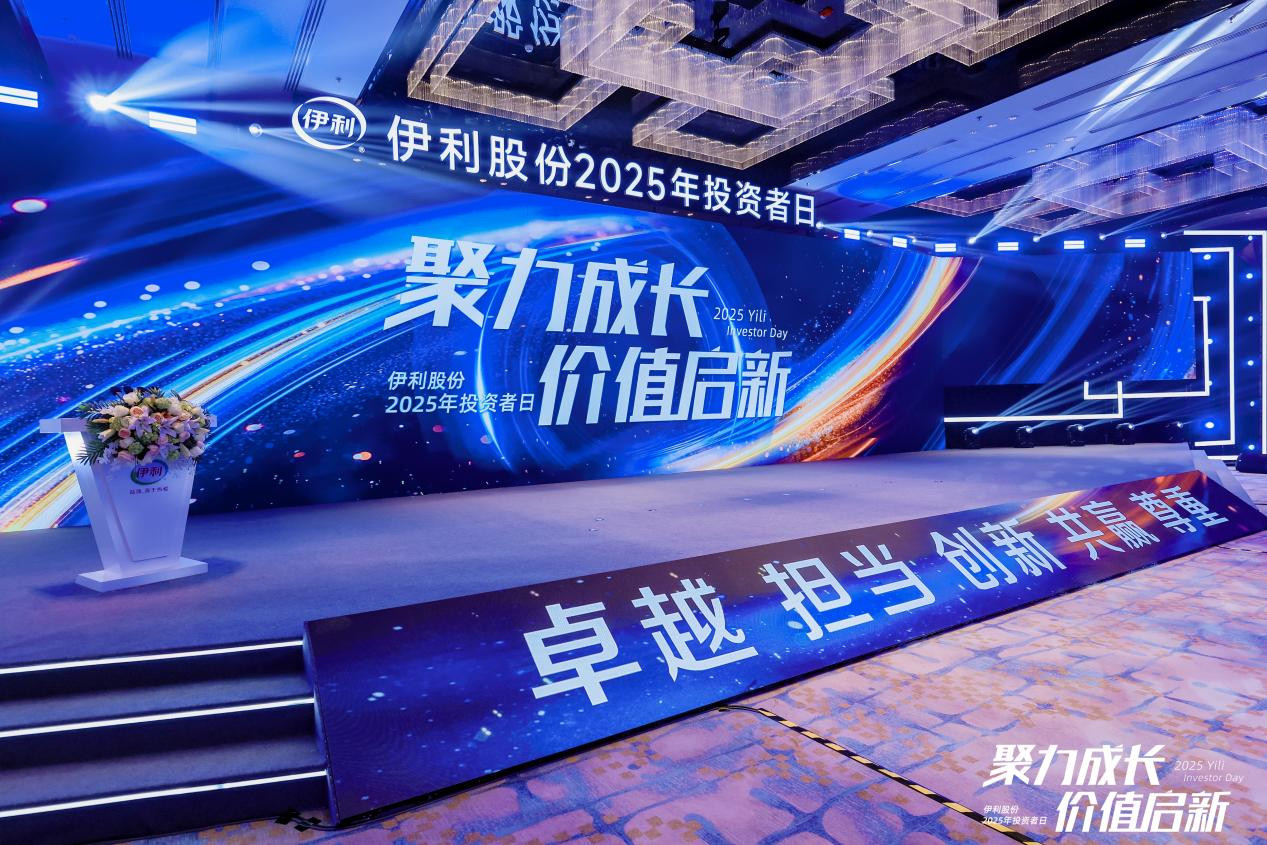
Pan Gang, Chairman of Yili Group, clearly stated at the Investor Day event on November 18, 2025 [1][2]:
“The Chinese dairy industry is at a major turning point. The industry has fully entered a new stage of quality improvement oriented by diversified and refined demand from the previous period of purely pursuing growth in volume, and structural growth is replacing universal growth.”
- Raw milk prices continue to decline, and the industry is engaging in large-scale “powder spraying” (spraying excess liquid milk into milk powder for storage)
- In the first three quarters of 2025, Yili recorded operating revenue of RMB 90.56 billion, with a year-on-year growth of only 1.8%; net profit reached RMB 10.42 billion, a year-on-year decrease of 4.4% [1]
- The net profit margin is under pressure to meet the 9% target [1]
Yili plans to seek growth opportunities through the following three core strategies [2][3]:
- Accelerate the two strategic layouts of functional nutrition and deep dairy processing
- Expand into functional nutrition and professional nutrition
- Cater to the consumer needs of “the elderly and children” and launch a series of products integrating medicine and food
- Upstream: Establish long-term cooperative relationships with raw material suppliers, and support the stable development of milk source bases through empowerment and resource support
- Downstream: Build a full-chain, full-scenario, full-channel e-commerce system, and expand into membership stores, e-commerce platforms, instant retail, and catering channels
- Continue to deepen industrial layout in New Zealand, the Netherlands, Indonesia, and Thailand
- Promote the “local production, global sales” model and accelerate the global network system
The timing of establishing the investment subsidiaries coincides with an inflection point in Yili’s capital liquidity [1]:
- Monetary funds: RMB 13.83 billion (a year-on-year decrease of 72.4%)
- Short-term debt ratio: increased from 84.4% to 98.9%
- Cash-to-short-term-debt ratio: plummeted from 0.96x to 0.25x
- Net asset-liability ratio: surged from 20% to 68.3%
Against the backdrop of pressure on its main business, these 5 investment subsidiaries may become an important breakthrough to enhance profitability [1].
| Investment Direction | Possibility | Analysis |
|---|---|---|
Supply Chain Finance |
High | Yili has provided financing guarantees of RMB 6.64-8.97 billion for upstream and downstream enterprises over the past 5 years, with experience in industrial chain finance |
Health Management Services |
High | “Health management” was frequently mentioned at the Investor Day, including functional nutrition and professional nutrition fields |
Venture Capital Outside the Dairy Industry |
Medium | There are successful historical cases (investment income from Changji Shengxin Industrial exceeded RMB 2.5 billion) |
Industrial M&A and Integration |
High | Integrate upstream and downstream resources or carry out horizontal M&A of high-quality assets |
Yili once invested in Changji Shengxin Industrial (power and heating projects) through its subsidiary Shengtai Venture Capital. After holding the investment for 14 years, it sold it for approximately RMB 2.647 billion in 2024, generating an investment income of over RMB 2.5 billion [1]. This case proves that Yili has investment operation capabilities and has reaped the benefits of investment.
Based on the latest financial data [0]:
| Indicator | Value | Industry Comparison |
|---|---|---|
| Market Capitalization | USD 179.77 billion | Industry Leader |
| Price-to-Earnings Ratio (P/E) | 22.44x | Reasonable Range |
| Return on Equity (ROE) | 14.49% | Good |
| Net Profit Margin | 6.83% | Under Pressure |
| Current Ratio | 0.75 | Weak |
| Gross Profit Margin (Estimated) | Approx. 30%+ | Relatively Stable |
- In the first half of 2025, revenue from milk powder and dairy products increased by 14.3% year-on-year to RMB 16.58 billion
- Revenue from cold drinks increased by 12.4% year-on-year to RMB 8.23 billion
- The proportion of high-margin businesses increased from 33.2% to 40.1% [1]
| Dimension | Traditional Model | New Strategic Shift |
|---|---|---|
Growth Logic |
Universal Scale Growth | Structural Quality Growth |
Investment Method |
Within the Industrial Chain | Industrial Fund + Venture Capital Model |
Business Focus |
Liquid Milk-led | Driven by Milk Powder + Cold Drinks + Functional Nutrition |
Capital Operation |
Conservative and Prudent | Proactive Investment Layout |
Profit Source |
Main Business Operation-oriented | Dual-driven by Main Business + Investment Income |
Yili’s establishment of 5 investment subsidiaries reflects its strategic intention to
- In the Short Term: It can optimize capital utilization efficiency and explore light-asset businesses such as supply chain finance
- In the Medium Term: It can acquire new growth drivers through investment and M&A to balance fluctuations in the main business
- In the Long Term: It can build a dual-driven business model of “Dairy Industry + Investment”
This strategic shift is in line with the development path of global food giants (such as Nestlé and Danone), but attention needs to be paid to investment risk control and capital liquidity security.
[1] Sina Finance - “Deep-pocketed Yili is Playing a Big Capital Game” (https://finance.sina.com.cn/roll/2026-01-07/doc-inhfnktv2229052.shtml)
[2] 36Kr - “Deep-pocketed Yili is Playing a Big Capital Game” (https://m.36kr.com/p/3629088573010692)
[3] Eastmoney - “Looking Ahead to 2026 | Liu Chunxi of Yili Group: Promote Industrial Transformation and Upgrading, Embrace Emerging Channels” (https://finance.eastmoney.com/a/202512263602694063.html)
[0] Jinling AI Financial Database - Company Profile and Financial Data of Yili Co., Ltd. (600887.SS)
Insights are generated using AI models and historical data for informational purposes only. They do not constitute investment advice or recommendations. Past performance is not indicative of future results.
About us: Ginlix AI is the AI Investment Copilot powered by real data, bridging advanced AI with professional financial databases to provide verifiable, truth-based answers. Please use the chat box below to ask any financial question.