
In-Depth Analysis of Nanjiren E-Commerce's Store Closures and Light Asset Model Transformation
Unlock More Features
Login to access AI-powered analysis, deep research reports and more advanced features
About us: Ginlix AI is the AI Investment Copilot powered by real data, bridging advanced AI with professional financial databases to provide verifiable, truth-based answers. Please use the chat box below to ask any financial question.
Related Stocks
Based on the latest information I have collected, here is a systematic and comprehensive analysis report for you:
According to the latest information, Nanjiren E-Commerce is not closing 7 stores on a large scale. The actual situation is as follows:
- Partnering with emerging offline retail formats
- Continuously optimizing store operation models through direct operation
- Product range includes self-operated and franchise lines [1]
| Year | Brand Licensing Business Revenue (RMB 100 million) | YoY Change |
|---|---|---|
| 2020 | 13.27 | Peak Year |
| 2021 | 7.47 | -47.63% |
| 2022 | 3.61 | -51.64% |
| 2023 | 2.35 | -43.49% |
| Financial Indicator | 2020 | 2024 | First Three Quarters of 2025 |
|---|---|---|---|
| Operating Revenue (RMB 100 million) | 41.72 | 33.58 | 19.91 |
| Net Profit Attributable to Parent Company (RMB 100 million) | 12.06 | -2.37 |
0.43 |
| Gross Profit Margin | 35.2% | 15.04% | 13.19% |
| Net Profit Margin | 28.9% | -7.06% | 2.15% |
The previous extensive licensing strategy of “Everything Can Be Nanjiren” has led to:
- The brand covers 45 product categories and over 100,000 SKUs [2]
- Over 3,000 related complaintson the Black Cat Complaint Platform [3]
- The brand image has fallen into the awkward situation of being both a recognized brand and a generic, low-quality brand
As Chairman Zhang Yuxiang admitted: “I ran a business that was relatively easy and profitable, but it didn’t make me proud.” [2]
| Transformation Direction | Specific Measures | Investment Scale |
|---|---|---|
| Return to Self-Operated Model | Launch self-operated products positioned as “affordable alternatives to premium brands” | Cumulative investment of RMB 300 million to RMB 500 million in raw material and fabric procurement, etc. |
| Brand Upgrading | Signed Nicholas Tse as spokesperson; launched advertising in airports and office buildings | Planned RMB 500 million in marketing investment over 3 years |
| Supply Chain Restructuring | Partnered with top suppliers such as YKK, Yongrong Jinjiang, and Coats | Planned investment of RMB 10 billion |
| Channel Expansion | Opened Nanjiren’s first global offline store by the end of 2024 | Exploration of offline stores |
- Self-operated revenue reached RMB 52.5364 millionin H1 2025, a152.01% year-on-year increase
- Gross profit margin stood at 36.70%, significantly higher than the overall gross profit margin of 13.19% [3]
- Positive review rate of the light luxury product line reached 95%
- Full-year revenue for 2024 is expected to reach RMB 3.2 billion to RMB 3.5 billion, representing an 18.9% to 30% year-on-year increase [6]
- Short-term Financial Pressure: Sales expenses reached RMB 138 million, a 63.97% year-on-year increase
- Capability Transition Challenge: Reshaping end-to-end capabilities from “brand management” to “product operation” [7]
- Changing Consumer Perception: Nanjiren’s “low-end” image is deeply rooted, and the transformation requires long-term investment
- Cash Flow Pressure: Net cash flow from operating activities in the first three quarters was-RMB 428 million[5]
| Litigant | Litigation Amount | Main Claims |
|---|---|---|
| Shanghai Xinhezhao vs. Nanjiren E-Commerce | RMB 565 million |
Terminate the contract and compensate for losses |
| Nanjiren E-Commerce vs. Shanghai Xinhezhao | RMB 81.69 million | Recover losses from breach of contract and claim liability for infringement |
- Shanghai Xinhezhao and its distributors have been sued by third parties multiple times for trademark infringement, and Nanjiren E-Commerce is held jointly liable
- Shanghai Xinhezhao unauthorizedly modified the licensed trademark design, imitating brands such as LACOSTE and BURBERRY
- Allowed downstream distributors to use the trademark without authorization [8]
This case reflects the systemic risks of the brand licensing model:
- Quality control management is difficult to cover the massive number of licensed products
- Unauthorized use of trademarks by distributors brings legal risks to the brand owner
- The interest game between the licensor and the licensee is difficult to reconcile
| Indicator | Trend | Conclusion |
|---|---|---|
| Brand Licensing Revenue | Shrunk by over 70% in 3 years | The traditional model is no longer sustainable |
| Gross Profit Margin | Dropped from 35% to 13% | Profitability has declined sharply |
| Brand Value | Extensive licensing has diluted brand strength | Brand perception needs to be rebuilt |
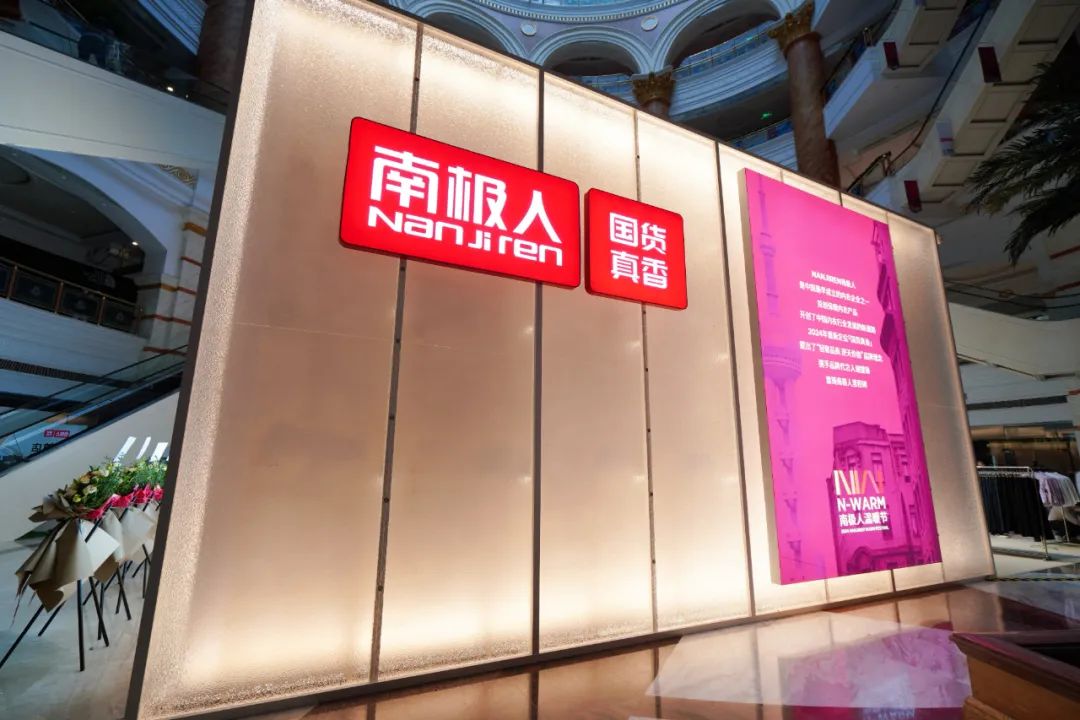
- The closed stores are pop-up stores(temporary shops), not official fixed stores
- Plans to open fixed storesin the same shopping mall
- This is a channel strategy upgrade, not a strategic contraction
- Self-operated business saw a 152% year-on-year growth, with a significant increase in gross profit margin
- Continuous investment in brand upgrading, with positive consumer feedback
- Supply chain system is upgrading to high-end
- Short-term loss pressure persists
- Cash flow is under pressure
- Litigation disputes may affect performance
- Brand reshaping requires a 3- to 5-year cycle
The light asset model (pure brand licensing) has indeed failed for Nanjiren E-Commerce, which is an inevitable result of market selection and the upgrading of consumer demand. However,the company is actively transforming, shifting from the “King of Brand Tags” to a “product brand operator”. Store closures are just a normal step in channel adjustment, and do not signal the failure of the transformation.
- Whether the company can return to profitability in 2026
- Whether the self-operated business can maintain high growth
- Whether the brand reshaping can gain consumer recognition
- Whether the litigation disputes can be properly resolved
[1] Sina Finance - “Nanjiren Offline Pop-Up Stores to Close by the End of This Month, Fixed Stores to Open in Global Harbor” (https://finance.sina.com.cn/roll/2025-02-28/doc-inemzpzf6943513.shtml)
[2] Sina Finance - “Nanjiren: No Longer ‘Everything Can Be Nanjiren’” (https://finance.sina.com.cn/tech/roll/2025-03-06/doc-inenswim6828095.shtml)
[3] The Economic Observer - “Nanjiren E-Commerce Involved in RMB 500 Million+ Litigation, Still Caused by ‘Selling Brand Tags’” (http://www.eeo.com.cn/2026/0106/777284.shtml)
[4] Xinhua News Agency - “How Long Will Nanjiren E-Commerce’s Transformation Take?” (http://www.news.cn/fashion/20250121/308fa4ce97624458b416d5fc860bed82/c.html)
[5] Eastmoney - “Nanjiren E-Commerce: Net Profit of RMB 42.7931 Million in the First Three Quarters of 2025, Down 21.09% YoY” (https://finance.eastmoney.com/a/202510313550895062.html)
[6] Phoenix Net - “Returning to Self-Operated Model: How Nanjiren, a Subsidiary of Nanjiren E-Commerce, Reshapes Brand Value” (https://i.ifeng.com/c/8gJxUTnBvCy)
[7] Sina Finance - “Transformation Pains After the Fading ‘Aura’ of Nanjiren E-Commerce’s Light Asset Model” (https://finance.sina.com.cn/stock/aigcy/2025-12-23/doc-inhcuunm5327135.shtml)
[8] China Finance Information Network - “[Litigation] Nanjiren E-Commerce (002127): Major Litigation Cases of the Company” (https://www.cfi.net.cn/p20260105000252.html)
[9] Eastmoney - “Over RMB 600 Million Involved! Nanjiren E-Commerce and Former Ally Face Off in ‘Sky-High Cross-Litigation’” (https://wap.eastmoney.com/a/202601043607932355.html)

The chart above shows changes in key financial data of Nanjiren E-Commerce from 2020 to 2025, including the decline in brand licensing business revenue, changes in operating revenue and net profit, business structure transformation, and comparisons of key financial indicators.

The chart above presents Nanjiren E-Commerce’s development milestones and the core challenges facing its light asset model, reflecting the company’s difficult transition from a light asset to a heavy asset model.
Insights are generated using AI models and historical data for informational purposes only. They do not constitute investment advice or recommendations. Past performance is not indicative of future results.
About us: Ginlix AI is the AI Investment Copilot powered by real data, bridging advanced AI with professional financial databases to provide verifiable, truth-based answers. Please use the chat box below to ask any financial question.