
Risk Analysis of Connected Transactions in Wanbang Digital Energy's Hong Kong IPO
Unlock More Features
Login to access AI-powered analysis, deep research reports and more advanced features
About us: Ginlix AI is the AI Investment Copilot powered by real data, bridging advanced AI with professional financial databases to provide verifiable, truth-based answers. Please use the chat box below to ask any financial question.
Based on the information searched, I will conduct a detailed analysis of the risk balance of connected transactions after Wanbang Digital Energy spun off Star Charge.
Wanbang Digital Energy Co., Ltd. submitted its prospectus to the Hong Kong Stock Exchange on
Shortly before the IPO, the company carried out a major business restructuring:
- July 2024: Wanbang Digital Energy restructured its manufacturing business and operation service business throughstatutory division
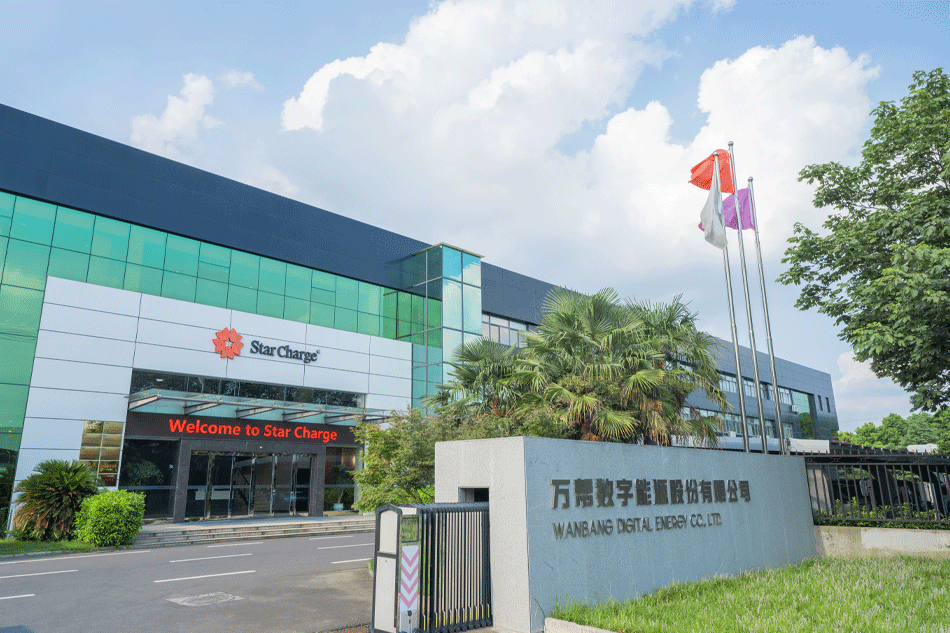
- After the restructuring, Wanbang Digital Energy only retained its energy equipment manufacturing business
- Equity in 9 companiesincluding “Star Charge” was transferred to Wanbang Taiyi, with a total consideration of approximatelyRMB 47.4 million[1]
According to industrial and commercial information, the “Star Charge” brand belongs to
Wanbang Digital Energy Co., Ltd.
    │
    ├── Controlling Shareholder: Wanbang New Energy Investment Group (50% each held by Ding Feng and Shao Danwei)
    │
    └── Related Company: Wanbang Taiyi (undertakes energy operation businesses including Star Charge)
According to the prospectus, the connected transactions between Wanbang Digital Energy and Wanbang Taiyi are as follows [1]:
| Time Period | Amount of Connected Transactions | Percentage of Total Revenue | Customer Ranking |
|---|---|---|---|
| 2023 | RMB 278 million | 8.0% | Top 5 Customers |
| 2024 | RMB 203 million | 4.9% | Top 5 Customers |
| First three quarters of 2025 | RMB 171 million | 5.6% | Top 5 Customers |
Wanbang Digital Energy signed a
| Year | Upper Limit of Connected Transactions |
|---|---|
| 2026 | RMB 1.7 billion |
| 2027 | RMB 2.2 billion |
| 2028 | RMB 2.8 billion |
- The prospectus must detail the specific commercial rationality of connected transactions
- Provide explanations of pricing standards and fairness
- Prove the absence of interest transfer by comparing with market prices or third-party pricing
- Affects the company’s cash flow and financial stability
- May lead to regulatory inquiries into the company’s financial health
- Affects the IPO approval process
- Wanbang Digital Energy stated that it does not rely on Wanbang Taiyi as its sole customer
- Wanbang Taiyi also does not only rely on Wanbang Digital Energy as its equipment supplier
- The two parties have a foundation of historical cooperation and are familiar with each other’s businesses and products [1]
- Establish procedures for the identification, approval and disclosure of connected transactions
- Clarify the pricing mechanism for connected transactions
- Set upper limits and ratio controls for connected transaction amounts
- Material connected transactions require prior approval from independent directors
- Independent directors need to issue independent opinions on connected transactions
- Ensure the independence and professionalism of independent directors
- At general meetings involving connected transactions, related shareholders must abstain from voting
- Protect the interests of minority shareholders
- Improve the fairness of connected transaction decisions
- Disclose related party relationships and details of connected transactions in detail
- Explain the specific commercial background of connected transactions
- Provide pricing basis and references for comparable transactions
- Continue to fulfill continuous disclosure obligations after listing
- Disclose details of connected transactions in annual reports
- Announce material connected transactions in a timely manner
- Disclose balances with related parties in detail in the notes to the financial statements
- Explain the impact of connected transactions on the financial statements
- Provide comparative data from the previous period
- Actively expand non-related customers
- Reduce dependence on a single customer
- Increase the proportion of market-oriented sales
- Focus on the core business of energy equipment manufacturing
- Spin off energy operation businesses to reduce conflicts of interest
- Improve business independence and transparency
- Establish a sound internal control system
- Conduct regular audits of connected transactions
- Prevent potential internal control deficiencies
According to the
| Requirement Type | Specific Content |
|---|---|
| Disclosure Obligations | Connected transactions to be entered into by the listing applicant or to continue after listing must be disclosed in the prospectus |
| Written Agreements | Written agreements must be signed with relevant parties for all connected transactions |
| Annual Upper Limits | An annual cumulative maximum amount must be set for each ongoing connected transaction |
| Shareholder Approval | Material connected transactions require shareholder approval, with related shareholders required to abstain from voting |
| Independent Financial Opinion | Independent financial advisor opinions must be provided for material transactions |
The China Securities Regulatory Commission (CSRC) focuses on the following connected transaction issues in overseas listing filings [4]:
-
Fairness of Connected Transactions
- Explain the specific commercial rationality of connected transactions
- Provide proof of pricing standards and fairness
- Compare with market prices or third-party pricing
-
Prevention of Interest Transfer Risks
- Assess the risk of interest transfer or infringement of minority shareholders’ interests
- Provide explanations of risk prevention and control measures
- Ensure transactions are genuine, necessary, and conducted in compliance with legal procedures
-
Impact on Financial Stability
- Detail the decision-making process and pricing basis
- Assess the impact on the company’s financial stability
- Explain issues such as high dividend payouts and purchases from related parties
| Risk Category | Risk Level | Assessment Basis |
|---|---|---|
| Risk of Pricing Fairness | Medium | The proportion of connected transactions is relatively low (<10%), but continuous attention is required |
| Risk of Accounts Receivable | High | The scale of RMB 3.8 billion in accounts receivable is large; detailed disclosure of sources and bad debt provisions is required |
| Risk of Business Dependence | Low | The company has stated that the two parties do not rely on each other, and the proportion of connected transactions is decreasing year by year |
| Risk of Regulatory Compliance | Medium | Must meet the dual regulatory requirements of the HKEX and CSRC |
-
Adequate Information Disclosure
- Fully disclose related party relationships and transaction details
- Provide detailed pricing basis
- Explain the commercial logic of business restructuring
-
Sound Internal Control
- Establish approval and monitoring mechanisms for connected transactions
- Conduct regular internal audits
- Ensure effective implementation of systems
-
Continuous Independence Building
- Gradually reduce the proportion of connected transactions
- Expand non-related customers and markets
- Improve business independence and marketization level
-
Reasonable Future Planning
- Set annual upper limits for connected transactions
- Clarify business development direction
- Provide verifiable growth strategies
By spinning off energy operation businesses including Star Charge, Wanbang Digital Energy has achieved its goal of “lightening the load” to sprint for a Hong Kong IPO. However, the risk of connected transactions remains a key issue that requires focused attention and proper handling during its listing process.
- Strengthen Institutional Guarantees- Establish a sound management system for connected transactions and internal control system
- Improve Transparency- Fully disclose related party relationships, transaction details and pricing basis
- Ensure Pricing Fairness- Prove transaction fairness through market-oriented pricing mechanisms and third-party verification
- Reduce Dependence- Gradually increase the proportion of non-connected transactions to improve business independence
- Meet Regulatory Requirements- Strictly comply with all compliance requirements of the HKEX and CSRC
Through the above comprehensive measures, Wanbang Digital Energy can effectively balance and manage the risks of connected transactions while promoting its listing process, protect the interests of minority shareholders, and achieve long-term healthy development of the enterprise.
[1] Phoenix Finance - Spinning off Star Charge to “Lighten the Load”? Wanbang Digital’s Hong Kong IPO Cannot Hide the Trouble of RMB 3.8 Billion in Accounts Receivable (https://finance.ifeng.com/c/8piHwFuqvLe)
[2] 36Kr - 540,000 Charging Piles Support Star Charge’s IPO, Creating Two “Hurun Rich List” Billionaires (https://m.36kr.com/p/3061037342270592)
[3] U-Green Energy Prospectus - Disclosures Related to Connected Transactions (http://pdf.dfcfw.com/pdf/H2_AN202304281586040979_1.pdf)
[4] Zhong Lun Law Firm - Hong Kong Capital Markets 2.0 Report (https://www.zhonglun.com/upload/file/20251125/1764062804764005005.pdf)
[5] Mayer Brown - Hong Kong Initial Public Offerings: An Issuer’s Guide (https://www.mayerbrown.com/-/media/files/perspectives-events/publications/brochures/asia/hong-kong-initial-public-offerings-an-issuers-guide-sc.pdf)
Insights are generated using AI models and historical data for informational purposes only. They do not constitute investment advice or recommendations. Past performance is not indicative of future results.
About us: Ginlix AI is the AI Investment Copilot powered by real data, bridging advanced AI with professional financial databases to provide verifiable, truth-based answers. Please use the chat box below to ask any financial question.