
Listing Analysis of Mingming Hen Mang's Bid to Become the "First Mass-Market Snack Stock" on the Hong Kong Stock Exchange
Unlock More Features
Login to access AI-powered analysis, deep research reports and more advanced features
About us: Ginlix AI is the AI Investment Copilot powered by real data, bridging advanced AI with professional financial databases to provide verifiable, truth-based answers. Please use the chat box below to ask any financial question.
Related Stocks
Based on the latest news reports and public information, I will conduct a comprehensive analysis of Mingming Hen Mang’s bid to become the “first mass-market snack stock”.
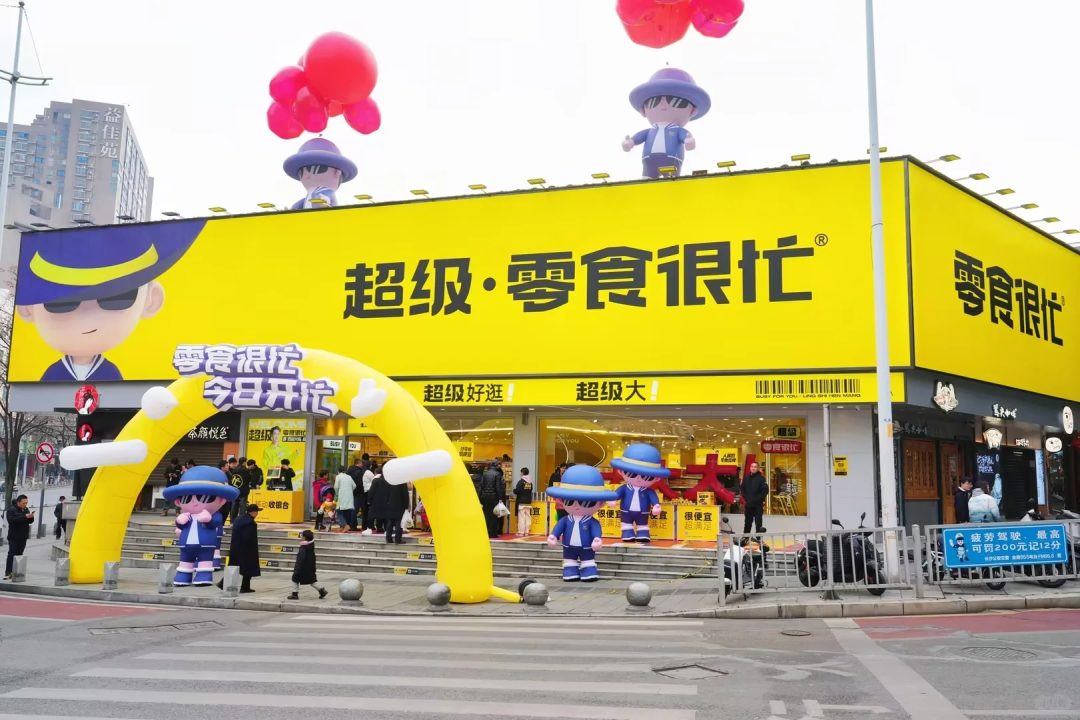
On January 6, 2026, Hunan Mingming Hen Mang Commercial Chain Co., Ltd. officially passed the Hong Kong Stock Exchange (HKEX) listing hearing and is about to land on the Hong Kong stock market as the “first mass-market snack stock on HKEX”[1][2]. This marks an important milestone in the company’s development and makes it the second listed company in the industry after Wanchen Group (already listed on A-share market).
- Gross Merchandise Value (GMV) from stores: RMB 66.1 billion, representing a year-on-year (YoY) growth of 74.5%
- Revenue: RMB 46.371 billion, YoY growth of 75.2%
- Adjusted Net Profit: RMB 2.189 billion
- Number of Operating Stores: 19,517, covering 28 provinces and cities at all levels across the country
- As of November 30, 2025, the total number of stores reached 21,041, making it the first enterprise in the industry to exceed 20,000 stores[3]
| Year | Revenue (RMB 100 million) | Revenue Growth Rate | Adjusted Net Profit (RMB 100 million) | Net Profit Growth Rate |
|---|---|---|---|---|
| 2022 | 42.86 | 140.2% | 0.81 | 188.1% |
| 2023 | 102.95 | 282.2% | 2.35 | 288.7% |
| 2024 | 393.44 | — | 9.13 | — |
| First Three Quarters of 2025 | 463.71 | 75.2% | 21.89 | — |
Note: The sharp growth in 2023 performance was mainly due to the acquisition of “Zhao Yiming Snacks”, and financial statements have been consolidated since December 2023[3]
Mingming Hen Mang’s business model is characterized by an extreme
- Use shockingly low prices of well-known brands (such as Coca-Cola, Master Kong, etc.) to attract customer traffic
- Rely on higher-margin private labels or agent brands (white-label products) to achieve core profits
- Average selling price is about 25% lower than that of offline supermarket channels, and the average number of SKUs per store is twice that of supermarkets of the same scale[2]
- Cooperates with more than 2,500 manufacturers (about 50% are Hurun China Top 100 Food Industry Enterprises)
- More than 95% of products are directly purchased from brand manufacturers, eliminating intermediate circulation links
- 40 warehouses are deployed nationwide, and stores are usually located within the 300-kilometer radiation range of warehouses, enabling 24-hour delivery
- Inventory turnover days are only 11.6 days, and warehousing and logistics costs are controlled at 1.7% of total revenue[4]
Mingming Hen Mang regards franchisees as “teammates” rather than mere franchisees, and has established a mutually beneficial and win-win ecological partnership[2]:
- Fee Policy: Starting from 2024, franchise fees and management fees for its two brands “Snacks Hen Mang” and “Zhao Yiming Snacks” are waived
- Empowerment Support: Provides full-cycle one-stop solutions, including a site selection database (over 10,000 locations), 7-day practical training, 10-12 days of training for new store openings, etc.
- Interest Binding: 99.3% of revenue comes from selling goods to stores, and profits are achieved through large-scale goods supply
| Time Node | Number of Franchisees | Average Number of Stores per Franchisee |
|---|---|---|
| End of 2022 | 994 | 1.94 |
| End of 2023 | 3,377 | 1.94 |
| End of 2024 | 7,241 | 1.98 |
| September 30, 2025 | 9,552 | 2.04 |
Data shows that the franchisee group presents a trend of steady growth and active investment, with more and more franchisees choosing to operate multiple stores[2].
This is the core challenge facing Mingming Hen Mang’s business model:
| Indicator | Mingming Hen Mang | Wanchen Group | Gap |
|---|---|---|---|
| Monthly Profit per Store (H1 2025) | Approximately RMB 5,500 | RMB 10,800 | Approximately 50% |
| Gross Margin Rate (First Nine Months of 2025) | 9.7% | 11.41% | 1.71 percentage points lower |
| Net Margin Rate (H1 2025) | 3.68% | 4.28% | 0.6 percentage points lower |
| Average Monthly Revenue (H1 2025) | RMB 300,700 | — | Declined compared to 2024 (RMB 313,600) |
Data Source: [1][3][4]
- Payback Period: From about 12 months in the early stage of the industry, it has generally extended to an average of29 months[1]
- Break-Even Threshold: Monthly turnover per store needs to reachRMB 300,000to barely touch the break-even line
- Realistic Dilemma: In the fierce “store density war”, the market is over-divided, making this break-even threshold unattainable for many stores
Mingming Hen Mang only took about 15 months to expand from 10,000 stores to 20,000 stores, with a store expansion pace comparable to that of Luckin Coffee and Mixue Ice Cream at their peak[1]. However, this rapid expansion did not bring corresponding economies of scale; instead, it showed a phenomenon of “diseconomies of scale”:
- Over-dense stores cause new stores to divert revenue from existing stores
- Single-store output is diluted
- The industry has fallen into a vicious cycle of “diseconomies of scale” + price wars
The mass-market snack industry has formed a competitive pattern of
| Enterprise | Number of Stores (End of June 2025) | Core Brands | Listing Status |
|---|---|---|---|
| Mingming Hen Mang | 16,783 (over 20,000 by September) | Snacks Hen Mang, Zhao Yiming Snacks | Bidding for Hong Kong Stock Exchange Listing |
| Wanchen Group | 15,365 | Haoxianglai, Laiyoupin, Laopo Daren | Listed on A-share Market |
Data Source: [4][5]
Wanchen Group (300972.SZ), as an A-share listed company, shows strong competitiveness in multiple dimensions:
- Profitability: Gross margin rate of 11.41% and net margin rate of 4.28%, both higher than Mingming Hen Mang
- Format Innovation: Launched “Laiyoupin Money-Saving Supermarket” and “Haoxianglai Full Food Selection”, transforming from single-category snacks to “full-category retail”
- Digital Advantages: Has a 358-person digital team, and its self-developed system improves the accuracy of cash register and inventory management through image recognition technology
- Private Labels: Launched two series “Haoxianglai Value” and “Haoxianglai Selection”, with private label sales accounting for 15% of total sales, and gross margin 8-10 percentage points higher than that of distributed products[5]
The current mass-market snack track has completely fallen into a
- Product portfolios, store images, and even “low-price” slogans are largely the same
- It is difficult for brands to build effective moats
- Competitive methods mainly rely on “store density”, blocking competitors’ penetration through a saturated physical network
- The industry has shifted from incremental market development to stock competition
- Franchisee Confidence Erosion: Widespread profit dilemmas may lead to a decline in franchisee confidence
- Decline in Network Service Quality: Meager single-store profits may affect service quality and operational investment
- Risk of Local Store Closure Wave: Sustained profit pressure may trigger franchisee withdrawals
- Damage to Brand Reputation: A store closure wave will backfire on brand reputation and shake the foundation of the entire business empire
-
Company-Level Support:
- Waives franchise fees and management fees, reducing franchisees’ upfront investment
- Provides all-round empowerment including site selection, training, and operation
- Stipulates that in principle, new stores of “Snacks Hen Mang” and “Zhao Yiming Snacks” will not be opened within 400 meters of existing stores to avoid internal cannibalization[4]
-
Market Demand Support:
- High penetration rate in sinking markets (about 59% of stores are located in county towns and township areas)
- Large price-sensitive consumer group
- The “cost-performance ratio” retail model is in line with current consumption trends
| Risk Type | Specific Performance |
|---|---|
Profit Risk |
Gross margin is only 9.3%, with extremely low fault tolerance; any cost increase or efficiency decline may erode profits |
Competition Risk |
Industry price wars continue to escalate, with competitors such as Wanchen Group pressing forward |
Franchisee Risk |
The 10,000-store network relies on the franchise system; declining single-store profits may trigger systemic risks |
Market Risk |
Industry dividend period fades, shifting from incremental to stock competition |
Valuation Risk |
The capital market may shift from “scale narrative” to “profit quality” evaluation |
- Industry Integration Opportunities: As an industry leader, it is expected to gain more market share in integration
- Supply Chain Efficiency Improvement: Further leverage scale advantages to reduce procurement and logistics costs
- Category Expansion: Learn from Wanchen Group’s “Full Food Selection” model to broaden profit boundaries
- Private Label Development: Increase the proportion of white-label products to improve gross margin levels
Mingming Hen Mang’s bid to become the “first mass-market snack stock” marks the entry of the mass-market snack industry into a new stage of capitalization. However, listing is not the end of success, but the beginning of a deeper examination of its model[1].
- Structural Contradictions in Business Model: The extreme “low gross margin, high turnover” model has fragile profitability when competition intensifies; monthly profit per store in the first half of 2025 is only RMB 5,500, significantly lower than that of competitors
- Sustainability of Franchise Model is Questionable: The payback period has extended to 29 months, the break-even threshold of RMB 300,000 per month poses pressure on most stores, and the “diseconomies of scale” dilemma has emerged
- Fierce Industry Competition: Under the “duopoly” pattern with Wanchen Group, homogenized competition makes it difficult to build effective moats, and price wars continue to erode profits
- Transformation Pressure After Listing: The capital market will evaluate the company with “sustainable profitability” as the core standard; the company needs to transform from extensive external growth of “opening many stores” to lean internal operation of “opening good stores”
- Whether single-store profitability can be improved
- Stability of the franchisee network
- Whether gross margin can be further improved
- Progress in the layout of private labels and differentiated products
[1] Sina Finance - “Gross Margin Only 9.3%, Monthly Profit per Store Less Than RMB 10,000: How Will Mingming Hen Mang Break the ‘Profit Curse’ After Listing?” (https://finance.sina.com.cn/stock/newstock/2026-01-07/doc-inhfnktp6268615.shtml)
[2] National Business Daily - “Mingming Hen Mang Passes IPO Hearing: Regards Franchisees as ‘Teammates’ to Co-Expand 10,000-Store Network” (https://www.nbd.com.cn/articles/2026-01-07/4210389.html)
[3] The Paper - “Snack Chain Mingming Hen Mang Passes HKEX Listing Hearing: Over 21,000 Franchise Stores” (https://www.thepaper.cn/newsDetail_forward_32333925)
[4] Tencent News - “Mass-Market Snack Giant Bids for Hong Kong Listing: Annual Revenue Nearly RMB 40 Billion, ‘Price War’ Spreads to Secondary Market” (https://news.qq.com/rain/a/20251212A06XH600)
[5] Sohu - “Cross-Border Breakthrough + Ecological Deep Cultivation: Wanchen Group Rewrites the Mass-Market Snack Competitive Pattern in 2025” (https://m.sohu.com/a/971919852_115386)
Insights are generated using AI models and historical data for informational purposes only. They do not constitute investment advice or recommendations. Past performance is not indicative of future results.
About us: Ginlix AI is the AI Investment Copilot powered by real data, bridging advanced AI with professional financial databases to provide verifiable, truth-based answers. Please use the chat box below to ask any financial question.