
Analysis of the FTC's Lawsuit Against Ticketmaster and Its Impact on Live Nation Entertainment
Unlock More Features
Login to access AI-powered analysis, deep research reports and more advanced features
About us: Ginlix AI is the AI Investment Copilot powered by real data, bridging advanced AI with professional financial databases to provide verifiable, truth-based answers. Please use the chat box below to ask any financial question.
Related Stocks
Based on the latest data and analysis, I will provide you with a comprehensive impact analysis of the FTC’s lawsuit against Ticketmaster over ticket resale.
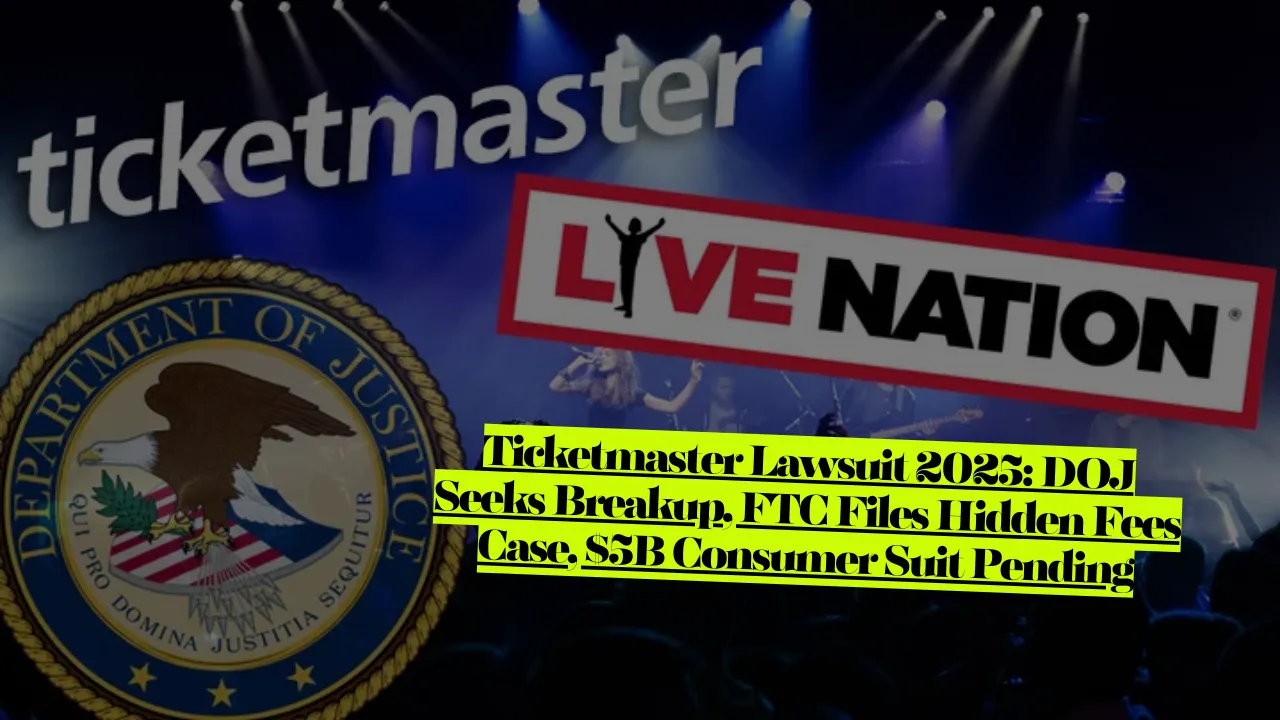
The U.S. Federal Trade Commission (FTC), together with seven states, has filed a lawsuit against Live Nation Entertainment and its subsidiary Ticketmaster, accusing them of the following illegal practices [1]:
- Bait-and-Switch Pricing: The ticket prices advertised externally are significantly lower than the amount consumers actually need to pay when purchasing tickets
- False Ticket Purchase Limit Claims: Falsely claims that there are strict limits on the number of tickets consumers can purchase, but ticket brokers often significantly exceed these limits
- Illegal Resale: Selling millions of tickets obtained by brokers in excess of limits on resale platforms, typically at prices far higher than the original face value
- Secret Collusion: Allegedly coordinating with ticket brokers to allow them to obtain millions of dollars worth of tickets in the primary ticketing market
This case is currently
According to the latest market data [0], Live Nation Entertainment (ticker: LYV) currently has a stock price of
| Time Horizon | Price Change | Market Performance |
|---|---|---|
| 1 Month | +5.04% | Relatively Strong |
| 3 Months | -5.78% | Beginning to Pull Back |
| 6 Months | -0.71% | Sideways Trading |
| 1 Year | +12.89% | Mid-term Uptrend |
| 3 Years | +102.53% | Long-term Positive |
Current valuation metrics show
- Price-to-Earnings (P/E) Ratio: 37.71x
- Price-to-Book (P/B) Ratio: 65.02x
- Enterprise Value to Operating Cash Flow (EV/OCF): 14.66x
According to analyst opinions [3], the current valuation faces the following risks:
- Valuation Disconnected from Fundamentals: The P/E ratio has reached as high as 60x in some periods, and the high premium lacks reasonable support
- Persistent Low Profit Margins: Net profit margin is only 3.66%, operating profit margin is 4.70%, with no operating leverage
- High Debt Risk: Financial analysis shows ahigh-riskdebt level, and aggressive accounting treatment increases risks
- Persistent Shareholder Dilution: There is an ongoing issue of equity dilution
| Scenario | Expected Valuation Impact | Key Drivers |
|---|---|---|
FTC Loses Lawsuit (No Major Penalties for the Company) |
Neutral to Slightly Positive | Eliminates uncertainty, but regulatory pressure persists |
FTC Wins Partial Victory (Fines/Business Adjustments) |
Mildly Negative | Fine payments and operating adjustment costs |
DOJ Wins Lawsuit (Company Split) |
Significant Negative Impact |
Vertically integrated business model is broken, core synergies are lost |
Settlement (Business Restrictions) |
Mild to Moderately Negative | Restrictive clauses may weaken market control |
Ticketmaster’s dominant position in the ticketing market is facing multi-faceted challenges:
-
Legal Litigation:
- FTC’s ticket resale lawsuit (ongoing) [1]
- DOJ’s antitrust lawsuit (trial in March 2026) [2]
- Additional antitrust lawsuits filed by companies such as Fanimal [4]
-
Industry Criticism:
- The National Independent Venue Association (NIVA) has become the most vocal critic [2]
- A mid-2025 report shows that 64% of U.S. independent stage venues are operating at a loss
-
Trends in Competitive Landscape Changes:
| Potential Change | Beneficiaries | Affected Parties |
|---|---|---|
| Forced Split of Ticketmaster | New Entrants, Independent Ticketing Platforms | Live Nation |
| Ban on Exclusive Venue Contracts | Small Venues, Independent Promoters | Live Nation |
| Price Transparency Requirements | Consumers | Ticketmaster |
| Resale Business Restrictions | Traditional Ticket Brokers | Secondary Market Platforms |
The outcome of the lawsuits may create market space for competitors:
- Existing competitors such as SeatGeekandStubHubmay gain more market share
- Emerging ticketing technology companiesmay gain access to the market
- Artist direct ticketing platformsmay gain room for growth
Based on financial analysis data [0], Live Nation’s financial health shows the following characteristics:
- Return on Equity (ROE): 3.10%, at a relatively low level
- Net Profit Margin: 3.66%, indicating that operational efficiency needs improvement
- Gross Profit Margin: Although not directly disclosed, analysis based on revenue structure shows pressure
- Current Ratio: 0.92, below the healthy level (typically >1.0)
- Quick Ratio: 0.92, indicating weak short-term solvency
According to the latest quarterly data [0], revenue is highly dependent on:
- Sponsorships and Advertising: $1.407 billion (60.5%)
- Concert Business: $869 million (37.6%)
- Ticketing Business: Only $44.42 million (1.9%)
Although the ticketing business accounts for a small proportion of revenue, as a core business entry point, any changes to it may affect the entire ecosystem.
- Direct impact on the ticketing business is limited
- May be forced to adjust pricing transparency
- Valuation Impact: Mildly negative (-5% to -10%)
- May be forced to cancel some exclusive venue contracts
- Needs to open up some resources to competitors
- Valuation Impact: Moderately negative (-15% to -25%)
- Vertically integrated business model ends
- Loses synergies
- Valuation Impact: Significantly negative (-30% to -50%)
According to market data [0], analyst ratings show:
- Buy Ratings: 88.1% (37 analysts)
- Hold Ratings: 11.9% (5 analysts)
- Consensus Target Price: $178 (implying 21.6% upside potential)
- Target Price Range: $164 to $195
However, the rise in regulatory risks may recalibrate these expectations.
The FTC’s lawsuit against Ticketmaster and the DOJ’s antitrust lawsuit will have far-reaching impacts on Live Nation Entertainment:
- Short-term: Lawsuit uncertainty may lead to stock price volatility and valuation pressure
- Mid-term: Regardless of the lawsuit outcomes, the tightening regulatory environment may weaken the company’s market control
- Long-term: If a forced split occurs, it will fundamentally change the competitive landscape of the ticketing industry and create opportunities for new entrants
Investors should closely monitor the following key milestones:
- February 19, 2026: Release of Q4 FY2025 earnings report (expected EPS: -$0.96)
- March 2026: Start of the DOJ’s antitrust lawsuit trial
- Administrative ruling outcome of the FTC’s lawsuit
[1] FTC Official Page - Entertainment Industry (https://www.ftc.gov/industry/entertainment)
[2] Hypebot - “Stories Set to Reshape the Live Music Industry in 2026” (https://www.hypebot.com/hypebot/2026/01/stories-set-to-reshape-the-live-music-industry-in-2026.html)
[3] Seeking Alpha - “Live Nation: Deceleration Fears Are Becoming A Reality” (https://seekingalpha.com/article/4857639-live-nation-stock-deceleration-fears-becoming-reality)
[4] Music Business Worldwide - “Defunct ticketing startup Fanimal files antitrust lawsuit against Live Nation, Ticketmaster” (https://www.musicbusinessworldwide.com/defunct-ticketing-startup-fanimal-files-antitrust-lawsuit-against-live-nation-ticketmaster/)
Insights are generated using AI models and historical data for informational purposes only. They do not constitute investment advice or recommendations. Past performance is not indicative of future results.
About us: Ginlix AI is the AI Investment Copilot powered by real data, bridging advanced AI with professional financial databases to provide verifiable, truth-based answers. Please use the chat box below to ask any financial question.