
Trump's $2,000 Tariff Dividend Promise: Legal Challenges and Economic Feasibility Analysis
Unlock More Features
Login to access AI-powered analysis, deep research reports and more advanced features
About us: Ginlix AI is the AI Investment Copilot powered by real data, bridging advanced AI with professional financial databases to provide verifiable, truth-based answers. Please use the chat box below to ask any financial question.
This analysis examines President Trump’s November 9, 2025 announcement promising $2,000 “tariff dividend” payments to most Americans, coinciding with a pivotal Supreme Court challenge to his tariff authority [1][2]. The proposal represents a complex intersection of fiscal policy, constitutional law, and political strategy occurring amid heightened market uncertainty.
Trump’s social media announcement promised “A dividend of at least $2000 a person (not including high income people!)” funded by tariff revenue [1][2]. The timing appears strategically significant, coming just days after Supreme Court oral arguments on November 5, 2025, where justices across the ideological spectrum questioned whether the International Emergency Economic Powers Act (IEEPA) authorizes sweeping tariffs traditionally reserved for Congress’s constitutional taxing power [3][4]. The announcement also follows Republican electoral setbacks attributed to voter backlash against tariff-related price increases [1].
The proposal faces substantial arithmetic challenges. While customs duties increased dramatically from $77 billion in fiscal 2024 to $195 billion in fiscal 2025, this revenue falls far short of the estimated $300 billion cost for $2,000 payments to 150 million Americans earning under $100,000 [2][5][6]. Furthermore, net tariff revenue after accounting for negative budgetary impacts is estimated at only $90 billion, creating a $210 billion shortfall [2]. Treasury Secretary Scott Bessent appeared to distance himself from the plan, suggesting the $2,000 figure might refer to tax savings from existing legislation rather than direct payments [2].
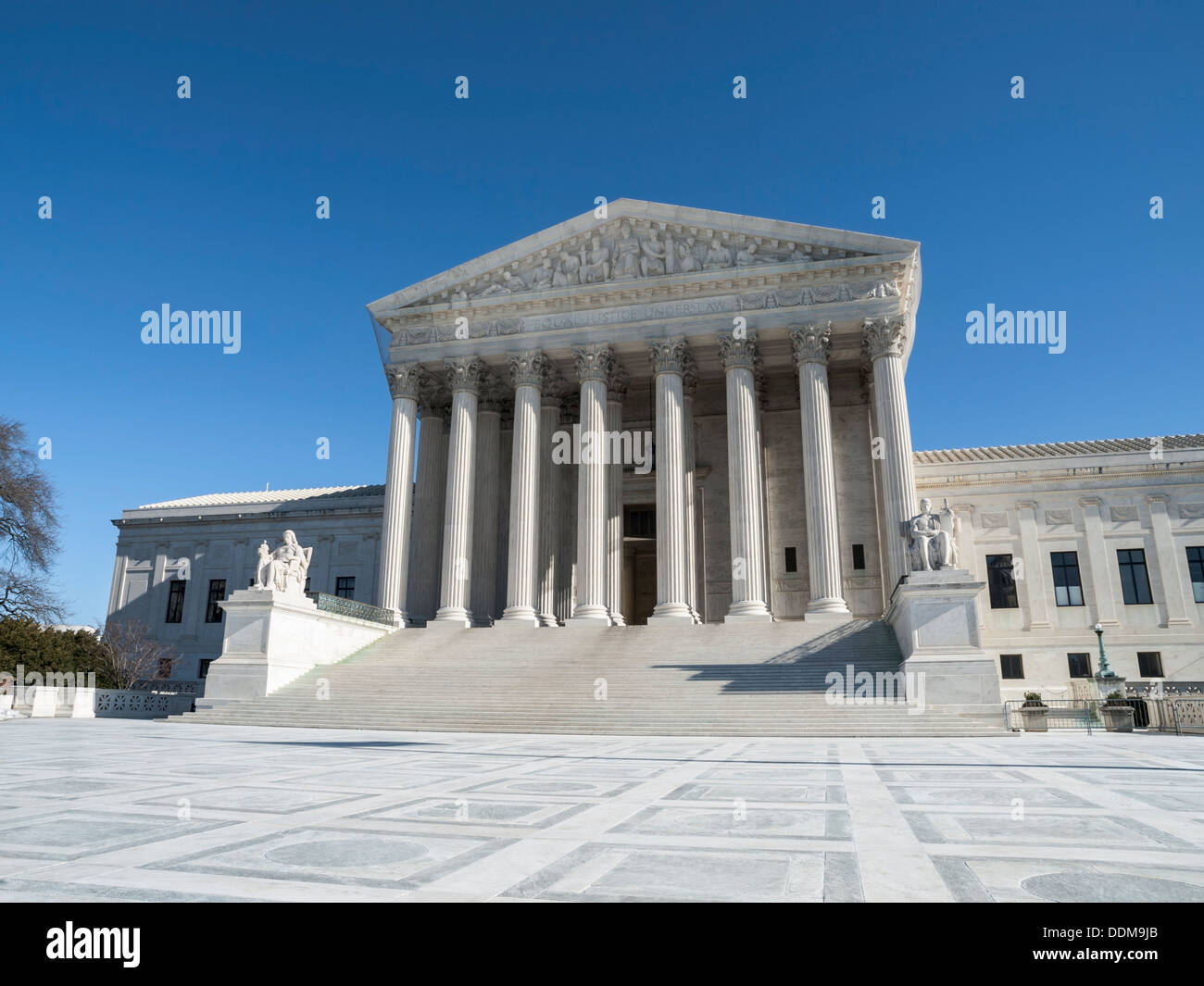
The Supreme Court case represents a fundamental test of presidential power versus congressional authority. During oral arguments, justices expressed concern that tariffs were effectively functioning as taxes, which the Constitution reserves for Congress [3][4]. The Court’s skepticism about whether tariffs address genuine emergencies rather than serve as revenue-raising measures suggests potential invalidation of Trump’s tariff regime [1][3]. Such a ruling could require refunds of $750 billion to $1 trillion to importers, according to Treasury Secretary Bessent and the Committee for a Responsible Federal Budget [1][6].
The proposal reveals a fundamental contradiction - if tariffs are deemed constitutional emergency measures (as the administration argues), they should not generate surplus revenue for distribution. Conversely, if tariffs generate sufficient surplus revenue for dividend payments, they function as taxes requiring congressional authorization [3][4]. This legal paradox undermines the proposal’s foundation.
The uncertainty surrounding tariff policy has contributed to bond market volatility, with 10-year yields hovering around 4% despite 3% inflation [0]. Technology and consumer cyclical sectors showed mixed performance (down 0.99% and 0.68% respectively), reflecting investor uncertainty about both policy direction and economic impact [0]. The combination of potential stimulus payments and ongoing trade tensions creates conflicting market signals.
Trump’s repeated emphasis on America being “the Richest, Most Respected Country In the World, With Almost No Inflation” appears designed to counter criticism that his trade policies contribute to inflationary pressures [1][2]. However, economists note that tariff costs are typically passed to consumers through higher prices, potentially negating any stimulus effect from dividend payments [2]. The proposal may function more as political messaging than viable economic policy.
- Constitutional Challenge: Supreme Court ruling against tariff authority could invalidate the entire policy framework and require massive refunds [1][3][4]
- Fiscal Sustainability: Even with increased tariff revenue, the proposal appears financially unsustainable without increasing the $38 trillion national debt [2]
- Inflationary Pressures: Combining tariffs with stimulus payments could exacerbate inflation, undermining any economic benefit [2]
- Implementation Barriers: Direct payments would require congressional approval, which hasn’t been secured, with no clear mechanism for targeting or administration [2]
- Policy Innovation: If legally viable, the proposal could establish a new framework for distributing trade policy benefits directly to citizens
- Political Capital: Successful implementation could generate significant public support for trade policies
- Economic Stimulus: If properly structured, could provide targeted economic relief to middle and lower-income households
The Supreme Court’s decision timeline represents the critical uncertainty factor. A ruling against the administration could force immediate restructuring of U.S. trade policy and potential retroactive refunds, creating significant market disruption [1][6]. Conversely, a favorable ruling could accelerate implementation attempts, though funding and authorization challenges would remain.
- Fiscal 2025 tariff revenue: $195 billion (150% increase over 2024) [5][6]
- Estimated payment program cost: $300 billion for 150 million eligible Americans [2]
- Net available tariff revenue: $90 billion after budgetary impacts [2]
- Potential refund liability: $750 billion to $1 trillion if SCOTUS rules against tariffs [1][6]
- November 5, 2025: Supreme Court oral arguments completed [3][4]
- November 9, 2025: Trump’s dividend announcement [1][2]
- SCOTUS decision timeline: Unknown, creating ongoing uncertainty [1]
- No clear definition of “high income” exclusion criteria [2]
- No established payment administration mechanism [2]
- Congressional authorization not secured [2]
- Treasury Secretary appears unsupportive of direct payment interpretation [2]
The analysis reveals that Trump’s tariff dividend promise faces substantial legal, financial, and implementation challenges that make successful execution highly unlikely without significant policy revisions and congressional support.
Insights are generated using AI models and historical data for informational purposes only. They do not constitute investment advice or recommendations. Past performance is not indicative of future results.
About us: Ginlix AI is the AI Investment Copilot powered by real data, bridging advanced AI with professional financial databases to provide verifiable, truth-based answers. Please use the chat box below to ask any financial question.