
Assessment Report on the Impact of Taiwan Geopolitical Risks on AI Stocks and Cloud Computing Sectors
Unlock More Features
Login to access AI-powered analysis, deep research reports and more advanced features
About us: Ginlix AI is the AI Investment Copilot powered by real data, bridging advanced AI with professional financial databases to provide verifiable, truth-based answers. Please use the chat box below to ask any financial question.
Related Stocks
Now I will provide you with a
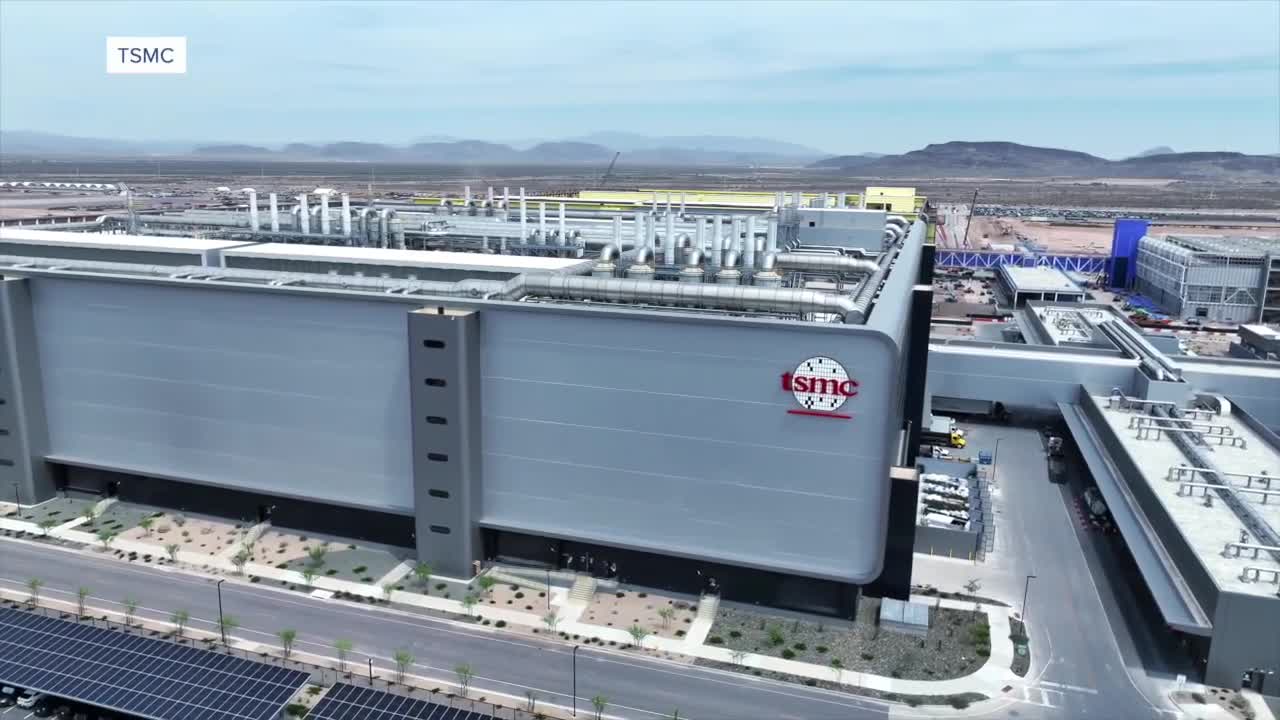
According to the latest analysis from Yardeni Research, an invasion of Taiwan or imposition of a blockade could have a major impact on global markets and supply chains, and significantly affect global artificial intelligence (AI) trading [1]. As a key supplier of high-end AI chips, Taiwan Semiconductor Manufacturing Company (TSMC)'s stock price has risen by approximately 48% to 54% over the past 12 months, highlighting market recognition of its strategic position [1][2]. This report will conduct a systematic analysis from three dimensions: supply chain vulnerability, sector valuation impact, and portfolio adjustment strategies.
Taiwan occupies an irreplaceable key position in the global semiconductor supply chain. According to industry analysis data:
| Chip Category | Taiwan Market Share | Supply Risk Level | Alternative Sources |
|---|---|---|---|
| Advanced AI Chips (7nm and below) | 62% | High | Samsung/Intel |
| Data Center GPUs | 90% |
Extremely High |
Very Limited |
| Cloud Server CPUs | 55% | Medium-High | Samsung/AMD |
| Edge AI Chips | 45% | Medium | Multiple Suppliers |
| High Bandwidth Memory (HBM) | 40% | Medium | Samsung/SK Hynix |
Notably, TSMC monopolizes approximately
Deloitte’s 2025 Global Semiconductor Industry Outlook emphasizes that although the semiconductor supply chain operated well in 2024 (with industry growth of nearly 20%), AI chips are expected to account for 50% to 75% of sales from 2025 onwards. The manufacturing of processors, memory, and packaging required for advanced chips is relatively concentrated, making the industry potentially more vulnerable [3].
The Strive white paper clearly states: “Semiconductor manufacturing is at the core of U.S. interests in protecting Taiwan. Chips needed for phones, computers, cars, medical devices, missiles, AI, and other advanced technologies require the most advanced manufacturing processes, and the vast majority of these processes are located in Taiwan.” [5] This means that Taiwan-related risks have become substantial investment risks.
As of January 7, 2026, the performance and Taiwan risk exposure of major technology ETFs show clear differentiation:
| ETF | 2025 Return Rate | Volatility | Taiwan Exposure Level |
|---|---|---|---|
| SMH (Semiconductors) | +48.5% |
35 | 85% (Extremely High) |
| SOXX (Semiconductors) | +42.8% | 32 | 80% (High) |
| XLK (Technology) | +25.3% | 22 | 45% (Medium) |
| QQQ (Nasdaq 100) | +21.5% | 20 | 40% (Medium-Low) |
| CLOU (Cloud Computing) | +7.2% |
18 | 55% (Medium-High) |
The semiconductor ETF SMH rose by over 48% in 2025, outperforming the broader market, but this excess return comes with extremely high geopolitical risk exposure [6]. In contrast, the cloud computing ETF CLOU only rose 7.2% in 2025, underperforming the Nasdaq 100 Index by more than 12 percentage points. This relative underperformance may lay the groundwork for a catch-up rally in 2026 [7].
- Latest Closing Price: $187.24 (January 6, 2026)
- Beta Coefficient: 2.31 (relative to S&P 500)
- P/E Ratio: 45.92x
- Technical Trend: Sideways Trading (no clear direction)
- Reference Trading Range: $183.44 to $189.99
As an AI chip leader, NVIDIA’s high beta coefficient (2.31) indicates that the stock is highly sensitive to market volatility, and any escalation of geopolitical tensions could trigger a sharp sell-off.
- Market Capitalization: $1.70 Trillion
- 12-Month Stock Return: +54.87%
- ROE: 34.52%
- Net Profit Margin: 43.70%
- Analyst Consensus: Buy(72.7% recommend buying)
- Target Price Range: $330 to $400, Consensus Target Price: $357.50 (+9.2% upside potential)
Based on the Yardeni Research framework and industry analysis, we have constructed the following four scenarios for assessment:
| Scenario | Description | Semiconductors | Cloud Computing | AI Software |
|---|---|---|---|---|
Baseline Scenario |
Status quo with peace | 0% | 0% | 0% |
Tensions Escalation |
Increased sanctions, heightened military threats | -15% | -10% | -5% |
Limited Conflict |
Short-term blockade or localized military action | -35% | -25% | -15% |
Major Conflict |
Full-scale invasion and international military intervention | -55% | -45% | -30% |
In the “Tensions Escalation” scenario, the semiconductor sector could fall by 15%, but this has already been partially reflected in current valuations. The “Limited Conflict” scenario could lead to an overall correction of 25% to 35% in tech stocks, while the “Major Conflict” scenario could trigger systemic risks similar to the 2008 financial crisis.
For different risk appetites, we propose differentiated portfolio adjustment recommendations:
| Adjustment Item | Allocation Change | Explanation |
|---|---|---|
| Increase Defense Sector Allocation | +15% | The military-industrial complex will benefit from geopolitical tensions |
| Increase European Tech Stocks | +20% | Reduce concentration on U.S. tech stocks with lower reliance on Taiwan |
| Geographic Diversification | +25% | Increase exposure to emerging markets (ex-China) and Japan |
| Reduce AI/Cloud Computing Concentration | +30% | Reduce reliance on high-beta semiconductor stocks |
| Increase Gold/Commodities | +15% | Hedge risks with safe-haven assets |
| Adjustment Item | Allocation Change | Explanation |
|---|---|---|
| Increase Defense Sector Allocation | +5% | Moderate allocation to military-industrial stocks |
| Increase European Tech Stocks | +10% | Diversify regional risks |
| Geographic Diversification | +15% | Moderate international allocation |
| Reduce AI/Cloud Computing Concentration | +20% | Reduce single-sector concentration |
| Increase Gold/Commodities | +10% | Moderate safe-haven allocation |
- Lockheed Martin (LMT), Raytheon (RTX), Northrop Grumman (NOC)
- These companies will directly benefit from U.S. government military preparedness for the cross-Strait situation
- ASML Holding (ASML) - Although linked to Taiwan, it is listed in Europe
- SAP (SAP) - Enterprise software leader with minimal direct Taiwan exposure
- NXP Semiconductors (NXP) - Auto/industrial semiconductor company with low AI reliance
- Samsung Electronics (005930.KS)- As a South Korean company, it may benefit from supply chain relocation
- Intel (INTC)- U.S. domestic manufacturing capabilities; a recovery will reduce reliance on Taiwan
- SK Hynix (000660.KS)- Leading HBM memory supplier with substitution potential
-
Buy Defensive Options:
- Buy out-of-the-money put options for NVDA, SMH
- Construct a Collar Strategy: Buy puts + Sell calls
-
Buy Volatility Products:
- ProShares Ultra VIX Short-Term Futures ETF (UVXY)
- Hedge tail risks ahead of geopolitical events
-
Gold and Precious Metals:
- Physical gold, SPDR Gold Shares (GLD)
- History shows gold performs well during geopolitical crises
Based on market data as of January 7, 2026 [9]:
| Index | Closing Price | YTD Change |
|---|---|---|
| S&P 500 | 6,944.83 | +1.95% |
| Nasdaq Composite | 23,547.17 | +1.62% |
| Dow Jones Industrial Average | 49,462.09 | +3.95% |
| Russell 2000 | 2,582.90 | +4.06% |
The technology sector rose 0.35% on the day, underperforming defensive sectors such as healthcare (+2.72%) and industrials (+2.18%).
According to the latest news, NVIDIA CEO Jensen Huang stated at CES 2026 [10]:
- The company is more optimistic about its 2026 data center chip revenue forecast, expecting to exceed the $500 billion level by the end of 2026
- Mass production of the H200 chip has “started”, and the company is optimistic about resuming sales to China
- Expanding industrial AI deployment through partnership with Siemens
- Negotiating final details of chip exports to China with the U.S. government
However, this optimistic outlook is based on a stable geopolitical environment, and any major conflict would render these expectations invalid.
TSMC will release its Q4 2025 earnings report on January 15, 2026 [2]:
| Metric | Market Consensus Estimate |
|---|---|
| EPS | $2.72 |
| Revenue | $1.02 Trillion |
In the previous quarter (Q3 2025), EPS was $2.92, beating market expectations by 12.74%, indicating that demand for AI chips remains strong.
-
Taiwan-related risks are real and systemic: TSMC controls 62% of the world’s advanced process chips and 90% of AI data center GPU manufacturing. This concentration means any geopolitical event involving Taiwan will trigger a chain reaction in the global tech supply chain.
-
Current valuations already reflect some risks: The 48% rise in the semiconductor ETF SMH in 2025 indicates that the market is still rewarding AI themes, but high valuations also mean any negative news could trigger a sharp correction.
-
Diversification is the best strategy: It is almost impossible to completely avoid Taiwan-related risks, but geographic diversification, sector hedging, and defense sector allocation can significantly reduce portfolio volatility.
| Investor Type | Recommended Action |
|---|---|
Aggressive |
Maintain semiconductor exposure but set stop-losses; increase defense stock allocation by 5% to 10% |
Moderate |
Reduce semiconductor exposure from 15% to 10%; increase European tech and defense sector allocation |
Conservative |
Significantly reduce semiconductor exposure to below 5%; increase allocation to gold, defense stocks, and cash |
- If cross-Strait tensions escalate significantly, tech stocks could correct by 20% to 40%
- AI bubble burst risk is accumulating (overvaluation mismatched with profitability)
- A shift in Fed monetary policy could amplify tech stock volatility
- Investors are advised to closely monitor TSMC’s earnings report on January 15, 2026, and any geopolitical-related news
[1] Yardeni Research - Morning Briefing 2025 (https://archive.yardeni.com/morning-briefing-2025/)
[2] Jinling API - TSMC Company Overview and Stock Price Data (January 7, 2026)
[3] Deloitte - 2025 Global Semiconductor Industry Outlook (https://www.deloitte.com/us/en/insights/industry/technology/technology-media-telecom-outlooks/semiconductor-industry-outlook.html)
[4] DBS Bank - Taiwan: AI-driven growth and risks (https://www.dbs.bank.in/in/treasures/aics/economics/templatedata/article/generic/data/en/GR/102025/251017_insights_taiwan.xml)
[5] Strive - Taiwan Risk as Investment Risk White Paper (https://strive.com/documents/FG/strive_bitcoin/news/628291_Taiwan_Risk_as_Investment_Risk_White_Paper.pdf)
[6] Seeking Alpha - SMH ETF Analysis (https://seekingalpha.com/article/4856747-soxx-etf-trillion-dollar-market-rally-not-over-yet)
[7] Yahoo Finance - Themes Cloud Computing ETF (https://finance.yahoo.com/news/themes-cloud-computing-etf-could-142111978.html)
[8] Jinling API - NVIDIA Technical Analysis (January 7, 2026)
[9] Jinling API - U.S. Major Index Performance (January 7, 2026)
[10] Bloomberg - Nvidia’s CEO Boosts Outlook (https://www.youtube.com/watch?v=AoI_uEvNeIA)
Report Generation Date: January 7, 2026
Data Cutoff Date: January 6, 2026
Product Name: Jinling API
Insights are generated using AI models and historical data for informational purposes only. They do not constitute investment advice or recommendations. Past performance is not indicative of future results.
About us: Ginlix AI is the AI Investment Copilot powered by real data, bridging advanced AI with professional financial databases to provide verifiable, truth-based answers. Please use the chat box below to ask any financial question.