
Analysis of ByteDance's Strategic Layout of its Second Headquarters in Shenzhen and the Competitive Landscape
Unlock More Features
Login to access AI-powered analysis, deep research reports and more advanced features
About us: Ginlix AI is the AI Investment Copilot powered by real data, bridging advanced AI with professional financial databases to provide verifiable, truth-based answers. Please use the chat box below to ask any financial question.
Related Stocks
Based on the latest information and data, I will conduct a systematic analysis for you.
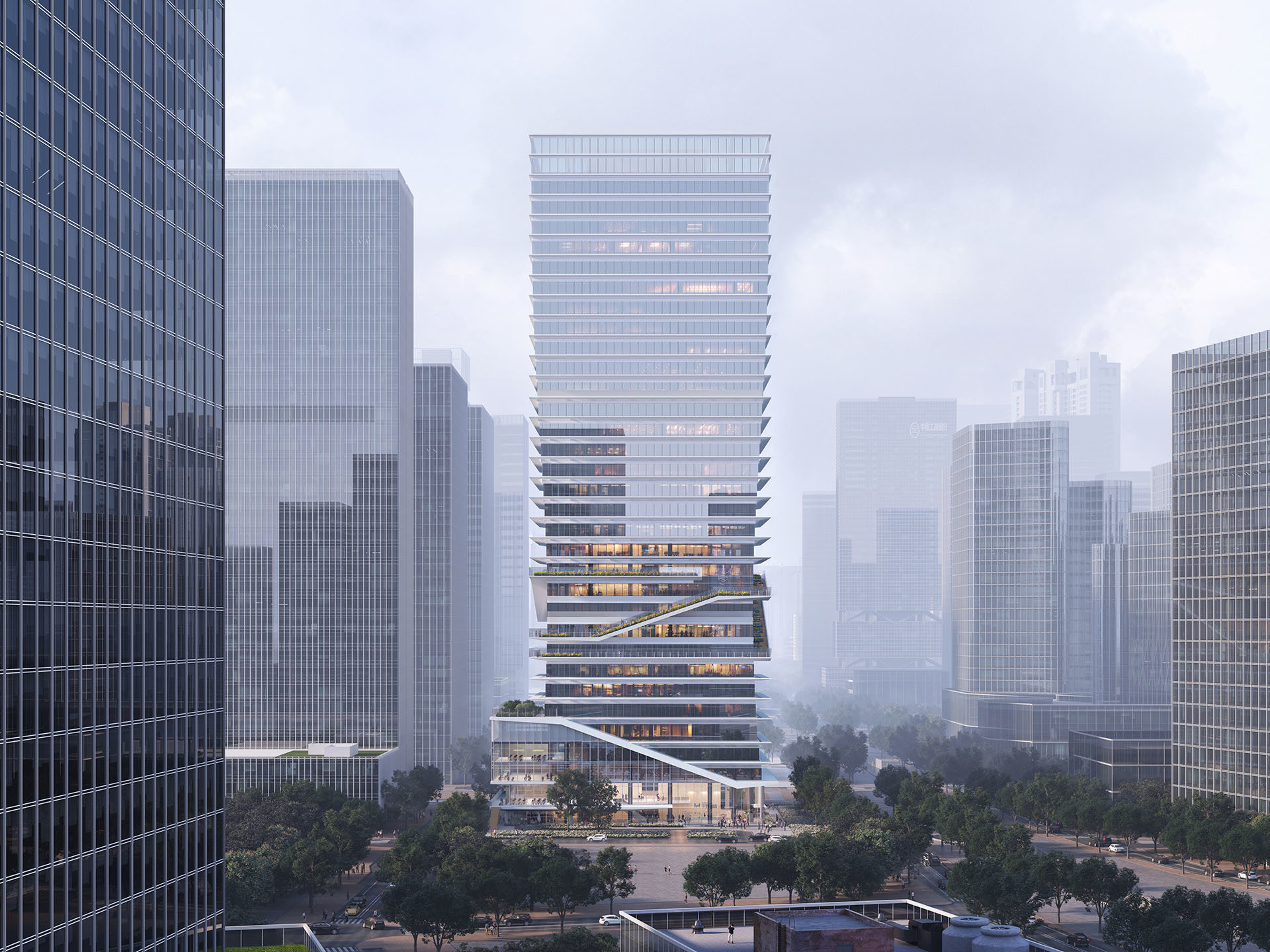
On January 5, 2026, Shenzhen held the 2026 Project Construction On-site Promotion Conference, launching 222 new projects in a concentrated manner with a total investment of approximately 157.34 billion yuan. Nanshan District ranked first in the city with 30 projects and a total investment of 31 billion yuan, among which ByteDance’s “Pan-Video Technology R&D Headquarters” project is particularly eye-catching[1]. Located in Yuehai Subdistrict, the project is positioned as the second headquarters of Douyin, focusing on supporting the R&D of core products such as Douyin and Toutiao, as well as new businesses such as payment, while simultaneously building the ByteDance AI Lab Research Center and SaaS Platform Service Center[1].
This marks a further deepening of ByteDance’s layout in Shenzhen following the opening of Shenzhen Jinghu Building in 2024. Notably, ByteDance’s Houhai Center has also been in operation for more than half a year, and the construction of this second headquarters reflects the company’s continued emphasis on Shenzhen’s strategic position.
ByteDance’s investment scale in the AI sector is staggering. Its capital expenditure reached 80 billion yuan in 2024, almost reaching the combined total of Baidu, Alibaba, and Tencent (approximately 100 billion yuan)[2][3]. More notably, the capital expenditure budget will soar to 160 billion yuan in 2025, with approximately 90 billion yuan allocated for AI computing power procurement and 70 billion yuan for IDC infrastructure and network equipment[2][3]. Although founder Zhang Yiming stepped down as CEO in 2021, insiders revealed that he is still deeply involved in the group’s AI strategic layout, repeatedly emphasizing the pursuit of the “Artificial General Intelligence (AGI)” goal[3].
At the product level, ByteDance’s AI application matrix has formed a significant competitive advantage. The Doubao Large Model has 75 million monthly active users (MAUs), ranking first among domestic similar products; the video generation tool “Jimeng” has 170 million MAUs, second only to ChatGPT[4]. From C-end applications to B-end services, ByteDance is attempting to replicate the success of its “App Factory” model to build a comprehensive AI ecosystem.
Currently, China’s AI market is showing a “dual hegemony” pattern. ByteDance and Alibaba represent two different competitive strategies: ByteDance excels in extreme product execution and application implementation capabilities, while Alibaba builds a technology alliance through open-source models and investment layout[5]. The minimum required investment for training a large model has reached 2-3 billion US dollars per year, a figure that exceeds the total financing amount of any of the so-called “AI Six Dragons”, meaning that AI competition is evolving into a resource war of attrition, where only leading enterprises have the strength to “fight to the end”[5].
ByteDance’s competitive advantages in the AI sector are reflected in three dimensions: first, its amazing organizational capabilities and execution enable it to quickly catch up and achieve overtaking; second, the daily active users (DAUs) of the Doubao application have exceeded 100 million, and the marketing cost during user growth is the lowest among all ByteDance products with DAUs exceeding 100 million; third, Doubao accounted for half of the industry’s MAU share in 2024, and the gap with competitors continues to widen[6].
The competition between ByteDance and Tencent has evolved from the early “traffic war” to a deeper ecological confrontation. As a local Shenzhen enterprise, Tencent’s Binhai Headquarters is less than 5 kilometers away from ByteDance’s second headquarters in Nanshan, officially forming a direct confrontation pattern between the two internet giants[7]. Tencent is counterattacking with products such as Yuanbao: in 2025, Tencent Yuanbao surpassed Doubao and DeepSeek on the App Store Free Chart, and topped the China App Store Free Chart on March 3, with an extremely aggressive marketing strategy[6].
However, from a more macro perspective, the two companies are moving from confrontation to cooperation. Tencent Video has publicly announced a statement that it will cooperate with Douyin on the second creation and promotion of long-form videos, breaking the deadlock of multiple lawsuits over copyright issues in the past[7]. This change in coopetition relationship reflects that after the fading of the mobile internet dividend, leading enterprises are more inclined to seek incremental cooperation opportunities in the existing market.
ByteDance’s strategic layout of simultaneously building a SaaS Platform Service Center may have a profound impact on the domestic SaaS market pattern. Currently, China’s SaaS market is relatively fragmented, lacking a platform-type enterprise with absolute dominance. Relying on its massive enterprise user base and ecological resources, ByteDance is expected to open up new growth space in this field, forming synergy with its core short-video and live e-commerce businesses.
Yuehai Subdistrict in Nanshan, Shenzhen is known as “China’s Most Powerful Subdistrict”, and its industrial agglomeration effect has formed a strong talent magnetism and innovation ecosystem. Official data shows that in 2018, Nanshan District’s GDP reached 501.8 billion yuan, with the added value of strategic emerging industries accounting for 60% of GDP, of which Yuehai Subdistrict contributed half of that[8]. As of June 2019, more than half of the 156 listed companies in Nanshan District are located in Yuehai Subdistrict, and 9 of the 14 “unicorn” enterprises with a valuation of over 1 billion US dollars are located in Yuehai Subdistrict[8].
As the core carrier of the region, the Shenzhen Bay Innovation Technology Center has attracted 14 Fortune 500 enterprises such as Huawei, Tencent, ByteDance, Accenture, and Airbus, as well as 46 listed companies, forming an industrial cluster with an annual output value of over 26 billion yuan[9]. There are more than 300 specialized, sophisticated, unique, and new enterprises in the park, and more than 50 start-ups have been incubated, 10 of which have successfully obtained financing[9]. This ecological chain model of “leading enterprise navigation + small and medium-sized enterprise collaboration + incubator cultivation” provides a favorable industrial supporting environment for ByteDance’s long-term development.
Shenzhen’s innovation element support system is becoming increasingly perfect. In terms of talent, the total number of various types of talents in the city exceeds 7 million, including 4.06 million skilled talents, 220,000 returned overseas students, and 26,000 high-level talents, ranking first in the country for two consecutive years in the “China City Post-95s Talent Attractiveness Ranking”[10]. In terms of scientific research platforms, Shenzhen has the Pengcheng Laboratory (National Key Laboratory of Network Communications and Cyberspace Security) and large-scale scientific and technological infrastructure such as Pengcheng Cloud Brain II and III, providing strong computing power support for AI R&D[10].
Shenzhen is planning and building 10 artificial intelligence industrial clusters such as Shenzhen Bay and Xili-Shiyan at a high standard, and building innovation incubators such as Nanshan District’s “Model Power Camp” and Futian District’s “Angel Hub · Thousand-Model Application Accelerator”, providing low-cost industrial space and innovation resources such as computing power, models, corpus, and capital for high-quality start-ups[10]. This full-chain innovation ecosystem can effectively support ByteDance’s full-process needs from basic research to product implementation.
ByteDance’s second headquarters in Shenzhen is located in Yuehai Subdistrict, which has unique geographical location advantages. The project is seamlessly connected to Keyuan Station of Metro Line 2 and Line 13, reaching Shenzhen Bay Port in 10 minutes, and connecting Bao’an International Airport and Qianhai Free Trade Zone in 30 minutes[9]. It is surrounded by urban arterial roads such as Binhai Avenue and Shennan Avenue, and linked with technology giants such as Tencent’s Global Headquarters and Baidu International Building, forming a “sea, land, air, and rail” three-dimensional transportation network radiating the Pearl River Delta[9].
More importantly, this area is adjacent to scientific research institutions such as Shenzhen University and Pengcheng Laboratory, and forms an “industry-university-research-application” collaborative innovation ecosystem with the Qianhai Shenzhen-Hong Kong Modern Service Industry Cooperation Zone[9]. This environment of deep integration of industry, university, and research is of great supporting significance for the long-term development of ByteDance’s AI Lab Research Center.
Although the overall support capability of Nanshan, Shenzhen’s science and technology ecosystem is strong, there are still some challenges that need attention. First, Yuehai Subdistrict is currently facing serious “urban maladies”, including dense enterprises, large management population, traffic congestion, and urgent need for upgrading supporting facilities such as apartments[8]. Second, the collaboration between Shenzhen’s universities is still not strong, and investment in talent education needs to be further increased[8]. Third, the problem of incomplete industrial chain is still prominent, especially in the chip manufacturing and packaging and testing segments[8]. In addition, geopolitical uncertainties may also affect the implementation of ByteDance’s strategy, especially the prospects of TikTok in overseas markets and the supply of computing power equipment[4].
ByteDance’s construction of its second headquarters in Nanshan, Shenzhen is an important implementation measure of its “ALL IN AI” strategy. From the perspective of competitive landscape, this layout will intensify direct competition with Tencent and Alibaba in the AI track, promoting further concentration of industry resources toward leading enterprises. From the perspective of regional development, ByteDance’s entry will strengthen the high-tech industrial agglomeration effect in Nanshan, forming a “dual-core drive” pattern with Tencent, but it may also intensify resource competition and cost increases in the region.
The science and technology ecosystem in Nanshan, Shenzhen can generally support the long-term development of ByteDance’s second headquarters, with its industrial agglomeration effect, innovation element support, and geographical location advantages all leading domestically. However, as AI competition enters a white-hot stage, whether ByteDance can continue to maintain its advantages in this resource war of attrition will depend on its technological breakthrough capabilities, ecosystem construction efficiency, and strategic resilience in responding to external uncertainties.
[1] 21st Century Business Herald - Douyin Builds Its Second Headquarters in Shenzhen (https://m.sohu.com/a/973332319_439726)
[2] Securities Times - ByteDance “ALL IN AI” (https://stcn.com/article/detail/1460247.html)
[3] MIT Technology Review China - ByteDance Announces AGI Goal for the First Time (https://www.mittrchina.com/news/detail/14343)
[4] Securities Times - Leading Enterprises Invest 100 Billion Yuan in AI to Compete for Super Entrance (https://www.stcn.com/article/detail/3563827.html)
[5] 53AI - 2025 China AI Landscape: Peak Duel Between ByteDance and Alibaba (https://www.53ai.com/news/LargeLanguageModel/2025012474356.html)
[6] The Paper - ByteDance Wins Another Bet (https://m.thepaper.cn/newsDetail_forward_32272627)
[7] xitalk - War and Peace: Six Years of Entanglement Between ByteDance and Tencent (https://wwyy.org/archives/8132.html)
[8] Jiemian News - Uncovering China’s Most Powerful Subdistrict: Yuehai (https://www.jiemian.com/article/3650983.html)
[9] Official Website of Shenzhen Bay Innovation Technology Center (https://shenzhenwanchuangxinkeji.cn/)
[10] Press Conference of Shenzhen Municipal Government Information Office (https://fgw.sz.gov.cn/hdjl/zxft/fthg/content/post_12015359.html)
Insights are generated using AI models and historical data for informational purposes only. They do not constitute investment advice or recommendations. Past performance is not indicative of future results.
About us: Ginlix AI is the AI Investment Copilot powered by real data, bridging advanced AI with professional financial databases to provide verifiable, truth-based answers. Please use the chat box below to ask any financial question.