
Strategic Implications and Valuation Impact Analysis of Unilever's Sale of Southeast Asian Tea Business
Unlock More Features
Login to access AI-powered analysis, deep research reports and more advanced features
About us: Ginlix AI is the AI Investment Copilot powered by real data, bridging advanced AI with professional financial databases to provide verifiable, truth-based answers. Please use the chat box below to ask any financial question.
Based on the information collected above, I now present a detailed analysis report for you:
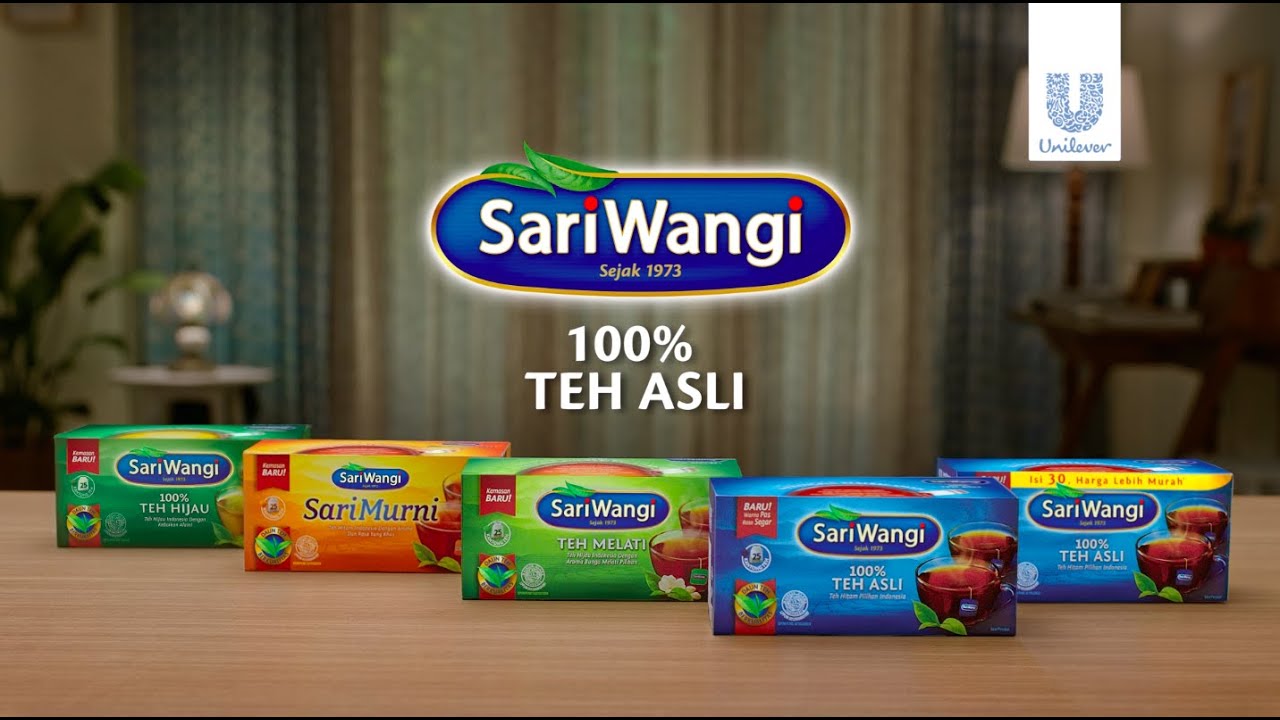
According to the latest announcement [1], Unilever Indonesia plans to sell its Sariwangi brand tea business to Savoria Kreasi Rasa for
This sale is a key component of Unilever’s “Growth Action Plan”. In February 2025, Unilever underwent major management changes – Hein Schumacher, who had been in office for only 20 months, announced his resignation as Chief Executive Officer, and Chief Financial Officer Fernando Fernandez took over as CEO [2]. This personnel change was widely interpreted by the outside world as a signal that the board of directors was impatient with the results of the reforms.
During his tenure, Hein Schumacher promoted a series of radical “streamlining” initiatives [2]:
- Global layoffs of 7,500 employees
- Initiated the spin-off of the ice cream business(including well-known brands such as Wall’s and Magnum)
- Sold over 20 non-core personal care and beauty brands
- Focused on high-growth beauty and health segments
2024 fiscal year data shows that Unilever’s sales reached a record high of EUR 60.8 billion, but
Unilever’s strategic adjustment provides important implications for the valuation of global consumer goods companies. According to corporate profile data [3], Unilever’s current market capitalization is
This valuation level reflects the market’s recognition of Unilever’s strategic transformation, but also implies challenges:
- P/E is higher than that of major competitor Procter & Gamble (27.5x), indicating that the market has given a premium for its transformation expectations
- Current ratio of 0.76 and quick ratio of 0.55indicate short-term liquidity pressure, confirming the necessity of recovering cash through asset sales
- Analyst consensus rating is “HOLD”, with a target price of USD 60.10, a 6.8% discount to the current price [3]
Unilever’s series of divestment actions have had the following valuation impacts:
| Divested Business | Transaction Value | Valuation Characteristics |
|---|---|---|
| Global Tea Business (Ekaterra) | EUR 4.5 billion | Divest low-growth category, release resources to focus on high-margin businesses |
| Elida Beauty | Undisclosed | Focus on core personal care and beauty brands |
| Sariwangi Tea Business | USD 940 million | Streamlining of emerging market businesses |
| Ice Cream Business | Spin-off as independent entity (valued at EUR 7.8 billion) [4] | Business restructuring under high-end strategy |
KPMG’s “2025 Global Consumer & Retail M&A Outlook” points out that consumer goods companies are
In the new organizational structure implemented by Unilever in January 2025,
- Resource Concentration: Redirect capital allocation from low-growth categories to high-growth, high-margin segments
- High-Endization: Enhance product portfolio through acquisitions of high-end brands such as Wild, K18, and Dr. Squatch [6]
- Efficiency First: Improve operational efficiency through organizational streamlining
This strategic adjustment directly impacts
A research report from EY shows that
The driving factors for this trend include:
- Asset Portfolio Optimization: Enterprises face the need to streamline investment portfolios and focus on core businesses
- Debt Repayment: In a high-interest rate environment, enterprises reduce leverage by selling assets
- Shareholder Returns: Capital return has become a priority; in 2024, Unilever returnedEUR 5.8 billionto shareholders through dividends and share buybacks [6]
The consumer goods industry faces unique structural challenges:
| Challenge Factor | Specific Performance |
|---|---|
Weak Consumer Demand |
Decline in black tea demand in developed markets, intensified competition in emerging markets |
Channel Transformation |
E-commerce impacts traditional retail channels |
Cost Pressure |
Fluctuations in raw material prices push up costs |
Brand Aging |
Some traditional brands have lost appeal to young consumers |
Unilever CEO Alan Jope previously stated clearly regarding the tea business that “although the tea business also achieved price-driven growth, sales volume declined”, due to
According to research reports from KPMG and EY [5][7], the trend of non-core asset divestment will continue in 2025 for the following reasons:
- Strategic Focus Demand: Nearly half of consumer goods and healthcare CEOs have listed divestment as a priority [7]
- Debt Optimization Pressure: In a high-interest rate environment, enterprises need to improve their balance sheets
- Growth Bottlenecks: Low growth in mature markets forces enterprises to re-evaluate asset allocation
- Regulatory Environment: Antitrust scrutiny has tightened, large-scale M&A faces resistance, and “bolt-on acquisitions” have become the mainstream
Accío’s “2025 Consumer Goods and Retail M&A Trends” report points out that consumer goods companies are
- Focus on the “Hidden Value” of Asset Divestment: Unilever’s ice cream business was valued at EUR 7.8 billion after spin-off [4], demonstrating the potential value release of undervalued businesses
- Profit Margin Improvement Expectations: Divesting low-margin businesses is expected to improve overall gross profit margin (currently 45.7%) [6]
- Capital Allocation Efficiency: Using proceeds from sales for shareholder returns (share buybacks, dividends) can enhance shareholder value
- Execution Risk: Strategic transformation takes time to verify, and management changes may affect coherence
- Market Risk: Performance fluctuations in emerging markets may offset the effects of transformation
- Valuation Risk: The current 35.8x P/E has already partially reflected transformation expectations
For investors focusing on the consumer goods sector, it is recommended to pay attention to the following indicators:
- Business Focus: Proportion of high-margin businesses
- Brand Portfolio Quality: Performance of “Power Brands”
- Capital Allocation Efficiency: Free cash flow and shareholder return intensity
- Emerging Market Layout: Performance of high-growth markets such as India and Indonesia
Unilever’s sale of its Southeast Asian tea business is
- Valuation Framework Restructuring: Shift from revenue growth-driven to profit margin improvement and capital efficiency-driven
- Asset Allocation Optimization: Non-core business divestment will continue to be a strategic norm
- Shareholder Value Release: Using proceeds from sales to reward shareholders will become a mainstream practice
[1] Economic Observer Network - Unilever Indonesia plans to sell local tea business for IDR 1.5 trillion (http://www.eeo.com.cn/2026/0107/777592.shtml)
[2] Huxiu - Top 10 CEO Succession Events in the Retail Industry in 2025 (https://www.huxiu.com/article/4823466.html)
[3] Jinling API - Unilever Corporate Profile Data (2026-01-07)
[4] Bloomberg - Unilever’s Magnum Ice Cream Co. Valued at €7.8 Billion (https://www.bloomberg.com)
[5] KPMG - Global Consumer & Retail M&A Outlook 2025 (https://assets.kpmg.com/content/dam/kpmgsites/kw/pdf/insights/2025/03/GM-TL-01745_M-A-C-R-Outlook-2025_Report_V10-highres.pdf)
[6] Unilever - First half performance supports full year confidence (https://www.unilever.com/news/press-and-media/press-releases/2025/first-half-performance-supports-full-year-confidence/)
[7] EY - Why consumer and health companies look to divestments (https://www.ey.com/content/dam/ey-unified-site/ey-com/en-uk/industries/consumer-products/documents/ey-why-consumer-and-health-companies-divest.pdf)
[8] Tea Weekly - Unilever sells tea business, is tea consumption not optimistic? (https://m.ipucha.com/show-13-6646.html)
[9] Accío - 2025 Consumer and Retail M&A Trends (https://www.accio.com/business/consumer-and-retail-m-a-trends)
Report Generation Date: January 7, 2026
Data Sources: Jinling API, exchange announcements, major financial media, and research institutions
Insights are generated using AI models and historical data for informational purposes only. They do not constitute investment advice or recommendations. Past performance is not indicative of future results.
About us: Ginlix AI is the AI Investment Copilot powered by real data, bridging advanced AI with professional financial databases to provide verifiable, truth-based answers. Please use the chat box below to ask any financial question.