
U.S. Stocks Close at Record Highs as Risk-On Sentiment Dominates January Trading
Unlock More Features
Login to access AI-powered analysis, deep research reports and more advanced features
About us: Ginlix AI is the AI Investment Copilot powered by real data, bridging advanced AI with professional financial databases to provide verifiable, truth-based answers. Please use the chat box below to ask any financial question.
Related Stocks
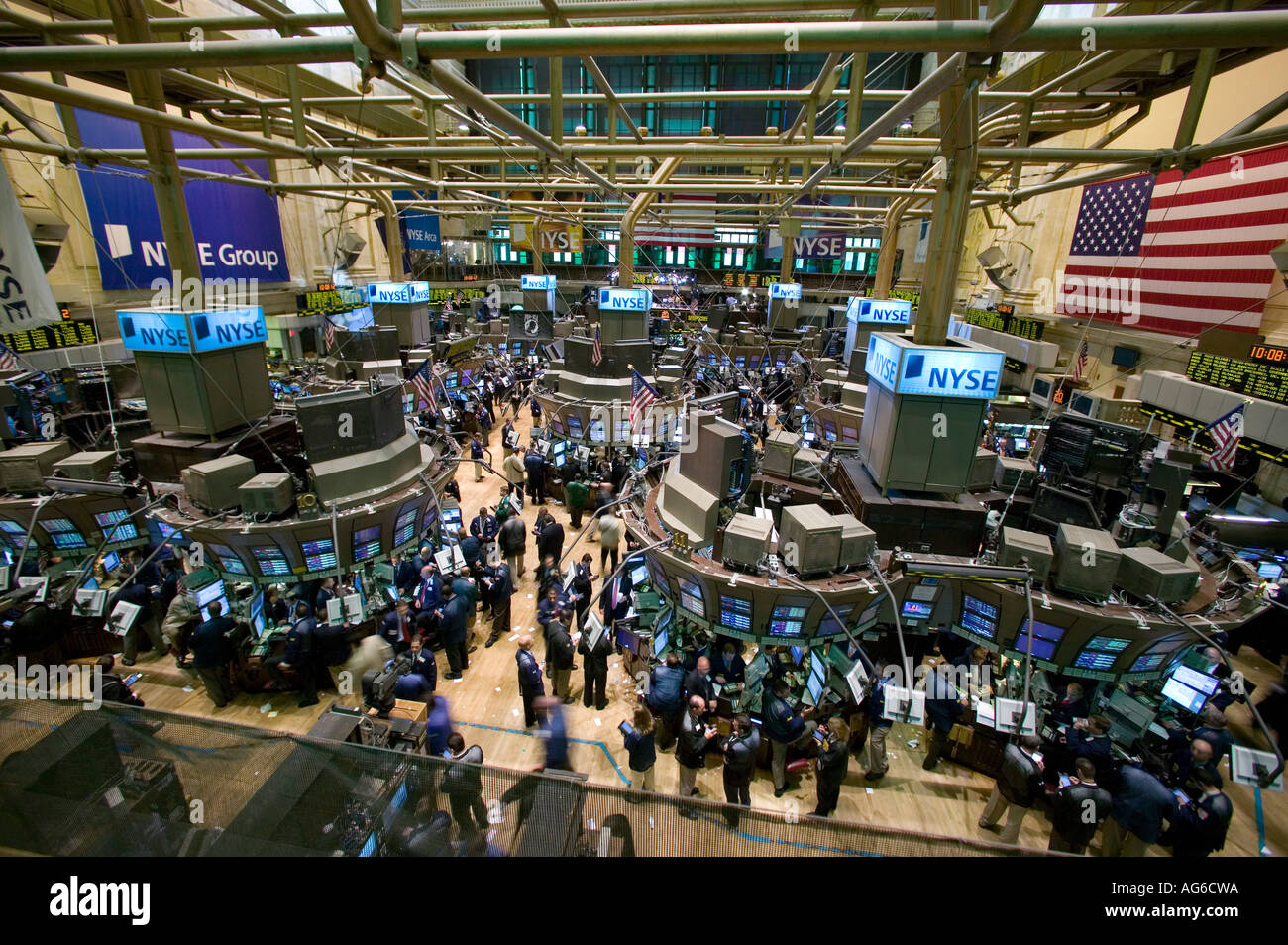
This analysis is based on the Bloomberg Television closing bell coverage [1] published on January 6, 2026, which reported that U.S. stock markets closed at record highs driven by semiconductor strength, biotech momentum, and broad-based investor optimism.
U.S. equity markets delivered a strong start to 2026, with all major indices closing at or near record highs amid robust risk appetite. The S&P 500 closed at 6,944.83, gaining 0.53% [0], while the NASDAQ Composite reached an all-time high of 23,547.17 with a 0.43% advance [0]. The Dow Jones Industrial Average surged 0.97% to 49,462.09, approaching the significant 50,000 milestone [0]. Perhaps most notably, the Russell 2000 small-cap index led with a 1.49% gain to 2,582.90, signaling broadening participation in the rally beyond large-cap technology names [0].
The market demonstrated remarkable breadth, with 8 of 11 sectors advancing. Healthcare emerged as the strongest performer, climbing 2.72% as Moderna (MRNA) rallied 10.85% to $35.66 following an upgraded price target from BofA Global Research [2][3]. This single stock momentum lifted the entire healthcare sector index by 1.96%. Industrials followed closely with a 2.21% gain, reflecting economic optimism around infrastructure themes, while real estate advanced 1.67% on expectations for Federal Reserve rate cuts benefiting rate-sensitive sectors [0].
Technology stocks recorded more modest gains of 0.35%, though semiconductor names significantly outperformed. The PHLX Semiconductor Index (SOX) jumped 2.75% to an all-time high, having gained approximately 8% in the first three trading sessions of 2026 [2]. This semiconductor strength reflects sustained investor confidence in artificial intelligence infrastructure spending and follows optimistic commentary from Nvidia CEO Jensen Huang at CES.
Energy stocks lagged significantly, with the sector retreating 1.36% as oil-related shares pulled back. Exxon Mobil (XOM) declined 3.4% and Chevron (CVX) fell 4.5% after posting gains in the prior session [2]. Utilities also declined 0.64% as investors rotated from defensive assets into riskier alternatives. Notable individual losers included AIG (AIG), which dropped 7.5% after CEO Peter Zaffino announced his departure [2], and cooling systems manufacturers Johnson Controls (JCI) and Trane Technologies, which fell 6.2% and 2.5% respectively amid concerns about demand following Nvidia CEO’s comments on chip efficiency [2].
Memory and storage chipmakers experienced extraordinary gains driven by AI demand optimism. Western Digital (WDC) advanced 17% to record highs, SanDisk (SNDK) jumped 27% to record levels, Seagate Technology (STX) rose 14% to record highs, and Micron Technology (MU) gained approximately 10% [2]. This sector-wide rally reflects growing demand for data storage solutions powering artificial intelligence applications and data centers.
Investors are closely monitoring upcoming economic data that could influence Federal Reserve rate cut expectations. The JOLTS job openings report on January 7 and the December jobs report on January 9 will provide crucial indicators of labor market health [2]. Divergent comments from Fed officials have created policy uncertainty: Richmond Fed President Tom Barkin favored a “careful” approach to rate cuts, while Governor Stephen Mirin called for more aggressive reductions [2]. This intra-Fed disagreement suggests the path of monetary policy remains data-dependent and potentially volatile.
The S&P 500 is trading at approximately 22x expected earnings, significantly above its 5-year average of 19x [2]. This elevated valuation suggests limited room for disappointment as Big Tech earnings season approaches. Jed Ellerbroek, portfolio manager at Argent Capital, noted: “I think we’re going to have a very strong earnings season for Big Tech, and all those capex estimates that we hear about are going to be revised higher again” [2]. However, high expectations create execution risk for equity markets.
The strength in healthcare, industrials, and small-cap stocks alongside semiconductor gains suggests the market rally is broadening beyond pure technology concentration. This rotation pattern indicates healthy market dynamics where multiple sectors participate in upward movement rather than narrow leadership. The healthcare sector’s 2.72% gain, led by Moderna’s pharmaceutical rally, demonstrates how positive analyst coverage can create sector-wide momentum [2][3].
Despite the broadly risk-on sentiment, energy sector weakness persists, with oil stocks declining while equities generally advanced. This divergence may indicate that investors perceive near-term economic weakness in energy-intensive sectors even as they maintain exposure to growth-oriented equities. Additionally, investors appear to have dismissed geopolitical concerns related to Venezuela, potentially betting that improved oil market access could benefit energy consumers rather than producers [2].
Analysts at eToro and Swissquote Bank have noted that 2026 could resemble 2016, when regime shifts triggered significant rallies in commodities, emerging markets, and domestic equities [4]. This historical comparison suggests that structural political and economic changes may drive market dynamics beyond traditional fundamental factors. However, unlike 2016, current elevated valuations mean markets may be more susceptible to disappointment if expected catalysts fail to materialize.
While investors largely dismissed geopolitical concerns during Tuesday’s session, 2026 has been identified as a “geopolitical year” with potential for significant regime shifts [4]. The apparent market complacency regarding geopolitical risk represents both an opportunity for continued upside and a potential vulnerability if unexpected developments occur.
The analysis reveals several risk factors warranting attention. First, valuation risk remains elevated with the S&P 500 trading at 22x expected earnings, well above historical averages, which leaves limited upside if corporate growth disappoints [2]. Second, concentration risk persists as market gains remain heavily dependent on AI and semiconductor sector performance; any negative catalyst in technology could trigger broader market pullback. Third, earnings dependency is high—as noted by analysts, strong Big Tech earnings with upwardly revised capital expenditure estimates are expected, but expectations are extremely high [2]. Fourth, energy sector weakness may signal broader economic concerns despite the prevailing risk-on sentiment. Fifth, Fed policy uncertainty continues as divergent views among Federal Reserve officials create ambiguity around the timing and pace of rate cuts [2].
The small-cap Russell 2000’s 1.49% gain suggests potential for broader market participation beyond large-cap technology names [0]. Healthcare sector strength, particularly in biotech, presents opportunities for investors seeking growth outside the technology concentration. The semiconductor sector’s continued momentum, with the SOX index gaining approximately 8% in three trading sessions, reflects sustained AI infrastructure demand [2]. Additionally, the approaching Federal Reserve rate cuts could benefit rate-sensitive sectors including real estate and utilities, which may see renewed interest as policy accommodation becomes more certain.
The upcoming economic data releases—JOLTS job openings on January 7 and the December jobs report on January 9—represent near-term catalysts that could significantly shift market sentiment and Fed cut expectations [2]. Big Tech earnings reports scheduled for late January will be critical in determining whether current elevated valuations are justified [2]. Investors should be prepared for elevated volatility around these events.
The record-setting close on January 6, 2026, reflects continued investor confidence in AI-driven growth narratives and expectations for accommodative Federal Reserve policy. Key market statistics include the S&P 500 closing at 6,944.83 (+0.53%), NASDAQ Composite at 23,547.17 (+0.43%), Dow Jones Industrial Average at 49,462.09 (+0.97%), and Russell 2000 at 2,582.90 (+1.49%) [0]. Healthcare led sector performance with a 2.72% gain, while energy lagged with a 1.36% decline [0].
Notable movers included Moderna (MRNA) advancing 10.85% after an upgraded price target from BofA [2][3], memory chip stocks reaching record highs with SanDisk (SNDK) up 27% and Western Digital (WDC) gaining 17% [2], and AIG falling 7.5% following CEO departure announcement [2]. Trading volumes were mixed, with NASDAQ recording 7.78 billion shares and S&P 500 seeing 3.32 billion shares, both below prior session levels [0].
The market’s elevated valuation at approximately 22x expected earnings—above the 5-year average of 19x—suggests limited room for error heading into earnings season [2]. Upcoming JOLTS data and the December jobs report will provide crucial economic health indicators that may influence Federal Reserve policy expectations. The semiconductor sector’s continued strength, with the SOX index gaining ~8% in early 2026 trading, reflects sustained AI infrastructure investment optimism [2].
This analysis provides market context and factual information for decision-making support. It is not investment advice, trading recommendations, or financial guidance.
Insights are generated using AI models and historical data for informational purposes only. They do not constitute investment advice or recommendations. Past performance is not indicative of future results.
About us: Ginlix AI is the AI Investment Copilot powered by real data, bridging advanced AI with professional financial databases to provide verifiable, truth-based answers. Please use the chat box below to ask any financial question.