
Federal Reserve Discount Rate Vote Reveals Significant Internal Division Over December 2025 Rate Cut
Unlock More Features
Login to access AI-powered analysis, deep research reports and more advanced features
About us: Ginlix AI is the AI Investment Copilot powered by real data, bridging advanced AI with professional financial databases to provide verifiable, truth-based answers. Please use the chat box below to ask any financial question.
Related Stocks
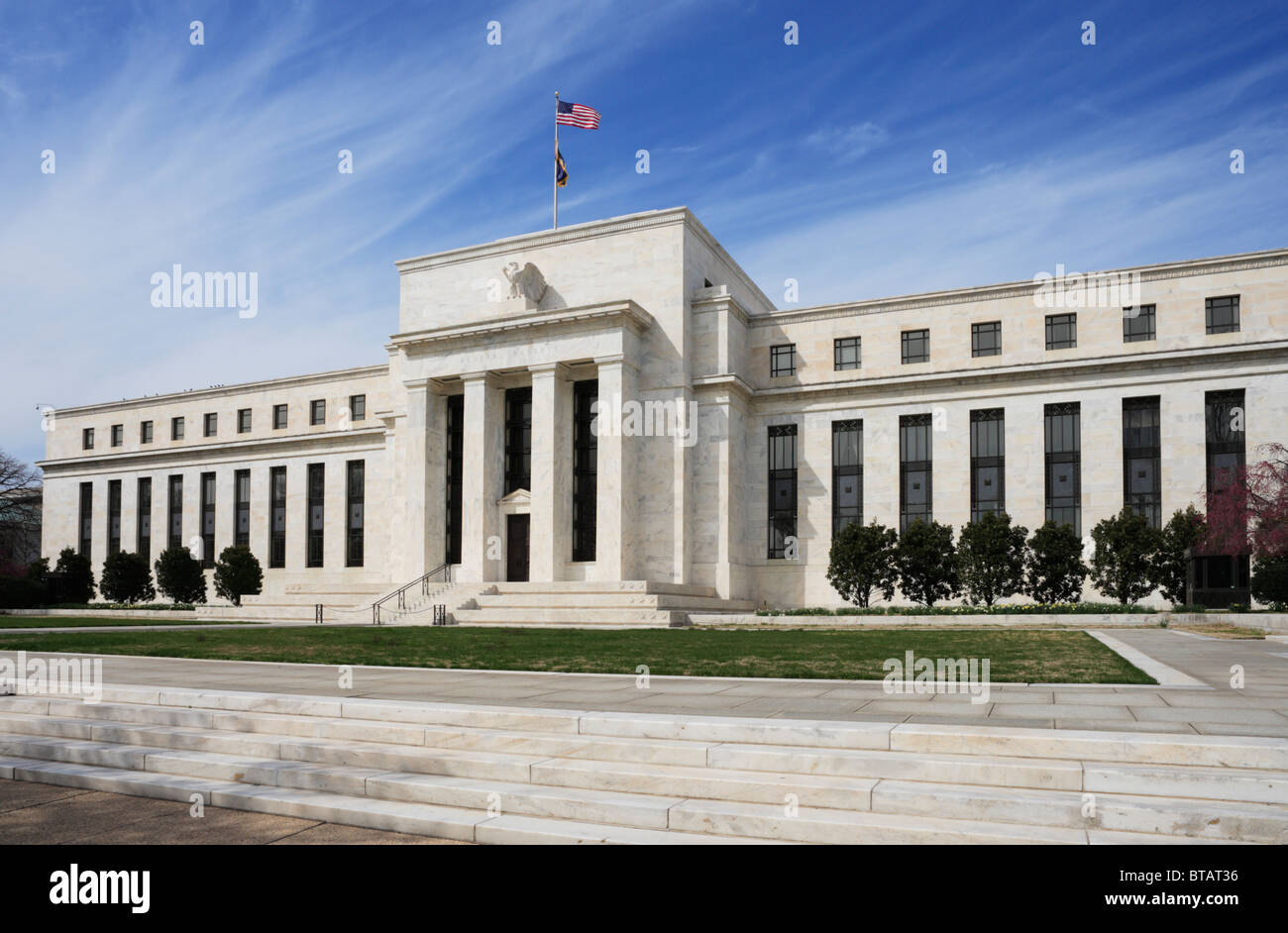
The release of the Federal Reserve’s discount rate meeting minutes on January 6, 2026, provides transparency into a significant internal policy divergence that occurred during the December 2025 FOMC meeting. Eight of the twelve regional Federal Reserve banks—representing two-thirds of the System—voted to maintain the discount rate at its then-existing level, demonstrating substantial institutional skepticism about the necessity of further monetary easing [1]. This regional opposition was ultimately overruled by the FOMC’s 9-3 vote to implement a 25-basis-point rate cut, reflecting the national policy perspective held by the Board’s voting members.
The banks that supported maintaining rates included major financial centers such as Chicago, Kansas City, Boston, Richmond, Cleveland, Atlanta, Minneapolis, and Dallas [1]. These institutions represent a geographically and economically diverse cross-section of the American economy, suggesting that concerns about the economic outlook were not isolated to particular regions. In contrast, the four banks that supported the rate cut—New York, Philadelphia, St. Louis, and San Francisco—tended to represent districts with either stronger technology sector exposure or different economic conditions [1].
The underlying rationale presented by the opposing banks centers on two primary concerns that merit careful attention. First, regional directors highlighted persistent and strong demand for financing related to artificial intelligence infrastructure and data center construction [1]. This reflects observations from the ground about capital expenditure patterns in the technology sector that may not be fully captured in national economic indicators. Second, banks expressed expectations of tariff-related cost increases arriving in 2026, suggesting concern about potential inflationary pressures from trade policy developments [1]. These factors combined to create an environment where directors believed maintaining current policy settings was appropriate until economic data provided clearer signals.
Boston Federal Reserve President Susan Collins’ characterization of her support for the December rate cut as a “close call” adds important context to the decision-making process [1]. As a voting member of the FOMC, President Collins’ remarks indicate that even among officials who ultimately supported the cut, there was significant uncertainty about the appropriate policy path. This suggests that future decisions may be subject to similar deliberation, particularly as new economic data becomes available and as the incoming administration’s policy priorities become clearer.
The discount rate vote reveals a fundamental tension between regional Federal Reserve perspectives and the national policy stance adopted by the FOMC. While regional bank directors are closer to ground-level economic conditions in their respective districts, the FOMC voting members ultimately have the authority to set national monetary policy. The 8-4 regional vote against a cut, overruled by a 9-3 FOMC vote for a cut, demonstrates that institutional mechanisms exist to reconcile these perspectives, but the degree of disagreement warrants attention from market participants.
The concerns raised by opposing banks about AI and data center financing demand represent a microcosm of broader structural economic changes occurring in the United States. Regional directors’ visibility into commercial lending patterns appears to have identified sustained capital investment in technology infrastructure that may be sustaining economic activity even as other sectors show signs of deceleration. This insight suggests that monetary policymakers may need to carefully monitor sector-specific dynamics that could complicate the path toward price stability.
The tariff concerns expressed by regional banks anticipate potential economic impacts from policy developments that had not yet materialized at the time of the December meeting [1]. This forward-looking perspective indicates that regional directors are incorporating anticipated policy changes into their economic assessments, which may create additional uncertainty as trade policy evolves in 2026. The intersection of monetary policy and fiscal or trade policy creates a complex environment for forecasting economic conditions.
The substantial internal division within the Federal Reserve system introduces policy uncertainty that market participants should monitor carefully. With eight of twelve regional banks opposing the December rate cut, there exists a significant bloc of policymakers who believe current monetary conditions may be inappropriate for the economic environment they observe [1]. This suggests that future rate cuts may face increased resistance, potentially limiting the extent of monetary easing that markets have priced in for coming quarters. Investors should be aware that the path of least resistance for policy may be more constrained than previously anticipated.
The regional banks’ concerns about AI financing demand and tariff impacts suggest that inflationary pressures may be more persistent than headline economic data indicates [1]. If these observations prove accurate, the Federal Reserve may need to maintain a more restrictive policy stance for longer than current market expectations suggest. This could create headwinds for interest-rate-sensitive sectors and asset classes that have benefited from the prospect of continued monetary easing.
The discount rate being lowered to 3.75%, matching the top of the federal funds rate range, maintains the traditional relationship between these policy tools [1]. This alignment provides clarity for market participants regarding the Fed’s policy framework and reduces potential confusion about the transmission mechanism for monetary policy decisions.
Regional banks’ attention to AI and data center financing trends highlights continued investment in productivity-enhancing technology infrastructure. For investors with appropriate risk tolerance and investment horizons, this structural shift may present opportunities in companies positioned to benefit from artificial intelligence deployment, data center construction, and related infrastructure development.
The Federal Reserve’s December 2025 discount rate meeting minutes, published on January 6, 2026, document a significant divergence between regional Federal Reserve bank perspectives and FOMC policy decisions. Eight of twelve regional banks voted to maintain the discount rate unchanged, citing concerns about AI and data center financing demand as well as anticipated tariff-related cost increases in 2026 [1]. The FOMC ultimately voted 9-3 to implement a 25-basis-point rate cut, reducing both the federal funds rate target range to 3.50%-3.75% and the discount rate to 3.75% [1].
Boston Fed President Susan Collins described her support for the December cut as a “close call,” indicating that even among officials who supported easing, there was significant uncertainty about the appropriate policy path [1]. The regional banks supporting the rate cut were New York, Philadelphia, St. Louis, and San Francisco, while those opposing included Chicago, Kansas City, Boston, Richmond, Cleveland, Atlanta, Minneapolis, and Dallas [1].
Market reaction to the release was modest, with major indices showing gains on January 6, 2026—S&P 500 advancing 0.56%, NASDAQ rising 0.44%, Dow Jones increasing 1.02%, and Russell 2000 gaining 1.45% [0]. This muted response suggests markets are processing the information as informational rather than transformative, though continued monitoring is warranted as the implications of internal Fed division absorb fully.
Insights are generated using AI models and historical data for informational purposes only. They do not constitute investment advice or recommendations. Past performance is not indicative of future results.
About us: Ginlix AI is the AI Investment Copilot powered by real data, bridging advanced AI with professional financial databases to provide verifiable, truth-based answers. Please use the chat box below to ask any financial question.