
In-Depth Analysis of Bama Tea's Franchise Model and the Growth Ceiling of the Tea Industry's 'Branded Wholesaler' Model
Unlock More Features
Login to access AI-powered analysis, deep research reports and more advanced features
About us: Ginlix AI is the AI Investment Copilot powered by real data, bridging advanced AI with professional financial databases to provide verifiable, truth-based answers. Please use the chat box below to ask any financial question.
Based on the collected materials, I will provide you with an in-depth analysis report on Bama Tea’s franchise model and the ‘branded wholesaler’ model in the tea industry.
According to prospectus data, Bama Tea has formed a unique “direct sales + franchise” dual-track model[1][2]:
| Time Period | Number of Franchise Stores | Franchise Channel Revenue (RMB 100 million) | Revenue Share |
|---|---|---|---|
| 2022 | 2,579 | 9.12 | 50.2% |
| 2023 | 3,054 | 10.73 | 50.6% |
| 2024 | 3,255 | 10.90 | 50.9% |
| H1 2025 | 3,341 | 5.23 | 49.1% |
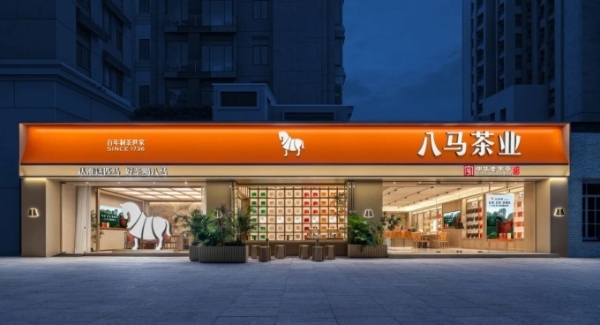
As of June 30, 2025, Bama Tea operates a total of 3,585 offline stores nationwide, including 244 direct stores and 3,341 franchise stores, with franchise stores accounting for as high as 93.2% of the total[1][3]. Notably, the number of direct stores versus franchise stores in offline channels is approximately 1:9, while their revenue ratio is about 2:5, indicating that the franchise model requires profit concessions to middlemen, squeezing the company’s gross profit margin[1].
Bama Tea implements a “buyout franchise” model, where franchisees must pay for goods upfront before picking up inventory. There are no annual sales targets, but franchisees are divided into different tiers based on purchase volume. Only the highest-tier franchisees who meet the specified purchase threshold can become first-tier franchisees and enjoy the highest purchase discounts[2]. The company also provides sales rebates to franchisees that meet relevant requirements; from 2022 to H1 2025, sales rebates accounted for 1.3%, 5.1%, 1.8%, and 1.8% of franchisee sales revenue in the corresponding periods, respectively[2].
Bama Tea’s performance growth has shown obvious signs of fatigue[3]:
- Revenue Performance (2022-2024): RMB 1.818 billion, RMB 2.122 billion, RMB 2.143 billion respectively
- Revenue Growth Rate: 16.8% in 2023, plummeting to 1.0% in 2024
- Net Profit Growth Rate: 24.0% in 2023, dropping to 8.9% in 2024
- H1 2025: Revenue of RMB 1.063 billion (a year-on-year decrease of 4.2%), net profit of RMB 120 million (a year-on-year decrease of 17.8%)
The company explained that the revenue decline was mainly due to decreased sales in offline channels, while increased administrative expenses also led to lower profits[1][2].
Even more concerning are signs of contraction in the franchise system[3]:
| Time Point | Number of Franchisees | Annual Net Increase |
|---|---|---|
| 2022 | 1,033 | - |
| 2023 | 1,202 | +169 |
| 2024 | 1,252 | +50 |
| June 2025 | 1,228 | -24 |
Since 2022, Bama Tea has lost over 300 franchisees. In 2024, 201 new franchise stores were opened, far less than the 475 opened in 2023; in H1 2025, the net increase in franchise stores was only 86 compared to the end of 2024[3].
China’s tea market has the distinct characteristic of “strong categories, weak brands”[1][2]:
- As of the end of 2024, there are over 1.6 million enterprises engaged in tea planting, production, and distribution
- In 2024, the combined market share of the top five enterprises was only about 5.6%, with total sales revenue of approximately RMB 8.202 billion
- As the industry leader, Bama Tea’s share of China’s high-end tea market only increased from about 1.1% in 2020 to about 1.7% in 2024
Consumers’ awareness of tea categories is much higher than that of brands; category IPs such as Tieguanyin, Dahongpao, and Pu’er are far stronger than enterprise brands, which limits the space for brand premium.
The essential characteristics of the tea industry are fundamentally contradictory to the capital market’s pursuit of business models with “high growth, replicability, easy standardization, and barriers”[3]:
- Agricultural product attribute: Tea quality depends on origin, climate, year, and craftsmanship, with strong non-standard characteristics
- High quality control difficulty: It is difficult to achieve stable large-scale growth, and quality control costs fluctuate greatly
- Need for time accumulation: Tea-making craftsmanship and brand building require long-term accumulation and cannot be quickly established through short-term high-intensity investment
From the financial turmoil of Dayi Tea to the collapse of “financial tea” models such as Fancha and Changshi, this contradiction has been repeatedly verified[3].
Bama Tea’s “high-end tea” strategy faces a complex market environment[1][2]:
- Impressive gross profit margins: 53.3%, 52.3%, 55.0%, and 55.3% from 2022 to H1 2025 respectively
- The offline high-end tea market grew from RMB 83.8 billion in 2020 to RMB 97.5 billion in 2024, with a compound annual growth rate of approximately 3.9%
- The high-end tea market is more likely to generate brand effects, which is a typical feature of the “gift economy”
- High-end tea sales rely more on offline experience, with high costs such as rent, decoration, and labor
- Amid the consumption downgrade trend, consumers are reducing purchases of non-essential consumer goods
- The high-end positioning has weaker risk resistance during market downturns
The “branded wholesaler” model faces multiple channel management difficulties:
- Terminal sales transmission pressure: Poor terminal sales directly affect franchisees’ willingness to stock up, forming a negative cycle
- Difficulty in maintaining price systems: In multi-level channel systems, brand owners have limited ability to control terminal prices
- Uneven service quality: There are differences in franchisees’ service levels and implementation of brand concepts
- Inventory turnover pressure: Under the buyout model, franchisees bear inventory risks and will reduce orders if sales fall short of expectations
| Indicator | 2024 Data | 2029 Forecast | Compound Annual Growth Rate |
|---|---|---|---|
| Size of China’s Tea Market | Approximately RMB 300 billion | - | - |
| Size of Offline High-End Tea Market | RMB 97.5 billion | RMB 128.7 billion | 5.7% |
| Market Share of Top 5 Brands | 5.6% | - | - |
| Bama Tea’s High-End Market Share | 1.7% | - | - |
Based on the current development trend, Bama Tea faces multiple obstacles such as solidified category awareness, fragmented regional markets, and low consumer brand loyalty if it wants to significantly increase its share in the high-end market (e.g., from 1.7% to over 5%).
Based on current data, we can estimate the growth boundary of Bama Tea’s franchise system:
- Store density ceiling: Based on the coverage of the current 3,341 franchise stores, high-quality locations in major business districts and communities across the country have basically been fully deployed
- Franchisee profitability boundary: Extended payback periods for single-store investments and lower success rates of new stores have reduced franchise willingness
- Regional saturation signal: The net increase in franchisees was only 50 in 2024, and negative growth occurred in H1 2025, indicating that the franchise network is approaching saturation
Although the proportion of Bama Tea’s online channel revenue increased from 27.2% in 2022 to 35.4% in H1 2025[1], this growth mainly “seized” revenue share from direct stores rather than developing incremental markets. The high-end attribute of tea determines that online channels cannot fully replace offline experience functions.
- Optimize the franchisee tier system: Establish a more scientific evaluation and incentive mechanism to support high-quality franchisees
- Reduce franchise thresholds and costs: Under the current market environment, appropriately concede profits to maintain the stability of the franchise network
- Strengthen regional in-depth cultivation: Intensify layout in advantageous regions and expand cautiously in weak regions
- Integration of “physical store + cloud store”: Achieve online-offline integration to drive store profitability through consumer experience
- In-depth cultivation of the membership system: Utilize the data asset of 26 million members to build in-depth user operation capabilities
- Digitalization of the supply chain: Drive distributors through digital systems to achieve efficient collaboration between the enterprise and multi-level channels
- Empowerment with intangible cultural heritage techniques: Strengthen the brand story of the founder as a National Intangible Cultural Heritage Inheritor
- Breakthrough in category branding: Shift from “selling tea” to “selling a lifestyle” to build brand awareness that transcends categories
- Global layout: Leverage capital market resources to expand into overseas Chinese and high-end consumer markets
The case of Bama Tea reveals the fundamental dilemma of the tea industry’s “branded wholesaler” model:
For investors in the tea industry, the following core indicators require attention:
- Net increase in the number of franchisees: Judge the expansion momentum of the franchise system
- Average single-store revenue: Evaluate channel efficiency and franchisee profitability
- Gross profit margin vs. net profit margin gap: Monitor the erosion of profits due to channel profit concessions
- Changes in high-end market share: Measure brand premium capability
The “branded wholesaler” model in the tea industry has clearly reached a growth ceiling at the current stage. The breakthrough path requires a shift from “scale expansion” to “in-depth value cultivation” and from “channel dependence” to “brand moat construction”. This transformation process will be long and arduous, but it is also an inevitable path for industry leaders to establish long-term competitive advantages.
[1] CBNData - “Bama Tea IPO: The Knockable HKEX Door, the Unbreakable Barrier” (https://www.cbndata.com/information/294604)
[2] CBNData - “Bama Tea Takes Another Step Toward IPO: Hidden Worries Lurk Beneath the ‘High-End Tea King’ Glory” (https://www.cbndata.com/information/294554)
[3] Tencent News - “Bama Tea’s Stock Breaks IPO Price, Capital Doesn’t Believe in ‘Slow Stories’” (https://news.qq.com/rain/a/20251112A00VFU00)
Insights are generated using AI models and historical data for informational purposes only. They do not constitute investment advice or recommendations. Past performance is not indicative of future results.
About us: Ginlix AI is the AI Investment Copilot powered by real data, bridging advanced AI with professional financial databases to provide verifiable, truth-based answers. Please use the chat box below to ask any financial question.