
Analysis of Changes in R&D Expense Ratio and Its Impact on Technological Competitiveness of Benxing New Materials
Unlock More Features
Login to access AI-powered analysis, deep research reports and more advanced features
About us: Ginlix AI is the AI Investment Copilot powered by real data, bridging advanced AI with professional financial databases to provide verifiable, truth-based answers. Please use the chat box below to ask any financial question.
Based on publicly available information retrieved, this is a comprehensive analysis of changes in Benxing New Materials’ R&D expense ratio and its impact on technological competitiveness:
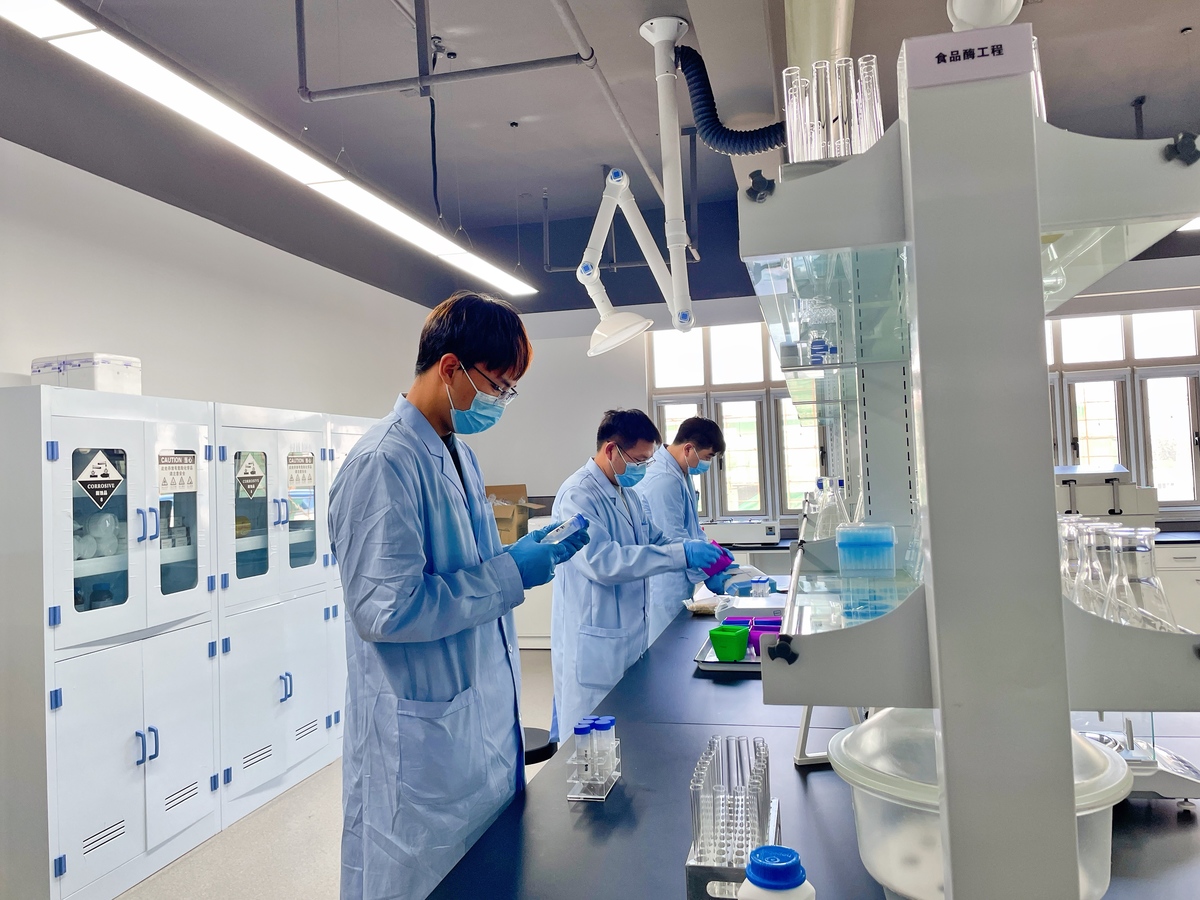
As a key enterprise in China’s PVC heat stabilizer sector, Benxing New Materials has established a relatively complete R&D system[1]:
- Qualifications & Recognitions: Awarded the titles of “Hubei Provincial Enterprise Technology Center” and “International Science and Technology Cooperation Base for Plastic Heat Stabilizers” in 2011
- R&D Platforms: Recognized as the “Hubei Provincial Engineering Technology Research Center for Polyvinyl Chloride Heat Stabilizers” in 2013; established an “Academician Workstation” in 2017; and was accredited as the “Hubei Provincial Engineering Research Center for Environmentally Friendly Plastic Modified Materials” in 2023
- Patent Accumulation: As of June 2025, the company has obtained 84 patents (including 37 invention patents), mainly applied to its core business[1]
- Industry-University-Research Cooperation: Maintains long-term cooperative relationships with universities and research institutions such as Wuhan University of Science and Technology and Sichuan University
The decline in R&D expense ratio from 4.55% to 3.11% may stem from the following factors:
- The company’s net profit was RMB 35.4087 million and RMB 39.1577 million in 2023 and 2024 respectively, showing a growth trend[2]
- The expansion of operating revenue scale may have led to a passive decline in the proportion of R&D expenses
- The company has improved R&D efficiency through the “internal R&D + industry-university-research collaboration” model[1]
- It has established a mature R&D team and talent development mechanism, which may have improved the output ratio per unit of R&D investment
- The company is advancing the R&D center construction project (total investment of RMB 200 million, construction period of 24 months)[1]
- During the construction of major R&D infrastructure, the proportion of expensed R&D expenditures may decline periodically
- The 84 patents accumulated through years of R&D form core technological barriers
- Established platforms such as provincial-level technology centers and academician workstations continue to play a role
- The company is advancing the RMB 200 million R&D center construction project[1]
- The R&D expense investment in 2025 remains within a reasonable range for the industry
- The technology update cycle in the PVC heat stabilizer industry is relatively long
- The company has advantages in mature processes for core products such as mercaptan methyl tin
- The industry is accelerating its transformation to environmental-friendly lead-free products (the EU banned lead in 2015, and domestic policies are promoting this transition)[3]
- Competition in technological routes for calcium-zinc and rare earth-based environmental-friendly stabilizers is intensifying
- Peer enterprises such as Jiaxian Co., Ltd. continue to increase R&D investment[3]
- There is a possibility that the company’s technological advantages may be caught up or even surpassed
- There is a need to continuously develop new auxiliary products such as ACR and ACM to expand application fields
- A decline in R&D investment may affect the launch rhythm of new products
- Focus on subsequent changes in the absolute value of the company’s R&D expenses, rather than just the ratio
- Track changes in the quantity and quality of new patent applications
- Observe the improvement effect of the R&D center project on the company’s R&D capabilities after completion
- Pay attention to changes in the technological competition landscape of the same industry
[1] Feasibility Study Report on Benxing New Materials’ R&D Center Construction Project (https://caifuhao.eastmoney.com/news/20251226114409979941890)
[2] Beijing Stock Exchange Weekly: Aishelun is about to enter the issuance stage, and 13 companies including Kailong Clean Energy are about to file applications (https://mp.ofweek.com/ce/a856714679557)
[3] 2023 Annual Report of Jiaxian Co., Ltd. (http://notice.10jqka.com.cn/api/pdf/b17c1fd445b3eb46.pdf)"
Insights are generated using AI models and historical data for informational purposes only. They do not constitute investment advice or recommendations. Past performance is not indicative of future results.
About us: Ginlix AI is the AI Investment Copilot powered by real data, bridging advanced AI with professional financial databases to provide verifiable, truth-based answers. Please use the chat box below to ask any financial question.