
In-Depth Analysis of Suplay: Plunge in Self-Developed IP Revenue Share and Research on Licensing Risk Pricing
Unlock More Features
Login to access AI-powered analysis, deep research reports and more advanced features
About us: Ginlix AI is the AI Investment Copilot powered by real data, bridging advanced AI with professional financial databases to provide verifiable, truth-based answers. Please use the chat box below to ask any financial question.
Based on the collected information, I will provide you with an in-depth analysis report on Suplay.
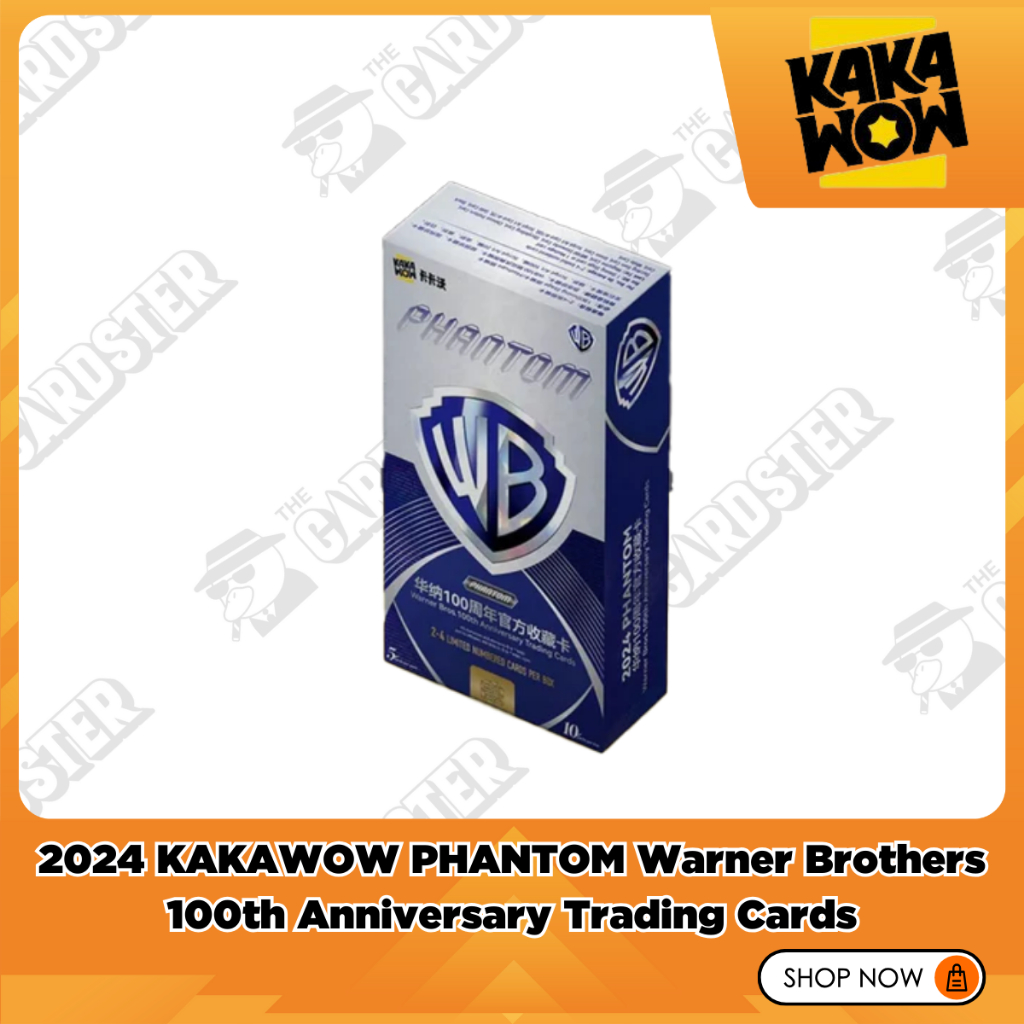
Founded in 2019, Suplay is a trend culture enterprise focusing on IP collectibles and consumer products, with its flagship brand “Kakawow” under its umbrella. Huang Wanjun, the company’s founder and CEO, holds 72.86% of Suplay’s shares through his affiliated companies, making him the controlling shareholder. In the 2021 Series A+ financing, renowned game company miHoYo invested USD 8 million in Suplay and currently holds 11.86% of the shares, making it the company’s largest external shareholder [1][2].
Suplay adopts a dual-drive business model of “IP licensing + self-developed IPs”, mainly engaging in the development and sales of collectible non-competitive trading cards. According to Frost & Sullivan, Suplay ranked first in GMV in the Chinese market for collectible non-competitive trading cards, a niche segment of the card industry, in 2024 [3].
Suplay’s product lines are mainly divided into two segments:
From the perspective of the changing trend of business proportions, the share of the collectibles business has continued to rise, from approximately 33% in 2023 to over 70% in the first three quarters of 2025, driving the company’s overall gross profit margin up from 41.7% to 54.5% [3].
| Financial Indicator | 2023 | 2024 | First Three Quarters of 2025 |
|---|---|---|---|
| Revenue (RMB 100 million) | 1.46 | 2.81 | 2.83 |
| YoY Revenue Growth Rate | - | 92.5% | ~40% |
| Net Profit (RMB 10,000) | 294.9 | 4,911.5 | 3,707.4 |
| Adjusted Net Profit (RMB 10,000) | 1,597.4 | 6,481.5 | 8,642.3 |
| Net Profit Margin | 2.0% | 17.5% | 13.1% |
| Adjusted Net Profit Margin | 10.9% | 23.1% | 30.5% |
| Gross Profit Margin | 41.7% | 45.8% | 54.5% |
The data shows that Suplay’s profitability has shown a significant improvement trend during the reporting period. Its adjusted net profit margin increased from 10.9% in 2023 to 30.5% in the first three quarters of 2025, and its gross profit margin also rose from 41.7% to 54.5% [2][3]. This improvement is mainly attributed to: 1) The product structure tilts towards the high-margin collectibles business; 2) The scale effect brought by sales volume growth dilutes unit production costs; 3) Improved operational efficiency and controlled marketing expenses.
However, the revenue growth rate slowed to approximately 40% in the first three quarters of 2025, a significant decline from 92.5% in 2024, indicating that the company is entering a steady development phase after high-speed growth [3].
Despite strong performance, Suplay faces certain inventory risks. In the first three quarters of 2025, the company wrote off over RMB 36 million in inventory with a shelf life of more than one year, equivalent to a one-time write-down of over half of its inventory [3]. This reflects the vulnerability of the “price preservation and volume control” model during a market downturn.
In terms of cash flow, the company’s cooperation with KOLs/KOCs mostly adopts a product barter model, which does not require large cash investments, so the marketing promotion expense accounts for only about 1% of revenue [3]. This asset-light operation model helps control costs, but it also limits the intensity and scope of brand promotion.
Suplay’s self-developed IP business has shown a continuous shrinking trend, which is the most noteworthy risk signal at present:
| Time Period | Self-Developed IP Revenue Share | Licensed IP Revenue Share |
|---|---|---|
| 2023 | 40.6% | 54.2% |
| 2024 | 14.4% | 85.1% |
| First Three Quarters of 2025 | 4.1% | 95.0% |
Self-developed IP revenue fell from approximately RMB 60 million in 2023 to approximately RMB 40 million in 2024, and further dropped to only RMB 11.72 million in the first three quarters of 2025 [1][2]. As of September 30, 2025, the company mainly owns three self-developed IPs: Rabbit KIKI, Uncle OHO, and Water Wave Egg, all of which are trend toy IPs targeting young consumers.
The sharp decline in the share of self-developed IPs reflects the following issues:
In sharp contrast to the decline of self-developed IPs, the share of licensed IP revenue has risen from 54.2% in 2023 to 95% in the first three quarters of 2025 [1][2]. This high dependence on licensed IPs brings multiple risks:
Suplay’s licensed IP cooperation has the following characteristics:
In the card industry, there are significant differences in market positioning between Suplay and Kayou:
| Dimension | Suplay (Kakawow) | Kayou |
|---|---|---|
| Card Type | Collectible Non-Competitive Trading Cards | Collectible Trading Cards (Mainly Competitive) |
| Single Card Issue Price | >10 RMB | ~1.7 RMB (Average per Pack) |
| Target Customer Group | Adults (>99% of consumers are over 18 years old) | Teenagers and Children |
| 2024 Revenue | 281 million RMB | 10.057 billion RMB |
| 2024 Growth Rate | 92.5% | ~270% |
| Gross Profit Margin | 45.8% (Overall), 62.6% (Collectible Cards) | 67.3% (Overall), 71.3% (Cards) |
In terms of scale, there is a huge gap between Suplay and industry leader Kayou, with Suplay’s 2024 revenue being less than one-thirtieth of Kayou’s [2][3]. Looking at 2024, when My Little Pony and live card unboxing ignited the industry, Hitcard’s revenue soared 6 times year-on-year, Kayou’s revenue increased 2.7 times to exceed RMB 10 billion, while Suplay, with a growth rate of 90% in the same period, did not perform prominently in the industry [3].
- Niche market leadership: Suplay ranks first in GMV in the niche market of collectible non-competitive trading cards, with first-mover advantage [1]
- Overseas market expansion capability: The company’s transaction volume on eBay and the domestic Card Tao platform ranks first among all Chinese card brands, with a certain international foundation [3]
- Advantage in cooperation with rating institutions: It has established strategic cooperation with globally renowned rating institutions such as PSA and CGC, and is the brand with the highest proportion of Chinese consumers voluntarily submitting cards for evaluation to international rating institutions [3]
- Scale disadvantage: The revenue scale is much smaller than that of competitors, making it difficult to obtain cost advantages brought by scale effects
- Weak bargaining power in IP licensing: The licensing fee rate is higher than the industry average (10% vs 7.6%)
- Insufficient channel coverage: It has long focused on the collectible card field, with relatively weak layout and operation experience in offline mature channels [3]
- Limited brand influence: When strong copyright holders choose cooperation partners, leading players have more advantages. For example, when Pop Mart chose a collectible card issuer for its LABUBU, it selected Topps, an international brand with greater global influence [3]
Suplay has obvious shortcomings in self-developed IP development capabilities:
Under the model of high dependence on licensed IPs, Suplay’s content differentiation is mainly reflected in:
However, these differentiation methods have relatively low thresholds and are easy to be imitated by competitors. In the long run, the core competitive barrier still needs to be built on unique IP assets and content creation capabilities.
| Company | Self-Developed IPs | Licensed IPs | Characteristics of IP Strategy |
|---|---|---|---|
| Pop Mart | MOLLY, SKULLPANDA, etc. | Few | Centered on self-developed IPs, building a trend toy empire |
| Kayou | Kayou Three Kingdoms (self-developed) | Ultraman, My Little Pony, etc. (over 70) | Dual-drive of self-developed + licensed IPs |
| Suplay | KIKI, OHO, Water Wave Egg | 22 Partners | Heavily dependent on licensed IPs |
Compared with Pop Mart and Kayou, Suplay has obvious gaps in self-developed IP reserves and content creation capabilities, which is the core shortboard restricting the company’s long-term development [4].
The licensing renewal risk faced by Suplay is the biggest operational risk at present:
Based on prospectus information and industry analysis, the following qualitative assessment of Suplay’s licensing risks can be made:
| Risk Type | Risk Level | Impact Degree | Probability of Occurrence |
|---|---|---|---|
| Core IP Renewal Failure | High | Extremely High | Medium |
| Rising Licensing Costs | Medium-High | Medium-High | High |
| Decline in Licensed IP Popularity | Medium | Medium | Medium-High |
| Intensified Competition from Non-Exclusive Licenses | Medium | Medium | High |
| Direct Competition from Licensors | Low-Medium | Medium | Medium-Low |
Overall, the licensing risks faced by Suplay are at a relatively high level, especially the uncertainty of core IP renewal, which poses a major threat to the company’s operations.
For card companies like Suplay that are highly dependent on licensed IPs, traditional valuation methods have certain limitations:
Considering Suplay’s special business model, it is recommended to adopt a risk-adjusted multi-scenario valuation model:
- Optimistic scenario (30% probability): Core IP is successfully renewed, self-developed IP share increases to 15%, 2026 revenue grows by 50%, adjusted net profit margin remains at 28%
- Neutral scenario (50% probability): Core IP is renewed with slightly unfavorable terms, self-developed IP share remains at around 5%, 2026 revenue grows by 30%, adjusted net profit margin drops to 25%
- Pessimistic scenario (20% probability): Core IP renewal fails, revenue drops sharply, self-developed IPs fail to fill the gap, 2026 revenue decreases by 20%, adjusted net profit margin drops to 20%
Based on the above scenarios and DCF model (assuming a perpetual growth rate of 2%, WACC of 12%), the reasonable valuation range of Suplay can be obtained:
| Scenario | Valuation (RMB 100 million) | Valuation Basis |
|---|---|---|
| Optimistic Scenario | 18-22 | Successful core IP renewal + scale expansion |
| Neutral Scenario | 12-15 | Core IP renewed with unfavorable terms |
| Pessimistic Scenario | 6-9 | Core IP renewal failure |
Weighted Average |
12-16 |
Considering scenario probabilities |
In valuation, it is necessary to separately evaluate Suplay’s IP assets:
Insights are generated using AI models and historical data for informational purposes only. They do not constitute investment advice or recommendations. Past performance is not indicative of future results.
About us: Ginlix AI is the AI Investment Copilot powered by real data, bridging advanced AI with professional financial databases to provide verifiable, truth-based answers. Please use the chat box below to ask any financial question.