
Analysis of Platform Dependency Risks and Response Strategies for Bonsze Chuangke’s Cross-border E-commerce
Unlock More Features
Login to access AI-powered analysis, deep research reports and more advanced features
About us: Ginlix AI is the AI Investment Copilot powered by real data, bridging advanced AI with professional financial databases to provide verifiable, truth-based answers. Please use the chat box below to ask any financial question.
Based on the collected information, I will provide an in-depth analysis of Bonsze Chuangke’s cross-border e-commerce platform dependency issue.
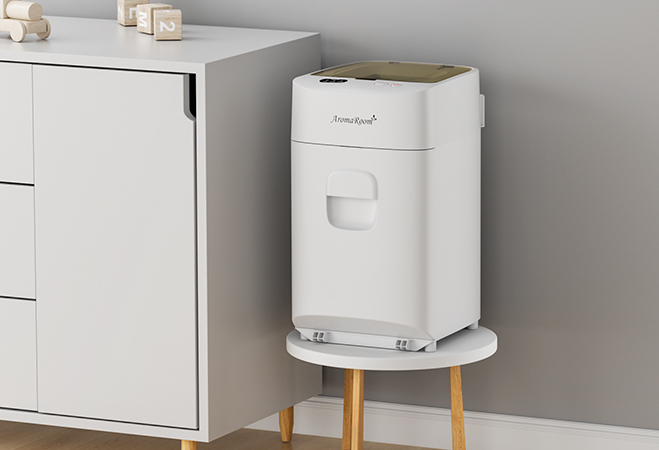
Bonsze Chuangke was founded in March 2005, and is a manufacturing enterprise focused on the R&D, production, and sales of office appliances and household appliances[1]. The company’s products are mainly divided into two categories: office appliances (paper shredders, laminators, and consumables, etc.) and household appliances (small kitchen appliances such as vacuum sealers, hand mixers, and living appliances such as air purifiers, etc.)[1][2].
Since 2014, the company has engaged in cross-border e-commerce business, mainly conducting online sales through third-party e-commerce platforms such as Amazon, Walmart, Shopify independent stores, and JD.com Self-operated[2]. The proportion of the company’s overseas sales revenue to its main business revenue has been continuously rising, increasing from 95.34% in 2022 to 96.98% in 2024[1].
According to public data, the proportion of Bonsze Chuangke’s sales revenue from overseas e-commerce platforms such as Amazon to its main business revenue first rose and then stabilized: 48.45% in 2022, rising to 60.54% in 2023, and falling slightly to 58.49% in 2024[1]. This data indicates that the company has a high degree of dependence on the Amazon platform, but the company is also actively taking measures to reduce this dependence.
The company diversifies risks through a multi-point channel strategy, and has covered multiple e-commerce platforms under its online direct sales model:
| Platform | 2024 Sales Proportion | Characteristics |
|---|---|---|
| Amazon | 95.56% | Core sales channel |
| Walmart | Low | Supplementary channel |
| Shopify Independent Store | Low | Brand independent store |
| Temu (Pinduoduo Global) | Gradually increasing | Emerging growth driver |
| JD.com Self-operated | Low | Domestic channel |
With the continuous growth of Gross Merchandise Volume (GMV) of emerging e-commerce platforms such as Temu (Pinduoduo Global), and the gradual maturity of the company’s layout on other domestic and foreign e-commerce platforms, the proportion of the company’s sales revenue from the Amazon platform is expected to further decrease in the future[3].
If platforms such as Amazon make major adjustments to their platform policies and fees for third-party sellers, or if the company’s cooperative relationship with platforms such as Amazon undergoes major adverse changes in the future, and the company fails to timely and effectively expand other sales channels, it will have an adverse impact on the company’s business operations and financial status[1][2]. Rule changes on cross-border e-commerce platforms may include: commission rate increases, adjustments to traffic allocation mechanisms, account suspension risks, stricter compliance requirements, etc.
In recent years, competition in the cross-border e-commerce industry has become increasingly fierce. Platforms such as Temu (Pinduoduo Global), Alibaba AliExpress, and SHEIN have risen rapidly, seizing market share through low-price strategies and social e-commerce models[3]. This change in the competitive landscape not only brings opportunities for channel diversification, but also puts forward higher requirements for enterprises’ operational efficiency and cost control capabilities.
The company’s products are mainly for export, and the proportion of overseas sales revenue to its main business revenue exceeds 95%[1]. Factors such as exchange rate fluctuations, changes in trade policies, and fluctuations in sea freight rates may have a significant impact on the company’s revenue and costs. In recent years, the global political environment and economic situation have become increasingly complex, and trade frictions between countries have occurred from time to time, which may lead to increased supply chain volatility, reduced logistics efficiency, and increased operating costs[1].
Bonsze Chuangke has adopted the business strategy of “multi-category, multi-channel, multi-brand” to address the platform dependency issue[2]. Specific measures include:
- Expand emerging platforms: Actively lay out channels such as Temu, Walmart, and Shopify independent stores to diversify revenue sources
- Develop ODM business: Reduce dependence on a single e-commerce platform by providing OEM services for international retail giants such as AmazonBasics, Walmart, Sam’s Club, Best Buy, and Staples
- Deepen regional market layout: Establish localized service systems in regions such as Europe, Australia, and the Asia-Pacific
Through the expansion of its own brand e-commerce business, the company directly faces end consumers and accurately grasps demand changes[2]. Currently, the company’s own brands include:
- Office appliance brands: “Bonsaii”, “Bonsen”
- Household appliance brands: “Bonsenkitchen”, “AromaRoom”, “Fresko”
- Licensed brand: “HP/Hewlett-Packard”[2]
Among them, the paper shredders under the “Bonsaii” brand and the vacuum sealers under the “Fresko” and “Bonsenkitchen” brands have continuously ranked on the Amazon Best Sellers list, enjoying high brand awareness in the North American and European markets[2]. Building independent stores through platforms such as Shopify helps enterprises get rid of dependence on third-party platforms and establish direct consumer relationships.
The company relies on its transnational production bases in “China + Vietnam” to continuously invest in product innovation and R&D[2]. The new product development strategy is: first sell through its own brands on Internet e-commerce platforms, obtain excellent sales data and user reviews, and then use this as a credit endorsement to obtain ODM orders from large supermarkets/Internet channels[3]. Currently, new products such as hand mixers, safes, air purifiers, and coffee machines have entered multiple sales channels.
Through vertical integration (R&D, production, sales, and door-to-door services), the company leverages its full-link operation capabilities, continuously launches popular products, and builds a user-centric global operation system[2]. At the same time, relying on the layout of transnational production bases, it optimizes supply chain efficiency, reduces production and logistics costs, to cope with possible price competition pressure.
Overall, as a cross-border e-commerce concept enterprise, Bonsze Chuangke faces the following main risks:
- Platform dependency risk: The proportion of revenue from the Amazon platform remains at a high level, and changes in platform policies may have a significant impact on the company’s performance
- Rising sales expense ratio: With intensified platform competition and rising traffic costs, the continuous rise in the sales expense ratio may compress profit margins
- Accounts receivable risk: The company’s accounts receivable turnover rate continues to decline, and the inventory balance is high, resulting in certain capital turnover pressure
- Third-party payment collection issue: The company has situations where the payer of sales proceeds is inconsistent with the contract-signing entity, and compliance risks need to be paid attention to
[1] Harbor Business Observer. Bonsze Chuangke Derives Over Half of Its Revenue from Amazon: Sales Expense Ratio Continues to Rise, Reaching Nearly 20%. 2025-08-07. https://mp.ofweek.com/ce/a556714316547
[2] Eastmoney.com. Prospectus of Bonsze Chuangke. https://pdf.dfcfw.com/pdf/H2_AN202506131690254583_1.pdf
[3] Eastmoney.com. Documents on the Public Offering of Shares and Listing on the Beijing Stock Exchange by Guangdong Bonsze Chuangke Electric Co., Ltd. https://pdf.dfcfw.com/pdf/H2_AN202512261808633270_1.pdf
To obtain more detailed financial data, valuation analysis, or company comparison research, it is recommended to enable the
Insights are generated using AI models and historical data for informational purposes only. They do not constitute investment advice or recommendations. Past performance is not indicative of future results.
About us: Ginlix AI is the AI Investment Copilot powered by real data, bridging advanced AI with professional financial databases to provide verifiable, truth-based answers. Please use the chat box below to ask any financial question.