
In-Depth Analysis of the Hongjiu Fruit Delisting Case: Methodology for Identifying Financial Fraud in Agricultural Enterprises
Unlock More Features
Login to access AI-powered analysis, deep research reports and more advanced features
About us: Ginlix AI is the AI Investment Copilot powered by real data, bridging advanced AI with professional financial databases to provide verifiable, truth-based answers. Please use the chat box below to ask any financial question.
Related Stocks
Based on in-depth investigations, I will provide you with a comprehensive analysis of the Hongjiu Fruit delisting case, as well as a professional methodology for identifying financial fraud in agricultural enterprises.
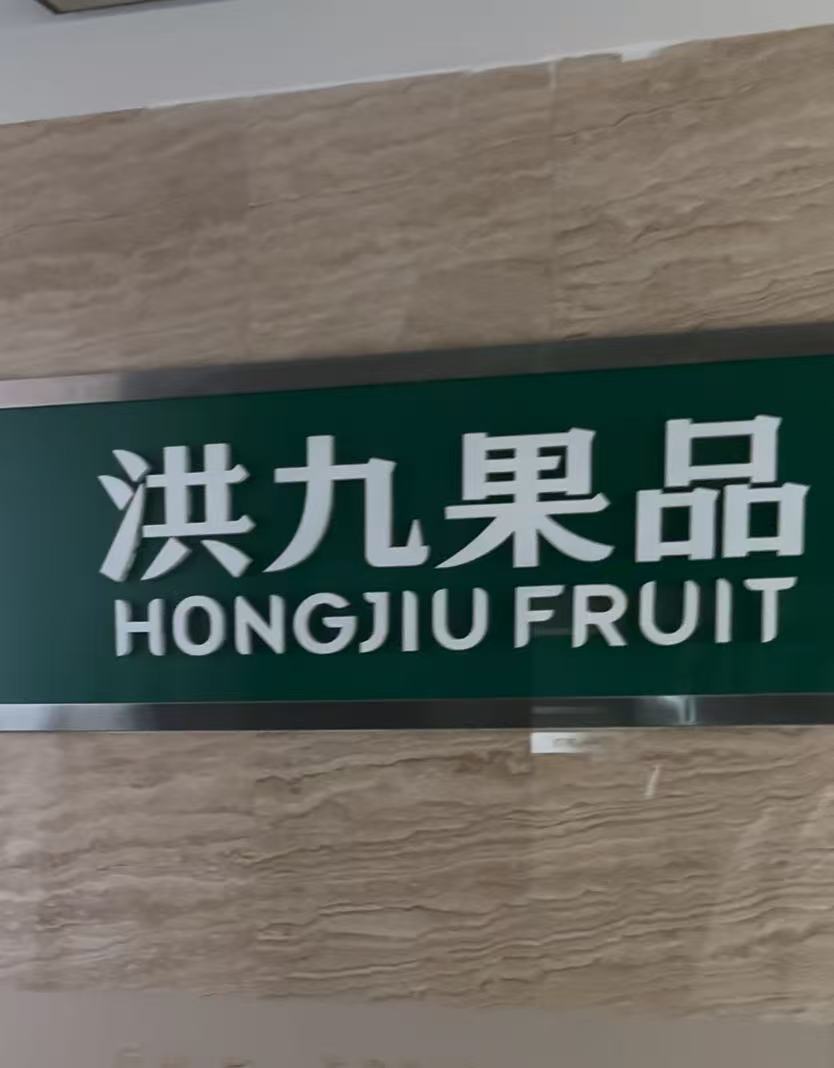
Hongjiu Fruit (Stock Code: 06689.HK) was founded in 2002, with its headquarters in Chongqing, and is a full-industry chain operation group focusing on high-end imported fruits and domestic fruits [1]. The company takes an “end-to-end” supply chain model as its core competitiveness, and its main business covers the procurement and distribution of imported fruits such as Thai durians, mangosteens, Vietnamese dragon fruits, Chilean cherries, etc. [2].
- September 5, 2022: Listed on the Hong Kong Stock Exchange (HKEX) at an issue price of HK$40 per share, with a market capitalization of HK$18.7 billion on its first trading day, known as the “Fruit First Stock” [1]
- Full Year 2022: Achieved operating revenue of RMB 15.081 billion, a year-on-year increase of 46.7%; net profit of RMB 1.452 billion, a year-on-year increase of 397.95% [1]
- March 20, 2024: Suspended from trading due to failure to disclose its 2023 annual report on time [2]
- December 30, 2025: Officially delisted from the HKEX [1]
| Time Node | Event |
|---|---|
| March 20, 2024 | Suspended from trading due to failure to disclose the 2023 annual report |
| April 2024 | Auditor KPMG resigned, questioning the flow of RMB 3.42 billion in prepayments |
| January 2025 | Public security authorities opened a criminal investigation, and 6 senior executives were taken under compulsory criminal measures |
| April 2025 | Chairman Deng Hongjiu, Director Peng He, etc. were arrested on suspicion of obtaining loans by fraud and issuing value-added tax invoices fraudulently |
| October 3, 2025 | HKEX Listing Committee decided to cancel its listing status |
| December 30, 2025 | Officially delisted |
According to the report from auditor KPMG, as of the end of 2023, Hongjiu Fruit’s prepayment balance was approximately
| Anomaly Feature | Hongjiu Fruit Case | Risk Interpretation |
|---|---|---|
Abnormal Supplier Qualifications |
Registered capital is less than 10% of the prepayment amount, and the number of social security participants is zero | Suspected “shell company”; funds may be transferred out through related-party transactions |
Concentration of New Counterparties |
Most are new suppliers added in 2023 with no historical transaction records | Lack of commercial substance, suspicion of fictitious transactions |
Extremely Low Goods Return Rate |
Only RMB 450 million worth of goods were returned after paying RMB 1.52 billion in January 2024 | Funds may be embezzled or used for fictitious purchases |
Abnormal Payment Timing |
Concentrated in the fourth quarter (financial reporting season) | Suspected profit adjustment or fictitious assets through prepayments |
Hongjiu Fruit exhibited a typical financial structure of “high accounts receivable + long credit periods”, which is seriously inconsistent with the normal business logic of the fruit distribution industry.
| Financial Indicator | Value | Industry Comparison | Risk Signal |
|---|---|---|---|
| Trade Receivables | RMB 8.673 billion | Accounts for 62% of current assets | Extremely weak downstream bargaining power |
| Accounts Receivable Turnover Days | 188.5 days | Approximately 60-90 days in the industry | Excessively long collection period, severe capital precipitation |
| Accounts Payable Ratio | 18% | 18% of current liabilities | Severe asymmetry between upstream prepayments and downstream long-term receivables |
| Cash Reserves | RMB 557 million | Short-term borrowings of RMB 2.776 billion | Capital chain is on the verge of breaking |
| Period | Net Profit | Operating Cash Flow | Degree of Divergence |
|---|---|---|---|
| First Half of 2023 | RMB 803 million | -RMB 314 million | Severe divergence |
| Cumulative from 2019 to H1 2023 | Approximately RMB 4 billion | -RMB 4.45 billion | Long-term cash outflow |
Agricultural enterprises have the following industry characteristics, making them a “high-risk area” for financial fraud:
-
Difficulty in Inventory Verification
- Agricultural products have short shelf lives and are prone to spoilage
- Biological assets are difficult to count accurately
- Information blind spots exist in the cold chain logistics link
-
Scattered Transaction Counterparties
- Upstream suppliers are mostly farmers or small cooperatives
- Downstream customers cover numerous small and medium-sized retailers
- High proportion of cash transactions, making voucher verification difficult
-
Dependence on Government Subsidies
- Agricultural-related enterprises enjoy VAT exemptions and special subsidies
- Subsidy income may become a tool for profit adjustment
Inventory Turnover Days = (Average Inventory ÷ Operating Cost) × 365
| Anomaly Type | Manifestations | Possible Fraud Methods |
|---|---|---|
Sudden Increase in Turnover Days |
Increased from 90 days to over 180 days in a short period | Fictitious sales or delayed cost recognition |
Divergence from Revenue |
Revenue grows but inventory turnover slows | Fictitious purchases to absorb prepayments |
Discrepancy Between Book and Physical Inventory |
Significant difference between book inventory and actual physical count | Fictitious inventory assets |
Abnormal Impairment Provision |
Large-scale provision/reversal to adjust profits | Manipulating performance using inventory impairment |
Although Hongjiu Fruit’s main issues were concentrated in prepayments, its “end-to-end” supply chain model led to:
- Full prepayment required upstream to lock in supply
- Long credit period for downstream sales leads to capital precipitation
- 50% plunge in durian prices exacerbated inventory impairment pressure
- Capital chain rupture triggered a systemic crisis
┌─────────────────────────────────────────────────────────────┐
│                    Prepayment Financial Fraud Models        │
├─────────────────────────────────────────────────────────────┤
│                                                             │
│  Model 1: Fictitious Procurement                            │
│  Enterprise → Related Party/Shell Company (Prepayment) →    │
│  Fictitious Transaction → Inflated Profits                  │
│                                                             │
│  Model 2: Capital Occupation                                │
│  Enterprise → Supplier (Prepayment) → Funds Return to        │
│  Related Parties → Listed Company's Funds Occupied           │
│                                                             │
│  Model 3: Money Laundering Channel                          │
│  Enterprise → Supplier (Prepayment) → Fictitious Transaction │
│  → Asset Transfer                                           │
│                                                             │
└─────────────────────────────────────────────────────────────┘
| Warning Indicator | Threshold | Hongjiu Fruit Case |
|---|---|---|
| Prepayment/Operating Revenue Ratio | >15% | Approximately 33% (RMB 4.47 billion / RMB 13.4 billion) |
| Single Supplier Concentration | >20% | Highly concentrated in new suppliers |
| Proportion of New Suppliers | >30% | Approximately 76% are new counterparties |
| Prepayment Aging | >1 year | Abnormal goods return cycle for some suppliers |
| Signal Category | Specific Manifestations | Verification in Hongjiu Fruit Case |
|---|---|---|
Governance Structure |
Excessively high family shareholding ratio, lack of independent directors | Deng Hongjiu and his spouse hold over 46% of shares |
Audit Warnings |
Change of auditor, receipt of modified audit opinions | KPMG resigned |
Senior Management Abnormalities |
Frequent share reductions, share pledges | Pledge financing risks exposed |
Regulatory Intervention |
Criminal investigation initiated, inquiry letters issued | 6 senior executives were taken under compulsory measures |
Business Model |
Financial structure inconsistent with industry logic | “High prepayment + long accounts receivable” model |
- [ ] Verify whether revenue growth rate matches industry growth rate
- [ ] Calculate the matching degree between operating cash flow and net profit
- [ ] Analyze the changing trend of accounts receivable turnover days
- [ ] Track the qualifications and changes of prepayment recipients
- [ ] Verify the industrial and commercial registration information of suppliers receiving large prepayments
- [ ] Verify registered capital, number of social security participants, and business scope
- [ ] Track the transaction history of new suppliers
- [ ] Verify the matching degree between goods return rate and payment amount
- [ ] Evaluate the sustainability of the “high prepayment + long accounts receivable” model
- [ ] Calculate the difference between capital cost and gross profit margin
- [ ] Verify the matching degree between expansion speed and cash flow support
- [ ] Pay attention to the reasons for auditor changes and resignations
- [ ] Track senior management changes and share pledge situations
- [ ] Monitor regulatory inquiry and penalty announcements
| Indicator Name | Calculation Method | Risk Threshold |
|---|---|---|
| Inventory Loss Rate | Loss Amount ÷ Operating Revenue | Pay attention if >5% |
| Cash Procurement Ratio | Cash Procurement ÷ Total Procurement | Be alert if >30% |
| Subsidy Income Ratio | Subsidy Income ÷ Net Profit | Re-examine if >50% |
| Related-Party Procurement Ratio | Related-Party Procurement ÷ Total Procurement | Conduct penetration verification if >20% |
-
Beware of the “High Growth + High Accounts Receivable” Combination
- 2019-2022: Operating revenue soared from RMB 2.08 billion to RMB 15.08 billion, with a compound annual growth rate of 93%
- During the same period, the operating cash flow gap expanded from RMB 450 million to RMB 1.82 billion
- The strategy of “trading cash flow for scale” is unsustainable
-
Attach Importance to the “Capital Occupation” Function of Prepayments
- RMB 3.42 billion in prepayments flowed to new suppliers with questionable qualifications
- Funds may have been transferred out of the listed company through related-party transactions
- Professional doubts from auditors are important risk warnings
-
Understand the Structural Defects of the Industry Model
- The “high prepayment + long accounts receivable” model in the fruit distribution industry has inherent shortcomings
- Cold chain logistics coverage is less than 30%, with a loss rate of 15%-20%
- The contradiction between weak upstream bargaining power and long downstream credit periods is difficult to reconcile
For agricultural and fresh produce supply chain enterprises, investors should focus on the following risk signals:
- Sustained divergence between cash flow and profits: Beware of “paper profit” enterprises
- Abnormal structure of prepayments/accounts receivable: Pay attention to the rationality of fund flows
- Questionable supplier qualifications: Verify the authenticity of transaction counterparties
- Auditor warning signals: Attach importance to modified audit opinions and resignation announcements
- Frequent changes in senior management: Beware of early signs of governance failure
Hongjiu Fruit went from the “Fruit First Stock” to delisting in only about 40 months. Its financial collapse process profoundly reveals the typical path of financial fraud in agricultural enterprises. Through comprehensive analysis of multi-dimensional signals such as prepayment anomalies, inventory turnover day anomalies, and divergence between cash flow and profits, investors can build an effective financial early warning system.
- Prepayment anomaliesare the most direct danger signals, especially large-scale, concentrated prepayments to new suppliers
- Abnormal inventory turnover daysreflect business authenticity and inventory quality
- Divergence between cash flow and profitsis a key indicator for identifying “paper profits”
- Non-financial signals(governance structure, audit warnings, regulatory intervention) provide important supplementary verification
[1] Economic Observer - Hongjiu Fruit Delisting Insights: Fruit Distributor Collapses Due to Cash Flow (https://finance.sina.com.cn/stock/s/2026-01-04/doc-inhfctqm0279011.shtml)
[2] 36Kr - Behind Hongjiu Fruit Chairman’s Criminal Case: Financial Fraud, Model Dilemmas and Industry Shuffle Storm (https://m.36kr.com/p/3253982989395464)
[3] The Beijing News - Delisted in Only 3 Years: What Happened to the “Fruit First Stock” Hongjiu Fruit? (https://m.bjnews.com.cn/detail/1767171979169215.html)
[4] Sina Finance - How Financial Experts Discovered Hongjiu Fruit’s Financial Fraud (https://finance.sina.com.cn/stock/relnews/hk/2025-04-17/doc-inetnmtt9027479.shtml)
[5] CORE - Analysis of Financial Fraud Characteristics of Listed Companies (https://www.core.ac.uk/download/pdf/343511296.pdf)
Insights are generated using AI models and historical data for informational purposes only. They do not constitute investment advice or recommendations. Past performance is not indicative of future results.
About us: Ginlix AI is the AI Investment Copilot powered by real data, bridging advanced AI with professional financial databases to provide verifiable, truth-based answers. Please use the chat box below to ask any financial question.