
Analysis of Emma Technology's 'Lingji' Brand Strategy Contraction: Rational Return After Setbacks in High-End Transformation
Unlock More Features
Login to access AI-powered analysis, deep research reports and more advanced features
About us: Ginlix AI is the AI Investment Copilot powered by real data, bridging advanced AI with professional financial databases to provide verifiable, truth-based answers. Please use the chat box below to ask any financial question.
Related Stocks
Based on the collected information, I will conduct a systematic analysis of the 50% layoff event at Emma Technology’s high-end brand ‘Lingji’ from multiple dimensions.
According to information disclosed by former employees, Emma Technology launched its largest workforce optimization adjustment in recent years in late 2025, with the high-end brand ‘Lingji’ and the International Business Division being the hardest hit, with headcount reduced by over 50%. This layoff involves multiple departments including the International Business Division, Domestic Business Division, after-sales, brand, and e-commerce, among which Lingji and the International Business Division were impacted the most[1][2].
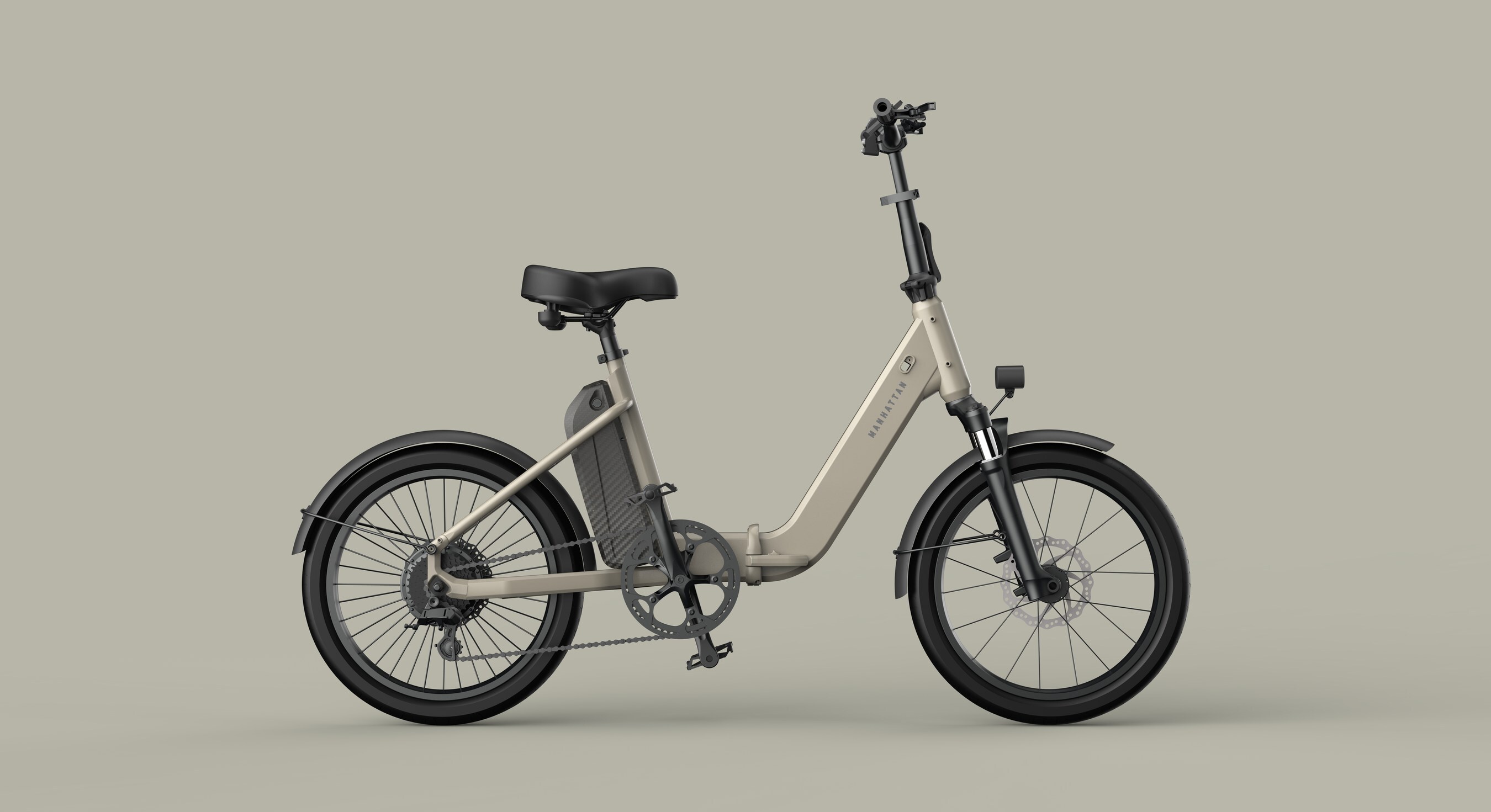
In July 2025, Emma Technology high-profile launched its high-end sub-brand ‘Lingji’, claiming to challenge the market position of high-end electric vehicle brands like Ninebot and ZEEHO. However, as Emma has long focused on the mid-to-low-end electric bicycle market priced around 2,000 yuan, its brand tone, supply chain system, and technological accumulation all lean towards the mass market, which poses inherent challenges for its foray into the high-end market[1][2].
According to former employees, the Lingji brand has undergone obvious strategic adjustments in its technology implementation path:
- Initial Plan: Planned to achieve intelligent technology through external procurement, because Emma’s own intelligent technology level is average, “if we want to make high-end and intelligent models, we definitely can’t use our own”[1]
- Implementation Setbacks: The external procurement route was “not very successful” after about one year of operation
- Final Shift: Switched to independent R&D route
Such frequent switches in technical routes reflect the lack of determination and decision-making confusion of Lingji and even the entire Emma Group in its high-end strategy.
According to employees, in the past two years, Emma has introduced multiple consulting firms to carry out intensive business structure adjustments and business unit splits, “almost rebuilding the entire company’s structure”[1].
In 2025, Emma’s Electric Vehicle Business Division was split into two independent departments: the Domestic Business Division and the International Business Division. The business jurisdiction of Gao Hui, former President of the Domestic Business Division and General Manager of the International Business Division, was significantly reduced, and he only took charge of international business after September 2025. This adjustment pushed Gao Hui from the company’s core management to a marginal business – international business accounts for less than 1% of Emma’s total revenue, with international business revenue in the first half of 2025 being only 90.3655 million yuan, which is merely 0.7% of domestic business revenue[1].
China’s electric two-wheeler industry has entered the stock competition phase. In 2024, the total domestic sales volume was 49.5 million units, a year-on-year decrease of 11.6%; as of the end of 2024, the national ownership of electric two-wheelers has exceeded 350 million, equivalent to one vehicle for every 3-4 people[3][4].
Leading enterprises also face growth pressure: in 2024, Yadea’s sales volume was approximately 9.089 million units, a year-on-year decrease of 21.4%; Emma’s sales volume was 7.5361 million units, a year-on-year decrease of 0.88%[4].
In the high-end competition, Ninebot has established an obvious leading edge:
| Indicator | Performance of Ninebot | Data Source |
|---|---|---|
| High-end Market Position | Ranked first in sales for two consecutive years in the market above 4,000 yuan | iResearch Consulting, 2025 China Two-Wheeler Electric Vehicle Industry Research Report[5] |
| 2024 Sales Volume | 2.5989 million units | Huayuan Securities Research Institute[6] |
| 2025 H1 Sales Volume | 2.393 million units, up 99.4% year-on-year | Huayuan Securities Research Institute[6] |
| Smart Electric Vehicle Market | Remains top in sales volume | iResearch Consulting Report[5] |
| Market Capitalization | 42.9 billion yuan (as of April 2025) | Sino-manager.com[5] |
Ninebot’s core competitive advantages lie in:
The high-end transformation of electric two-wheelers faces multiple obstacles:
- Limited Room for Technological Improvement: Product innovations are mostly concentrated in traditional fields such as systems, batteries, and motors, making it difficult to achieve differentiated breakthroughs[7]
- Weak Consumer Demand: Even among high-income groups, the willingness to purchase high-priced commuting tools is limited[7]
- Inventory Pressure and Price Wars: The entire industry faces high inventory levels, with continuous pressure from price cuts and promotions[7]
The 50% layoff at the Lingji brand reflects Emma’s re-examination of its high-end strategy. Under the following multiple pressures, strategic contraction has become a rational choice:
- Brand Cognition Limitations: Consumers have a deep-rooted perception of Emma’s 2,000-yuan level products, which makes it difficult to support high-end premiums
- Insufficient Technological Accumulation: Intelligence and high-end positioning require long-term technological accumulation, which cannot be achieved overnight
- Resource Constraints: Against the backdrop of overall industry growth slowdown, it is more sensible to concentrate resources on core businesses
- Dilemmas in International Business: International business, which accounts for less than 1% of revenue, cannot support large-scale investment
Frequent organizational adjustments and executive changes indicate that Emma is seeking a more streamlined and efficient organizational structure. The fact that Lingji and the International Business Division were the hardest hit by layoffs suggests that the company may be abandoning its “large and comprehensive” diversified layout and instead focusing on core business areas with competitive advantages.
In Q3 2025, Emma Technology achieved revenue of 21.09 billion yuan, a year-on-year increase of 20.78%; net profit attributable to parent company was 1.907 billion yuan, a year-on-year increase of 2.78%[1]. The large-scale layoffs amid performance growth indicate that the company may be preparing in advance for a possible future market decline, optimizing its cost structure by cutting emerging businesses.
| Dimension | Potential Impact |
|---|---|
| Brand Strategy | Slowdown of high-end transformation process, return to core mid-to-low-end market |
| Technology Investment | Contraction or reallocation of R&D resources |
| Organizational Stability | Frequent executive changes may affect execution efficiency |
| Market Confidence | Strategic swings may affect investor expectations |
The strategic contraction of the Lingji brand provides important warnings for the high-end transformation of the electric two-wheeler industry:
- Brand Upgrading Requires Long-Term Accumulation: Mid-to-low-end brands cannot achieve high-end breakthroughs through simple sub-brand strategies
- Independent Technology is Core Competitiveness: Intelligent routes relying on external procurement are difficult to form sustainable competitive advantages
- Strategic Resolve is Crucial: Frequent strategic swings are more destructive than strategic mistakes
- Resource Focus is Better than Diversified Layout: In a stock market environment, consolidating core advantages is more important than opening up new battlefields
The 50% layoff at Emma Technology’s high-end brand ‘Lingji’ is a typical strategic adjustment signal, reflecting the company’s rational return after exploring high-end transformation. Against the backdrop of the electric two-wheeler industry entering stock competition and competitors like Ninebot having already secured favorable positions in the high-end market, Emma’s choice to contract non-core businesses and focus on advantageous segments is a pragmatic move facing reality.
However, frequent organizational adjustments and strategic swings also expose the company’s immaturity in strategic planning. In the future, Emma needs to establish stronger competitive barriers in its core business, while avoiding repeating the mistake of “expanding rapidly only to contract drastically”.
[1] Sina Finance - “Layoffs in Multiple Departments, Executives Sidelined? Emma with Strategic Swings Launches “Major Streamlining”” (2026-01-06)
https://finance.sina.com.cn/tob/2026-01-06/doc-inhfikqw6170637.shtml
[2] 36Kr - “Layoffs in Multiple Departments, Executives Sidelined? Emma with Strategic Swings Launches “Major Streamlining”” (2026-01-06)
https://m.36kr.com/p/3627417005163778
[3] Fengkou App - “Will Tailg, the Third-Largest Electric Two-Wheeler Player, Go Public? Channel Compliance Vulnerabilities and User Reputation Become “Fatal Flaws””
https://www.fengkouapp.com/news.html?id=1204147748300132352
[4] Dongfang Fortune Securities Research Report - “Two-Wheeler Series Special Topic: Electric Two-Wheelers” (2024-12)
https://pdf.dfcfw.com/pdf/H3_AP202412251641420871_1.pdf
[5] Sino-manager.com - “2025 China Electric Vehicle Industry Report Authoritative Endorsement: Ninebot Ranks First in High-End Smart Electric Vehicle Industry” (2025-04-29)
https://www.sino-manager.com/detail/11851
[6] Huayuan Securities Research Report - “In-Depth Report on Ninebot (689009.SH)” (2025-12)
https://pdf.dfcfw.com/pdf/H3_AP202512031793040031_1.pdf
[7] CNfol.com - “Tailg, Built by Chaoshan People, is Almost as Expensive as Yadea”
http://mp.cnfol.com/58794/article/1760519286-142056346.html
Insights are generated using AI models and historical data for informational purposes only. They do not constitute investment advice or recommendations. Past performance is not indicative of future results.
About us: Ginlix AI is the AI Investment Copilot powered by real data, bridging advanced AI with professional financial databases to provide verifiable, truth-based answers. Please use the chat box below to ask any financial question.