
Investment Implications of NASA's FY 2026 Budget for the Space Industry
Unlock More Features
Login to access AI-powered analysis, deep research reports and more advanced features
About us: Ginlix AI is the AI Investment Copilot powered by real data, bridging advanced AI with professional financial databases to provide verifiable, truth-based answers. Please use the chat box below to ask any financial question.
Related Stocks
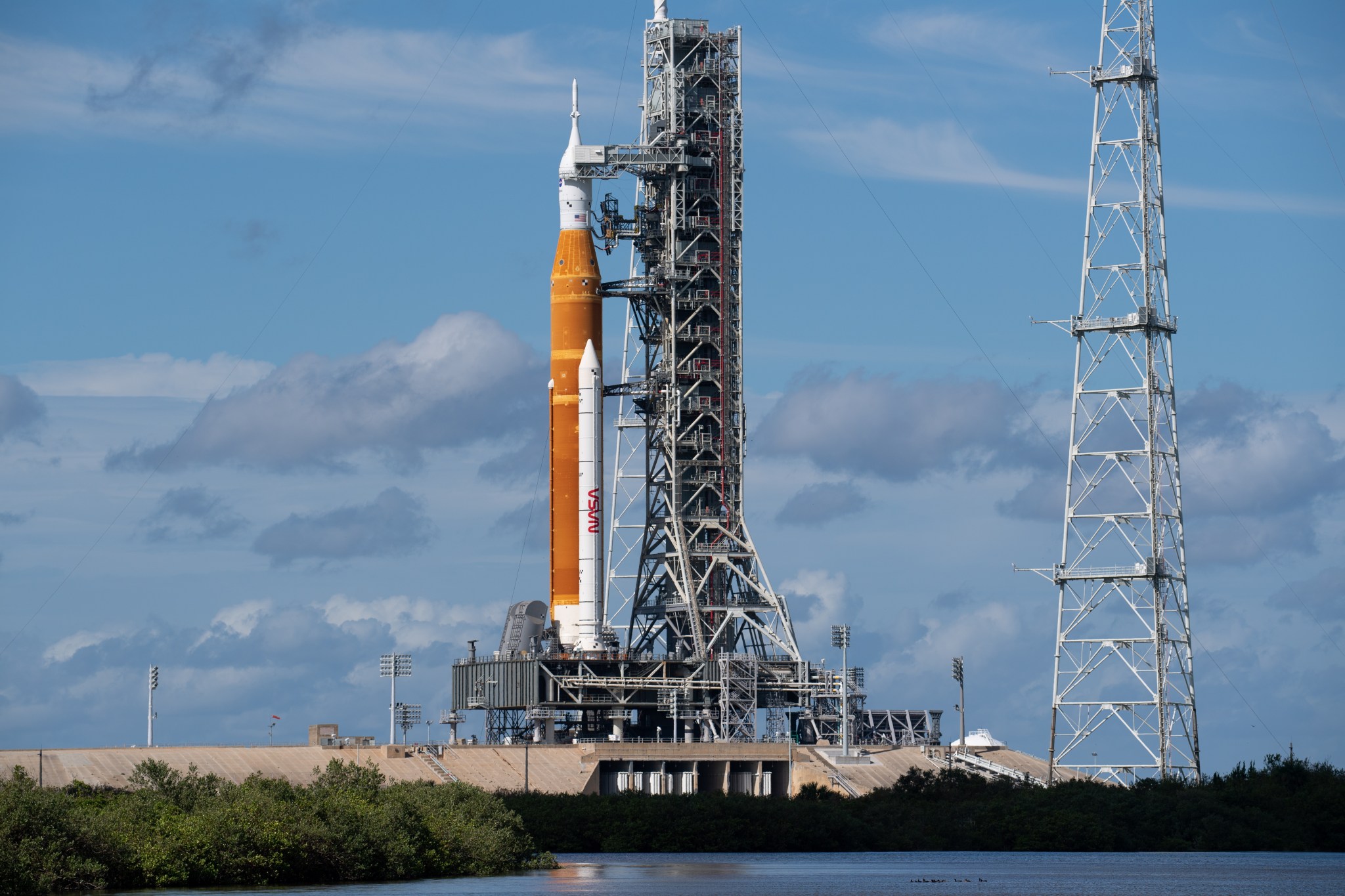
I will provide a systematic analysis of the investment implications of NASA’s FY 2026 budget for the space industry. Based on the latest market data and industry trends, the following is a comprehensive in-depth analysis:
According to official documents, NASA’s FY 2026 budget is confirmed to be
- Artemis Program and Mars Exploration: $7.78 billion(32% of total)
- Science Programs: $7.25 billion(30% of total)
- Other Programs: $9.41 billion (including space technology, aeronautics research, etc.)
While this budget size is roughly comparable to that of the previous fiscal year, it reflects the U.S. government’s sustained investment in space exploration as a strategic priority.
- Stock Price: $534.97 (daily gain +4.56%)
- Market Capitalization: $125.2 billion
- Price-to-Earnings Ratio: 29.57x
- Net Profit Margin: 5.73%
- Record-Backlogged Orders:Q3 2025 sales reached $18.61 billion, exceeding expectations, and the company has raised its full-year revenue guidance to $74.25-$74.75 billion[2]
- High ROE (68.48%):Demonstrates excellent capital utilization efficiency[0]
- Analyst Ratings:54.1% give a “Buy” rating, with a consensus target price of $531[0]
- Stock Price: $616.50 (daily gain +0.85%)
- Market Capitalization: $87.99 billion
- Price-to-Earnings Ratio: 22.21x (relatively reasonable valuation)
- Valuation Advantage:P/E ratio of 22.21x is lower than LMT’s 29.57x[0]
- Technological Leadership:Has competitive advantages in propulsion systems, autonomous robots, and government contracts[3]
- Stock Price: $229.71
- Market Capitalization: $172.87 billion
- Risk Warning:Negative EPS (-$13.69), mainly dragged down by commercial aircraft business
- Double-Edged Sword:While the space business is stable (accounting for about 30% of revenue), the company as a whole is affected by commercial aviation issues such as the 737 MAX[2]
- Recommendation: Hold Off:Consider allocation only after fundamentals improve
- Stock Price: $75.45 (161.98% YTD gain, 1,683.67% 3-year gain)
- Market Capitalization: $38.7 billion
- Backlogged Orders Exceed $1 Billion, Q3 2025 revenue reached $155.08 million, surging 48% YoY[4]
- 2026 First Launch of the Neutron Rocket, which will fill the gap in medium-lift capacity, with single reusable launch costs reduced to below $30 million[4]
- Vertical Integration Capability:In addition to manufacturing rockets, it also produces satellite bus and components, and is locking in the underlying architecture of space data centers through an integrated “launch + satellite platform” solution[4]
- Diverse Clients Including NASA:Has completed 79 Electron missions, with clients including government agencies such as NASA[5]
- Target Valuation: $1.5 Trillion(potentially the largest IPO in history)
- Fundraising Scale: Over $30 billion[6]
- 2025 revenue is projected to reach $15 billion, increasing to $22-$24 billion in 2026[6]
- Space Data Centers:Musk stated that this is “the fastest way to expand computing power within the next 4 years”, and will use IPO funds to develop space-based data centers and purchase chips[6]
- Starship Revolution:Targets a 90% reduction in orbital launch costs; when the cost per kilogram drops below the $200 threshold, space data centers will have better cost-performance than ground-based ones[4]
- Rocket Lab (RKLB), as a “SpaceX concept stock”, has risen over 100% this year[4]
- Satellite service providers such as EchoStar have also followed the upward trend[6]
- Physical Advantages:Vacuum heat dissipation, 24/7 solar power, unlimited deployment space
- Speed Advantage:Light travels 30% faster in a vacuum than in optical fibers; direct connection via Starlink’s low-Earth orbit satellite network offers lower latency than transoceanic submarine cables[4]
| Dimension | Company | Ticker | Core Value |
|---|---|---|---|
Traffic Entry |
Rocket Lab | RKLB | Launch capabilities, backlogged orders exceeding $1 billion[4] |
Computation Mothership |
HPE | - | On-orbit edge computing[4] |
Energy System |
Northrop Grumman | NOC | Space nuclear energy technology[4] |
Inter-Satellite Network |
CACI International | CACI | Laser inter-satellite links, backlogged orders of $28 billion[4] |
Application Monetization |
BlackSky | BKSY | Real-time geospatial intelligence, market size to reach $40 billion by 2030[4] |
- SpaceX/Starlink:Has the largest number of in-orbit satellites globally (over 8,100), far exceeding competitors[7]
- AST SpaceMobile (ASTS):245.2% YTD gain, focused on the satellite-to-mobile direct connection revolution[4]
- Investment Opportunities:Satellite communication chips, ground terminal equipment, spectrum license service providers
- NASA FY 2026:$24.44 billion budget remains at a high level[1]
- U.S. Space Force FY 2026:Budget is close to $40 billion, emphasizing reusable platforms, hypersonic propulsion systems, and resilient satellite networks[5]
- Commercial Space Reserve (CASR):Will fully transition from pilot phase to large-scale operation in 2026, with a target of signing 20 contracts[8]
- 2024 Scale:The global space economy is approximately $613 billion (commercial infrastructure + satellite services + government budgets)[9]
- 2034 Projection:Will grow to $788.7 billion, with a compound annual growth rate of approximately 6.6%[10]
- Launch Services Market:Expanding at a CAGR of 14.6%, valued at $8.2 billion in 2024[5]
-
Core Holdings (60%):LMT + NOC
- LMT: Core beneficiary of the Artemis Program, record backlogged orders, ROE of 68.48%[0]
- NOC: Relatively reasonable valuation (P/E 22.21x), full-industry-chain layout[0]
-
Satellite Allocation (40%):RKLB
- High growth potential, but requires tolerance for valuation volatility risks
-
Aggressive Growth (70%):RKLB + ASTS
- RKLB: Catalyzed by the first launch of the Neutron rocket
- ASTS: Leading the satellite-to-mobile direct connection revolution
-
Traditional Core Position (30%):LMT or NOC
- Provides stable cash flow and risk hedging
- Space Data Center Theme:RKLB + CACI + BKSY
- Satellite Internet Theme:ASTS + satellite chip suppliers
- Defense Space Theme:LMT + NOC + BA (hold off)
| Time | Event | Beneficiary Targets |
|---|---|---|
Q1 2026 |
First launch of Rocket Lab’s Neutron rocket | RKLB |
Mid-to-Late 2026 |
SpaceX IPO (valued at $1.5 trillion) | Re-rating of the entire space sector |
Full Year 2026 |
Continuous advancement of Artemis missions | LMT, NOC, BA |
End of 2026 |
Commercial Space Reserve completes 20 contracts | Satellite communication service providers |
- Technological Risks:Rocket launch failures, mission delays (the Artemis Program has been delayed multiple times[1])
- Policy Risks:Government budget cuts, priority adjustments
- Valuation Risks:High-growth stocks like RKLB have a P/B ratio of 31.14x, facing pullback risks[0]
- Competition Risks:Intensified global commercial space competition (China, Europe, etc.)
- Geopolitical Risks:Militarization of space, competition for orbital resources
While NASA’s FY 2026 budget of $24.44 billion is flat compared to the previous fiscal year, it reflects the U.S. government’s
- Short-Term (1-2 Years):Traditional defense giants (LMT, NOC) provide certainty and stable returns
- Mid-Term (2-3 Years):Leading commercial space players (RKLB) benefit from explosive launch demand and technological breakthroughs
- Long-Term (3-5 Years):Space data centers and satellite internet emerge as new trillion-dollar tracks
- Opportunities for sector valuation re-rating brought by the SpaceX IPO
- The industrialization process of space data centers from concept to implementation
- Explosive growth of commercial space against the backdrop of military-civilian integration
The space industry is transitioning from “government-led” to “commercial-driven”, and 2026 may be a
[0] Jinling API Data - Real-time stock quotes, company profiles, financial indicators (RKLB, LMT, NOC, BA)
[1] Division A - Commerce, Justice, Science, NASA FY2026 Conference Agreement (https://docs.house.gov/billsthisweek/20260105/Division A Commerce Justice Science.pdf)
[2] StockTitan - Defense & Military Stocks Analysis (https://www.stocktitan.net/stocks/themes/defense-military-stocks)
[3] GM Insights - Space Lander and Rover Market Report (https://www.gminsights.com/industry-analysis/space-lander-and-rover-market)
[4] TradingKey - “The Final Destination of AI Computing Power: In-Depth Analysis of Investment Opportunities in the 2026 U.S. Stock ‘Space Data Center’ Industry Chain” (https://www.tradingkey.com/zh-hans/analysis/stocks/us-stock/251424888-space-data-centers-ai-computing-investment-2026)
[5] Nasdaq - “The New Arms Race: Investing in Speed, Agility, and Responsive Space Infrastructure” (https://www.nasdaq.com/press-release/new-arms-race-investing-speed-agility-and-responsive-space-infrastructure-2026-01-02)
[6] CLS - “Largest IPO in History Coming Next Year? SpaceX Plans to Raise Over $30 Billion” (https://m.cls.cn/detail/2224862)
[7] Securities Times - “Musk Opens Up, Hinting SpaceX Plans to Go Public as Space AI Needs Funding” (https://stcn.com/article/detail/3536594.html)
[8] DefenseNews - “Space warfare in 2026: A pivotal year for US readiness” (https://www.defensenews.com/space/2026/01/05/space-warfare-in-2026-a-pivotal-year-for-us-readiness)
[9] Space Foundation - Global Space Economy Overview (https://www.spacefoundation.org/wp-content/uploads/2025/07/GlobalSpaceEconomyChart.png)
[10] GM Insights - Space Economy Market 2024-2034 (https://cdn.gminsights.com/image/rd/aerospace-and-defense/space-economy-market-2024-2032.webp)
Insights are generated using AI models and historical data for informational purposes only. They do not constitute investment advice or recommendations. Past performance is not indicative of future results.
About us: Ginlix AI is the AI Investment Copilot powered by real data, bridging advanced AI with professional financial databases to provide verifiable, truth-based answers. Please use the chat box below to ask any financial question.