
U.S. Stocks Rally as Oil Prices Rise Post-Venezuela Geopolitical Shock (2026-01-05)
Unlock More Features
Login to access AI-powered analysis, deep research reports and more advanced features
About us: Ginlix AI is the AI Investment Copilot powered by real data, bridging advanced AI with professional financial databases to provide verifiable, truth-based answers. Please use the chat box below to ask any financial question.
Related Stocks
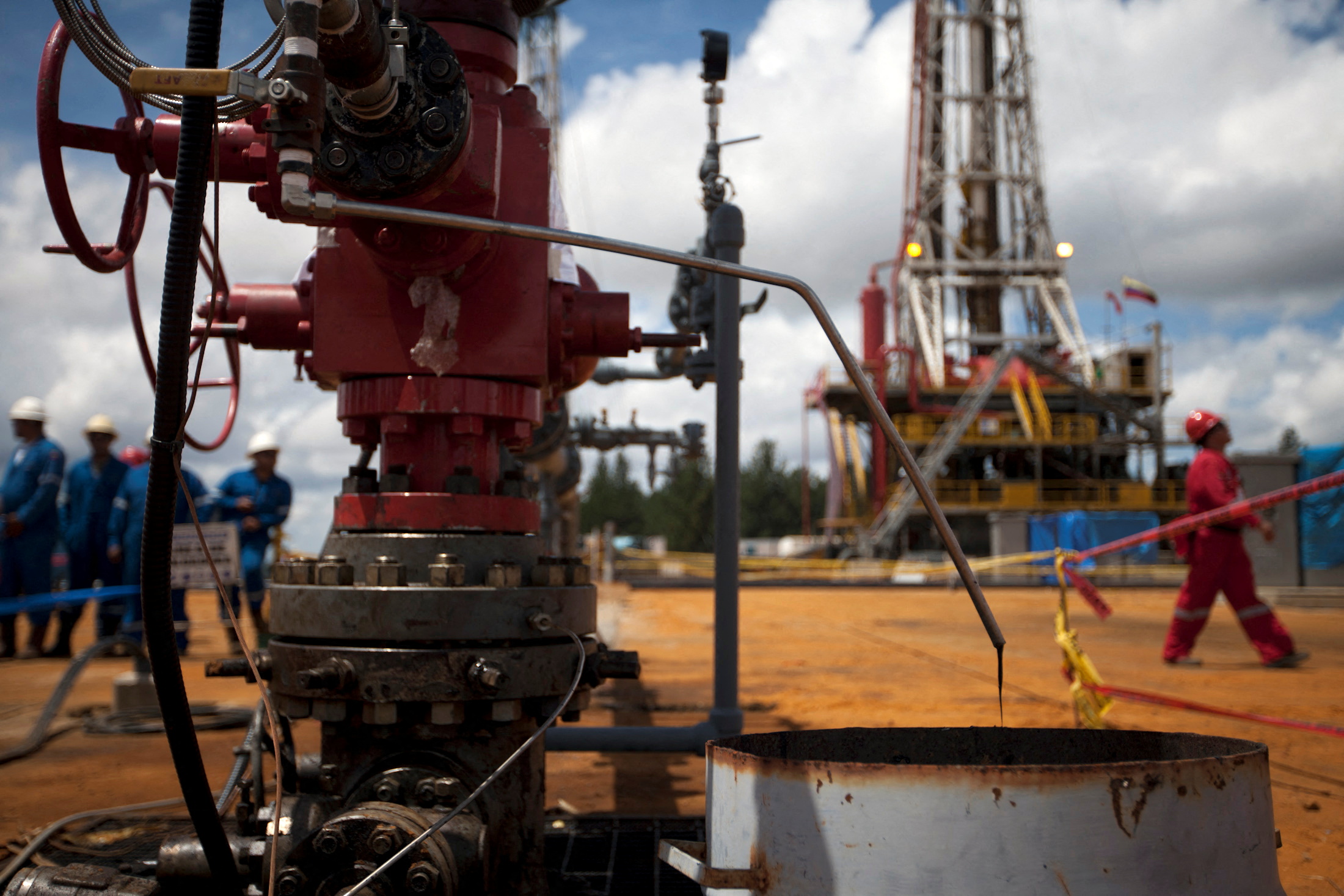
This analysis is based on Bloomberg’s Closing Bell coverage [0] of the 2026-01-05 U.S. market close, following the Venezuela geopolitical shock—U.S. capture of President Nicolás Maduro on drug conspiracy charges (2026-01-03) and subsequent pledges to deploy American drillers to revive Venezuela’s crude production [1].
On the day, Brent crude oil closed at $61.76 per barrel and WTI at $58.32 per barrel, both rising approximately 1.7%. This price increase reflected a combination of concerns about potential supply disruptions from Venezuela and expectations of expanded U.S. oil company involvement in the country’s production sector [3][4].
The Dow Jones Industrial Average (DJIA) hit a record high, rising 1.2% to 48,977.18, driven primarily by strong gains in energy stocks [3]. The S&P 500 and NASDAQ Composite also rallied, closing 0.6% (6,902.05) and 0.7% (23,395.82) higher respectively [3]. Energy stocks led the market: Chevron (CVX) rose 5.1% as the only major U.S. oil company with current operations in Venezuela [2][5], Halliburton (HAL) jumped 7.8%, and ExxonMobil (XOM) and ConocoPhillips (COP) also saw significant gains [3].
Notably, safe-haven assets also rose alongside equities: gold futures gained 2.05% to $4,457.9 per ounce, and silver futures increased 5.59% to $77.035 per ounce. This simultaneous rise indicates mixed market sentiment—optimism about energy sector opportunities paired with lingering concerns about geopolitical instability [4].
- Mixed Market Sentiment: The dual rally in stocks (energy-driven) and safe-haven assets reveals conflicting investor perspectives: confidence in near-term energy sector gains vs. caution about prolonged geopolitical unrest in Venezuela.
- DJIA Record High Catalyst: Chevron’s substantial rise (fueled by its unique existing exposure to Venezuela) was the primary driver of the DJIA’s record close [2][5].
- Oil Price Dual Drivers: Oil prices were supported by two key factors: fears of supply disruptions from Venezuela and expectations of increased U.S. oil company participation in the country’s production.
- Energy Sector Potential: Expanded U.S. driller involvement in Venezuela could benefit companies with existing regional exposure (Chevron) and oilfield services firms (Halliburton) [2][3].
- Geopolitical Instability: Further unrest in Venezuela could disrupt oil supplies, leading to heightened price volatility [3].
- Policy Uncertainty: Changes in U.S. sanctions or Venezuela policy could alter oil production plans and market expectations [1].
- Market Volatility: The mixed sentiment (equities rally + safe-haven gains) signals potential near-term market volatility [0][4].
- Oil Prices: Brent ($61.76/barrel) and WTI ($58.32/barrel) up ~1.7% (2026-01-05) [3][4].
- Stock Indices: DJIA (48,977.18, +1.2% record high), S&P 500 (6,902.05, +0.6%), NASDAQ Composite (23,395.82, +0.7%) [3].
- Energy Stocks: Chevron (CVX) +5.1%, Halliburton (HAL) +7.8%, ExxonMobil (XOM), ConocoPhillips (COP) up [2][3][5].
- Safe-Haven Assets: Gold +2.05%, silver +5.59% [4].
- Catalyst: Venezuela geopolitical shock (Maduro capture, U.S. driller deployment pledge) [1].
Insights are generated using AI models and historical data for informational purposes only. They do not constitute investment advice or recommendations. Past performance is not indicative of future results.
About us: Ginlix AI is the AI Investment Copilot powered by real data, bridging advanced AI with professional financial databases to provide verifiable, truth-based answers. Please use the chat box below to ask any financial question.